Molly McCully Brown - Böcker
Visar alla böcker från författaren Molly McCully Brown. Handla med fri frakt och snabb leverans.
5 produkter
5 produkter
146 kr
Skickas
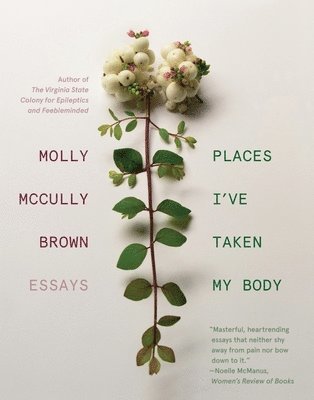
'Urgent, compelling and lyrically, luminously beautiful . . . a brilliant, heart-rending read.' Psychologies MagazineBrown constellates the subjects that define her inside and out: a disabled and conspicuous body, a religious conversion, a missing twin, a life in poetry. As she does, she depicts vividly for us not only her own life but a striking array of sites and topics, among them Mary Shelley's Frankenstein and the world's oldest anatomical theater, Eugenics, and Jerry Falwell's Liberty University. Throughout, Brown offers us the gift of her exquisite sentences, woven together in consideration, always, of what it means to be human: flawed, potent, feeling.
295 kr
Skickas inom 7-10 vardagar
Lyric essayists draw on memoir, poetry, and prose to push against the arbitrary genre restrictions in creative nonfiction, opening up space not only for new forms of writing, but also new voices and a new literary canon. This anthology features some of the best lyric essays published in the last several years by prominent and emerging writers. Editors Zoë Bossiere and Erica Trabold situate this anthology within the ongoing work of resistance—to genre convention, literary tradition, and the confines of dominant-culture spaces. As sites of resistance, these essays are diverse and include investigations into deeply personal and political topics such as queer and trans identity, the American BIPOC experience, reproductive justice, belonging, grief, and more.The lyric essay is always surprising; it is bold, unbound, and free. This collection highlights the lyric essay's natural capacity for representation and resistance and celebrates the form as a subversive genre that offers a mode of expression for marginalized voices. The Lyric Essay as Resistance features contemporary work by essayists including Melissa Febos, Wendy S. Walters, Torrey Peters, Jenny Boully, Crystal Wilkinson, Elissa Washuta, Lillian-Yvonne Bertram, and many more. Their work demonstrates the power of the lyric essay to bring about change, both on the page and in our communities.
258 kr
Skickas inom 3-6 vardagar
168 kr
Skickas inom 7-10 vardagar
117 kr
Skickas inom 5-8 vardagar
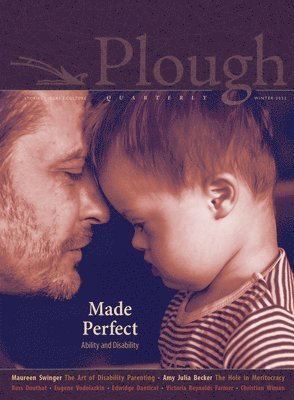
Whose lives count as fully human? The answer matters for everyone, disabled or not.The ancient Greek ideal linked physical wholeness to moral wholeness – the virtuous citizen was “beautiful and good.” It’s an ideal that has all too often turned deadly, casting those who do not measure up as less than human. In the pre-Christian era, infants with disabilities were left on the rocks; in modern times, they have been targeted by eugenics.Much has changed, thanks to the tenacious advocacy of the disability rights movement. Yesteryear’s hellish institutions have given way to customized educational programs and assisted living centers. Public spaces have been reconfigured to improve access. Therapies and medical technology have advanced rapidly in sophistication and effectiveness. Protections for people with disabilities have been enshrined in many countries’ antidiscrimination laws.But these victories, impressive as they are, mask other realities that collide awkwardly with society’s avowals of equality. Why are parents choosing to abort a baby likely to have a disability? Why does Belgian law allow for euthanasia in cases of disability, even absent a terminal diagnosis or physical pain? Why, when ventilators were in short supply during the first Covid wave, did some states list disability as a reason to deny care?On this theme: - Heonju Lee tells how his son with Down syndrome saved another child’s life.- Molly McCully Brown and Victoria Reynolds Farmer recount their personal experiences with disability.- Amy Julia Becker says meritocracies fail because they value the wrong things.- Maureen Swinger asks six mothers around the world about raising a child with disabilities.- Joe Keiderling documents the unfinished struggle for disability rights.- Isaac T. Soon wonders if Saint Paul’s “thorn in the flesh” was a disability.- Leah Libresco Sargeant reviews What Can a Body Do? and Making Disability Modern.- Sarah C. Williams says testing for fetal abnormalities is not a neutral practice.Also in the issue: - Ross Douthat is brought low by intractable Lyme disease.- Edwidge Danticat flees an active shooter in a packed mall.- Eugene Vodolazkin finds comic relief at funerals, including his own father’s.- Kelsey Osgood discovers that being an Orthodox Jew is strange, even in Brooklyn.- Christian Wiman pens three new poems.- Susannah Black profiles Flannery O’Conner.- Our writers review Eyal Press’s Dirty Work, Steve Coll’s Directorate S, and Millennial Nuns by the Daughters of Saint Paul.Plough Quarterly features stories, ideas, and culture for people eager to apply their faith to the challenges we face. Each issue includes in-depth articles, interviews, poetry, book reviews, and art.