Monica Heller – författare
Visar alla böcker från författaren Monica Heller. Handla med fri frakt och snabb leverans.
20 produkter
20 produkter
Inbunden, Engelska, 2027
984 kr
Kommande
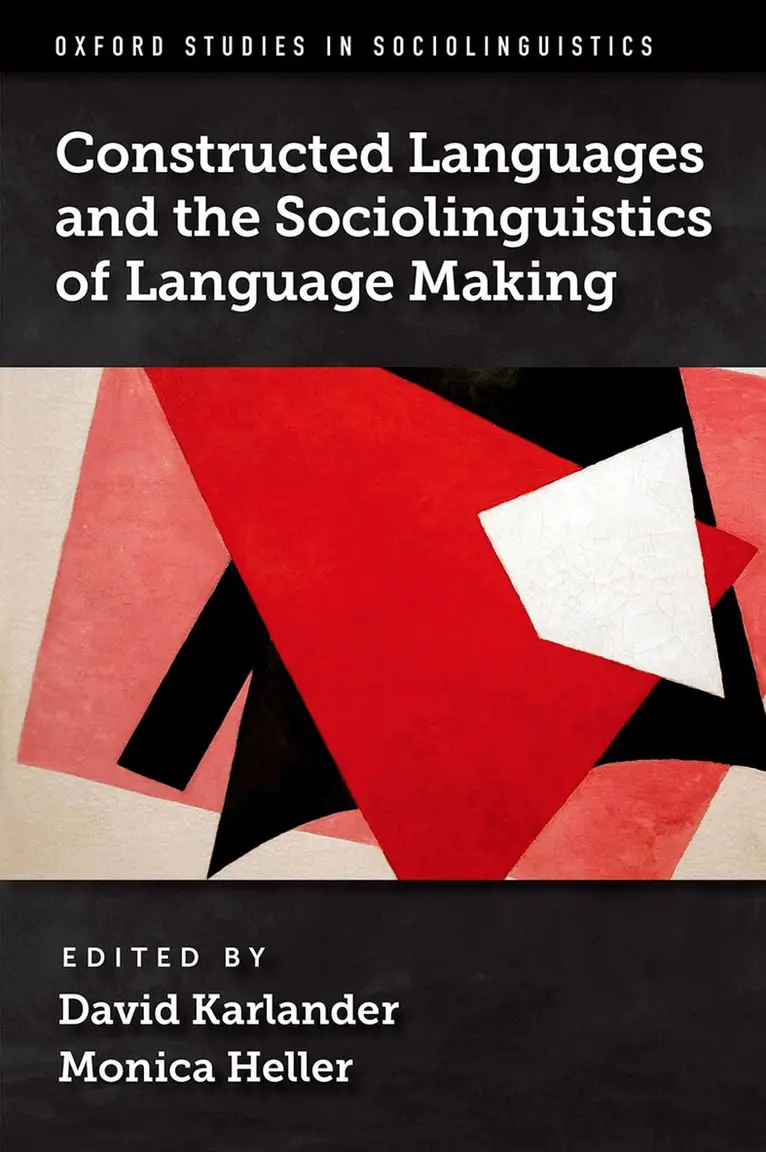
Constructed Languages and the Sociolinguistics of Language Making examines so-called "constructed" languages from the French Revolution to the present, challenging the assumption that they are linguistic curiosities or exceptions. Instead, the contributors approach them as no more artificial, and no less natural, than any other language. Read in their social and political contexts, constructed languages emerge as revealing efforts to negotiate historical tensions through language itself: tensions surrounding revolutionary ideals, the limits and injustices of the nation-state, and industrial capitalism, debates over socialism and liberal democracy, and the legacies of colonialism. Usually tied to modernist assumptions about achieving progress through technology and rational thought, they allow for the expression of sociopolitical visions of alternative, possibly better, worlds.
Häftad, Engelska, 2011
600 kr
Skickas inom 5-8 vardagar
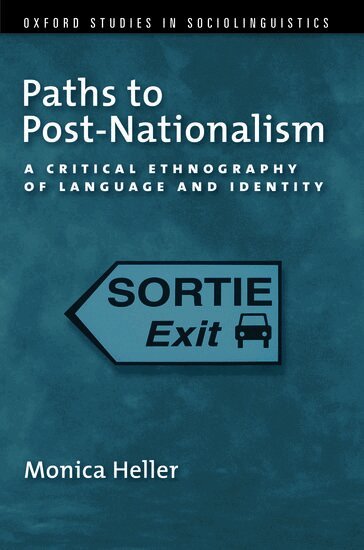
Nationalism informs our ideas about language, culture, identity, nation, and State-ideas that are being challenged by globalization and an emerging new economy. As language, culture, and identity are commodified, multilingualism becomes a factor in the mobility of people, ideas and goods-and in their value.In Paths to Post-Nationalism, Monica Heller shows how hegemonic discourses of language, identity, and the nation-State are destabilized under new political and economic conditions. These processes, she argues, put us on the path to post-nationalism. Applying a fine-grained ethnographic analysis to the notion of "francophone Canada" from the 1970s to the present, Heller examines sociolinguistic practices in workplaces, schools, community associations, NGOs, State agencies, and sites of tourism and performance across francophone North America and Europe. Her work shows how the tensions of late modernity produce competing visions of social organization and competing sources of legitimacy in attempts to re-imagine--or resist re-imagining--who we are.
Inbunden, Engelska, 2011
865 kr
Skickas inom 5-8 vardagar
Nationalism informs our ideas about language, culture, identity, nation, and State-ideas that are being challenged by globalization and an emerging new economy. As language, culture, and identity are commodified, multilingualism becomes a factor in the mobility of people, ideas and goods-and in their value.In Paths to Post-Nationalism, Monica Heller shows how hegemonic discourses of language, identity, and the nation-State are destabilized under new political and economic conditions. These processes, she argues, put us on the path to post-nationalism. Applying a fine-grained ethnographic analysis to the notion of "francophone Canada" from the 1970s to the present, Heller examines sociolinguistic practices in workplaces, schools, community associations, NGOs, State agencies, and sites of tourism and performance across francophone North America and Europe. Her work shows how the tensions of late modernity produce competing visions of social organization and competing sources of legitimacy in attempts to re-imagine-or resist re-imagining-who we are.
Inbunden, Engelska, 2015
1 732 kr
Skickas inom 5-8 vardagar
This book is an ethnography of labor mobility and its challenges to the idea of the nation. Using the example of francophone Canada, it examines how social difference-race, ethnicity, language, gender-has been used to sort out who must (or can) be mobile and who must (or can) remain in place in the organization of global circulation of human and natural resources. It argues that "francophone Canada" can best be understood as an ethnoclass category that has embedded francophones into specific forms of labor mobility since the beginnings of European colonization, even as their social difference has been constructed as national in the interests of gaining political power. The result has been an erasure both of francophone mobilities and of their contribution to the rootedcommunity that lies at the heart of the idea of the nation, and of francophone capacity to resist economic marginalization and exploitation. By following French Canadian workers back and forth between eastern and central Canada and the frontiers of the Canadian northwest, Sustaining the Nation explores how contemporary forms of labor mobility make it increasingly difficult for national structures and discourses to produce the francophonenation. By following the ideological tensions between language as a skill and language as a marker of belonging, the authors present grounded evidence of how the globalized new economy challenges the nation-state, and how mobilities and immobilities are co-constructed.
Häftad, Engelska, 2015
810 kr
Skickas inom 3-6 vardagar
This book is an ethnography of labor mobility and its challenges to the idea of the nation. Using the example of francophone Canada, it examines how social difference-race, ethnicity, language, gender-has been used to sort out who must (or can) be mobile and who must (or can) remain in place in the organization of global circulation of human and natural resources. It argues that "francophone Canada" can best be understood as an ethnoclass category that has embedded francophones into specific forms of labor mobility since the beginnings of European colonization, even as their social difference has been constructed as national in the interests of gaining political power. The result has been an erasure both of francophone mobilities and of their contribution to the rootedcommunity that lies at the heart of the idea of the nation, and of francophone capacity to resist economic marginalization and exploitation. By following French Canadian workers back and forth between eastern and central Canada and the frontiers of the Canadian northwest, Sustaining the Nation explores how contemporary forms of labor mobility make it increasingly difficult for national structures and discourses to produce the francophonenation. By following the ideological tensions between language as a skill and language as a marker of belonging, the authors present grounded evidence of how the globalized new economy challenges the nation-state, and how mobilities and immobilities are co-constructed.
Häftad, Engelska, 2013
848 kr
Skickas inom 10-15 vardagar
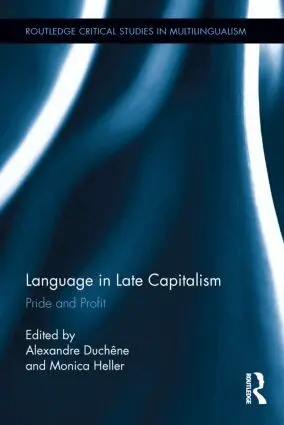
This book examines the ways in which our ideas about language and identity which used to be framed in national and political terms as a matter of rights and citizenship are increasingly recast in economic terms as a matter of added value. It argues that this discursive shift is connected to specific characteristics of the globalized new economy in what can be thought of as "late capitalism". Through ten ethnographic case studies, it demonstrates the complex ways in which older nationalist ideologies which invest language with value as a source of pride get bound up with newer neoliberal ideologies which invest language with value as a source of profit. The complex interaction between these modes of mobilizing linguistic resources challenges some of our ideas about globalization, hinting that we are in a period of intensification of modernity, in which the limits of the nation-State are stretched, but not (yet) undone. At the same time, this book argues, this intensification also calls into question modernist ways of looking at language and identity, requiring a more serious engagement with capitalism and how it constitutes symbolic (including linguistic) as well as material markets.
Inbunden, Engelska, 2011
2 429 kr
Skickas inom 10-15 vardagar
This book examines the ways in which our ideas about language and identity which used to be framed in national and political terms as a matter of rights and citizenship are increasingly recast in economic terms as a matter of added value. It argues that this discursive shift is connected to specific characteristics of the globalized new economy in what can be thought of as "late capitalism". Through ten ethnographic case studies, it demonstrates the complex ways in which older nationalist ideologies which invest language with value as a source of pride get bound up with newer neoliberal ideologies which invest language with value as a source of profit. The complex interaction between these modes of mobilizing linguistic resources challenges some of our ideas about globalization, hinting that we are in a period of intensification of modernity, in which the limits of the nation-State are stretched, but not (yet) undone. At the same time, this book argues, this intensification also calls into question modernist ways of looking at language and identity, requiring a more serious engagement with capitalism and how it constitutes symbolic (including linguistic) as well as material markets.
Inbunden, Engelska, 2006
2 653 kr
Skickas inom 10-15 vardagar
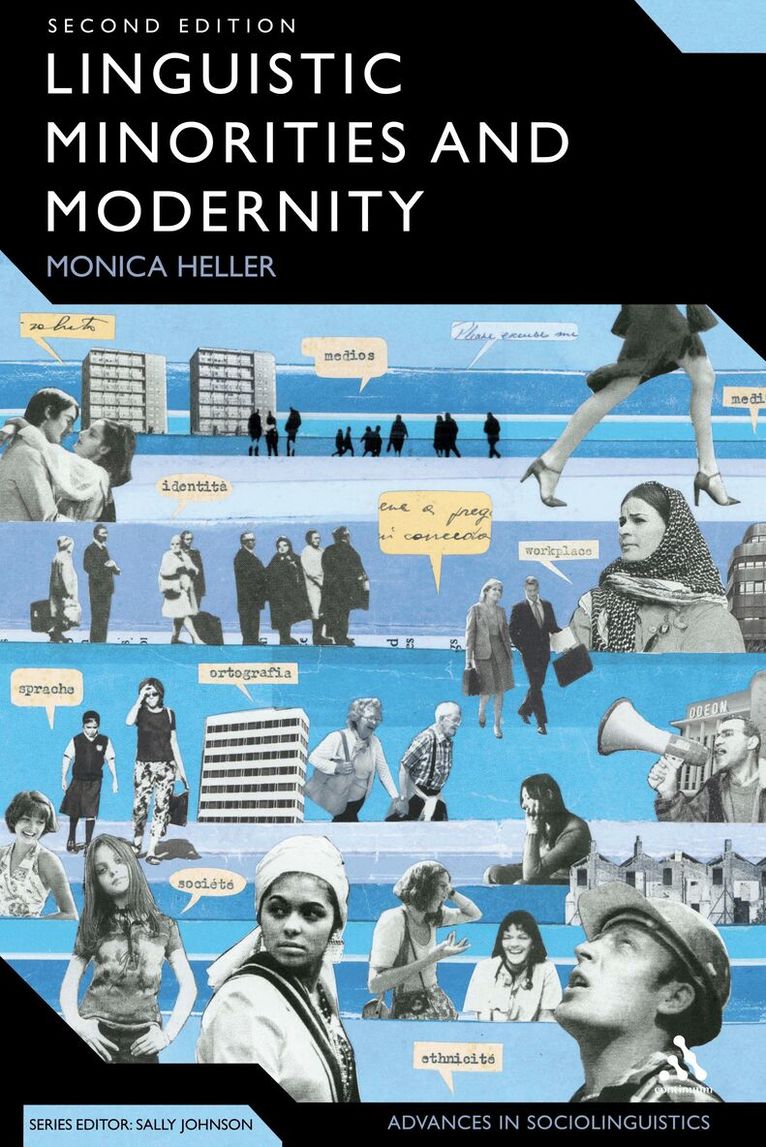
The subject of this book is linguistic minorities and social change, seen through the lens of a linguistic minority school, meeting the challenges of globalization. This is a core topic for sociolinguists, linguistic anthropologists, applied linguists and educators who are concerned about what multilingualism means in today's world. Through a careful examination of the language practices in the daily life of a minority language school, Monica Heller explores issues such as nationalism, language policy, bilingualism, identity, power, ideology, race, class, gender and sexuality, exploring their role in the increasing commodification of identity and language. "Linguistic Minorities and Modernity" has been revised throughout, and includes a new preface by the author.
Häftad, Engelska, 2006
1 121 kr
Skickas inom 10-15 vardagar
The subject of this book is linguistic minorities, and how language is used by speakers of languages which are not the main language of communication. This is a core topic for sociolinguists, who examine how language is actually used within a given context. Globalization, migration, and the erosion of nationhood is creating far more linguistic minorities as society becomes increasingly pluralistic. One of the major sites of contact between languages is the school, and this book focuses on linguistic interaction within this educational context. Through a careful examination of the language practices in the daily life of a school, Monica Heller explores issues such as changing language policy, bilingualism, identity, power, ideology and gender from the point of view of the minority speaker. In so doing she provdies a fresh new insight into this important area of sociolinguistics. Linguistic Minorities and Modernity is written in an accessible and lively narrative style, and uses real-life examples and case studies to illustrate the discussions. The text has been revised throughout, and includes a new introduction by the author.The book is suitable for undergraduate and postgraduate students of sociolinguistics and linguistic anthropology.
Inbunden, Engelska, 2007
2 514 kr
Skickas inom 10-15 vardagar
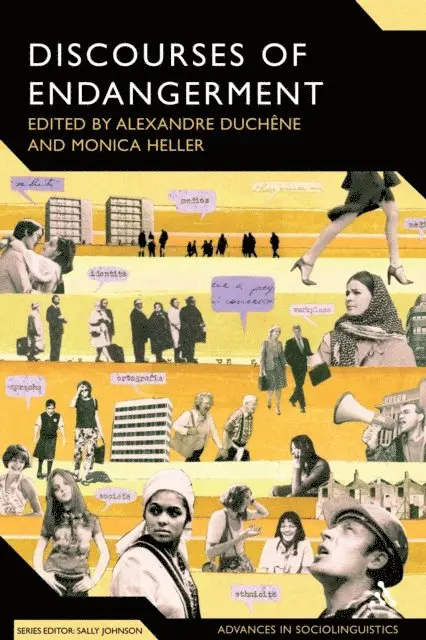
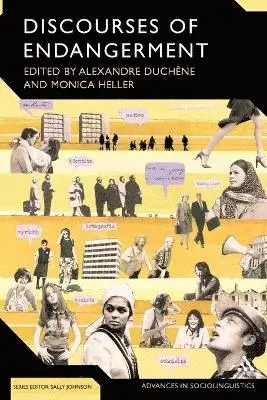
Current academic discussions and public debates about language frequently focus on the importance of defending languages against various kinds of dangers. Many of these current debates attach great importance to linguistic diversity. The debates focus on defending institutionalized languages against multilingualism, or conversely defending minority languages against the incursion of larger ones, especially the spread of English. In both cases, languages are constructed as autonomous wholes, held to need defending against attack. This book challenges such a view of language, to argue that the discussions in question are not in fact about language itself. The internationally renowned contributors claim that we are witnessing ideological struggles which are taking place on the terrain of language. Discourses of Endangerment addresses such questions as: * What does language represent in discussions of multilingualism? * Why is it constituted as an organic whole?* In whose interest does it lie to construct language in this way?* Who has an interest in taking various positions for or against official languages?* In what way is the linguistic order tied to the social order?The book addresses these issues through a set of case studies which locate the terms of the discussion in broad discourses of language, identity and power.Covering a wide-range of languages including Catalan, Swedish, Corsican, Ukrainian and French, from different sociolinguistic perspectives, this book is essential reading for students and academics interested in language endangerment and sociolinguistics.
Häftad, Engelska, 2024
551 kr
Skickas inom 10-15 vardagar
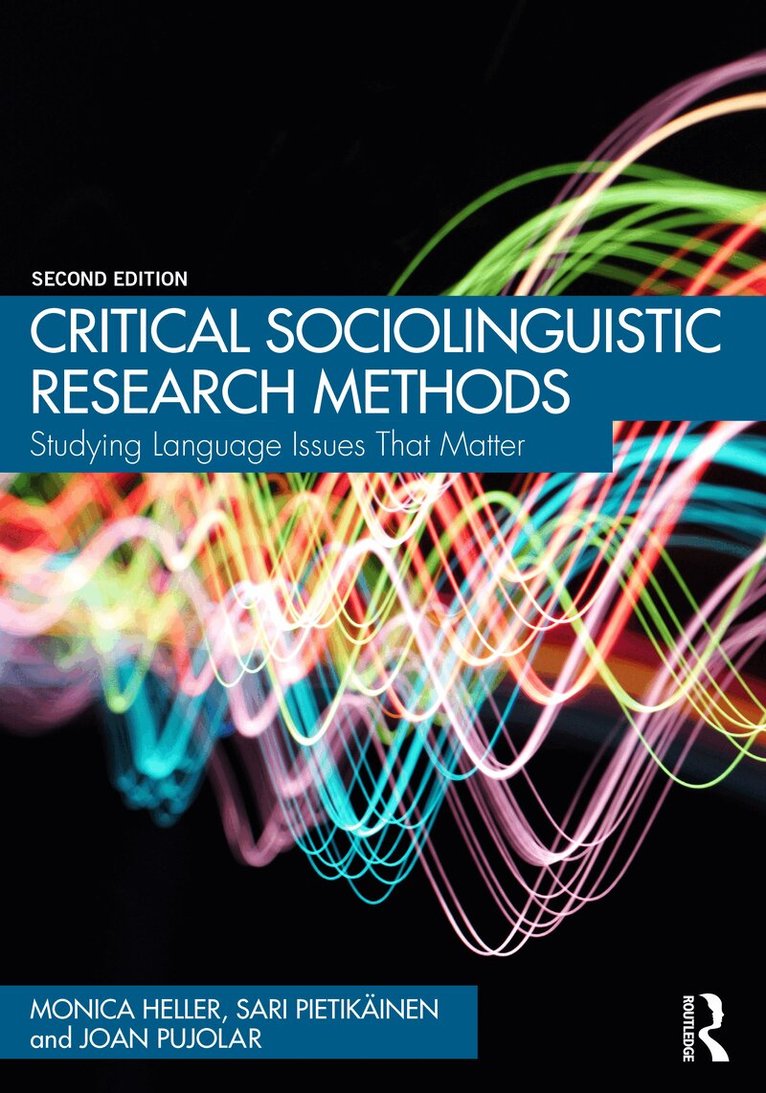
Critical Sociolinguistic Research Methods is a guide to conducting concrete ethnographic and discourse analytic research projects, written by top scholars for students and researchers in social science fields. Adopting a critical perspective focusing on the role of language in the construction of social difference and social inequality, the authors walk the reader through five key moments in the life of a research project: composing research questions, designing the project, doing fieldwork, performing data analysis and writing academic texts or otherwise engaging in conversation with different types of social actors about the project. These moments are illustrated by colour-coded examples from the authors’ experiences that help researchers and students follow the sequential stages of a project.Now in its second edition, this popular and original text has been revised and updated to reflect the latest developments in this field, including expanded sections on the centrality of the ethnographic gaze for the understanding of social processes, and on experiences of diversification in the communication of research results. Through the adoption of multimodal genres, authors share recent experiences of research presentations addressed to non-academic audiences, such as installations and photography, and interactive maps.Clear and highly applicable, with a detailed workbook full of practical tips and examples, this book is a great resource for graduate-level qualitative methods courses in linguistics and anthropology, as well as methods courses in the humanities and social sciences that focus on the role of language in research. It is a timely text for investigating language issues that matter and have consequences for people’s lives.
Inbunden, Engelska, 2024
2 201 kr
Skickas inom 10-15 vardagar
Critical Sociolinguistic Research Methods is a guide to conducting concrete ethnographic and discourse analytic research projects, written by top scholars for students and researchers in social science fields. Adopting a critical perspective focusing on the role of language in the construction of social difference and social inequality, the authors walk the reader through five key moments in the life of a research project: composing research questions, designing the project, doing fieldwork, performing data analysis and writing academic texts or otherwise engaging in conversation with different types of social actors about the project. These moments are illustrated by colour-coded examples from the authors’ experiences that help researchers and students follow the sequential stages of a project.Now in its second edition, this popular and original text has been revised and updated to reflect the latest developments in this field, including expanded sections on the centrality of the ethnographic gaze for the understanding of social processes, and on experiences of diversification in the communication of research results. Through the adoption of multimodal genres, authors share recent experiences of research presentations addressed to non-academic audiences, such as installations and photography, and interactive maps.Clear and highly applicable, with a detailed workbook full of practical tips and examples, this book is a great resource for graduate-level qualitative methods courses in linguistics and anthropology, as well as methods courses in the humanities and social sciences that focus on the role of language in research. It is a timely text for investigating language issues that matter and have consequences for people’s lives.
Häftad, Engelska, 2017
474 kr
Skickas
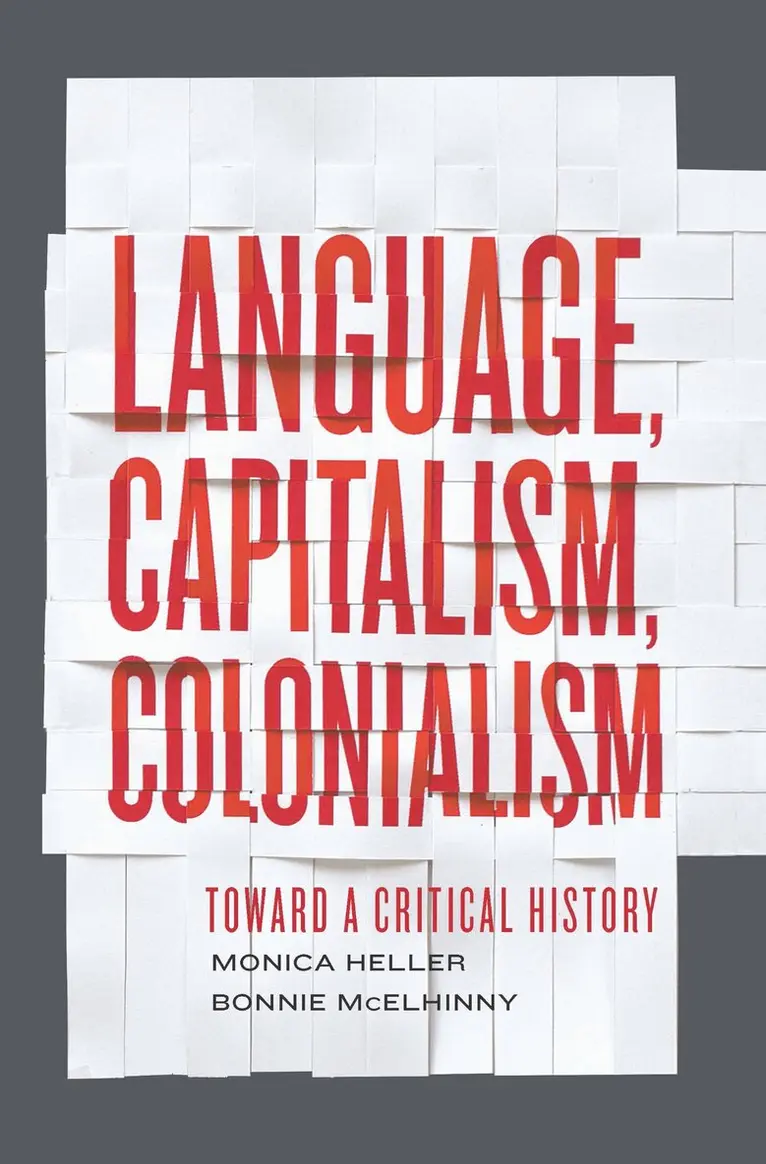
Heller and McElhinny reinterpret sociolinguistics for the twenty-first century with an original approach to the study of language that is situated in the political and economic contexts of colonialism and capitalism. In the process, they map out a critical history of how language serves, and has served, as a terrain for producing and reproducing social inequalities. The authors ask how, and by whom, ideas about language get unevenly shaped, offering new perspectives that will excite readers and incite further research for years to come.
Inbunden, Engelska, 2001
993 kr
Skickas inom 10-15 vardagar
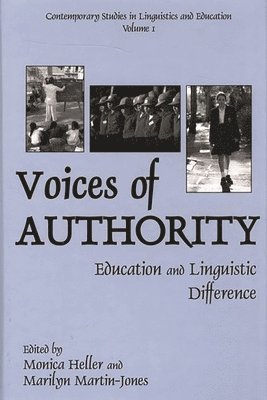
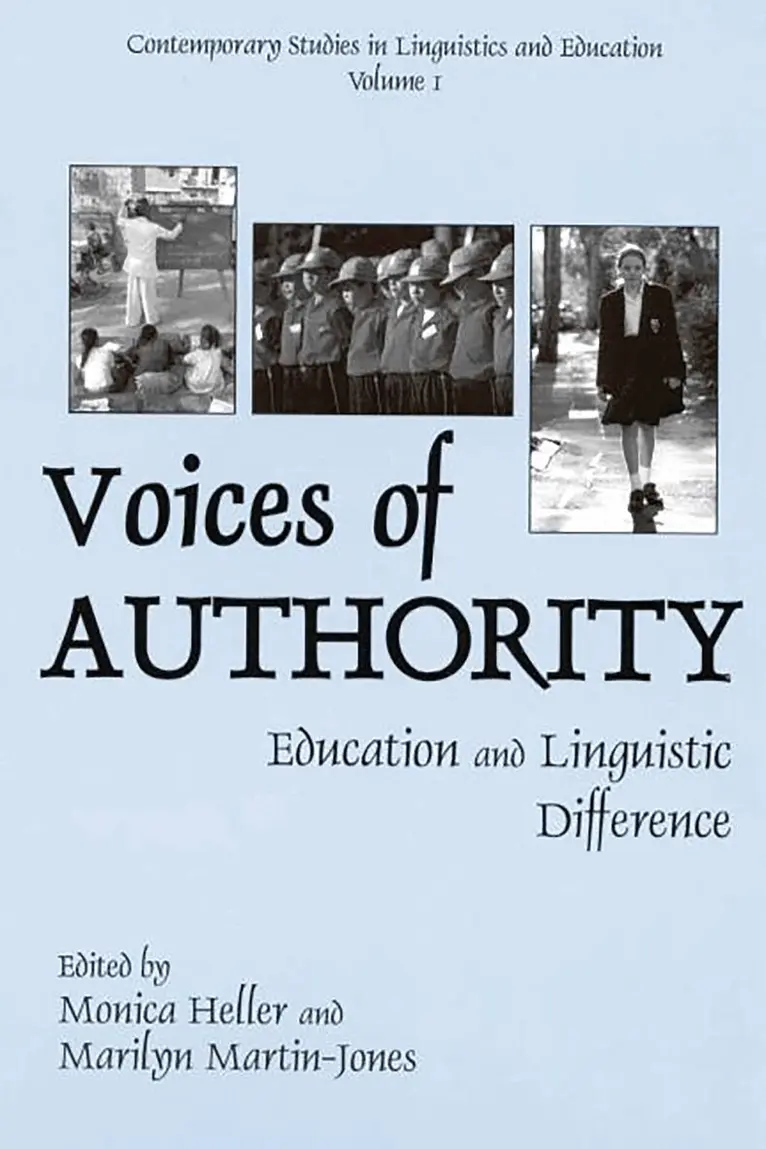
This collection of case studies from around the world examines how struggles for equality unfold in policies, programs, and practices in educational settings in multilingual contexts. Using sociolinguistic, interactional and discourse analysis, Heller and Martin-Jones examine the complex ways in which dominant ideologies of education, pedagogy, language and identity intersect in a wide variety of educational settings. They focus in particular on how those ideologies are reproduced or challenged, and on the consequences of such processes for changing or maintaining social relations of difference and inequality. Written for policy-makers, educators, and anyone else interested in education and multilingualism, the book places questions of power at the center of thinking about language and education.This collection of case studies from around the world examines how struggles for equality unfold in policies, programs, and practices in educational settings in multilingual contexts. Using sociolinguistic, interactional and discourse analysis, Heller and Martin-Jones examine the complex ways in which dominant ideologies of education, pedagogy, language, and identity intersect in a wide variety of educational settings. They focus in particular on how those ideologies are reproduced or challenged, and on the consequences of such processes for changing or maintaining social relations of difference and inequality. Written for policy-makers, educators, and anyone else interested in education and multilingualism, the book places questions of power at the center of thinking about language and education. It invites us to link questions about minority language maintenance, individual multilingualism, immigrant language education, and the use of former colonial languages in post-colonial settings to the politics and economics of our globalizing age, and to look locally for the spaces for change and action that always present themselves.
Häftad, Engelska, 2001
585 kr
Skickas inom 10-15 vardagar
This collection of case studies from around the world examines how struggles for equality unfold in policies, programs, and practices in educational settings in multilingual contexts. Using sociolinguistic, interactional and discourse analysis, Heller and Martin-Jones examine the complex ways in which dominant ideologies of education, pedagogy, language and identity intersect in a wide variety of educational settings. They focus in particular on how those ideologies are reproduced or challenged, and on the consequences of such processes for changing or maintaining social relations of difference and inequality. Written for policy-makers, educators, and anyone else interested in education and multilingualism, the book places questions of power at the center of thinking about language and education.This collection of case studies from around the world examines how struggles for equality unfold in policies, programs, and practices in educational settings in multilingual contexts. Using sociolinguistic, interactional and discourse analysis, Heller and Martin-Jones examine the complex ways in which dominant ideologies of education, pedagogy, language, and identity intersect in a wide variety of educational settings. They focus in particular on how those ideologies are reproduced or challenged, and on the consequences of such processes for changing or maintaining social relations of difference and inequality. Written for policy-makers, educators, and anyone else interested in education and multilingualism, the book places questions of power at the center of thinking about language and education. It invites us to link questions about minority language maintenance, individual multilingualism, immigrant language education, and the use of former colonial languages in post-colonial settings to the politics and economics of our globalizing age, and to look locally for the spaces for change and action that always present themselves.
Häftad, Engelska, 2008
912 kr
Skickas inom 10-15 vardagar
Current academic discussions and public debates about language frequently focus on the importance of defending languages against various kinds of dangers. Many of these current debates attach great importance to linguistic diversity. The debates focus on defending institutionalized languages against multilingualism, or conversely defending minority languages against the incursion of larger ones, especially the spread of English. In both cases, languages are constructed as autonomous wholes, held to need defending against attack. This book challenges such a view of language, to argue that the discussions in question are not in fact about language itself. The internationally renowned contributors claim that we are witnessing ideological struggles which are taking place on the terrain of language. Discourses of Endangerment addresses such questions as: * What does language represent in discussions of multilingualism? * Why is it constituted as an organic whole?* In whose interest does it lie to construct language in this way?* Who has an interest in taking various positions for or against official languages?* In what way is the linguistic order tied to the social order?The book addresses these issues through a set of case studies which locate the terms of the discussion in broad discourses of language, identity and power. Covering a wide-range of languages including Catalan, Swedish, Corsican, Ukrainian and French, from different sociolinguistic perspectives, this book is essential reading for students and academics interested in language endangerment and sociolinguistics.
Inbunden, Engelska, 1988
1 343 kr
Skickas
No detailed description available for "Codeswitching".
Inbunden, Engelska, 1994
1 383 kr
Skickas
No detailed description available for "Crosswords".
Inbunden, Engelska, 2017
1 482 kr
Tillfälligt slut
Critical Sociolinguistic Research Methods is a guide to conducting concrete ethnographic and discourse analytic research projects, written by top scholars for students and researchers in social science fields. Adopting a critical perspective focusing on the role of language in the construction of social difference and social inequality, the authors walk the reader through five key moments in the life of a research project: composing research questions, designing the project, doing fieldwork, performing data analysis and writing academic texts or otherwise engaging in conversation with different types of social actors about the project. These moments are illustrated by colour-coded examples from the authors’ experiences that help researchers and students follow the sequential stages of a project. Clear and highly applicable, with a detailed workbook full of practical tips and examples, this book is a great resource for graduate-level qualitative methods courses in linguistics and anthropology, as well as methods courses in the humanities and social sciences that focus on the role of language in research. It is a timely text for investigating language issues that matter and have consequences for people’s lives.
Häftad, Engelska, 2017
442 kr
Tillfälligt slut
Critical Sociolinguistic Research Methods is a guide to conducting concrete ethnographic and discourse analytic research projects, written by top scholars for students and researchers in social science fields. Adopting a critical perspective focusing on the role of language in the construction of social difference and social inequality, the authors walk the reader through five key moments in the life of a research project: composing research questions, designing the project, doing fieldwork, performing data analysis and writing academic texts or otherwise engaging in conversation with different types of social actors about the project. These moments are illustrated by colour-coded examples from the authors’ experiences that help researchers and students follow the sequential stages of a project. Clear and highly applicable, with a detailed workbook full of practical tips and examples, this book is a great resource for graduate-level qualitative methods courses in linguistics and anthropology, as well as methods courses in the humanities and social sciences that focus on the role of language in research. It is a timely text for investigating language issues that matter and have consequences for people’s lives.