Monika Amsler – författare
Visar alla böcker från författaren Monika Amsler. Handla med fri frakt och snabb leverans.
5 produkter
5 produkter
1 166 kr
Skickas inom 7-10 vardagar
In this book, Monika Amsler explores the historical contexts in which the Babylonian Talmud was formed in an effort to determine whether it was the result of oral transmission. Scholars have posited that the rulings and stories we find in the Talmud were passed on from one generation to the next, each generation adding their opinions and interpretations of a given subject. Yet, such an oral formation process is unheard of in late antiquity. Moreover, the model exoticizes the Talmud and disregards the intellectual world of Sassanid Persia. Rather than taking the Talmud's discursive structure as a sign for orality, Amsler interrogates the intellectual and material prerequisites of composers of such complex works, and their education and methods of large-scale data management. She also traces and highlights the marks that their working methods inevitably left in the text. Detailing how intellectual innovation was generated, Amsler's book also sheds new light on the content of the Talmud. This title is also available as Open Access on Cambridge Core.
234 kr
Skickas inom 7-10 vardagar
This Element describes the most common educational processes of religious communities in the late antique period. Through a combination of historical analysis and examples, it provides an overview of the methods used to teach the alphabet and basic rhetoric, which were central to Jewish and Christian - including Manichaean - knowledge production. It also explains how this knowledge was disseminated through liturgy. Rather than viewing the material remains of these communities in isolation, this Element examines them together, overcoming the usual scholarly focus on differences between religious communities and between religious and secular education. Instead, it highlights the dynamics created by mutual exchange and ambition. Since evidence of education is generally scarce, the synopsis demonstrates that, for example, while one religious community may have a surviving textbook with exercises, another community may only have the final products of those exercises.
753 kr
Skickas inom 7-10 vardagar
This Element describes the most common educational processes of religious communities in the late antique period. Through a combination of historical analysis and examples, it provides an overview of the methods used to teach the alphabet and basic rhetoric, which were central to Jewish and Christian - including Manichaean - knowledge production. It also explains how this knowledge was disseminated through liturgy. Rather than viewing the material remains of these communities in isolation, this Element examines them together, overcoming the usual scholarly focus on differences between religious communities and between religious and secular education. Instead, it highlights the dynamics created by mutual exchange and ambition. Since evidence of education is generally scarce, the synopsis demonstrates that, for example, while one religious community may have a surviving textbook with exercises, another community may only have the final products of those exercises.
1 882 kr
Skickas inom 5-8 vardagar
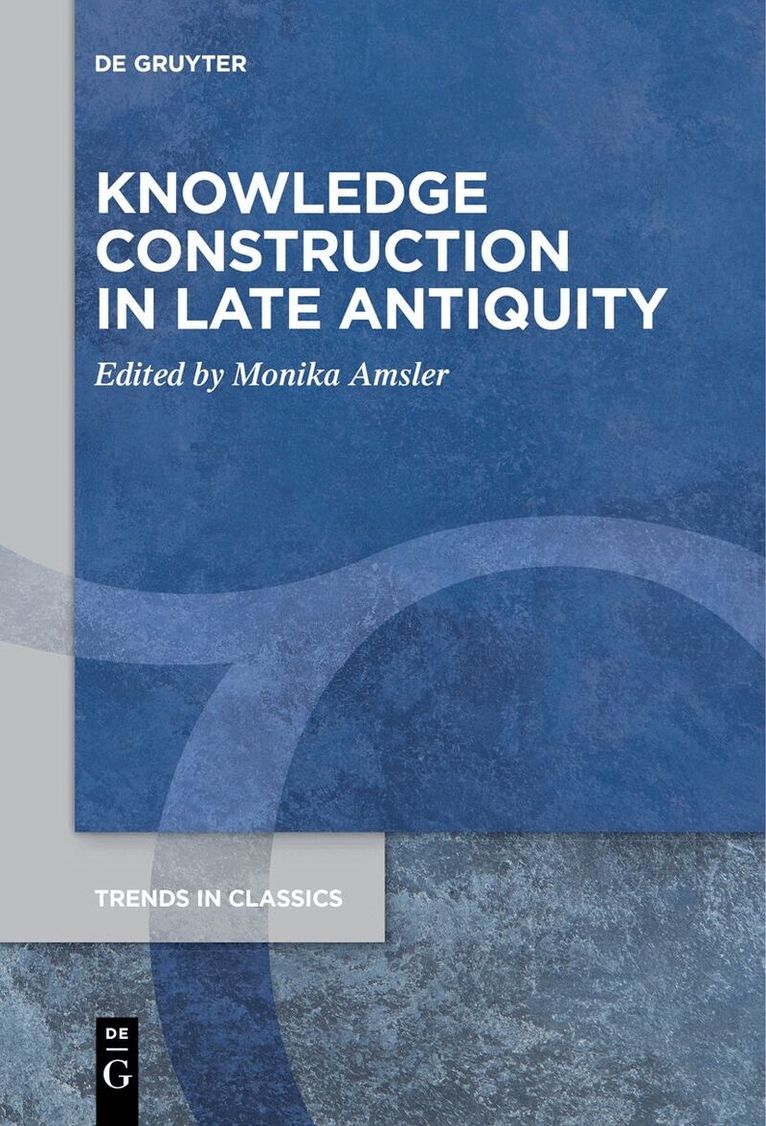
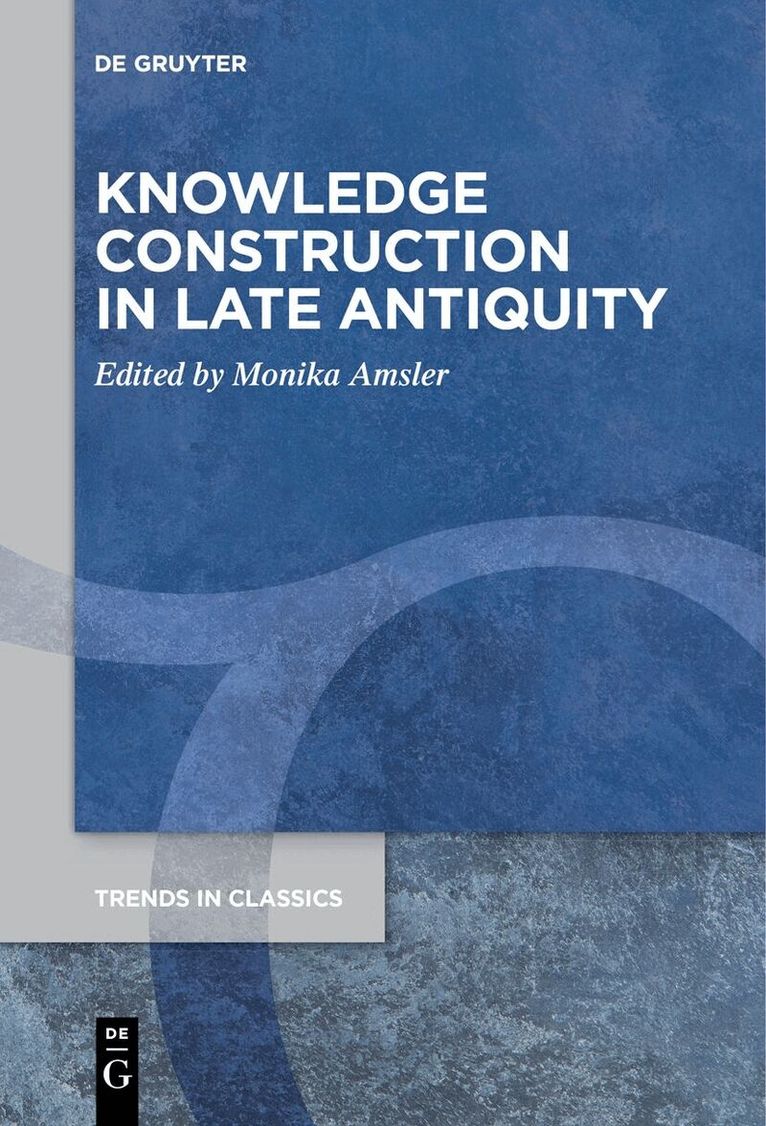
Social Studies of the sciences have long analyzed and exposed the constructed nature of knowledge. Pioneering studies of knowledge production in laboratories (e.g., Latour/Woolgar 1979; Knorr-Cetina 1981) have identified factors that affect processes that lead to the generation of scientific data and their subsequent interpretation, such as money, training and curriculum, location and infrastructure, biography-based knowledge and talent, and chance. More recent theories of knowledge construction have further identified different forms of knowledge, such as tacit, intuitive, explicit, personal, and social knowledge. These theoretical frameworks and critical terms can help reveal and clarify the processes that led to ancient data gathering, information and knowledge production. The contributors use late-antique hermeneutical associations as means to explore intuitive or even tacit knowledge; they appreciate mistakes as a platform to study the value of personal knowledge and its premises; they think about rows and tables, letter exchanges, and schools as platforms of distributed cognition; they consider walls as venues for social knowledge production; and rethink the value of social knowledge in scholarly genealogies—then and now.
292 kr
Skickas inom 3-6 vardagar
Social Studies of the sciences have long analyzed and exposed the constructed nature of knowledge. Pioneering studies of knowledge production in laboratories (e.g., Latour/Woolgar 1979; Knorr-Cetina 1981) have identified factors that affect processes that lead to the generation of scientific data and their subsequent interpretation, such as money, training and curriculum, location and infrastructure, biography-based knowledge and talent, and chance. More recent theories of knowledge construction have further identified different forms of knowledge, such as tacit, intuitive, explicit, personal, and social knowledge. These theoretical frameworks and critical terms can help reveal and clarify the processes that led to ancient data gathering, information and knowledge production. The contributors use late-antique hermeneutical associations as means to explore intuitive or even tacit knowledge; they appreciate mistakes as a platform to study the value of personal knowledge and its premises; they think about rows and tables, letter exchanges, and schools as platforms of distributed cognition; they consider walls as venues for social knowledge production; and rethink the value of social knowledge in scholarly genealogies—then and now.