Monika Murzyn-Kupisz - Böcker
Visar alla böcker från författaren Monika Murzyn-Kupisz. Handla med fri frakt och snabb leverans.
3 produkter
3 produkter
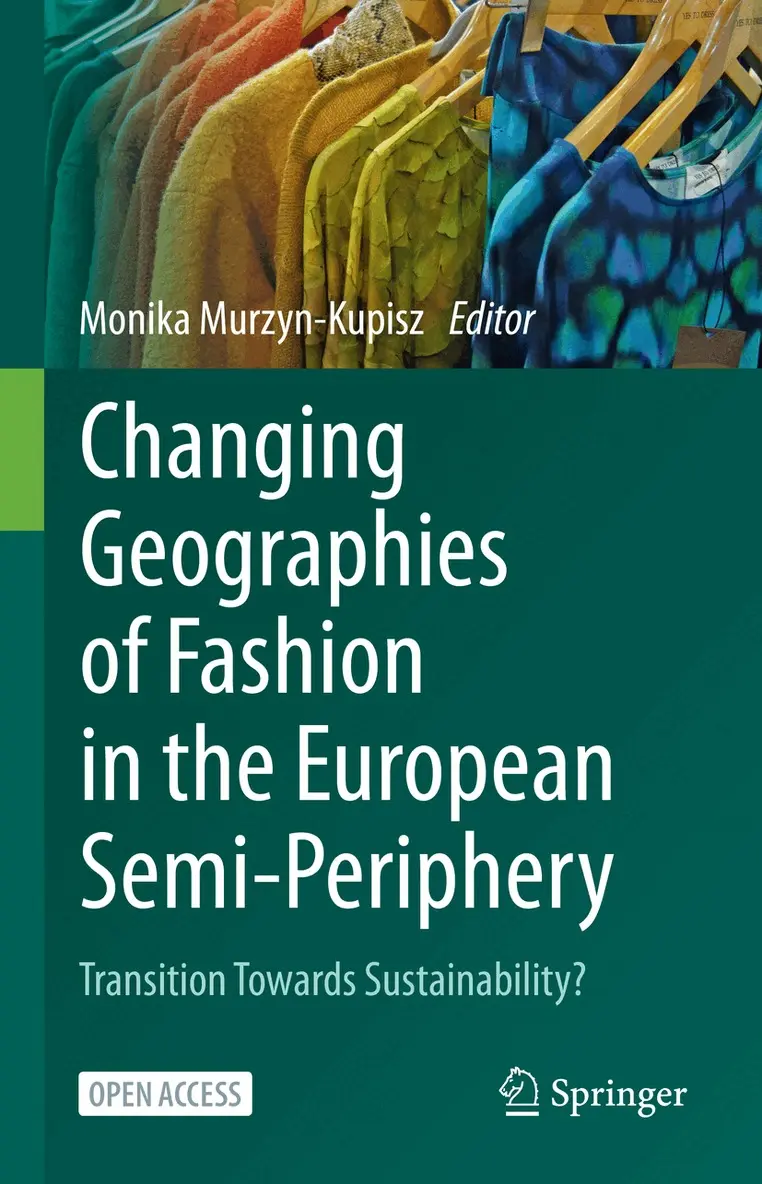
Changing Geographies of Fashion in the European Semi-Periphery
Transition Towards Sustainability?
Inbunden, Engelska, 2026
1 690 kr
Skickas inom 10-15 vardagar
Sustainability in fashion production and consumption is considered a major contemporary challenge and at the same time a visible trend in the fashion market. Despite a growing body of academic literature on the topic, detailed analyses have so far mainly pertained to only a selected dimension of the fashion market (design, production, retail or consumption). They have more often explored major fashion centres, brands and firms rather than independent designers, SMEs or independent fashion events and other alternative consumption means and spaces or less obvious intermediaries in the fashion market. Although the issue of sustainable fashion has been noticed in the academic discourse in Poland, it is yet to be examined bringing together the production and consumption side of the issue. Nor has the spatial dimension of fashion market transformation in Poland been analysed in detail.Taking a geographic perspective, this book fills this research gap by presenting a holistic approach to the fashion market – including design, production and consumption of fashion – considering the social, cultural and spatial dimensions of the matter and diverse stakeholders who participate in it. Providing a comprehensive analysis of long-term changes in the Polish fashion market, the book addresses several interesting issues. These include the extent to which the sustainable reorientation of the fashion market accompanies the broader processes of adaptation, restructuring and upgrading of the textile and clothing sector; how it fits into the broader logic of culturalisation of clothing production and commercialisation of design as an applied artistic genre and a part of the creative sector; and to what extent it is connected with new, alternative consumption patterns with respect to channels, places and spaces of clothing purchases and (re)use. The main premise of the book is that although it is still a relatively small part of the fashion market in Poland, sustainable fashion design, production and consumption is an increasingly important phenomenon, with significant social, economic and spatial implications. The book therefore argues that sustainable design and production constitute a promising opportunity for adaptation, restructuring and upgrading of the textile and clothing sector in the European semi-periphery. Using the metaphor of the fashion ecosystem, it also illustrates how sustainable fashion practices contribute to the creation of new links and networks within the fashion industry, alongside a more fragmented domestic production structure.
1 164 kr
Skickas inom 10-15 vardagar
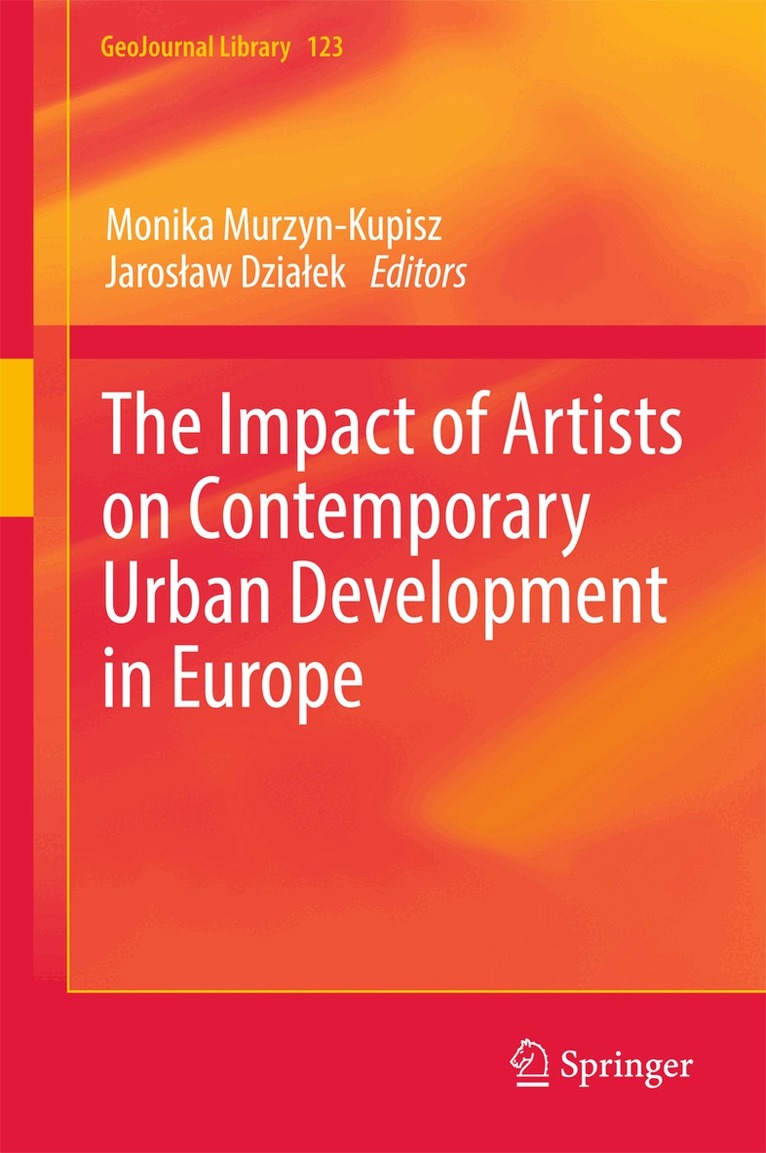
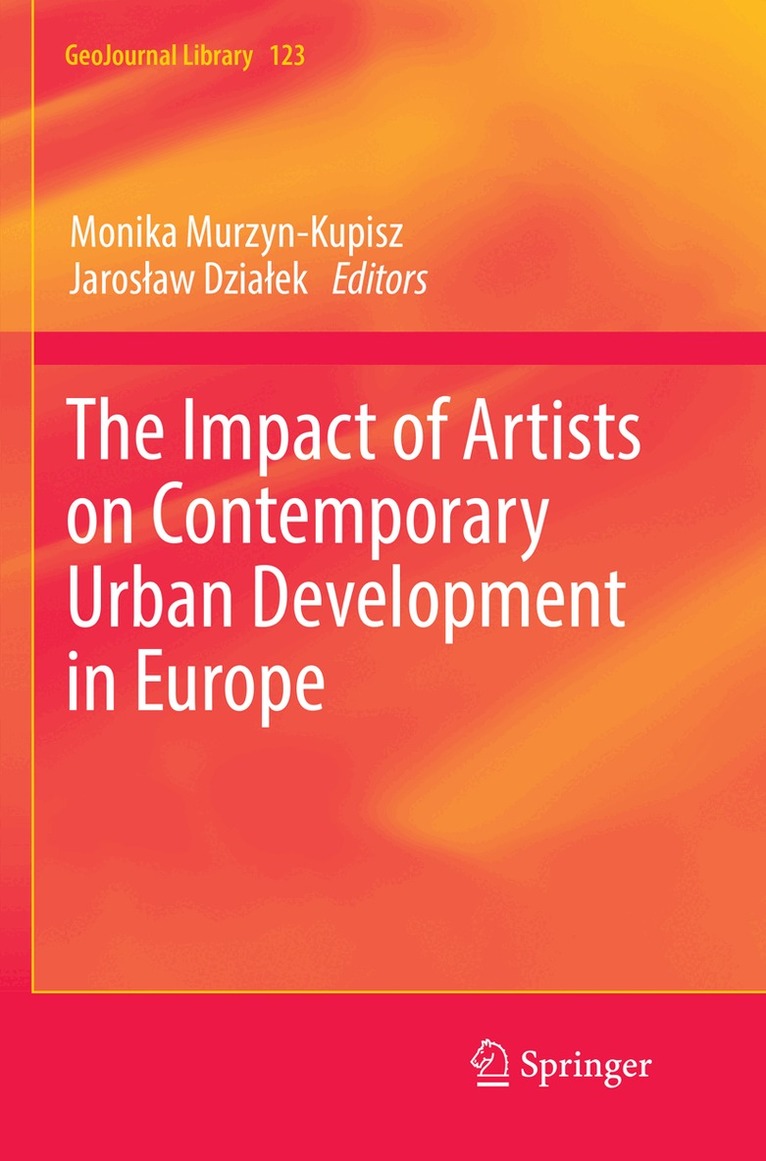
This book provides an up-to-date, critical review of theoretical concepts connecting artists and urban development. It focuses on the multidimensionality of potential and actually observed interactions between artists and cities and their impacts on urban space, its form, functions and perceptions. Departing from the viewpoint that a more nuanced geography of artists is still needed to fully conceptualise the diversity of roles artistic creatives play in urban transformations, the book presents contributions with a common denominator of distinguishing artists as a unique professional and social group. The essays focus on the complexity of the artists’ spatial preferences and analyse a myriad of expressions of artists’ presence in urban centres in different geographic, political, economic, social, and spatial contexts drawing on experiences from 16 cities across Europe. The book presents several case studies ranging from Spain to Russia and from Scandinavia to Slovenia, andoffers new pathways into understanding the implications of artists’ residence and activities in contemporary cities.Apart from presenting less obvious expressions of artists’ involvement in urban transformations such as their participation in urban planning or grass root urban movements, the volume explores the ambivalence of artists’ interactions with cities. Particular chapters test several divergent narratives of artistic creatives as inspirers and instigators of urban changes, pioneers of gentrification, contesters and resisters of neoliberal urban policies or mere indicators of transformations inspired by other actors, instrumentalized by public and private stakeholders.
1 164 kr
Skickas inom 10-15 vardagar
This book provides an up-to-date, critical review of theoretical concepts connecting artists and urban development. It focuses on the multidimensionality of potential and actually observed interactions between artists and cities and their impacts on urban space, its form, functions and perceptions. Departing from the viewpoint that a more nuanced geography of artists is still needed to fully conceptualise the diversity of roles artistic creatives play in urban transformations, the book presents contributions with a common denominator of distinguishing artists as a unique professional and social group. The essays focus on the complexity of the artists’ spatial preferences and analyse a myriad of expressions of artists’ presence in urban centres in different geographic, political, economic, social, and spatial contexts drawing on experiences from 16 cities across Europe. The book presents several case studies ranging from Spain to Russia and from Scandinavia to Slovenia, andoffers new pathways into understanding the implications of artists’ residence and activities in contemporary cities.Apart from presenting less obvious expressions of artists’ involvement in urban transformations such as their participation in urban planning or grass root urban movements, the volume explores the ambivalence of artists’ interactions with cities. Particular chapters test several divergent narratives of artistic creatives as inspirers and instigators of urban changes, pioneers of gentrification, contesters and resisters of neoliberal urban policies or mere indicators of transformations inspired by other actors, instrumentalized by public and private stakeholders.