Jarosław Działek - Böcker
Visar alla böcker från författaren Jarosław Działek. Handla med fri frakt och snabb leverans.
3 produkter
3 produkter
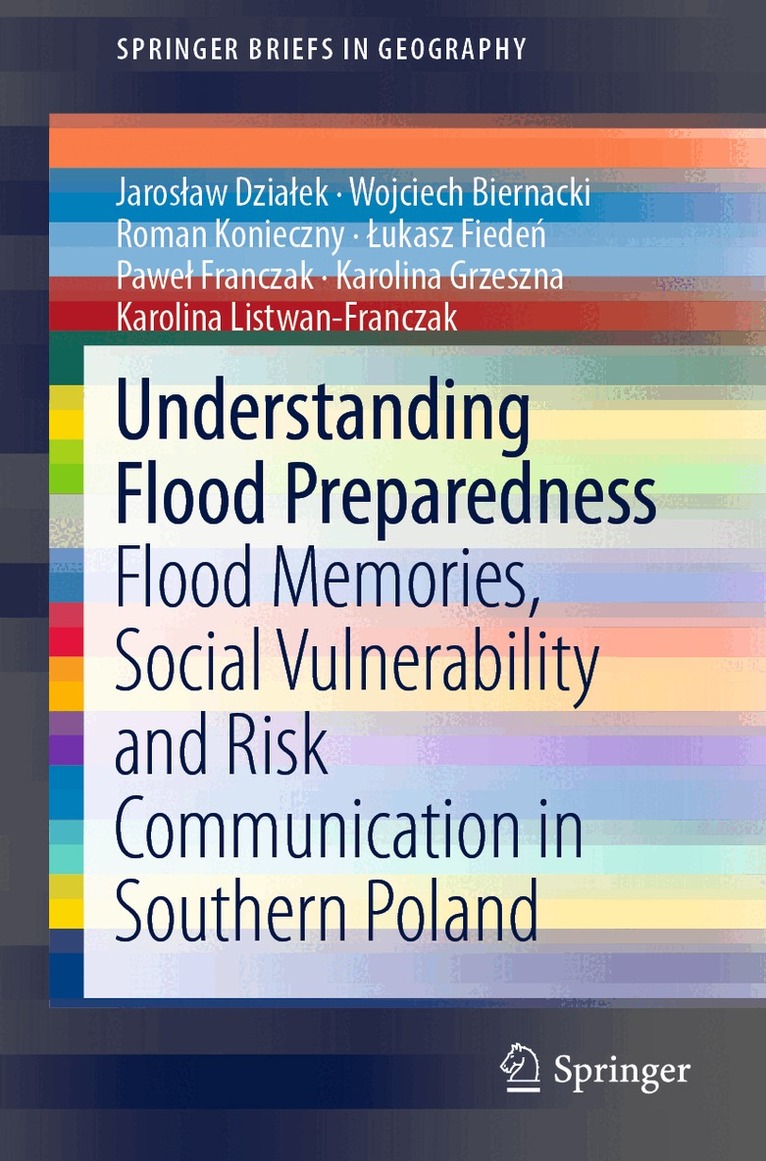
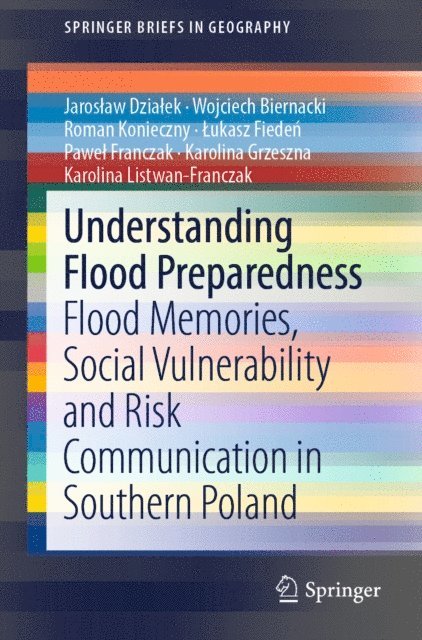
Understanding Flood Preparedness
Flood Memories, Social Vulnerability and Risk Communication in Southern Poland
Häftad, Engelska, 2019
536 kr
Skickas inom 10-15 vardagar
The book looks at the factors influencing the level of preparedness of communities exposed to flooding. It is based on original research carried out in twelve areas in southern Poland that suffered serious flood damage in the past thirty years. The underlying research was intended, on the one hand, to verify modern concepts explaining the behaviour of people who were exposed to natural hazards and, on the other, to explore the influence of the local natural, social, historical and economic contexts that could modify that behaviour. The book has three main threads: the social memory of floods and their image as it evolves in time; the influence of social and economic conditions (social vulnerability) on the preparedness to take on flood mitigation measures; and the role of risk communication in strengthening flood resilience.The main body of the work is based on 1) surveys carried out among the flood-affected population and members of local crisis services, 2) interviews with the flood-affected population and with members of administration and services (Police, Fire Dept.) with a history of rescue missions, and 3) an analysis of social media content and of local administration and government agency websites and land-use planning documents. The primary data collected by the authors was supplemented by statistics on the impact of floods occurring in the study areas. The data is presented in tables, graphs and maps for easier comprehension.The book is aimed at researchers and students, as well as at practitioners interested in risk perception, flood memories, social vulnerability & resilience studies, social capacity building, risk communication & education.
1 170 kr
Skickas inom 10-15 vardagar
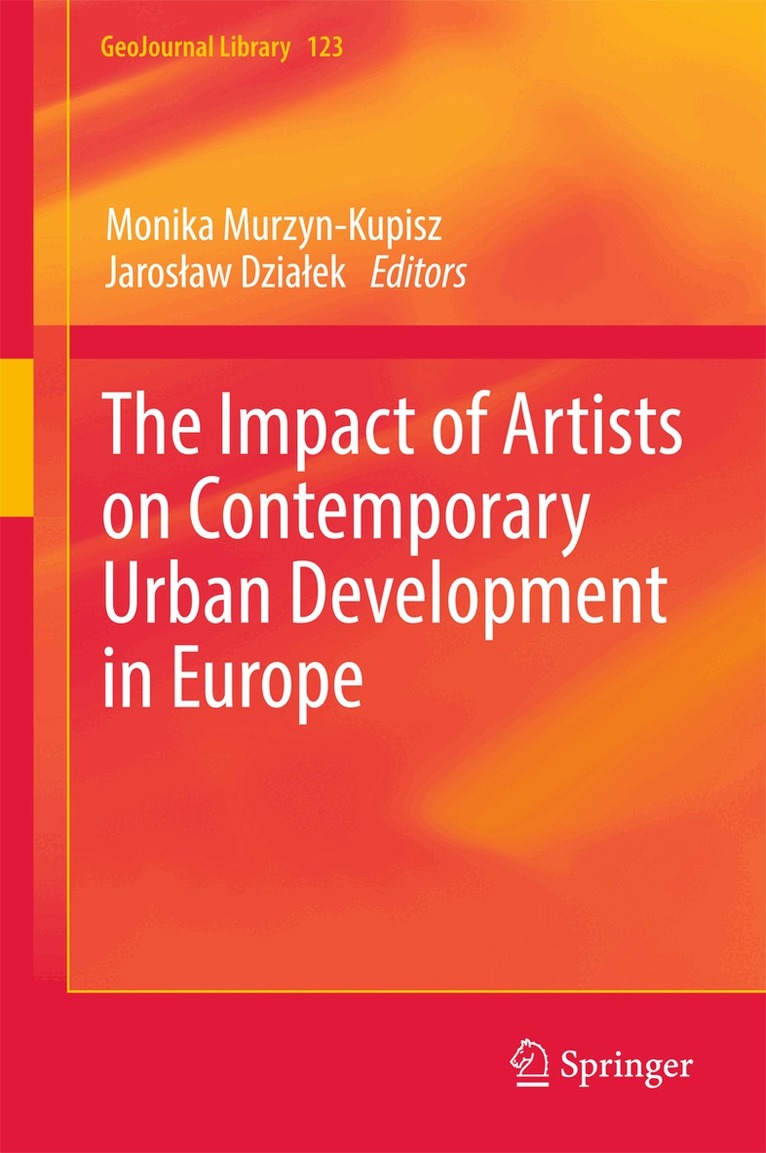
This book provides an up-to-date, critical review of theoretical concepts connecting artists and urban development. It focuses on the multidimensionality of potential and actually observed interactions between artists and cities and their impacts on urban space, its form, functions and perceptions. Departing from the viewpoint that a more nuanced geography of artists is still needed to fully conceptualise the diversity of roles artistic creatives play in urban transformations, the book presents contributions with a common denominator of distinguishing artists as a unique professional and social group. The essays focus on the complexity of the artists’ spatial preferences and analyse a myriad of expressions of artists’ presence in urban centres in different geographic, political, economic, social, and spatial contexts drawing on experiences from 16 cities across Europe. The book presents several case studies ranging from Spain to Russia and from Scandinavia to Slovenia, andoffers new pathways into understanding the implications of artists’ residence and activities in contemporary cities.Apart from presenting less obvious expressions of artists’ involvement in urban transformations such as their participation in urban planning or grass root urban movements, the volume explores the ambivalence of artists’ interactions with cities. Particular chapters test several divergent narratives of artistic creatives as inspirers and instigators of urban changes, pioneers of gentrification, contesters and resisters of neoliberal urban policies or mere indicators of transformations inspired by other actors, instrumentalized by public and private stakeholders.
1 170 kr
Skickas inom 10-15 vardagar
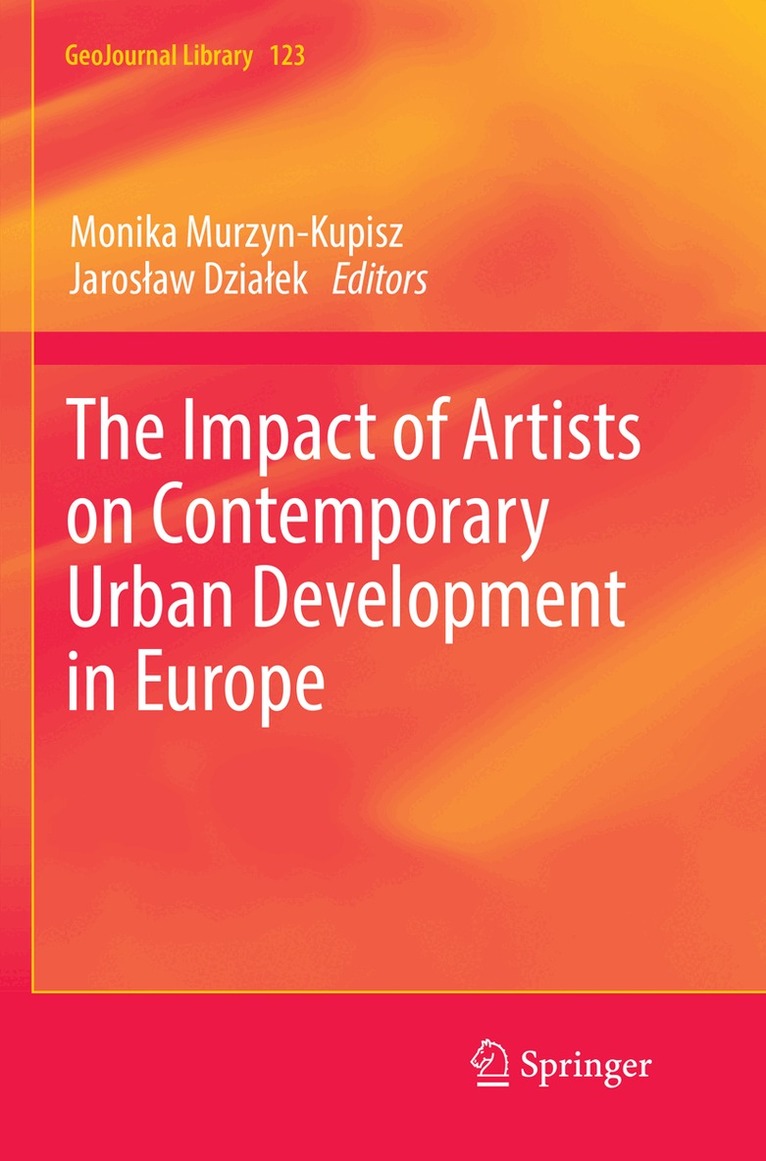
This book provides an up-to-date, critical review of theoretical concepts connecting artists and urban development. It focuses on the multidimensionality of potential and actually observed interactions between artists and cities and their impacts on urban space, its form, functions and perceptions. Departing from the viewpoint that a more nuanced geography of artists is still needed to fully conceptualise the diversity of roles artistic creatives play in urban transformations, the book presents contributions with a common denominator of distinguishing artists as a unique professional and social group. The essays focus on the complexity of the artists’ spatial preferences and analyse a myriad of expressions of artists’ presence in urban centres in different geographic, political, economic, social, and spatial contexts drawing on experiences from 16 cities across Europe. The book presents several case studies ranging from Spain to Russia and from Scandinavia to Slovenia, andoffers new pathways into understanding the implications of artists’ residence and activities in contemporary cities.Apart from presenting less obvious expressions of artists’ involvement in urban transformations such as their participation in urban planning or grass root urban movements, the volume explores the ambivalence of artists’ interactions with cities. Particular chapters test several divergent narratives of artistic creatives as inspirers and instigators of urban changes, pioneers of gentrification, contesters and resisters of neoliberal urban policies or mere indicators of transformations inspired by other actors, instrumentalized by public and private stakeholders.