Morris Dickstein - Böcker
Visar alla böcker från författaren Morris Dickstein. Handla med fri frakt och snabb leverans.
8 produkter
8 produkter
578 kr
Skickas inom 5-8 vardagar
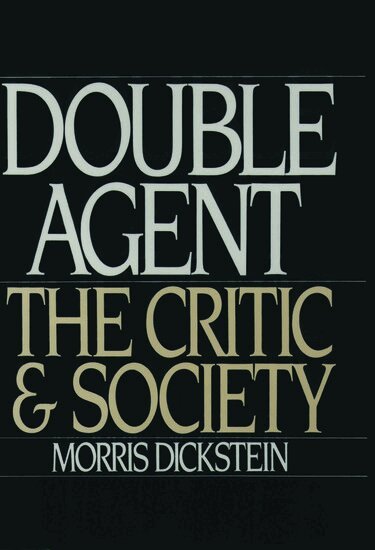
Double Agent is a watershed in the recent revival of interest in the role of the public critic and intellectual who writes about culture, politics, and the arts for an intelligent general audience. Offering acute portraits of critics both famous and neglected, Dickstein traces the evolution of cultural criticism over the last century from Matthew Arnold to New Historicism. He examines the development of practical criticism, the rise and fall of literary journalism, and the growth of American Studies, and rereads the work of critics like Arnold, Walter Pater, I.A. Richards, Roland Barthes, Edmund Wilson, R.P. Blackmur, Lionel Trilling, Alfred Kazin, and George Orwell. In essays and books that are themselves works of literature, these writers made criticism central to the public sphere, balancing social and literary values, politic commitment and aesthetic judgment. Though marginalized or ignored by academic histories of criticism, their example has proved immensely valuable for younger critics eager to find a personal voice and reach a wider public. Dickstein concludes with a lively and provocative dialogue that weighs the claims of recent literary theory and the importance of renewing public culture.
420 kr
Skickas inom 5-8 vardagar
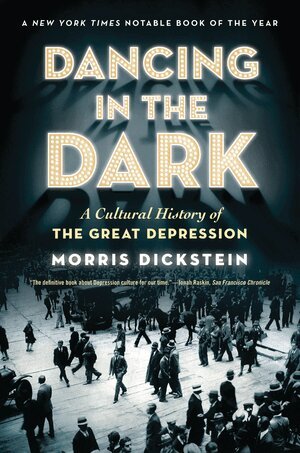
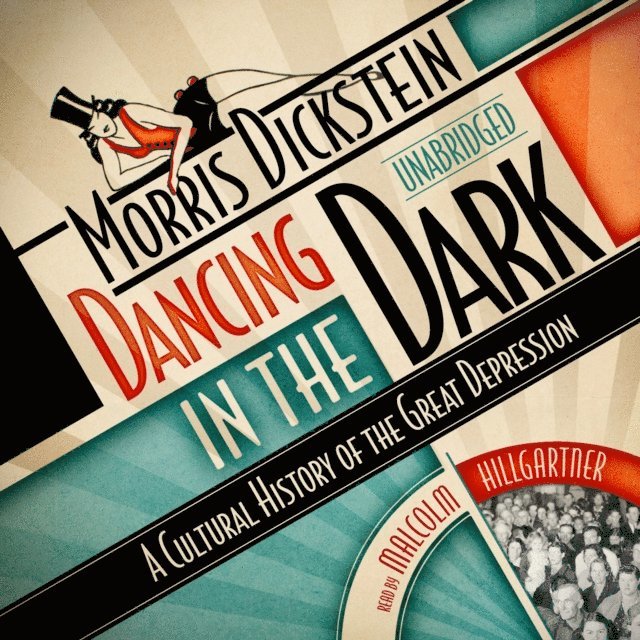
Hailed as one of the best books of 2009 by the New York Times and the Los Angeles Times, this vibrant portrait of 1930s culture masterfully explores the anxiety and hope, the despair and surprising optimism of distressed Americans during the Great Depression. Morris Dickstein, whom Norman Mailer called "one of our best and most distinguished critics of American literature," has brought together a staggering range of material-from epic Dust Bowl migrations to zany screwball comedies, elegant dance musicals, wildly popular swing bands, and streamlined Deco designs. Exploding the myth that Depression culture was merely escapist, Dickstein concentrates on the dynamic energy of the arts, and the resulting lift they gave to the nation's morale. A fresh and exhilarating analysis of one of America's most remarkable artistic periods, with Dancing in the Dark Dickstein delivers a monumental critique.A New York Times Notable Book, Los Angeles Times Favorite Book, San Francisco Chronicle Best Book of 2009, and Huffington Post Best Book.
379 kr
Skickas inom 10-15 vardagar
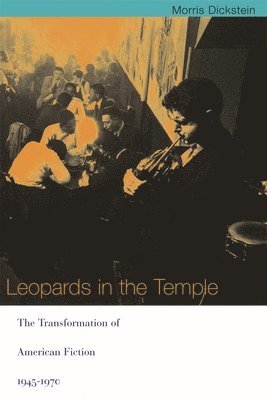
The twenty-five years after the Second World War were a lively and fertile period for the American novel and an era of momentous transformation in American society. Taking his title from the Kafka parable about the leopards who kept racing into the courtyard of the temple, disrupting the sacrifice, until they were made part of the ritual, Morris Dickstein shows how a daring band of outsiders reshaped the American novel and went on to dominate American fiction for the rest of the century.In fluid prose, offering a social as well as a literary history, Dickstein provides a wide-ranging and frank reassessment of more than twenty key figures—including Jewish writers like Norman Mailer, Saul Bellow, and Philip Roth; African-Americans such as Ralph Ellison and James Baldwin; colorful emigrés like Vladimir Nabokov; and avatars of a new youth culture, including J. D. Salinger and Jack Kerouac.Disputing the received wisdom about the culture of the Cold War, Dickstein shows why artists turned inward after the war and demonstrates how the writing of the 1960s emerged from the cultural ferment of the preceding decades, including road novels, avant-garde painting, bebop, film, psychoanalysis, and social changes that continue to affect us today.
715 kr
Skickas inom 3-6 vardagar
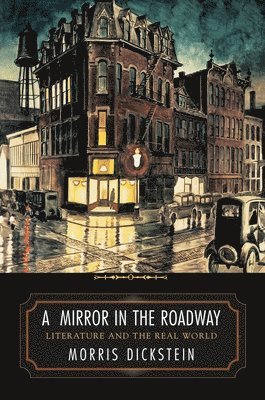
In a famous passage in The Red and the Black, the French writer Stendhal described the novel as a mirror being carried along a roadway. In the twentieth century this was derided as a naive notion of realism. Instead, modern writers experimented with creative forms of invention and dislocation. Deconstructive theorists went even further, questioning whether literature had any real reference to a world outside its own language, while traditional historians challenged whether novels gave a trustworthy representation of history and society. In this book, Morris Dickstein reinterprets Stendhal's metaphor and tracks the different worlds of a wide array of twentieth-century writers, from realists like Theodore Dreiser, Sinclair Lewis, Edith Wharton, and Willa Cather, through modernists like Franz Kafka and Samuel Beckett, to wildly inventive postwar writers like Saul Bellow, Gunter Grass, Mary McCarthy, George Orwell, Philip Roth, and Gabriel Garcia Marquez. Dickstein argues that fiction will always yield rich insight into its subject, and that literature can also be a form of historical understanding. Writers refract the world through their forms and sensibilities.He shows how the work of these writers recaptures--yet also transforms--the life around them, the world inside them, and the universe of language and feeling they share with their readers. Through lively and incisive essays directed to general readers as well as students of literature, Dickstein redefines the literary landscape--a landscape in which reading has for decades been devalued by society and distorted by theory. Having begun with a reconsideration of realism, the book concludes with several essays probing the strengths and limitations of a historical approach to literature and criticism.
403 kr
Skickas inom 7-10 vardagar
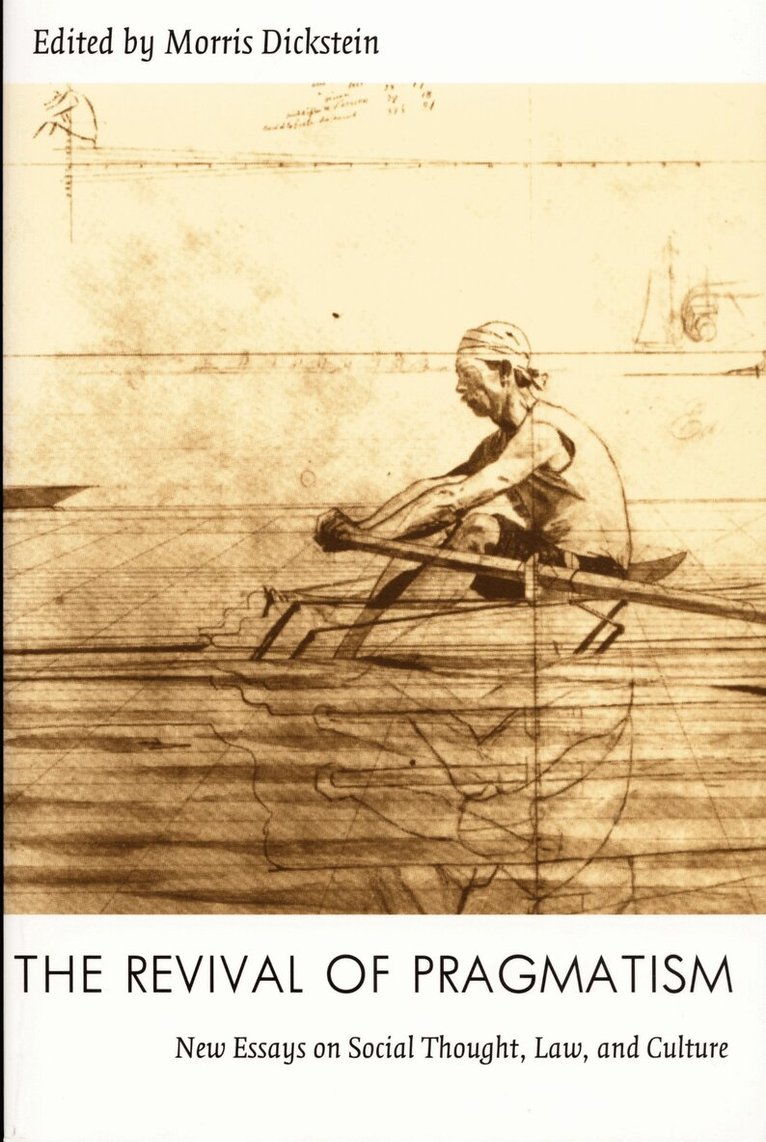
Although long considered the most distinctive American contribution to philosophy, pragmatism-with its problem-solving emphasis and its contingent view of truth-lost popularity in mid-century after the advent of World War II, the horror of the Holocaust, and the dawning of the Cold War. Since the 1960s, however, pragmatism in many guises has again gained prominence, finding congenial places to flourish within growing intellectual movements. This volume of new essays brings together leading philosophers, historians, legal scholars, social thinkers, and literary critics to examine the far-reaching effects of this revival. As the twenty-five intellectuals who take part in this discussion show, pragmatism has become a complex terrain on which a rich variety of contemporary debates have been played out. Contributors such as Richard Rorty, Stanley Cavell, Nancy Fraser, Robert Westbrook, Hilary Putnam, and Morris Dickstein trace pragmatism’s cultural and intellectual evolution, consider its connection to democracy, and discuss its complex relationship to the work of Emerson, Nietzsche, and Wittgenstein. They show the influence of pragmatism on black intellectuals such as W. E. B. Du Bois, explore its view of poetic language, and debate its effects on social science, history, and jurisprudence. Also including essays by critics of the revival such as Alan Wolfe and John Patrick Diggins, the volume concludes with a response to the whole collection from Stanley Fish. Including an extensive bibliography, this interdisciplinary work provides an in-depth and broadly gauged introduction to pragmatism, one that will be crucial for understanding the shape of the transformations taking place in the American social and philosophical scene at the end of the twentieth century. Contributors. Richard Bernstein, David Bromwich, Ray Carney, Stanley Cavell, Morris Dickstein, John Patrick Diggins, Stanley Fish, Nancy Fraser, Thomas C. Grey, Giles Gunn, Hans Joas, James T. Kloppenberg, David Luban, Louis Menand, Sidney Morgenbesser, Richard Poirier, Richard A. Posner, Ross Posnock, Hilary Putnam, Ruth Anna Putnam, Richard Rorty, Michel Rosenfeld, Richard H. Weisberg, Robert B. Westbrook, Alan Wolfe
219 kr
Tillfälligt slut
At once a coming-of-age story, an intellectual autobiography, and vivid cultural history, Why Not Say What Happened is an eloquent, gripping account of an intellectual and emotional education from one of our leading critics. In this "acutely observed, slyly funny memoir" (Molly Haskell), Morris Dickstein evokes his boisterous and close-knit Jewish family, his years as a yeshiva student that eventually led to fierce rebellion, his teenage adventures in the Catskills and in a Zionist summer camp, and the later education that thrust him into a life-changing world of ideas and far-reaching literary traditions. Dickstein brilliantly depicts the tension between the parochial religious world of his youth and the siren call of a larger cosmopolitan culture, a rebellion that manifested itself in a yarmulka replaced by Yankees cap, a Shakespeare play concealed behind a heavy tractate of the Talmud, and classes cut on Wednesday afternoons to take in the Broadway theater.Tracing a path from the Lower East Side to Columbia University, Yale, and Cambridge, Dickstein leaves home, travels widely, and falls in love, breaking through to new experiences of intimacy and sexual awakening, only to be brought low by emotional conflicts that beset him as a graduate student—homesickness, a sense of cultural dislocation—issues that come to a head during a troubled year abroad. In Why Not Say What Happened we see Dickstein come into his own as a teacher and writer deeply engaged with poetry: the "daringly modern" Blake, the bittersweet "negotiations of time and loss" in Wordsworth, and the "shifting turns of consciousness itself" in Keats. While eloquently evoking the tumult of the sixties and a culture in flux, Why Not Say What Happened is enlivened by Dickstein's "Zelig-like presence at nearly every significant aesthetic and political turning of the second half of the American twentieth century" (Cynthia Ozick). Dickstein crafts memorable portraits of his own mentors and legendary teachers like Lionel Trilling, Peter Gay, F. R. Leavis, and Harold Bloom, who become inimitable role models. They provide him with a world-class understanding of how to read and nourish his burgeoning feeling for literature and history. In the tradition of classic memoirs by Alfred Kazin and Irving Howe, this frank and revealing story, at once keenly personal and broadly cultural, sheds light on the many different forms education can take.
164 kr
Skickas inom 7-10 vardagar
The turbulent 1960s, almost from its outset, produced a dizzying display of cultural images and ideas that were as colorful as the psychedelic T-shirts that became part of its iconography. It was not, however, until Morris Dickstein's landmark Gates of Eden, first published in 1977, that we could fully grasp the impact of this raucous decade in American history as a momentous cultural epoch in its own right, as much as Jazz Age America or Weimar Germany. From Ginsberg and Dylan to Vonnegut and Heller, this lasting work brilliantly re-creates not only the intellectual and political ferment of the decade but also its disillusionment. What results is an inestimable contribution to our understanding of twentieth-century American culture.
1 279 kr
Skickas inom 7-10 vardagar
This title contains in-depth critical discussions of F. Scott Fitzgerald's novel. Representing a variety of critical approaches and edited by one of the leading critics on 20th Century American literature, this collection focuses on one of the most widely taught works of American literature. The critical viewpoints presented in the volume cover a wide array of topics from issues of race in the novel to individual character studies. The Editor's Introduction explores the deceptive simplicity of the plot and the complex underpinnings of what makes the novel a true masterpiece. This volume of criticism begins simply enough with essays that provide the reader with cultural, historical, comparative, and critical contexts for understanding ""Gatsby"". Several essays consider the cultural and historical contexts of Fitzgerald's work while critical comparisons link the novel to the poetry of Keats and the novels ""Daisy Miller"" and ""Passing"". The section of contextual readings is followed by a selection of critical overviews, including Robert Roulston and Helen H. Roulston's consideration of Gatsby as a type of culmination of Fitzgerald's writings and Ruth Prigozy's comprehensive introduction to the Oxford World Classic edition of ""Gatsby"". The critical overviews are followed by a series of critical readings that focus on narrative style, color symbolism, and character analysis among other topics. Spanning nearly 40 years of critical study, the selection of essays contained in this volume provide the ideal introduction for any one seeking an introduction to this American classic. Each essay is 5,000 words in length, and all essays conclude with a list of ""Works Cited,"" along with endnotes.