Morse - Böcker
Visar alla böcker från författaren Morse. Handla med fri frakt och snabb leverans.
6 produkter
6 produkter
805 kr
Skickas inom 5-8 vardagar
This important book examines the biologic, ecologic, and social factors responsible for the continuing emergence of new viral diseases. The book should appeal to a wide readership. It should be read by those responsible for curriculm design for medical and public health shcools, by all professional workers dealing with infectious diseases, by biomedical writers responsible for informing the public, and by those responsible for determining priorities for the funding of health programs and biomedical research and training. Thomas H Weller in The New England Journal of Medicine.This volume presents 28 brief chapters in dazzling variety, only a handful of them in too narrow a jargon, Scientific American.Resisting the tempation to present a doomsday scenario, the authors have achieved a well-balanced account. The book is scholarly, thoughtful, and well written, and scientific jargon has been kept to a minium, making it easy and enjoyable reading even for those with a limited background in biology". Walter Dowdle in ScienceNew epidemics such as AIDS and "mad cow" disease have dramatized the need to explore the factors underlying rapid viral evolution and emerging viruses. This comprehensive volume is the first to describe this multifaceted new field. It places viral evolution and emergence in a historical context, describes the interaction of viruses with hosts, and details the advances in molecular biology and epidemiology that have provided the tools necessary to track developing viral epidemics and to detect new viruses far more successfully than could be done in the recent past. This unique book also lucidly details case histories and offers practical suggestions for the prevention of future epidemics. The contributors are leading authorities in their disciplines, and were selected both for their expert knowledge and for their ability to define and elucidate the fundamental issues. The book is highly accessible and has been written for a wide audience that includes virologists, public health authorities, medical anthropologists, evolutionary biologists, geneticists, infectious disease specialists, and social scientists interested in medical and health issues.
433 kr
Skickas inom 5-8 vardagar
308 kr
Skickas inom 5-8 vardagar
444 kr
Skickas inom 3-6 vardagar
275 kr
Skickas inom 3-6 vardagar
1 101 kr
Skickas inom 10-15 vardagar
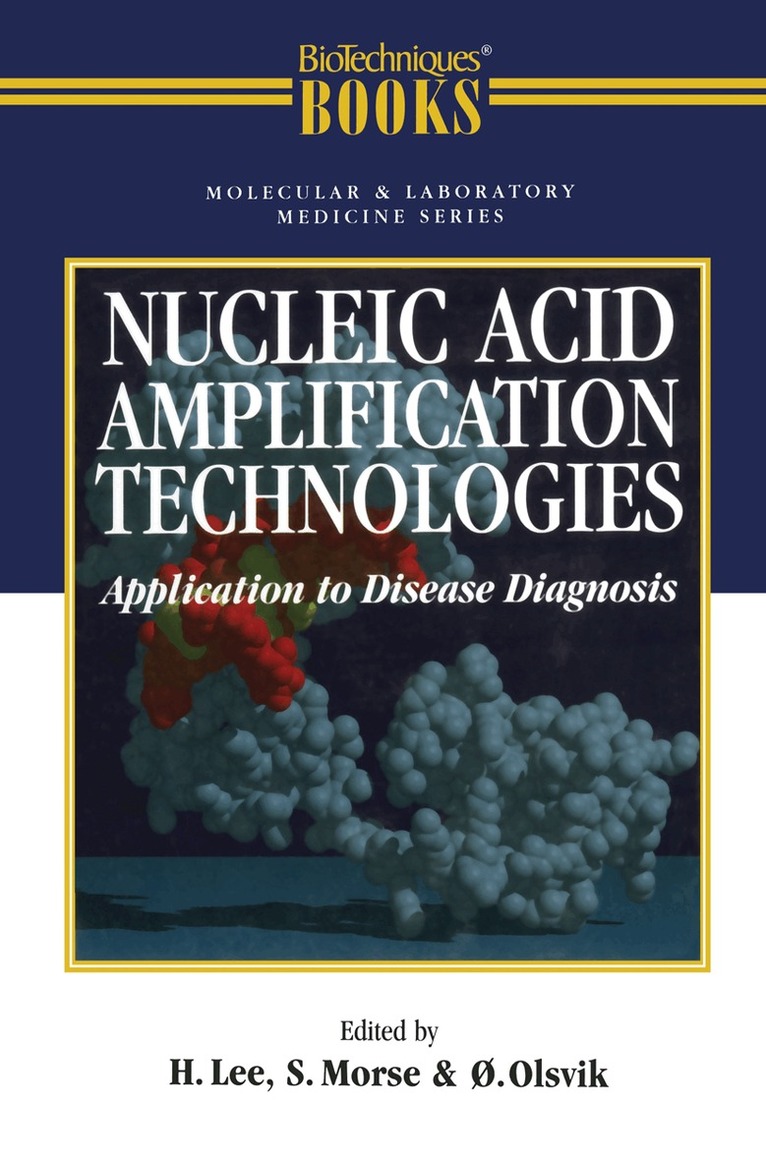
The polymerase chain reaction (PCR) has proved to be a powerful and versatile tool and has opened new avenues in molecular biol ogy. Alternative nucleic acid amplification techniques, such as the ligase chain reaction (LCR), nucleic acid sequence-based amplifica tion (NASBA), and transcription-mediated amplification (TMA), a variation of NASBA, are also now available. These techniques are all designed to amplify specific nucleic acid sequences in an expo nential manner, thus providing a basis for extremely sensitive diag nostic assays. However, despite the widespread and successful ap plication of genomic amplification techniques in biological research, they have not yet reached the point of routine use in clini cal laboratories. Thus, although the R&D investment in nucleic acid diagnostics is in excess of $250 million annually, clinical ap plications remain relatively modest. One of the principal reasons for this delay in clinical application has been the problem of acci dental contamination of negative clinical specimens with minute amounts of amplified products from a previous positive reaction. Carry-over contamination of amplicons can now be prevented by chemical means or the use of a closed reaction system. However, the current instrumentation is essentially modular in nature, com prising machines that perform the three essential steps of nucleic acid amplification technology: sample preparation, the amplifica tion reaction, and detection of products. Consequently, the test pro cedures are more complicated with somewhat lower sample throughput than the enzyme immunoassays currently performed in clinical laboratories.