Morton Keller – författare
Visar alla böcker från författaren Morton Keller. Handla med fri frakt och snabb leverans.
10 produkter
10 produkter
839 kr
Skickas inom 5-8 vardagar
Making Harvard Modern is a candid, richly detailed portrait of America's most prominent university from 1933 to the present: seven decades of dramatic change. Early twentieth century Harvard was the country's oldest and richest university, but not necessarily its outstanding one. By the century's end it was widely regarded as the nation's, and the world's, leading institution of higher education. With verve, humor, and insight, Morton and Phyllis Keller tell the story of that rise: a tale of compelling personalities, notable achievement and no less notable academic pratfalls. Their book is based on rich and revealing archival materials, interviews, and personal experience.Young, humbly born James Bryant Conant succeeded Boston Brahmin A. Lawrence Lowell as Harvard's president in 1933, and set out to change a Brahmin-dominated university into a meritocratic one. He hoped to recruit the nation's finest scholars and an outstanding national student body. But the lack of new money during the Depression and the distractions of World War Two kept Conant, and Harvard, from achieving this goal.In the 1950s and 1960s, during the presidency of Conant's successor Nathan Marsh Pusey, Harvard raised the money, recruited the faculty, and attracted the students that made it a great meritocratic institution: America's university. The authors provide the fullest account yet of this transformation, and of the wrenching campus crisis of the late 'sixties.During the last thirty years of the twentieth century, a new academic culture arose: meritocratic Harvard morphed into worldly Harvard. During the presidencies of Derek Bok and Neil Rudenstine the university opened its doors to growing numbers of foreign students, women, African- and Asian-Americans, and Hispanics. Its administration, faculty, and students became more deeply engaged in social issues; its scientists and professional schools were more ready to enter into shared commercial ventures. But worldliness brought its own conflicts: over affirmative action and political correctness, over commercialization, over the ever higher costs of higher education.This fascinating account, the first comprehensive history of a modern American university, is essential reading for anyone with an interest in the present state and future course of higher education.
1 965 kr
Skickas inom 3-6 vardagar
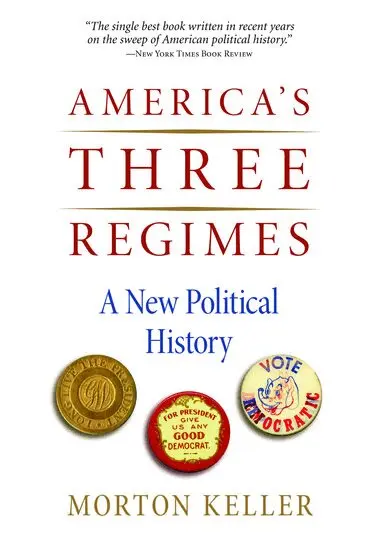
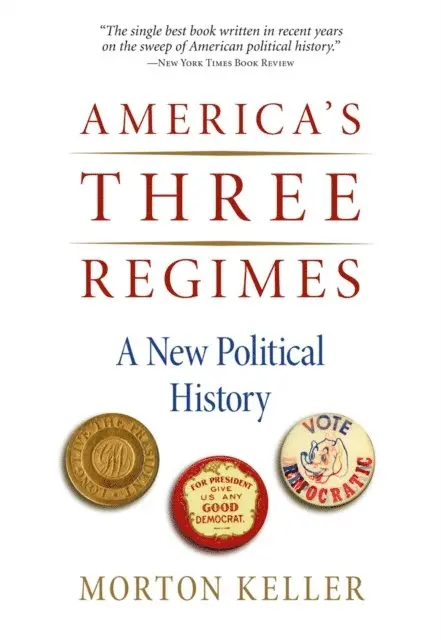
When historians take the long view, they look at "ages" or "eras" (the Age of Jackson, the Progressive Era). But these time spans last no longer than a decade or so. In this groundbreaking new book, Morton Keller divides our nation's history into three regimes, each of which lasts many, many decades, allowing us to appreciate, as never before, the slow steady evolution of American public life. Americans like to think of our society as eternally young and effervescent. But the reality is very different. A proper history of America must be as much about continuity, persistence, and evolution as about transformation and revolution. To provide this proper history, Keller groups America's past into three long regimes--Deferential and Republican, from the colonial period to the 1820s; Party and Democratic, from the 1830s to the 1930s; and Populist and Bureaucratic, from the 1930s to the present. This approach yields many new insights. We discover, for instance, that the history of colonial America, the Revolution, and the Early Republic is a more unified story than usually assumed.The Civil War, industrialization, and the Progressive era did relatively little to alter the character of the democratic-party regime that lasted from the 1830s to the 1930s. And the populist-bureaucratic regime in which we live today has seen changes in politics, government, and law as profound as those that occurred in the late 18th and early 19th centuries. As Keller underscores the sheer staying power of America's public institutions, he sheds light on current concerns as well: in particular, will the current political polarization continue or will more moderate forces prevail. Here then is a major contribution to United States history--an entirely new way to look at our past, our present, and our future--packed with provocative and original observations about American public life.
459 kr
Skickas inom 5-8 vardagar
Early twentieth-century Harvard was the country's oldest and richest university, but not necessarily its outstanding one. By the century's end, it was widely regarded as the nation's and the world's leading institution of higher education. With verve, humor, and insight, Morton and Phyllis Keller tell the story of that rise: a tale of compelling personalities, notable achievement, and no less notable academic pratfalls. Their book is based on rich and revealing archival materials, interviews, and personal experience. The Kellers begin in 1933, when James Bryant Conant became Harvard's president and set out to change a Brahmin-dominated university into a meritocratic one, and they shed light on the presidencies of Nathan Marsh Pusey, Derek Bok, and Neil Rudenstine. The Kellers cover such events as the campus turbulence of the 1960s, show how the university gradually opened its foors to growing numbers of foreign students, women, African- and Asian - Americans, and Hispanics, and examine the debates over authors feature a new chapter on the controversial presidency of Lawrence Summers, who put Harvard into the national spotlight during his reign, and the abolition of early admissions, which began to change university policies nationwide. The Kellers will draw on archival materials, newspaper articles, and an interview with Summers. The book will appear in time for Class Day in June. Making Harvard Modern is a candid, richly detailed portrait of America's most prominent university from 1933 to the present: seven decades of dramatic change. This fascinating account, the first comprehensive history of a modern American university, is essential reading for anyone with an interest in the present state and future course of higher education.
388 kr
Skickas inom 5-8 vardagar
Hailed in The New York Times Book Review as "the single best book written in recent years on the sweep of American political history," this groundbreaking work divides our nation's history into three "regimes," each of which lasts many, many decades, allowing us to appreciate as never before the slow steady evolution of American politics, government, and law. The three regimes, which mark longer periods of continuity than traditional eras reflect, are Deferential and Republican, from the colonial period to the 1820s; Party and Democratic, from the 1830s to the 1930s; and Populist and Bureaucratic, from the 1930s to the present. Praised by The Economist as "a feast to enjoy" and by Foreign Affairs as "a masterful and fresh account of U.S. politics," here is a major contribution to the history of the United States-an entirely new way to look at our past, our present, and our future-packed with provocative and original observations about American public life.
346 kr
Skickas inom 5-8 vardagar
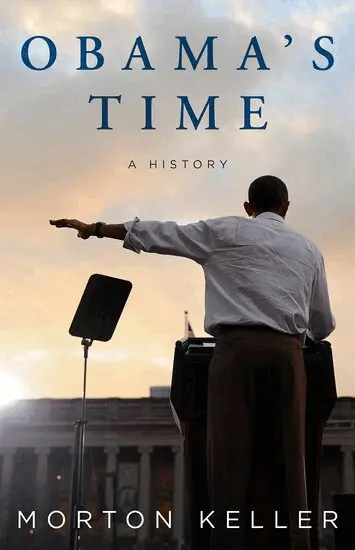
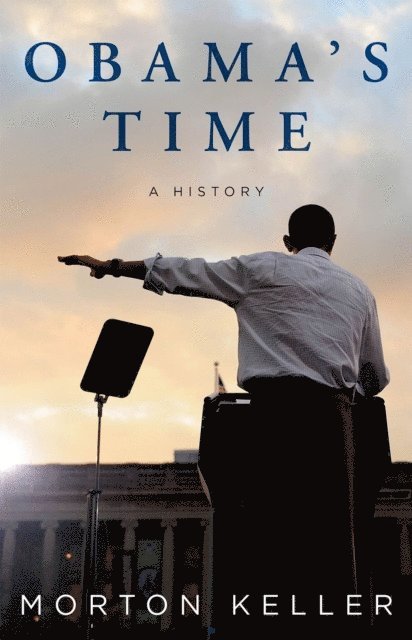
Barack Obama swept into office in 2008, capitalizing on his fresh and compelling political persona, the appeal of his "Hope and Change" campaign, the pre-election financial crisis, and a wave of popular discontent with his predecessor. The nation's first African-American president stirred unusually high expectations, and his first term saw the passage of a substantial economic stimulus package, a large-scale expansion of financial regulation, a drawdown in Iraq, and his signature health care reform. But a stagnant economy persisted. His personal popularity had no effect on the persistent disapproval of his program. The Democrats suffered a severe electoral setback in the 2010 Congressional election. But Obama's exceptional campaign organization, his strong personal appeal, and a weak Republican opponent won him a second term in 2012. Now his presidency is in its final stage. In Obama's Time, eminent historian Morton Keller has written the first historical assessment of Barack Obama's presidency. Drawing on a lifetime of scholarship on American history and politics, Keller examines Obama's presidential persona and governing style, his domestic and foreign policies, and his place in the broader history of American politics. Obama is deeply committed to active federal government, in the tradition of FDR's New Deal and LBJ's Great Society. But his ambitions have been tempered by the heavy weight of existing institutions and past precedents, strong Republican opposition, and unforeseen events. Keller concludes that this is a time when the centralized bureaucratic state faces a deep crisis of legitimacy. He ascribes the intense party polarization to a political culture in which the media, advocacy groups, and ideologically-driven donors have outsize influence. Historians will continue to debate the Obama presidency for decades to come. Keller's account of how Obama governed, the larger political context in which he functioned, and why he was unable to close the gap between expectations and reality, will be invaluable to that debate.
911 kr
Tillfälligt slut
What is American government like today? How has it changed - and how has it remained the same - over the course of the century now coming to a close? This study seeks to provide the fullest and most thoughtful answers yet offered to these questions. It brings together eminent historians and political scientists to examine the past experience, current state, and future prospects of five major American public issues: trade and tariff policy, immigration and aliens, conservation and environmentalism, civil rights, and social welfare. The contributors examine the evolving nature of these issues, the reactive policies of the federal government, and the institutional devices by which these policies have been applied. Never before have these major public policy issues been explored so deeply, and with such insight, in a collaborative effort crossing disciplinary borders.
887 kr
Tillfälligt slut
Life Insurance Enterprise, 1885–1910
A Study in the Limits of Corporate Power
Inbunden, Engelska, 1963
887 kr
Tillfälligt slut
No detailed description available for "The Life Insurance Enterprise, 1885–1910".
861 kr
Tillfälligt slut
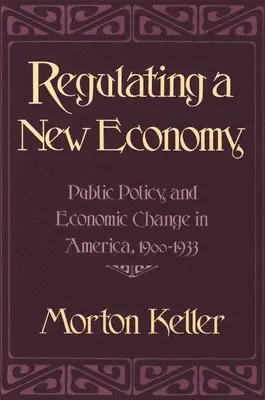
Regulating a New Economy
Public Policy and Economic Change in America, 1900–1933
Häftad, Engelska, 1996
444 kr
Skickas inom 10-15 vardagar
Morton Keller, a leading scholar of twentieth-century American history, describes the complex interplay between rapid economic change and regulatory policy. In its portrait of the response of American politics and law to a changing economy, this book provides a fresh understanding of emerging public policy for a modern nation.