Morton Owen Schapiro – författare
Visar alla böcker från författaren Morton Owen Schapiro. Handla med fri frakt och snabb leverans.
3 produkter
3 produkter
1 211 kr
Läs direkt efter köp
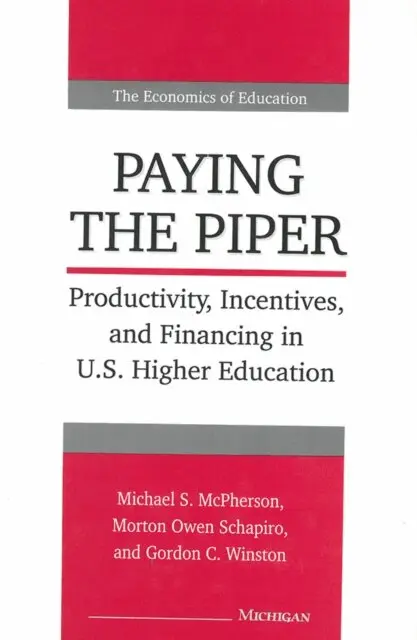
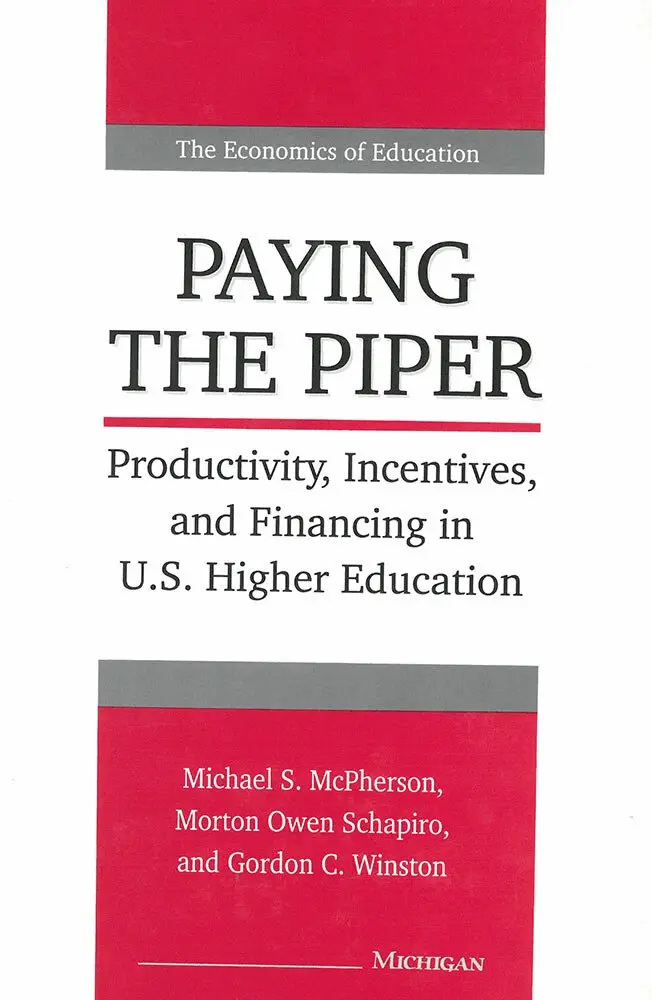
Rising tuitions and shrinking government budgets have pushed questions about productivity and resource use in U.S. higher education to the fore. In Paying the Piper three distinguished researchers examine the many successes of U.S. higher education, identify real problems, and carefully analyze potential solutions. Among the questions addressed are: On what do colleges and universities spend their money and how have their spending patterns changed over time; what does "e;quality"e; really mean in higher education and how is it related to price and cost; what are appropriate measures of "e;productivity"e;; and does increasing the amount of federal financial aid encourage colleges to raise their tuitions? The essays comprising this volume demonstrate that the application of basic economic principles and a combination of both descriptive and econometric analyses can illuminate a number of issues. Using economic concepts and tools to provide insight into these pressing questions, Paying the Piper helps us to understand the recent past, anticipate the future, and develop policies that can influence the future.
E-bok
Engelska, 2010294 kr
Läs direkt efter köp
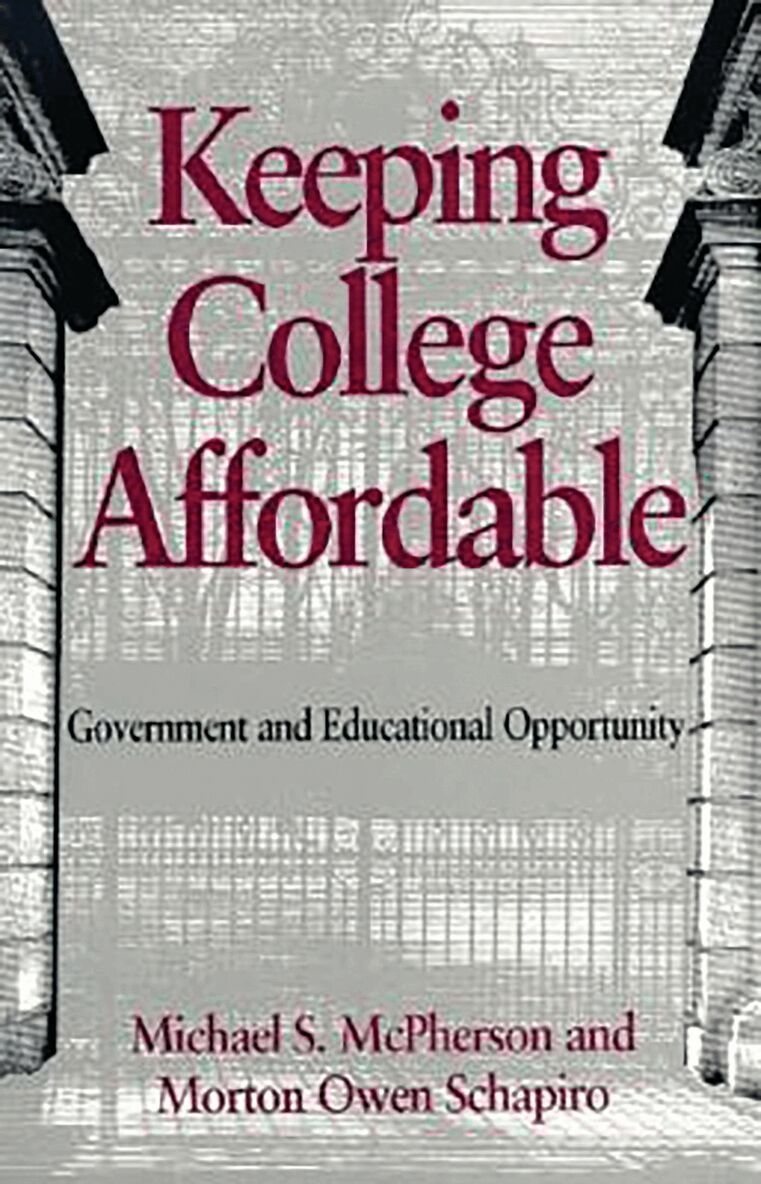
As Congress debates the reauthorization of the basic federal student aid legislation, and as governors and state legislators cope with increasingly severe budgetary problems of their own, the issues of preserving college opportunity and sharing the burden of college costs are particularly critical and timely. This book assesses the role of government subsidies for higher educationespecially but not exclusively federal student aidin keeping college affordable for Americans of all economic and social backgrounds. The authors examine the effects of student aid policies of the last twenty years. They address several vital questions, including: Has federal student aid encouraged the enrollment and broadened the educational choices of disadvantaged students? Has it made higher education institutions more secure and educationally more effectiveor has it raised costs and prices as schools try to capture additional aid? Has federal student aid made the distribution of higher education's benefits, and the sharing of costs, fairer? And what are the likely trends in patterns of college affordability?Drawing on their analysis, the authors highlight some of the principal dimensions of policy choice on which the debate has focused, as well as some that have been relatively neglected. Building upon their conclusion that student aid works, they propose reforms that would bolster the role of income-tested aid in the overall student financing picture. McPherson and Schapiro recommend a number of incremental reforms that could improve the effectiveness of existing federal aid programs and present a proposal to replace a substantial fraction of state-operating subsidies to colleges and universities with expanded federal aid.
Häftad, Engelska, 1991
277 kr
Skickas inom 10-15 vardagar
As Congress debates the reauthorization of the basic federal student aid legislation, and as governors and state legislators cope with increasingly severe budgetary problems of their own, the issues of preserving college opportunity and sharing the burden of college costs are particularly critical and timely. This book assesses the role of government subsidies for higher educationespecially but not exclusively federal student aidin keeping college affordable for Americans of all economic and social backgrounds. The authors examine the effects of student aid policies of the last twenty years. They address several vital questions, including: Has federal student aid encouraged the enrollment and broadened the educational choices of disadvantaged students? Has it made higher education institutions more secure and educationally more effectiveor has it raised costs and prices as schools try to capture additional aid? Has federal student aid made the distribution of higher education's benefits, and the sharing of costs, fairer? And what are the likely trends in patterns of college affordability?Drawing on their analysis, the authors highlight some of the principal dimensions of policy choice on which the debate has focused, as well as some that have been relatively neglected. Building upon their conclusion that student aid works, they propose reforms that would bolster the role of income-tested aid in the overall student financing picture. McPherson and Schapiro recommend a number of incremental reforms that could improve the effectiveness of existing federal aid programs and present a proposal to replace a substantial fraction of state-operating subsidies to colleges and universities with expanded federal aid.