Moshe Halevi Spero - Böcker
Visar alla böcker från författaren Moshe Halevi Spero. Handla med fri frakt och snabb leverans.
3 produkter
3 produkter
542 kr
Skickas inom 7-10 vardagar
In this original work, Moshe Halevi Spero makes a two-pronged effort to integrate the psychological and religious perspectives of contemporary psychoanalytic object relations theory with the system of Jewish ethics known as Halakhah. Religious Objects as Psychological Structures represents the first comprehensive theoretical and clinical integration of psychology and Judaism within the larger understanding of the religious nature of psychotherapy and the psychotherapeutic nature of religion. By constructing a halakhic metapsychology within which psychological phenomena can be given specific halakhic identities, Spero arrives at a unique perspective on the development of religious objects and God representations. He traces two lines of development: one for relationships between humans, anthropocentric, and another for relationships between God and humans, deocentric. The second aspect of his argument is that these two distinct but parallel lines allow one to conceptualize the revolutionary possibility of transference displacements—the shift of religious symbology—not only from interpersonal relationships onto the God concept (Freud's model) but also from an objective human-God relationship onto interpersonal relationships. Filled with clinical as well as theoretical illustrations, Spero's work is a rich resource for both the religious patient and the religious therapist. In the last few decades, a great deal of literature has been written on the relationship between theology and psychotherapy; none of this work, however, has addressed its subject using Judaism as a point of reference. Spero successfully takes up the task of bridging this gap in previous scholarship.
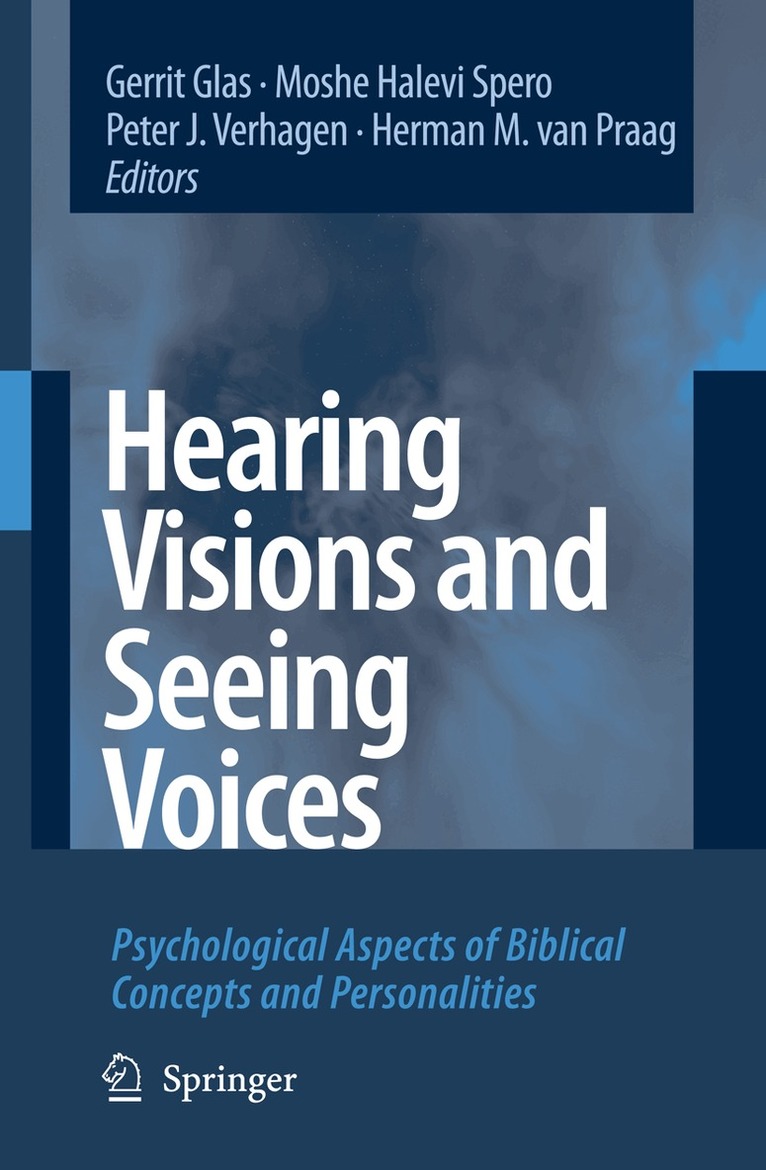
Hearing Visions and Seeing Voices
Psychological Aspects of Biblical Concepts and Personalities
Inbunden, Engelska, 2007
1 064 kr
Skickas inom 10-15 vardagar
The chapters in this book are based on papers that were presented at the international conference Psychological Aspects of Biblical Concepts and Persons, 4–6 March 2002 in Amsterdam. The conference was organized by the Dutch Foundation for Psychiatry and Re- gion (in Dutch: Stichting Psychiatrie en Religie) a small, but active and lively organization, which organizes conferences and post-graduate education for mental health professionals and which offers a platform for interdisciplinary research and discussion in the field of mental health and religion. The organizers of the conference – Gerrit Glas, Herman M. van Praag, and Peter J. Verhagen – are m- bers of the board of the Foundation. All three are psychiatrists; two of them are also professionally occupied in another discipline: theology (Verhagen) and philosophy (Glas). The primary aim of the conference was to create a space for scientific dialogue between two disciplines with a troubled and complex relationship: psychiatry and theology. The exchange of opinions and viewpoints between specifically these two fields has dried up in the course of the past century and has virtually been absent from around 1960 till at least the early nineties of the previous century. I need to clarify that we were quite specific in isolating theology and psychiatry; instead of focusing on theology and psychology, or biblical studies and psychology, or theology and psychoanalysis. Psychology and psychoanalysis do not seem to have lost all contact with theology, at least not to such an extent as have psychiatry and theology.
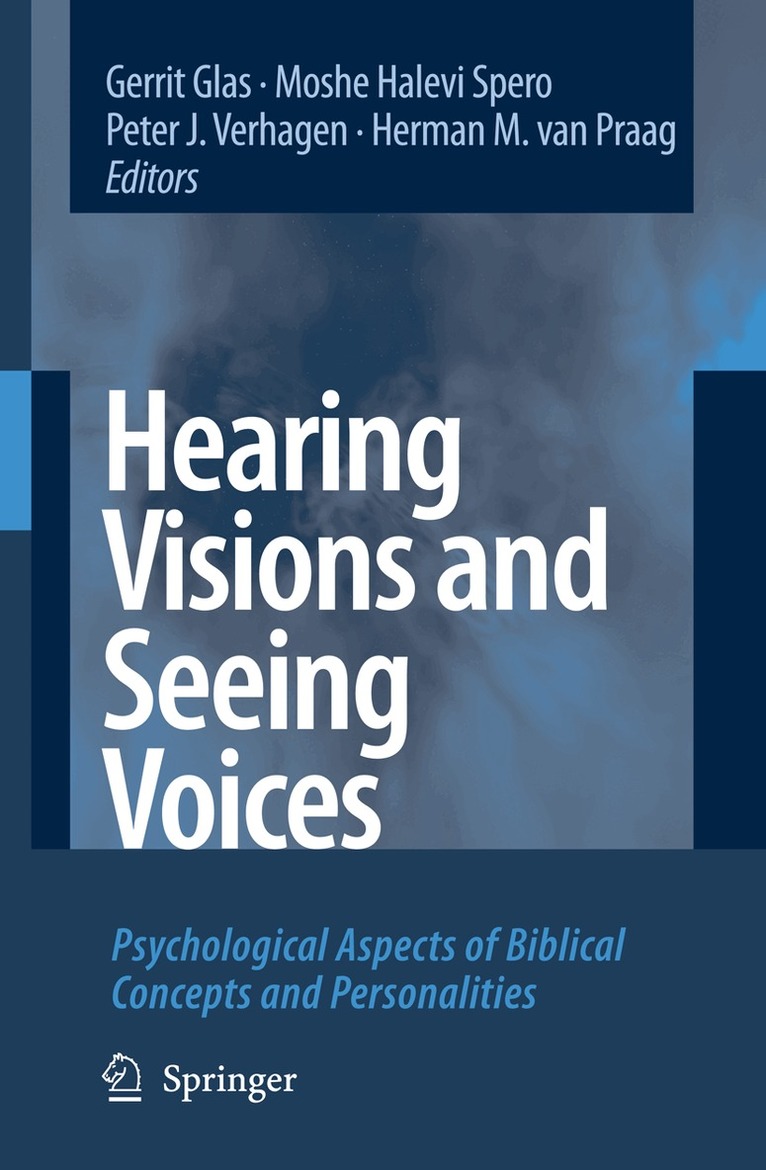
Hearing Visions and Seeing Voices
Psychological Aspects of Biblical Concepts and Personalities
Häftad, Engelska, 2010
1 064 kr
Skickas inom 10-15 vardagar
The chapters in this book are based on papers that were presented at the international conference Psychological Aspects of Biblical Concepts and Persons, 4–6 March 2002 in Amsterdam. The conference was organized by the Dutch Foundation for Psychiatry and Re- gion (in Dutch: Stichting Psychiatrie en Religie) a small, but active and lively organization, which organizes conferences and post-graduate education for mental health professionals and which offers a platform for interdisciplinary research and discussion in the field of mental health and religion. The organizers of the conference – Gerrit Glas, Herman M. van Praag, and Peter J. Verhagen – are m- bers of the board of the Foundation. All three are psychiatrists; two of them are also professionally occupied in another discipline: theology (Verhagen) and philosophy (Glas). The primary aim of the conference was to create a space for scientific dialogue between two disciplines with a troubled and complex relationship: psychiatry and theology. The exchange of opinions and viewpoints between specifically these two fields has dried up in the course of the past century and has virtually been absent from around 1960 till at least the early nineties of the previous century. I need to clarify that we were quite specific in isolating theology and psychiatry; instead of focusing on theology and psychology, or biblical studies and psychology, or theology and psychoanalysis. Psychology and psychoanalysis do not seem to have lost all contact with theology, at least not to such an extent as have psychiatry and theology.