Mrinalini Rajagopalan – författare
Visar alla böcker från författaren Mrinalini Rajagopalan. Handla med fri frakt och snabb leverans.
5 produkter
5 produkter
Inbunden, Engelska, 2017
511 kr
Skickas inom 5-8 vardagar
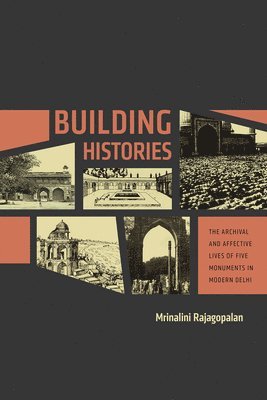
Building Histories offers innovative accounts of five medieval monuments in Delhi the Red Fort, Rasul Numa dargah, Jama Masjid, Purana Qila, and Qutb complex tracing their modern lives from the nineteenth century into the twentieth. ?Mrinalini Rajagopalan argues that the modern construction of the history of these monuments entailed the careful selection, manipulation, and regulation of the past by both the colonial and later postcolonial states. Although framed as objective "archival" truths, these histories were meant to erase or marginalize the powerful and persistent affective appropriations of the monuments by groups who often existed outside of the center of power. By analyzing these archival and affective histories together, Rajagopalan works to redefine the historic monument far from a symbol of a specific past, the monument is shown in Building Histories to be a culturally mutable object with multiple stories to tell.
E-bok
Engelska, 2017998 kr
Läs direkt efter köp
Building Histories offers innovative accounts of five medieval monuments in Delhi—the Red Fort, Rasul Numa Dargah, Jama Masjid, Purana Qila, and the Qutb complex—tracing their modern lives from the nineteenth century into the twentieth. Mrinalini Rajagopalan argues that the modern construction of the history of these monuments entailed the careful selection, manipulation, and regulation of the past by both the colonial and later postcolonial states. Although framed as objective “archival” truths, these histories were meant to erase or marginalize the powerful and persistent affective appropriations of the monuments by groups who often existed outside the center of power. By analyzing these archival and affective histories together, Rajagopalan works to redefine the historic monument—far from a symbol of a specific past, the monument is shown in Building Histories to be a culturally mutable object with multiple stories to tell.
E-bok
Engelska, 2024797 kr
Läs direkt efter köp
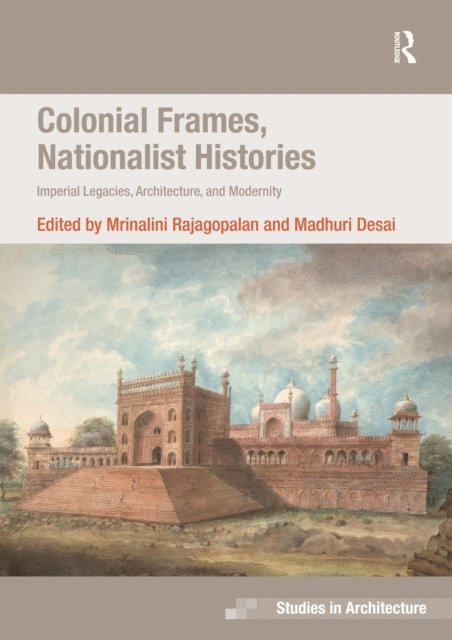
In recent years, there has been a growing debate on the various ways that architecture and urbanism have served the triad of colonialism, nationalism and modernity. Some have argued that newly decolonized nations sought to represent their modernity through the spaces and symbols of their new national capitals, while other scholars have stressed that while the forms and processes of architectural modernization have no doubt served as aids to various nation-building projects, it is the specific role of individual agents (such as planners, architects, an emerging twentieth-century bourgeois citizen, or colonial administrators) in this national project that needs attention. However, many such explorations of this subject have so far taken the form of monographs that concentrate on one city, thereby limiting the scope required to address the broader questions at hand. By juxtaposing case studies from various colonial and postcolonial settings from around the world, this edited volume provides a comprehensive and diachronic investigation of the ways in which architecture and urban space mediate the intersections of colonialism, nationalism, and modernity. Examining such spaces as archaeological sites, memorials, new buildings, or historic urban fabric, the book questions certain established dichotomies such as that of the imperial center and the colonized periphery; the colonial past and the postcolonial present; or the isolation of the national or local from the global. Besides offering unique historical perspectives on colonialism, nationalism and modernity, each case-study also reassesses theories regarding memory and monumentalization; the appropriation and deployment of tradition in the service of nationalism; and the institutions of modernity. A common thread throughout the essays in this volume is a focus on new loci of power that emerge either in collision with colonial power structures, or in collaboration with or those that emerge in the wake of decolonization. While the authors recognize the presence of a larger structure of colonial hegemony, they also investigate those centers of power that emerge in the interstices of crevices of colonial power. Interdisciplinary and theoretically innovative, this book offers a global perspective on colonial and national landscapes, rewrites the master creator narrative, examines national landscapes as sites of contestation and views the globalization of processes such as archaeology beyond the boundaries of the national.
E-bok
PDF, Engelska, 2024797 kr
Läs direkt efter köp
In recent years, there has been a growing debate on the various ways that architecture and urbanism have served the triad of colonialism, nationalism and modernity. Some have argued that newly decolonized nations sought to represent their modernity through the spaces and symbols of their new national capitals, while other scholars have stressed that while the forms and processes of architectural modernization have no doubt served as aids to various nation-building projects, it is the specific role of individual agents (such as planners, architects, an emerging twentieth-century bourgeois citizen, or colonial administrators) in this national project that needs attention. However, many such explorations of this subject have so far taken the form of monographs that concentrate on one city, thereby limiting the scope required to address the broader questions at hand. By juxtaposing case studies from various colonial and postcolonial settings from around the world, this edited volume provides a comprehensive and diachronic investigation of the ways in which architecture and urban space mediate the intersections of colonialism, nationalism, and modernity. Examining such spaces as archaeological sites, memorials, new buildings, or historic urban fabric, the book questions certain established dichotomies such as that of the imperial center and the colonized periphery; the colonial past and the postcolonial present; or the isolation of the national or local from the global. Besides offering unique historical perspectives on colonialism, nationalism and modernity, each case-study also reassesses theories regarding memory and monumentalization; the appropriation and deployment of tradition in the service of nationalism; and the institutions of modernity. A common thread throughout the essays in this volume is a focus on new loci of power that emerge either in collision with colonial power structures, or in collaboration with or those that emerge in the wake of decolonization. While the authors recognize the presence of a larger structure of colonial hegemony, they also investigate those centers of power that emerge in the interstices of crevices of colonial power. Interdisciplinary and theoretically innovative, this book offers a global perspective on colonial and national landscapes, rewrites the master creator narrative, examines national landscapes as sites of contestation and views the globalization of processes such as archaeology beyond the boundaries of the national.
Inbunden, Engelska, 2026
506 kr
Skickas
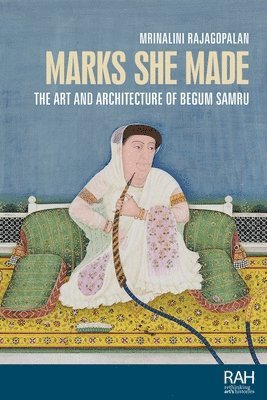
Begum Samru (c.1750–1836) was a remarkable north Indian ruler who used art and architecture to consolidate her social, political, and financial power in early modern India. Rising from the courtesan households of Mughal Delhi, she became commander of her own mercenary army and later the sovereign of Sardhana, an independent territory near Delhi. A trusted ally of both the Mughal emperor and the English East India Company, she corresponded with two popes and with King Louis Philippe of France, exchanging portraits, letters, and architectural plans. Art and architecture were central to shaping her identity—as a powerful yet non-threatening ruler, a Catholic patron, and head of a cosmopolitan court. Her story illuminates how women outside hereditary privilege forged paths to recognition, authority, and even global visibility in nineteenth-century India.