Madhuri Desai - Böcker
Visar alla böcker från författaren Madhuri Desai. Handla med fri frakt och snabb leverans.
3 produkter
3 produkter
1 737 kr
Skickas inom 7-10 vardagar
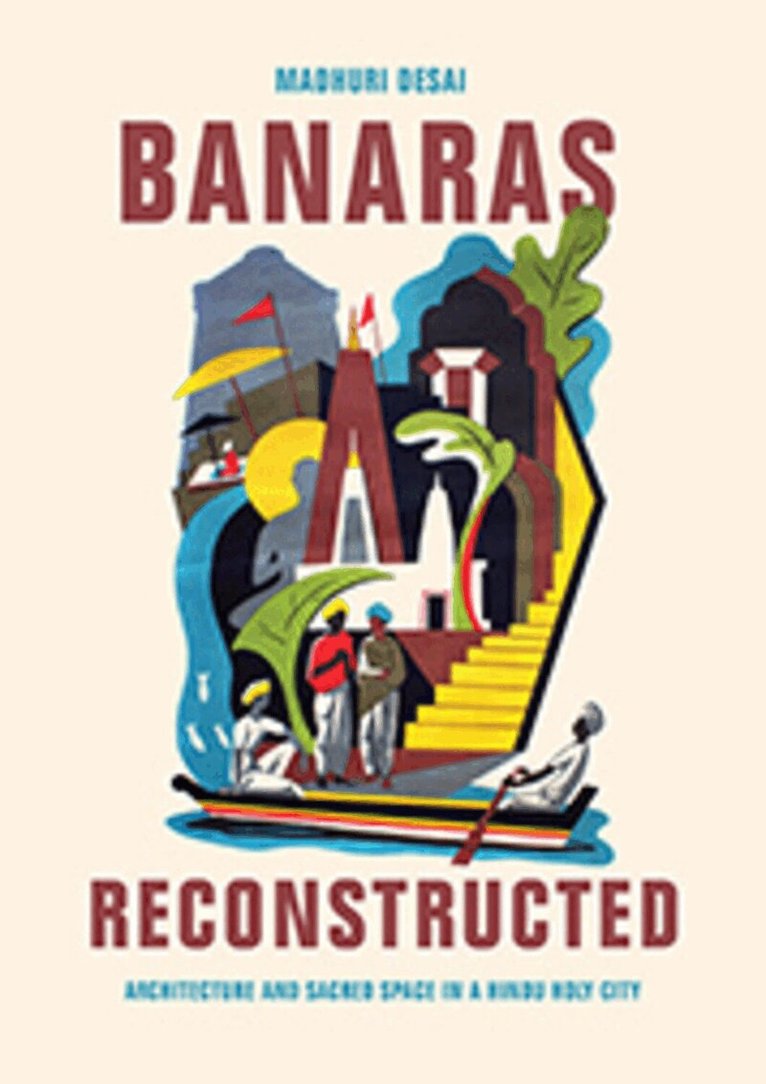
Between the late sixteenth and early twentieth centuries, Banaras, the iconic Hindu center in northern India that is often described as the oldest living city in the world, was reconstructed materially as well as imaginatively, and embellished with temples, monasteries, mansions, and ghats (riverfront fortress-palaces). Banaras’s refurbished sacred landscape became the subject of pilgrimage maps and its spectacular riverfront was depicted in panoramas and described in travelogues.In Banaras Reconstructed, Madhuri Desai examines the confluences, as well as the tensions, that have shaped this complex and remarkable city. In so doing, she raises issues central to historical as well as contemporary Indian identity and delves into larger questions about religious urban environments in South Asia.
502 kr
Skickas inom 7-10 vardagar
Between the late sixteenth and early twentieth centuries, Banaras, the iconic Hindu center in northern India that is often described as the oldest living city in the world, was reconstructed materially as well as imaginatively, and embellished with temples, monasteries, mansions, and ghats (riverfront fortress-palaces). Banaras’s refurbished sacred landscape became the subject of pilgrimage maps and its spectacular riverfront was depicted in panoramas and described in travelogues.In Banaras Reconstructed, Madhuri Desai examines the confluences, as well as the tensions, that have shaped this complex and remarkable city. In so doing, she raises issues central to historical as well as contemporary Indian identity and delves into larger questions about religious urban environments in South Asia.
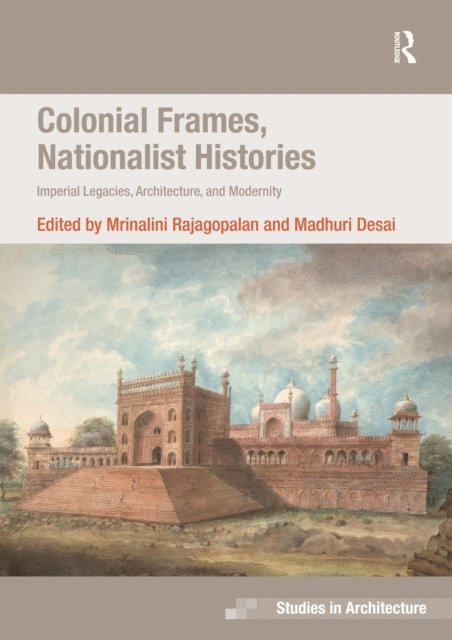
Colonial Frames, Nationalist Histories
Imperial Legacies, Architecture, and Modernity
Inbunden, Engelska, 2012
2 150 kr
Skickas inom 10-15 vardagar
In recent years, there has been a growing debate on the various ways that architecture and urbanism have served the triad of colonialism, nationalism and modernity. Some have argued that newly decolonized nations sought to represent their modernity through the spaces and symbols of their new national capitals, while other scholars have stressed that while the forms and processes of architectural modernization have no doubt served as aids to various nation-building projects, it is the specific role of individual agents (such as planners, architects, an emerging twentieth-century bourgeois citizen, or colonial administrators) in this national project that needs attention. However, many such explorations of this subject have so far taken the form of monographs that concentrate on one city, thereby limiting the scope required to address the broader questions at hand. By juxtaposing case studies from various colonial and postcolonial settings from around the world, this edited volume provides a comprehensive and diachronic investigation of the ways in which architecture and urban space mediate the intersections of colonialism, nationalism, and modernity. Examining such spaces as archaeological sites, memorials, new buildings, or historic urban fabric, the book questions certain established dichotomies such as that of the imperial center and the colonized periphery; the colonial past and the postcolonial present; or the isolation of the national or local from the global. Besides offering unique historical perspectives on colonialism, nationalism and modernity, each case-study also reassesses theories regarding memory and monumentalization; the appropriation and deployment of tradition in the service of nationalism; and the institutions of modernity. A common thread throughout the essays in this volume is a focus on new loci of power that emerge either in collision with colonial power structures, or in collaboration with or those that emerge in the wake of decolonization. While the authors recognize the presence of a larger structure of colonial hegemony, they also investigate those centers of power that emerge in the interstices of crevices of colonial power. Interdisciplinary and theoretically innovative, this book offers a global perspective on colonial and national landscapes, rewrites the master creator narrative, examines national landscapes as sites of contestation and views the globalization of processes such as archaeology beyond the boundaries of the national.