Munis D. Faruqui - Böcker
Visar alla böcker från författaren Munis D. Faruqui. Handla med fri frakt och snabb leverans.
4 produkter
4 produkter
461 kr
Kommande
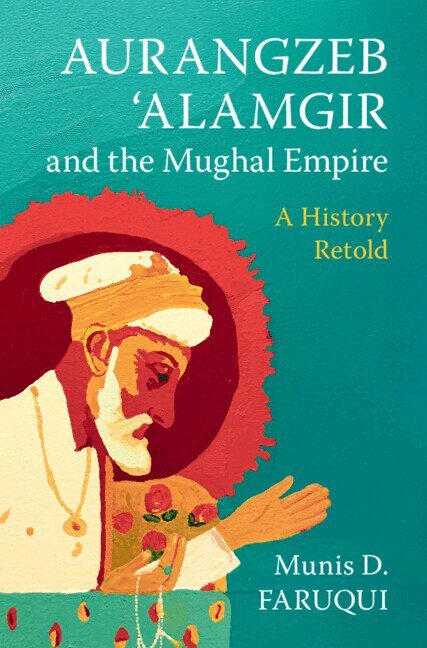
Aurangzeb 'Alamgir (r. 1658-1707) was the last of the so-called 'great' Mughal emperors. He remains a controversial historical figure: castigated for religious intolerance and placed at the centre of a narrative of Mughal decline by some; considered a great Muslim hero by others. In this richly researched exploration of Aurangzeb 'Alamgir's life and times, Munis D. Faruqui contests such simplistic understandings to unearth a more nuanced picture of the emperor and his reign. Drawing on a large and varied archive, Faruqui provides new insights into the emperor's rise to power, his administrative and religious policies, and the role of the imperial eunuchate and harem. By unpicking the complex dynamics of a long reign, from Aurangzeb 'Alamgir's accession to the last weeks of his life and his eighteenth-century memorialisation, this remarkable new history cuts through the many myths that have obscured the extraordinary life story of Emperor Aurangzeb 'Alamgir.
1 442 kr
Skickas inom 7-10 vardagar
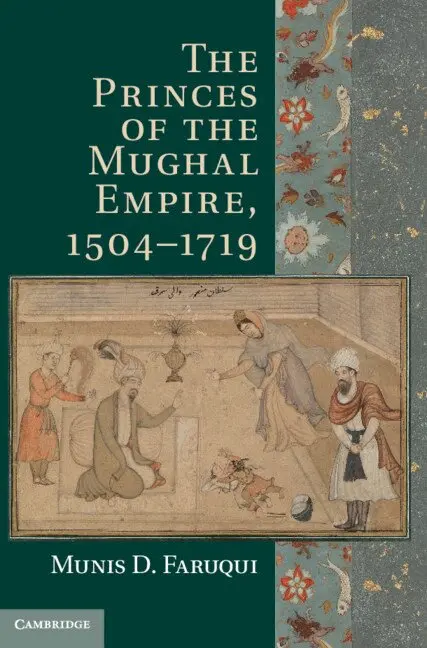
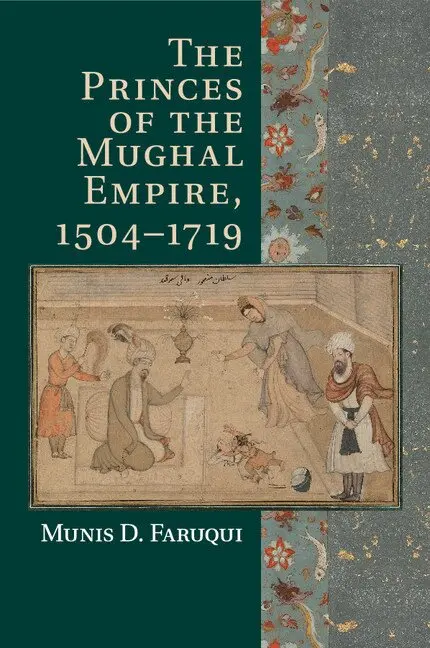
For more than 200 years, the Mughal emperors ruled supreme in northern India. How was it possible that a Muslim, ethnically Turkish, Persian-speaking dynasty established itself in the Indian subcontinent to become one of the largest and most dynamic empires on earth? In this rigorous new interpretation of the period, Munis D. Faruqui explores Mughal state formation through the pivotal role of the Mughal princes. In a challenge to previous scholarship, the book suggests that far from undermining the foundations of empire, the court intrigues and political backbiting that were features of Mughal political life - and that frequently resulted in rebellions and wars of succession - actually helped spread, deepen and mobilise Mughal power through an empire-wide network of friends and allies. This engaging book, which uses a vast archive of European and Persian sources, takes the reader from the founding of the empire under Babur to its decline in the 1700s.
Expanding Frontiers in South Asian and World History
Essays in Honour of John F. Richards
Inbunden, Engelska, 2013
441 kr
Skickas inom 7-10 vardagar
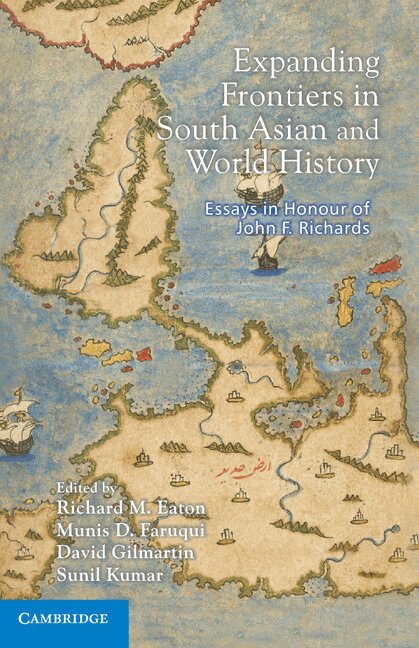
This book has brought together some of the foremost scholars of South Asian and global history, who were colleagues and associates of Professor John F. Richards, to discuss themes that marked his work as a historian in an academic career of almost forty years. It encapsulates discussions under the rubric of 'frontiers' in multiple contexts. Frontier has often been conceived as a space of transformation marking new forms of economic organization, commodity trade, land settlement and state authority. The essays here underline the range of interests and approaches that marked Professor Richards' illustrious career - frontiers and state building; frontiers and environmental change; cultural frontiers; frontiers, trade and drugs; and frontiers and world history. The volume discusses issues from medieval to early modern South Asian history. It also reflects a concern for large-scale global processes and for the detailed specificities of each historical case as evident in Professor Richards' work.
507 kr
Skickas inom 7-10 vardagar
For more than 200 years, the Mughal emperors ruled supreme in northern India. How was it possible that a Muslim, ethnically Turkish, Persian-speaking dynasty established itself in the Indian subcontinent to become one of the largest and most dynamic empires on earth? In this rigorous new interpretation of the period, Munis D. Faruqui explores Mughal state formation through the pivotal role of the Mughal princes. In a challenge to previous scholarship, the book suggests that far from undermining the foundations of empire, the court intrigues and political backbiting that were features of Mughal political life - and that frequently resulted in rebellions and wars of succession - actually helped spread, deepen and mobilise Mughal power through an empire-wide network of friends and allies. This engaging book, which uses a vast archive of European and Persian sources, takes the reader from the founding of the empire under Babur to its decline in the 1700s.