Munro S. Edmonson - Böcker
Visar alla böcker från författaren Munro S. Edmonson. Handla med fri frakt och snabb leverans.
4 produkter
4 produkter
453 kr
Skickas inom 7-10 vardagar
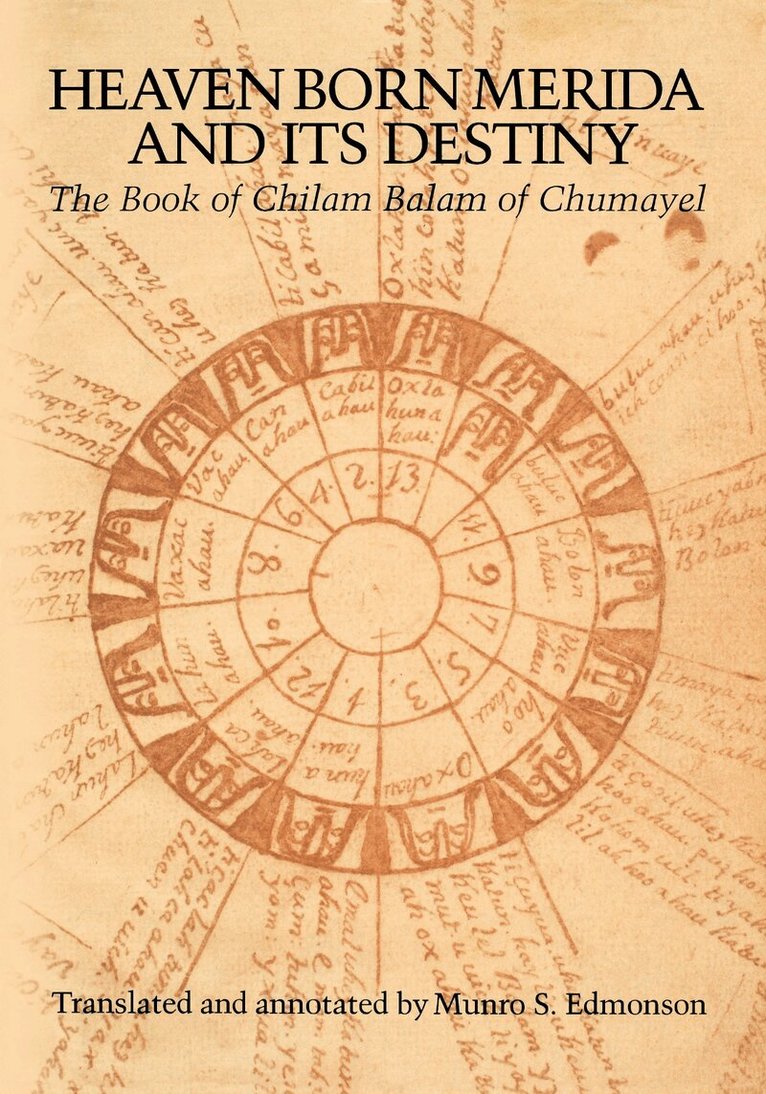
When the Spaniards conquered the Yucatan Peninsula in the early 1500s, they made a great effort to destroy or Christianize the native cultures flourishing there. That they were in large part unsuccessful is evidenced by the survival of a number of documents written in Maya and preserved and added to by literate Mayas up to the 1830s. The Book of Chilam Balam of Chumayel is such a document, literally the history of Yucatan written by and for Mayas, and it contains much information not available from Spanish sources because it was part of an underground resistance movement of which the Spanish were largely unaware. Well known to Mayanists, The Book of Chilam Balam of Chumayel is presented here in Munro S. Edmonson's English translation, extensively annotated. Edmonson reinterprets the book as literature and as history, placing it in chronological order and translating it as poetry. The ritual nature of Mayan history clearly emerges and casts new light on Mexican and Spanish acculturation of the Yucatecan Maya in the post-Classic and colonial periods. Centered in the city of Merida, the Chumayel provides the western (Xiu) perspective on Yucatecan history, as Edmonson's earlier book The Ancient Future of the Itza: The Book of Chilam Balam of Tizimin presented the eastern (Itza) viewpoint. Both document the changing calendar of the colonial period and the continuing vitality of pre-Columbian ritual thought down to the nineteenth century. Perhaps the biggest surprise is the survival of the long-count dating system down to the Baktun Ceremonial of 1618 (12.0.0.0.0). But there are others: the use of rebus writing, the survival of the tun until 1752, graphic if oblique accounts of Mayan ceremonial drama, and the depiction of the Spanish conquest as a long-term inter-Mayan civil war.
268 kr
Skickas inom 10-15 vardagar
The sixteen-volume Handbook of Middle American Indians, completed in 1976, has been acclaimed the world over as the single most valuable resource ever produced for those involved in the study of Mesoamerica. When it was determined in 1978 that the Handbook should be updated periodically, well-known cultural anthropologist Victoria Reifler Bricker was selected to be general editor. This second volume of the Supplement is devoted to Mesoamerican languages. It differs in both scope and content from its forerunner, Volume 5 of the Handbook of Middle American Indians: Linguistics, which presents a general survey of Middle American linguistics and descriptions of Classical Nahuatl, Yucatec, Quiche, Popoluca, Zapotec, Mazatec, Pame, and Chontal de Oaxaca. The aim of the present volume is to provide detailed sketches of five additional languages: Mixe, Chichimeco Jonaz, CholtÍ, Tarascan, and Huastec. All the grammatical sketches deal with the phonology, morphology, and syntax of the languages treated; most cover discourse as well. Taken together, these new essays represent a substantial enrichment of the earlier Handbook volume on linguistics. Alone, the Supplement stands as an invaluable reference guide for all who are interested in learning about these important and heretofore poorly treated languages of Middle America.
313 kr
Skickas inom 10-15 vardagar
The sixteen-volume Handbook of Middle American Indians, completed in 1976, has been acclaimed the world over as the single most valuable resource ever produced for those involved in the study of Mesoamerica. When it was determined in 1978 that the Handbook should be updated periodically, Victoria Reifler Bricker, well-known cultural anthropologist, was elected to be general editor. This third volume of the Supplement is devoted to the aboriginal literatures of Mesoamerica, a topic receiving little attention in the original Handbook. According to the general editor, "This volume does more than supplement and update the coverage of Middle American Indian literatures in the Handbook. It breaks new ground by defining the parameters of a new interdisciplinary field in Middle American Indian studies." The aim of the present volume is to consider literature from five Middle American Indian languages: Nahuatl, Yucatecan Maya, Quiche, Tzotzil, and Chorti. The first three literatures are well documented for both the Classical and Modern variants of their languages and are obvious candidates for inclusion in this volume. The literatures of Tzotzil and Chorti, on the other hand, are oral, and heretofore little has been written of their genres and styles. Taken together, these essays represent a substantial contribution to the Handbook series, with the volume editor's introduction placing in geographic perspective the five literatures chosen as representative of the Middle American literary tradition.
1 566 kr
Skickas inom 7-10 vardagar
No detailed description available for "Meaning in Mayan Languages".