Myles Osborne - Böcker
Visar alla böcker från författaren Myles Osborne. Handla med fri frakt och snabb leverans.
8 produkter
8 produkter
2 162 kr
Skickas inom 10-15 vardagar
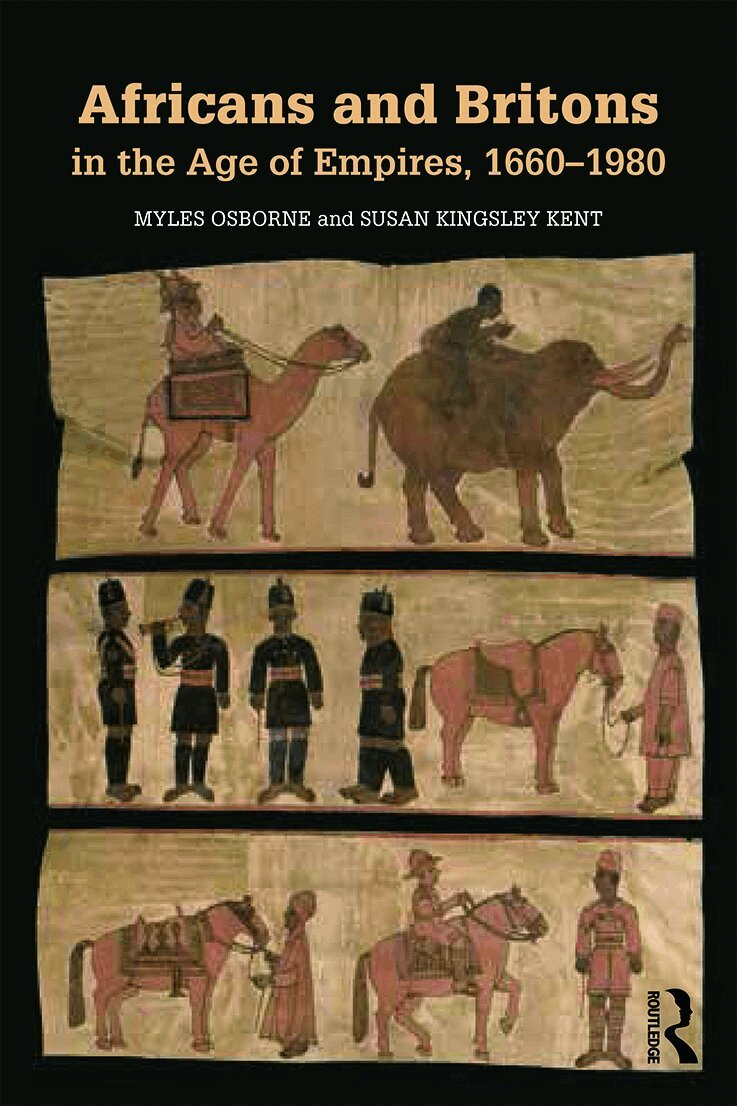
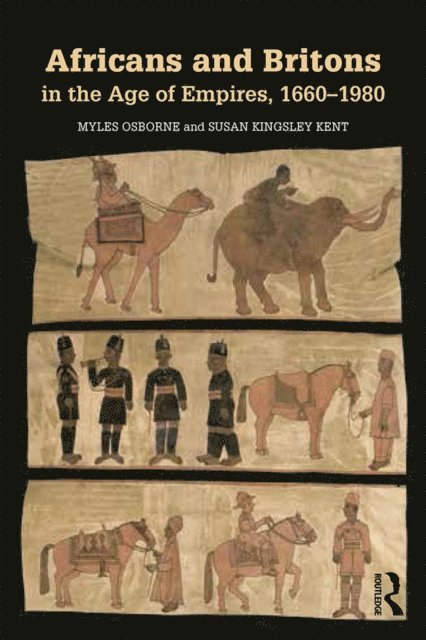
Africans and Britons in the Age of Empires, 1660-1980 tells the stories of the intertwined lives of African and British peoples over more than three centuries. In seven chapters and an epilogue, Myles Osborne and Susan Kingsley Kent explore the characters that comprised the British presence in Africa: the slave traders and slaves, missionaries and explorers, imperialists and miners, farmers, settlers, lawyers, chiefs, prophets, intellectuals, politicians, and soldiers of all colors. The authors show that the oft-told narrative of a monolithic imperial power ruling inexorably over passive African victims no longer stands scrutiny; rather, at every turn, Africans and Britons interacted with one another in a complex set of relationships that involved as much cooperation and negotiation as resistance and force, whether during the era of the slave trade, the world wars, or the period of decolonization. The British presence provoked a wide range of responses, reactions, and transformations in various aspects of African life; but at the same time, the experience of empire in Africa – and its ultimate collapse – also compelled the British to view themselves and their empire in new ways. Written by an Africanist and a historian of imperial Britain and illustrated with maps and photographs, Africans and Britons in the Age of Empires, 1660-1980 provides a uniquely rich perspective for understanding both African and British history.
744 kr
Skickas inom 10-15 vardagar
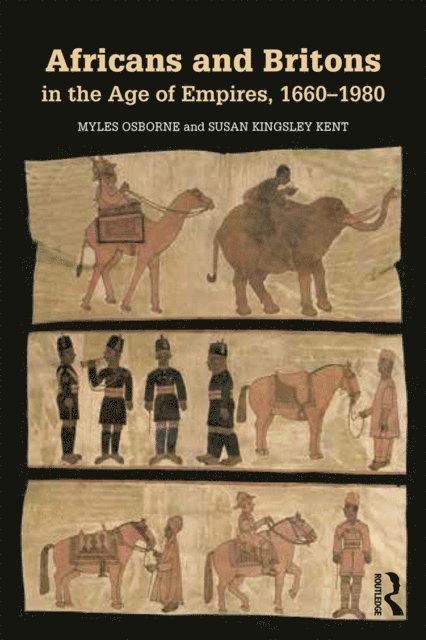
Africans and Britons in the Age of Empires, 1660-1980 tells the stories of the intertwined lives of African and British peoples over more than three centuries. In seven chapters and an epilogue, Myles Osborne and Susan Kingsley Kent explore the characters that comprised the British presence in Africa: the slave traders and slaves, missionaries and explorers, imperialists and miners, farmers, settlers, lawyers, chiefs, prophets, intellectuals, politicians, and soldiers of all colors. The authors show that the oft-told narrative of a monolithic imperial power ruling inexorably over passive African victims no longer stands scrutiny; rather, at every turn, Africans and Britons interacted with one another in a complex set of relationships that involved as much cooperation and negotiation as resistance and force, whether during the era of the slave trade, the world wars, or the period of decolonization. The British presence provoked a wide range of responses, reactions, and transformations in various aspects of African life; but at the same time, the experience of empire in Africa – and its ultimate collapse – also compelled the British to view themselves and their empire in new ways. Written by an Africanist and a historian of imperial Britain and illustrated with maps and photographs, Africans and Britons in the Age of Empires, 1660-1980 provides a uniquely rich perspective for understanding both African and British history.
871 kr
Skickas inom 7-10 vardagar
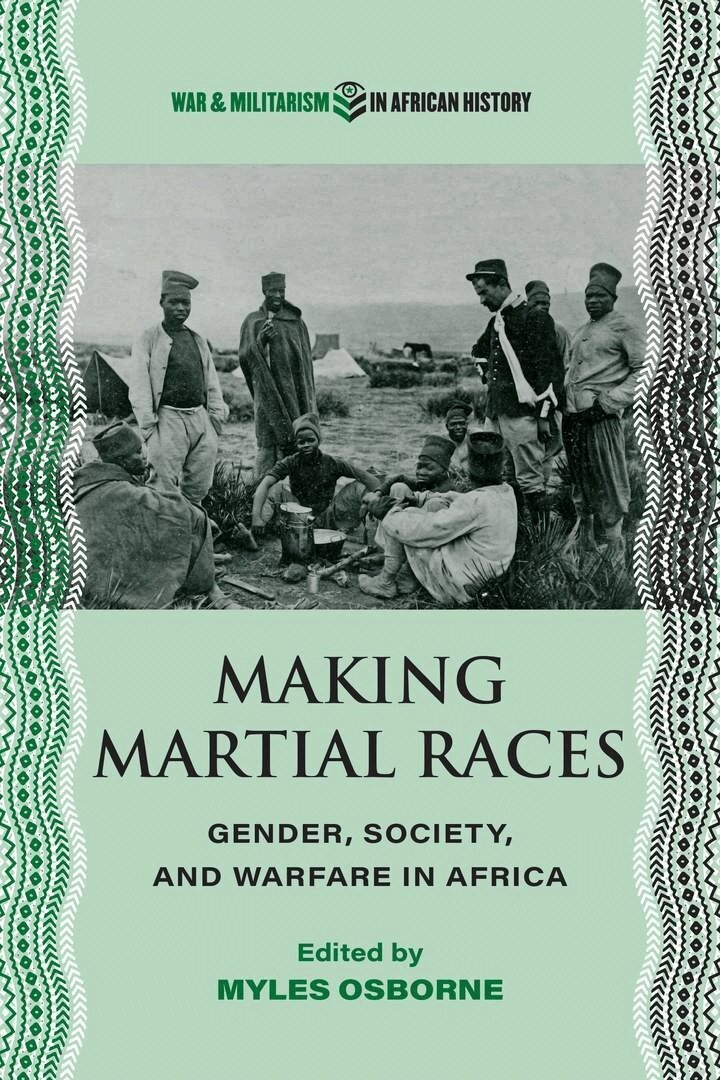
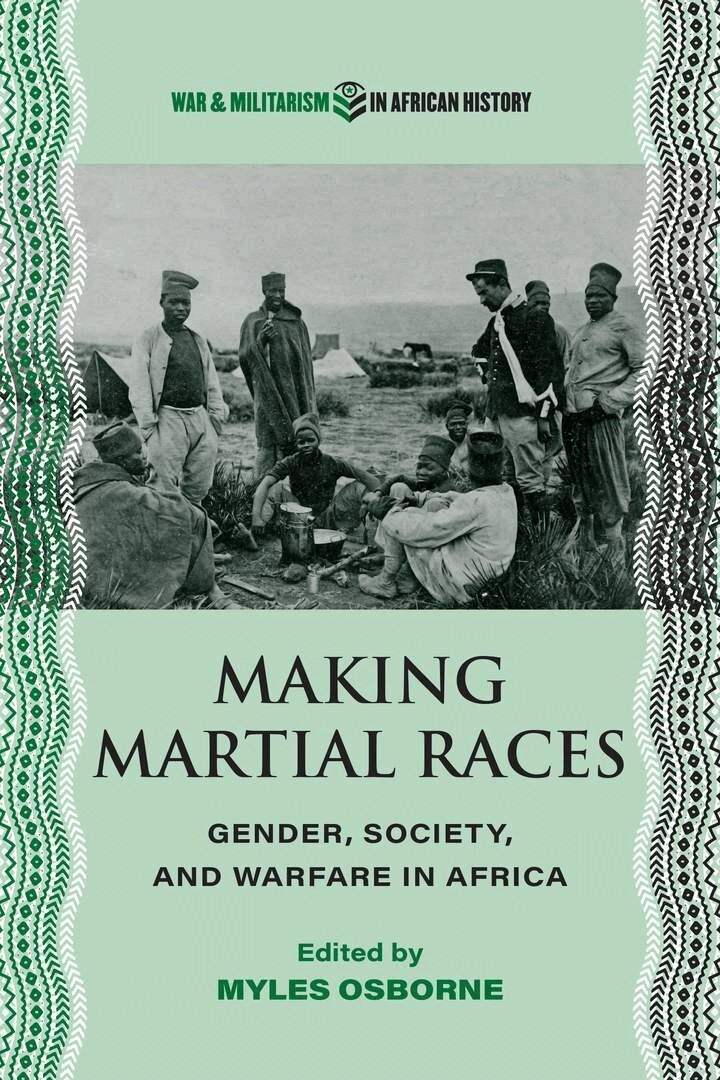
European colonizers in Africa required the service of local soldiers and military auxiliaries to uphold their power. These African men were initially engaged by the expeditions of European surveyors and explorers during the late nineteenth century, then quickly pressed into service in the notorious campaigns of pacification. Two world wars further expanded both the numbers of African soldiers in European employ and the roles they played; many of these men would continue their jobs into the era of decolonization in the 1960s and 1970s.Colonial administrators and military planners often chose their recruits based on the notion of “martial race”-a label that denoted peoples supposedly possessing an inborn aptitude for warfare and fighting. But the notion always obscured more than it revealed: few Europeans could agree on which “races”-or ethnic groups-were “martial,” and in any case, the identities of those groups changed continuously. Nevertheless, this belief remained a fundamental, guiding principle of the European presence in colonial Africa.The concept of “martial race” remains an awkward and ill-fitting Eurocentric category until African contributions, perspectives, and agencies are considered. “Martial race” was never a label neatly affixed by European administrators; rather, African peoples both contested its terms and shaped its contours. This book therefore takes as its starting point the idea of martial race and recasts it as a zone in which African men and women negotiated with their European counterparts, as well as with one another.The contributors to this volume take a broad approach to the topic, one that minimizes divisions between the precolonial, colonial, and postcolonial eras, and thinks through how cultural practices and notions of warfare and martial traditions shifted and were transformed from one period into another. These scholars’ research touches on a wide variety of subjects, including-efforts to think about culture and martial race;-the intersection of ethnic identity and the creation of “tribes” with colonial martial race theory;-the connection between colonial ethnography and constructions of martial subjectivities;-the role of gender in shaping martial notions;-the contribution of women to creating or disputing martial identities;-the idea of martial race as it intersected with slavery;-warring traditions and economies of honor as avenues for staking claims to martial genealogies; and-claims to special status by veterans of anticolonial revolutionary wars.
371 kr
Skickas inom 7-10 vardagar
European colonizers in Africa required the service of local soldiers and military auxiliaries to uphold their power. These African men were initially engaged by the expeditions of European surveyors and explorers during the late nineteenth century, then quickly pressed into service in the notorious campaigns of pacification. Two world wars further expanded both the numbers of African soldiers in European employ and the roles they played; many of these men would continue their jobs into the era of decolonization in the 1960s and 1970s.Colonial administrators and military planners often chose their recruits based on the notion of “martial race”-a label that denoted peoples supposedly possessing an inborn aptitude for warfare and fighting. But the notion always obscured more than it revealed: few Europeans could agree on which “races”-or ethnic groups-were “martial,” and in any case, the identities of those groups changed continuously. Nevertheless, this belief remained a fundamental, guiding principle of the European presence in colonial Africa.The concept of “martial race” remains an awkward and ill-fitting Eurocentric category until African contributions, perspectives, and agencies are considered. “Martial race” was never a label neatly affixed by European administrators; rather, African peoples both contested its terms and shaped its contours. This book therefore takes as its starting point the idea of martial race and recasts it as a zone in which African men and women negotiated with their European counterparts, as well as with one another.The contributors to this volume take a broad approach to the topic, one that minimizes divisions between the precolonial, colonial, and postcolonial eras, and thinks through how cultural practices and notions of warfare and martial traditions shifted and were transformed from one period into another. These scholars’ research touches on a wide variety of subjects, including-efforts to think about culture and martial race;-the intersection of ethnic identity and the creation of “tribes” with colonial martial race theory;-the connection between colonial ethnography and constructions of martial subjectivities;-the role of gender in shaping martial notions;-the contribution of women to creating or disputing martial identities;-the idea of martial race as it intersected with slavery;-warring traditions and economies of honor as avenues for staking claims to martial genealogies; and-claims to special status by veterans of anticolonial revolutionary wars.
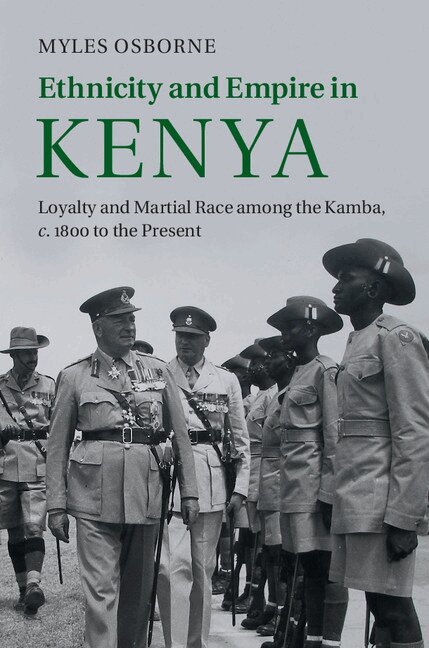
Ethnicity and Empire in Kenya
Loyalty and Martial Race among the Kamba, c.1800 to the Present
Inbunden, Engelska, 2014
1 228 kr
Skickas inom 7-10 vardagar
This book is about the creation and development of ethnic identity among the Kamba. Comprising approximately one-eighth of Kenya's population, the British considered the Kamba East Africa's premier 'martial race' by the mid-twentieth century: a people with an apparent aptitude for soldiering. The reputation, indeed, was one that Kamba leaders used to leverage financial rewards from the colonial state. However, beneath this simplistic exterior was a maelstrom of argument and debate. Men and women, young and old, Christians and non-Christians, and the elite and poor fought over the virtues they considered worthy of honor in their communities, and which of their visions should constitute 'Kamba' identity. Based on extensive archival research and more than 150 interviews, Ethnicity and Empire is one of the first books to analyze the complex process of building and shaping 'tribe' over more than two centuries. It reveals new ways to think about themes crucial to the history of colonialism: soldiering, 'loyalty', martial race, and indeed the nature of empire itself.
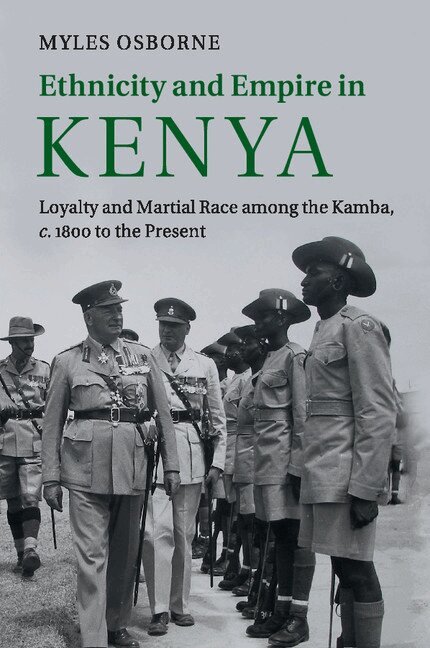
Ethnicity and Empire in Kenya
Loyalty and Martial Race among the Kamba, c.1800 to the Present
Häftad, Engelska, 2016
441 kr
Skickas inom 7-10 vardagar
This book is about the creation and development of ethnic identity among the Kamba. Comprising approximately one-eighth of Kenya's population, the British considered the Kamba East Africa's premier 'martial race' by the mid-twentieth century: a people with an apparent aptitude for soldiering. The reputation, indeed, was one that Kamba leaders used to leverage financial rewards from the colonial state. However, beneath this simplistic exterior was a maelstrom of argument and debate. Men and women, young and old, Christians and non-Christians, and the elite and poor fought over the virtues they considered worthy of honor in their communities, and which of their visions should constitute 'Kamba' identity. Based on extensive archival research and more than 150 interviews, Ethnicity and Empire is one of the first books to analyze the complex process of building and shaping 'tribe' over more than two centuries. It reveals new ways to think about themes crucial to the history of colonialism: soldiering, 'loyalty', martial race, and indeed the nature of empire itself.
1 410 kr
Skickas
408 kr
Skickas inom 3-6 vardagar