N. Bednarz – författare
Visar alla böcker från författaren N. Bednarz. Handla med fri frakt och snabb leverans.
6 produkter
6 produkter
Del 16 - Mathematics Education Library
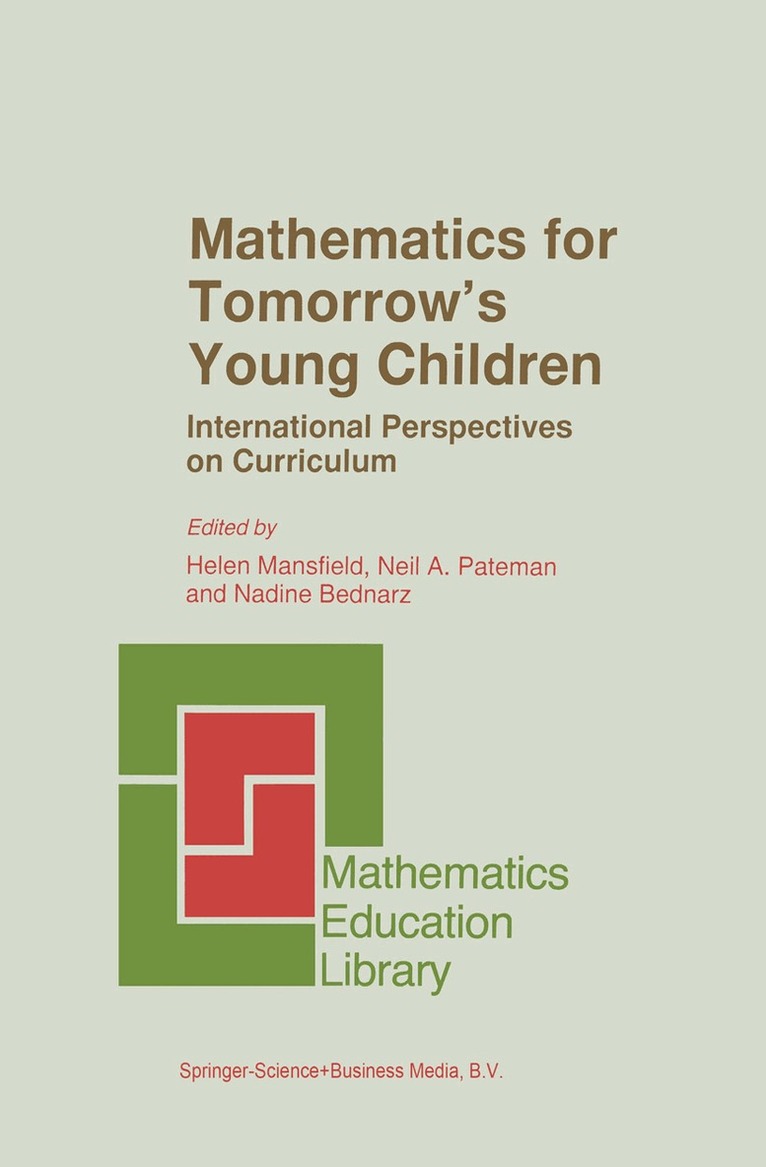
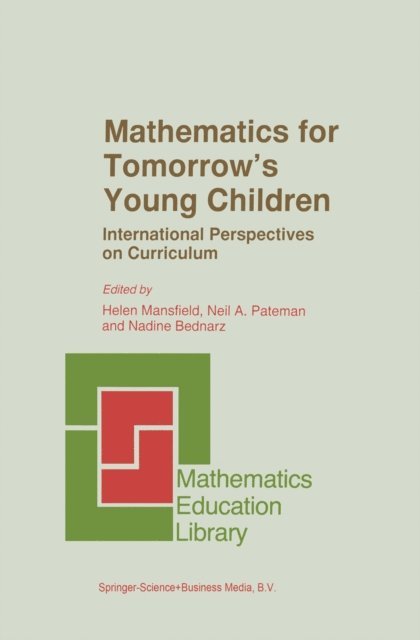
Mathematics for Tomorrow’s Young Children
Inbunden, Engelska, 1996
1 633 kr
Skickas inom 10-15 vardagar
Social constructivism is just one view of learning that places emphasis on the social aspects of learning. Other theoretical positions, such as activity theory, also emphasise the importance of social interactions. Along with social constructivism, Vygotsky's writings on children's learning have recently also undergone close scru tiny and researchers are attempting a synthesis of aspects ofVygotskian theory and social constructivism. This re-examination of Vygotsky's work is taking place in many other subject fields besides mathematics, such as language learning by young children. It is interesting to speculate why Vygotsky's writings have appealed to so many researchers in different cultures and decades later than his own times. Given the recent increased emphasis on the social nature of learning and on the interactions between student, teacher and context factors, a finer grained analysis of the nature of different theories of learning now seems to be critical, and it was considered that different views of students' learning of mathematics needed to be acknowledged in the discussions of the Working Group.
Del 18 - Mathematics Education Library
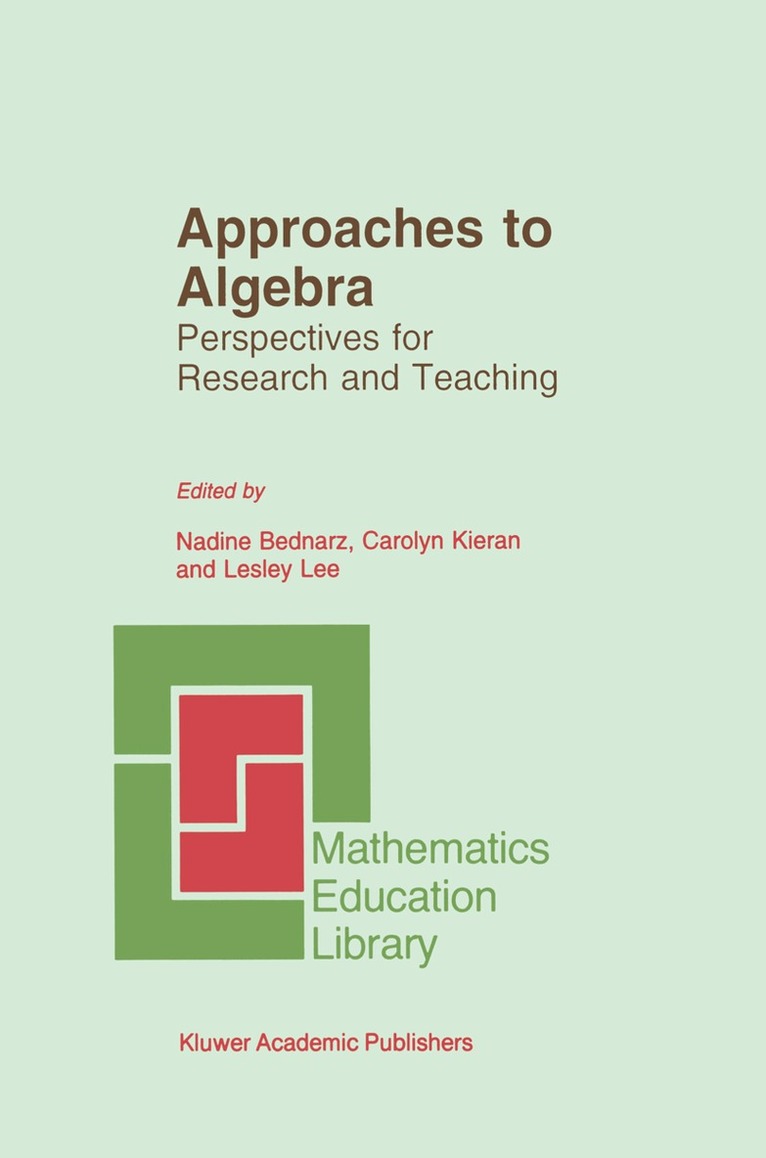
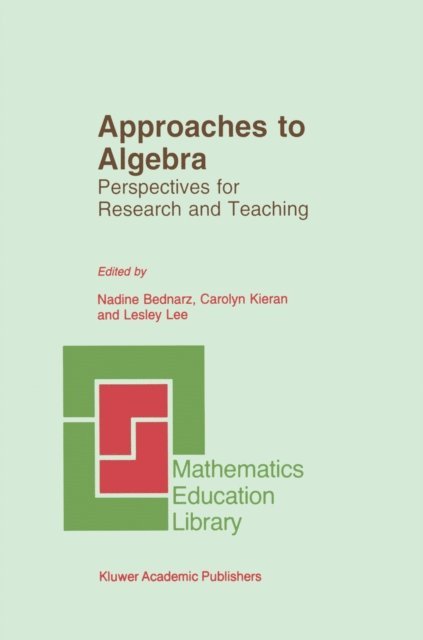
Approaches to Algebra
Perspectives for Research and Teaching
Inbunden, Engelska, 1996
3 258 kr
Skickas inom 10-15 vardagar
In Greek geometry, there is an arithmetic of magnitudes in which, in terms of numbers, only integers are involved. This theory of measure is limited to exact measure. Operations on magnitudes cannot be actually numerically calculated, except if those magnitudes are exactly measured by a certain unit. The theory of proportions does not have access to such operations. It cannot be seen as an "arithmetic" of ratios. Even if Euclidean geometry is done in a highly theoretical context, its axioms are essentially semantic. This is contrary to Mahoney's second characteristic. This cannot be said of the theory of proportions, which is less semantic. Only synthetic proofs are considered rigorous in Greek geometry. Arithmetic reasoning is also synthetic, going from the known to the unknown. Finally, analysis is an approach to geometrical problems that has some algebraic characteristics and involves a method for solving problems that is different from the arithmetical approach. 3. GEOMETRIC PROOFS OF ALGEBRAIC RULES Until the second half of the 19th century, Euclid's Elements was considered a model of a mathematical theory. This may be one reason why geometry was used by algebraists as a tool to demonstrate the accuracy of rules otherwise given as numerical algorithms. It may also be that geometry was one way to represent general reasoning without involving specific magnitudes. To go a bit deeper into this, here are three geometric proofs of algebraic rules, the frrst by Al-Khwarizmi, the other two by Cardano.
Del 18 - Mathematics Education Library
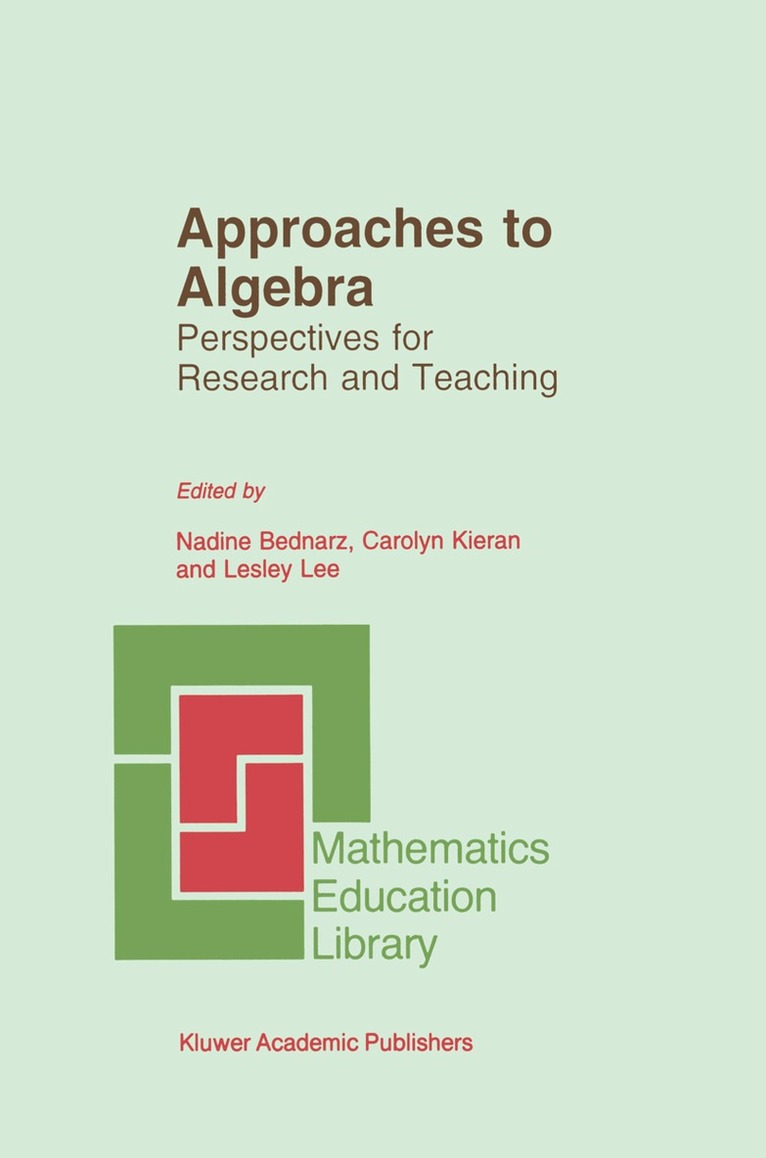
Approaches to Algebra
Perspectives for Research and Teaching
Häftad, Engelska, 1996
3 258 kr
Skickas inom 10-15 vardagar
In Greek geometry, there is an arithmetic of magnitudes in which, in terms of numbers, only integers are involved. This theory of measure is limited to exact measure. Operations on magnitudes cannot be actually numerically calculated, except if those magnitudes are exactly measured by a certain unit. The theory of proportions does not have access to such operations. It cannot be seen as an "arithmetic" of ratios. Even if Euclidean geometry is done in a highly theoretical context, its axioms are essentially semantic. This is contrary to Mahoney's second characteristic. This cannot be said of the theory of proportions, which is less semantic. Only synthetic proofs are considered rigorous in Greek geometry. Arithmetic reasoning is also synthetic, going from the known to the unknown. Finally, analysis is an approach to geometrical problems that has some algebraic characteristics and involves a method for solving problems that is different from the arithmetical approach. 3. GEOMETRIC PROOFS OF ALGEBRAIC RULES Until the second half of the 19th century, Euclid's Elements was considered a model of a mathematical theory. This may be one reason why geometry was used by algebraists as a tool to demonstrate the accuracy of rules otherwise given as numerical algorithms. It may also be that geometry was one way to represent general reasoning without involving specific magnitudes. To go a bit deeper into this, here are three geometric proofs of algebraic rules, the frrst by Al-Khwarizmi, the other two by Cardano.
Del 16 - Mathematics Education Library
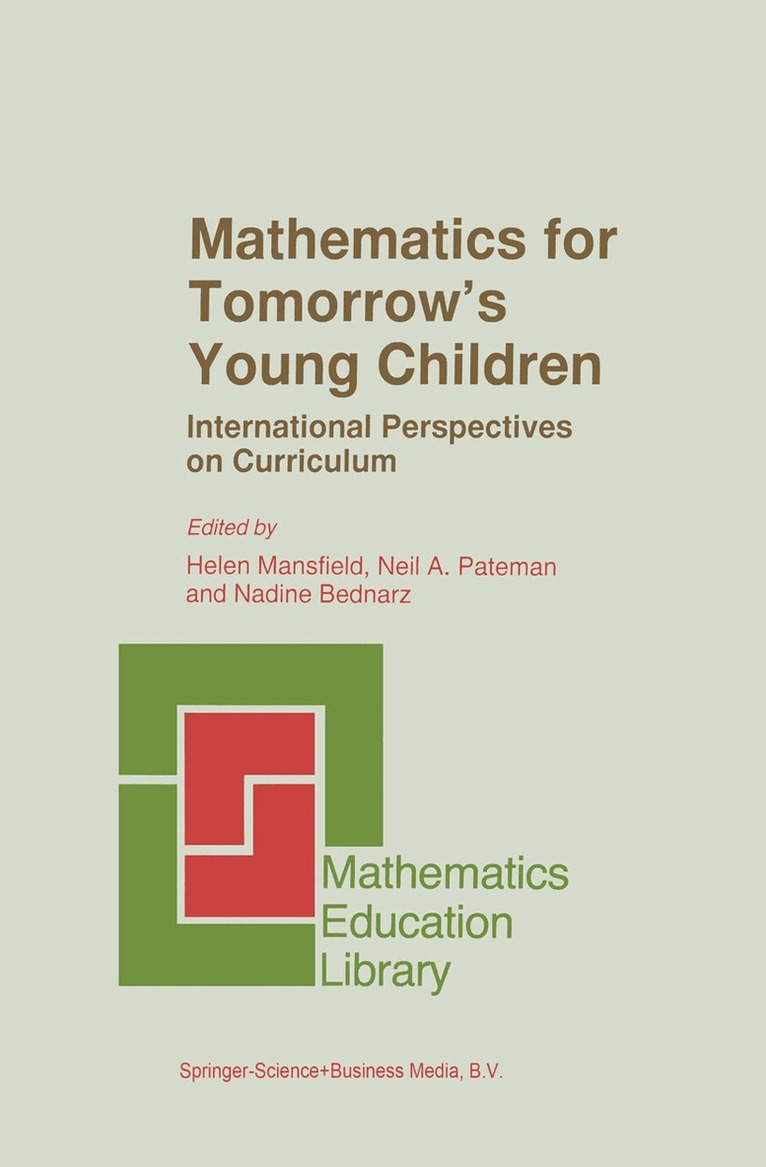
Mathematics for Tomorrow’s Young Children
Häftad, Engelska, 2010
1 633 kr
Skickas inom 10-15 vardagar
Social constructivism is just one view of learning that places emphasis on the social aspects of learning. Other theoretical positions, such as activity theory, also emphasise the importance of social interactions. Along with social constructivism, Vygotsky's writings on children's learning have recently also undergone close scru tiny and researchers are attempting a synthesis of aspects ofVygotskian theory and social constructivism. This re-examination of Vygotsky's work is taking place in many other subject fields besides mathematics, such as language learning by young children. It is interesting to speculate why Vygotsky's writings have appealed to so many researchers in different cultures and decades later than his own times. Given the recent increased emphasis on the social nature of learning and on the interactions between student, teacher and context factors, a finer grained analysis of the nature of different theories of learning now seems to be critical, and it was considered that different views of students' learning of mathematics needed to be acknowledged in the discussions of the Working Group.
E-bok
PDF, Engelska, 20124 015 kr
Läs direkt efter köp
In Greek geometry, there is an arithmetic of magnitudes in which, in terms of numbers, only integers are involved. This theory of measure is limited to exact measure. Operations on magnitudes cannot be actually numerically calculated, except if those magnitudes are exactly measured by a certain unit. The theory of proportions does not have access to such operations. It cannot be seen as an "arithmetic" of ratios. Even if Euclidean geometry is done in a highly theoretical context, its axioms are essentially semantic. This is contrary to Mahoney''s second characteristic. This cannot be said of the theory of proportions, which is less semantic. Only synthetic proofs are considered rigorous in Greek geometry. Arithmetic reasoning is also synthetic, going from the known to the unknown. Finally, analysis is an approach to geometrical problems that has some algebraic characteristics and involves a method for solving problems that is different from the arithmetical approach. 3. GEOMETRIC PROOFS OF ALGEBRAIC RULES Until the second half of the 19th century, Euclid''s Elements was considered a model of a mathematical theory. This may be one reason why geometry was used by algebraists as a tool to demonstrate the accuracy of rules otherwise given as numerical algorithms. It may also be that geometry was one way to represent general reasoning without involving specific magnitudes. To go a bit deeper into this, here are three geometric proofs of algebraic rules, the frrst by Al-Khwarizmi, the other two by Cardano.
E-bok
PDF, Engelska, 20131 977 kr
Läs direkt efter köp
Social constructivism is just one view of learning that places emphasis on the social aspects of learning. Other theoretical positions, such as activity theory, also emphasise the importance of social interactions. Along with social constructivism, Vygotsky''s writings on children''s learning have recently also undergone close scru tiny and researchers are attempting a synthesis of aspects ofVygotskian theory and social constructivism. This re-examination of Vygotsky''s work is taking place in many other subject fields besides mathematics, such as language learning by young children. It is interesting to speculate why Vygotsky''s writings have appealed to so many researchers in different cultures and decades later than his own times. Given the recent increased emphasis on the social nature of learning and on the interactions between student, teacher and context factors, a finer grained analysis of the nature of different theories of learning now seems to be critical, and it was considered that different views of students'' learning of mathematics needed to be acknowledged in the discussions of the Working Group.