Nancy Bernkopf Tucker - Böcker
Visar alla böcker från författaren Nancy Bernkopf Tucker. Handla med fri frakt och snabb leverans.
10 produkter
10 produkter
Patterns in the Dust
Chinese-American Relations and the Recognition Controversy, 1949-1950
Inbunden, Engelska, 1983
1 981 kr
Skickas inom 3-6 vardagar
Chiang Kai-shek's Chinese Nationalist government collapsed in 1949 despite United States support for the regime during the anti-Communist civil war. American policymakers were then forced to choose between rescuing the Nationalists or coming to terms with China's Communist government. The Truman Administration, caught up in the calculations of cold war diplomacy, refused to make a rash decision. Secretary of State Dean Acheson likened the Nationalist collapse to a tree falling in the forest--the United States would have to wait for the dust settled before it could see ahead clearly. Patterns in the Dust is a fresh look at a period overwhelmed by later events. Drawing on many previously unavailable sources, Nancy Bernkopf Tucker assesses the factors that influenced Washington policymakers during the critical few months in which the thirty-year estrangement between the two countries began. She examines the government's assessment of the chances for accommodation with the Chinese Communists, the careful efforts to ascertain American public opinion, and the effects of the Korean War which brought reasoned dialogue to an abrupt end.Patterns in the Dust highlights the flexibility that Dean Acheson retained in American policy toward China. Acheson emerges as a highly pragmatic man determined to preserve contacts with China simply because, as events have proved, that was the realistic way to conduct international relations.
982 kr
Tillfälligt slut
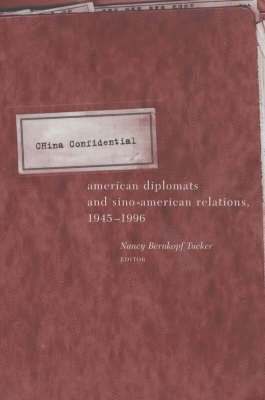
In the past sixty years, relations between China and the United States have fluctuated wildly. Such divisive issues as human rights, the future of Tibet and Taiwan, trade imbalances, and illegal immigration have fueled intense debate over how the United States should deal with the most populous nation in the world. Nancy Bernkopf Tucker brings together a wide range of interviews on these and other issues, recorded by the Association for Diplomatic Studies and Training, with key players in the making and execution of U.S. policy towards China since World War II. Historical events usch as Nixon's trip to China, the Tiananmen Massacre, and the recurring Taiwan Straits crises come to life as never before. Portraits of the essential personalities in Sino-American relations emerge from the pages of China Confidential, including Mao Zedong, Henry Kissinger, Zhou Enlai, Ronald Reagan, Chiang Kai-shek, Chiang Ching-kuo, and Lee Teng-hui.This rich array of interviews provides the context for understanding the otherwise baffling diplomatic interaction between the United States and China, shedding light on the circumstances under which difficult and crucial decisions were reached and revealing the background and biases of the people who made and carried out those policies.
665 kr
Skickas inom 3-6 vardagar
In the past sixty years, relations between China and the United States have fluctuated wildly. Such divisive issues as human rights, the future of Tibet and Taiwan, trade imbalances, and illegal immigration have fueled intense debate over how the United States should deal with the most populous nation in the world. Nancy Bernkopf Tucker brings together a wide range of interviews on these and other issues, recorded by the Association for Diplomatic Studies and Training, with key players in the making and execution of U.S. policy towards China since World War II. Historical events usch as Nixon's trip to China, the Tiananmen Massacre, and the recurring Taiwan Straits crises come to life as never before. Portraits of the essential personalities in Sino-American relations emerge from the pages of China Confidential, including Mao Zedong, Henry Kissinger, Zhou Enlai, Ronald Reagan, Chiang Kai-shek, Chiang Ching-kuo, and Lee Teng-hui.This rich array of interviews provides the context for understanding the otherwise baffling diplomatic interaction between the United States and China, shedding light on the circumstances under which difficult and crucial decisions were reached and revealing the background and biases of the people who made and carried out those policies.
1 140 kr
Skickas inom 7-10 vardagar
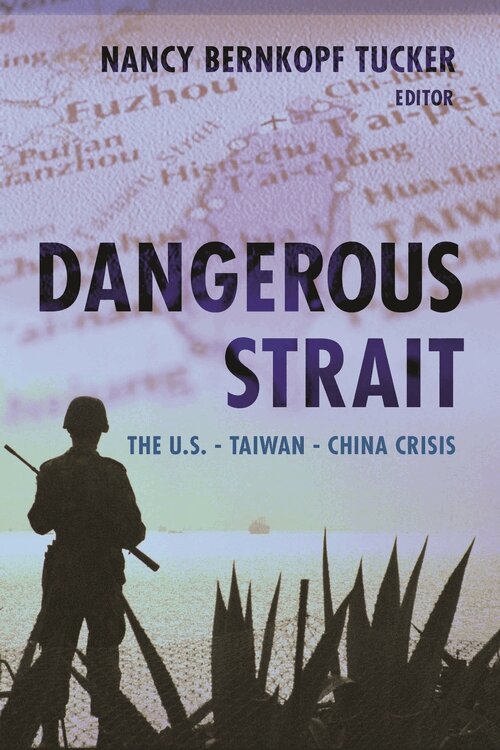
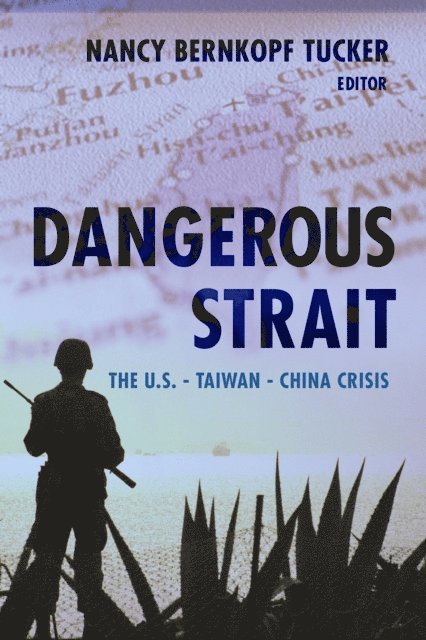
Today the most dangerous place on earth is arguably the Taiwan Strait, where a war between the United States and China could erupt out of miscalculation, misunderstanding, or accident. How and to what degree Taiwan pursues its own national identity will have profound ramifications in its relationship with China as well as in relations between China and the United States. Events late in 2004 demonstrated the volatility of the situation, as Taiwan's legislative elections unexpectedly preserved a slim majority for supporters of closer relations with China. Beijing, nevertheless, threatened to pass an anti-secession law, apt to revitalize pro-independence forces in Taiwan-and make war more likely. Taking change as a central theme, these essays by prominent scholars and practitioners in the arena of U.S.-Taiwan-Chinese relations combine historical context with timely analysis of an accelerating crisis. The book clarifies historical developments, examines myths about past and present policies, and assesses issues facing contemporary policymakers. Moving beyond simplistic explanations that dominate discussion about the U.S.-Taiwan-China relationship, Dangerous Strait challenges common wisdom and approaches the political, economic, and strategic aspects of the cross-Strait situation anew. The result is a collection that provides fresh and much-needed insights into a complex problem and examines the ways in which catastrophe can be avoided. The essays examine a variety of issues, including the movement for independence and its place in Taiwanese domestic politics; the underlying weaknesses of democracy in Taiwan; and the significance of China and Taiwan's economic interdependence. In the security arena, contributors provide incisive critiques of Taiwan's incomplete military modernization; strains in U.S.-Taiwan relations and their differing interpretations of China's intentions; and the misguided inclination among some U.S. policymakers to abandon Washington's traditional policy of strategic ambiguity.
595 kr
Skickas inom 3-6 vardagar
Today the most dangerous place on earth is arguably the Taiwan Strait, where a war between the United States and China could erupt out of miscalculation, misunderstanding, or accident. How and to what degree Taiwan pursues its own national identity will have profound ramifications in its relationship with China as well as in relations between China and the United States. Events late in 2004 demonstrated the volatility of the situation, as Taiwan's legislative elections unexpectedly preserved a slim majority for supporters of closer relations with China. Beijing, nevertheless, threatened to pass an anti-secession law, apt to revitalize pro-independence forces in Taiwan-and make war more likely. Taking change as a central theme, these essays by prominent scholars and practitioners in the arena of U.S.-Taiwan-Chinese relations combine historical context with timely analysis of an accelerating crisis. The book clarifies historical developments, examines myths about past and present policies, and assesses issues facing contemporary policymakers. Moving beyond simplistic explanations that dominate discussion about the U.S.-Taiwan-China relationship, Dangerous Strait challenges common wisdom and approaches the political, economic, and strategic aspects of the cross-Strait situation anew. The result is a collection that provides fresh and much-needed insights into a complex problem and examines the ways in which catastrophe can be avoided. The essays examine a variety of issues, including the movement for independence and its place in Taiwanese domestic politics; the underlying weaknesses of democracy in Taiwan; and the significance of China and Taiwan's economic interdependence. In the security arena, contributors provide incisive critiques of Taiwan's incomplete military modernization; strains in U.S.-Taiwan relations and their differing interpretations of China's intentions; and the misguided inclination among some U.S. policymakers to abandon Washington's traditional policy of strategic ambiguity.
1 140 kr
Skickas inom 7-10 vardagar
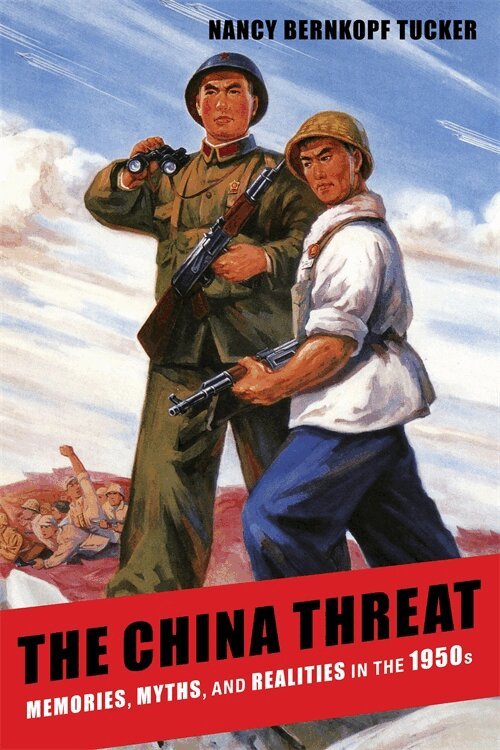
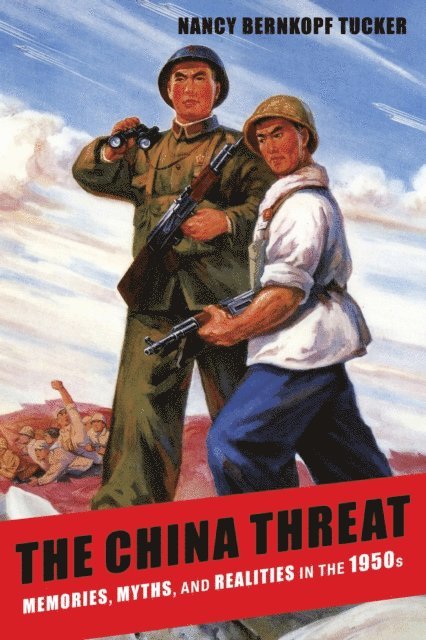
Nancy Bernkopf Tucker confronts the coldest period of the cold war-the moment in which personality, American political culture, public opinion, and high politics came together to define the Eisenhower Administration's policy toward China. A sophisticated, multidimensional account based on prodigious, cutting edge research, this volume convincingly portrays Eisenhower's private belief that close relations between the United States and the People's Republic of China were inevitable and that careful consideration of the PRC should constitute a critical part of American diplomacy. Tucker provocatively argues that the Eisenhower Administration's hostile rhetoric and tough actions toward China obscure the president's actual views. Behind the scenes, Eisenhower and his Secretary of State, John Foster Dulles, pursued a more nuanced approach, one better suited to China's specific challenges and the stabilization of the global community. Tucker deftly explores the contradictions between Eisenhower and his advisors' public and private positions.Her most powerful chapter centers on Eisenhower's recognition that rigid trade prohibitions would undermine the global postwar economic recovery and push China into a closer relationship with the Soviet Union. Ultimately, Tucker finds Eisenhower's strategic thinking on Europe and his fear of toxic, anticommunist domestic politics constrained his leadership, making a fundamental shift in U.S. policy toward China difficult if not impossible. Consequently, the president was unable to engage congress and the public effectively on China, ultimately failing to realize his own high standards as a leader.
290 kr
Skickas inom 7-10 vardagar
Nancy Bernkopf Tucker confronts the coldest period of the cold war-the moment in which personality, American political culture, public opinion, and high politics came together to define the Eisenhower Administration's policy toward China. A sophisticated, multidimensional account based on prodigious, cutting edge research, this volume convincingly portrays Eisenhower's private belief that close relations between the United States and the People's Republic of China were inevitable and that careful consideration of the PRC should constitute a critical part of American diplomacy. Tucker provocatively argues that the Eisenhower Administration's hostile rhetoric and tough actions toward China obscure the president's actual views. Behind the scenes, Eisenhower and his Secretary of State, John Foster Dulles, pursued a more nuanced approach, one better suited to China's specific challenges and the stabilization of the global community. Tucker deftly explores the contradictions between Eisenhower and his advisors' public and private positions.Her most powerful chapter centers on Eisenhower's recognition that rigid trade prohibitions would undermine the global postwar economic recovery and push China into a closer relationship with the Soviet Union. Ultimately, Tucker finds Eisenhower's strategic thinking on Europe and his fear of toxic, anticommunist domestic politics constrained his leadership, making a fundamental shift in U.S. policy toward China difficult if not impossible. Consequently, the president was unable to engage congress and the public effectively on China, ultimately failing to realize his own high standards as a leader.
1 200 kr
Skickas inom 7-10 vardagar
This is the most comprehensive, perceptive, and nuanced review to date of the foreign policy of the Lyndon Johnson era. It demonstrates US concern not just with the Soviet Union, Europe, and nuclear weapons issues, but the overwhelming preoccupation with Vietnam which shaped policy throughout the world. During this period, Johnson also faced a series of emergencies ranging from turmoil in the Congo, to war in the Middle East, to a perceived communist challenge in the Caribbean, to a lingering hostage crisis in Asia. Using the most recently declassified documents, it explains in thoroughly readable prose the intricacies of the foreign policy dilemmas that forced Johnson's Great Society domestic agenda into retreat.
422 kr
Skickas inom 7-10 vardagar
This is the most comprehensive, perceptive, and nuanced review to date of the foreign policy of the Lyndon Johnson era. It demonstrates US concern not just with the Soviet Union, Europe, and nuclear weapons issues, but the overwhelming preoccupation with Vietnam which shaped policy throughout the world. During this period, Johnson also faced a series of emergencies ranging from turmoil in the Congo, to war in the Middle East, to a perceived communist challenge in the Caribbean, to a lingering hostage crisis in Asia. Using the most recently declassified documents, it explains in thoroughly readable prose the intricacies of the foreign policy dilemmas that forced Johnson's Great Society domestic agenda into retreat.
306 kr
Skickas inom 10-15 vardagar
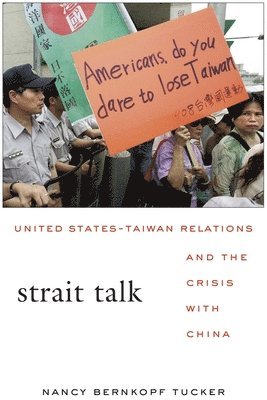
Relations among the United States, Taiwan, and China challenge policymakers, international relations specialists, and a concerned public to examine their assumptions about security, sovereignty, and peace. Only a Taiwan Straits conflict could plunge Americans into war with a nuclear-armed great power. In a timely and deeply informed book, Nancy Bernkopf Tucker traces the thorny relationship between the United States and Taiwan as both watch China’s power grow.Although Taiwan–U.S. security has been intertwined since the 1950s, neither Taipei nor Washington ever fully embraced the other. Differences in priorities and perspectives repeatedly raised questions about the wisdom of the alignment. Tucker discusses the nature of U.S. commitments to Taiwan; the intricacies of policy decisions; the intentions of critical actors; the impact of Taiwan’s democratization; the role of lobbying; and the accelerating difficulty of balancing Taiwan against China. In particular, she examines the destructive mistrust that undermines U.S. cooperation with Taiwan, stymieing efforts to resolve cross-Strait tensions.Strait Talk offers valuable historical context for understanding U.S.–Taiwan ties and is essential reading for anyone interested in international relations and security issues today.