Nancy G. Love – författare
Visar alla böcker från författaren Nancy G. Love. Handla med fri frakt och snabb leverans.
3 produkter
3 produkter
2 751 kr
Skickas inom 10-15 vardagar
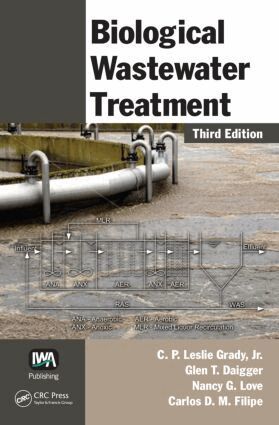
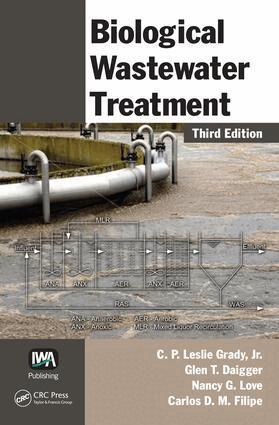
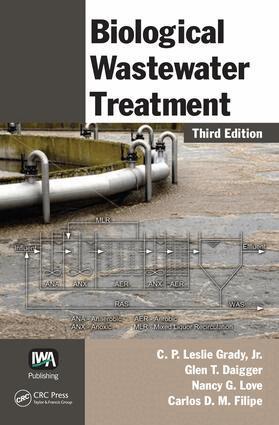
Following in the footsteps of previous highly successful and useful editions, Biological Wastewater Treatment, Third Edition presents the theoretical principles and design procedures for biochemical operations used in wastewater treatment processes. It reflects important changes and advancements in the field, such as a revised treatment of the microbiology and kinetics of nutrient removal and an update of the simulation of biological phosphorous removal with a more contemporary model. See what’s new in the Third Edition:A chapter devoted to the description and simulation of anaerobic bioreactorsCoverage of applications of submerged attached growth bioreactorsExpanded discussion of modeling attached growth systems Increased information on the fate and effects of trace contaminants as they relate to xenobiotic organic chemicalsA chapter on applying biochemical unit operations to design systems for greater sustainabilityThe book describes named biochemical operations in terms of treatment objectives, biochemical environment, and reactor configuration; introduces the format and notation used throughout the text; and presents the basic stoichiometry and kinetics of microbial reactions that are key to quantitative descriptions of biochemical operations. It then examines the stoichiometry and kinetics used to investigate the theoretical performance of biological reactors containing microorganisms suspended in the wastewater. The authors apply this theory to the operations introduced, taking care to highlight the practical constraints that ensure system functionality in the real world.The authors focus on further biochemical operations in which microorganisms grow attached to solid surfaces, adding complexity to the analysis, even though the operations are often simpler in application. They conclude with a look to the future, introducing the fate and effects of xenobiotic and trace contaminants in wastewater treatment systems and examining how the application of biochemical operations can lead to a more sustainable world.
1 822 kr
Tillfälligt slut
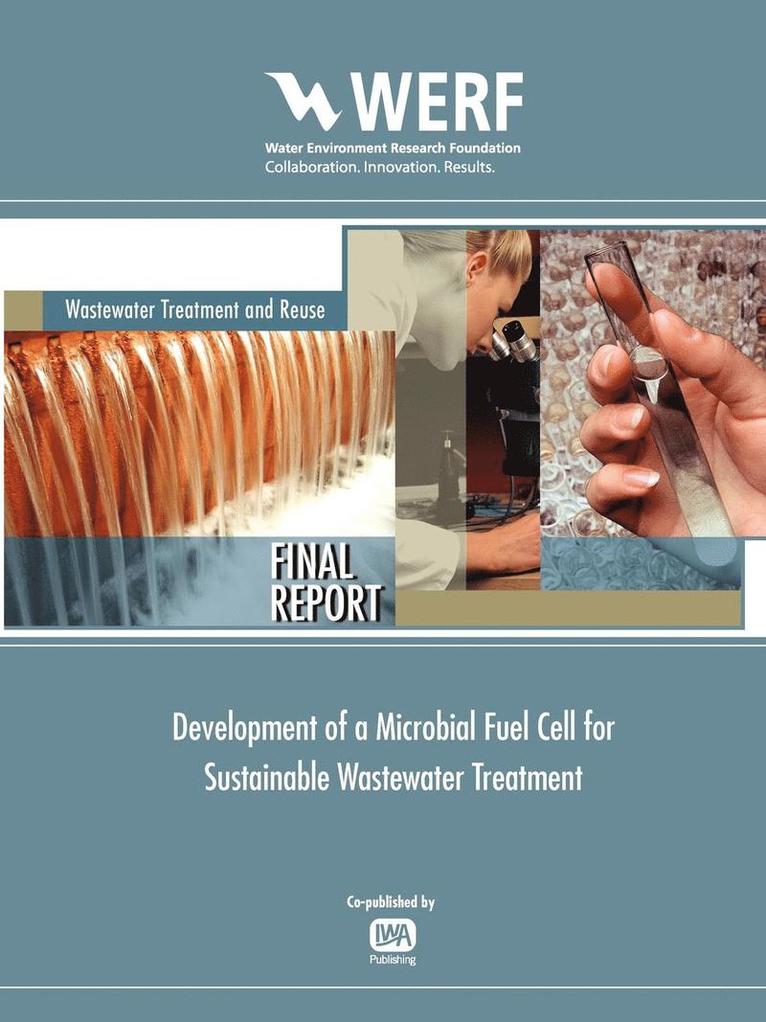
Wastewater treatment is an energy intensive process that removes contaminants and protects the environment. While some wastewater treatment plants (WWTPs) recover a small portion of their energy demand through sludge handling processes, most of the useful energy available from wastewater remains unrecovered. Efforts are underway to harness energy from wastewater by developing microbial fuel cells (MiFCs) that generate electricity. Key challenges to the development of microbial fuel cells include inefficiencies inherent in recovering energy from microbial metabolism (particularly carbon metabolism) and ineffective electron transfer processes between the bacteria and the anode. We explored the prospects for constructing microaerobic nitrifying MiFCs which could exhibit key advantages over carbon-based metabolism in particular applications (e.g., potential use in ammonia-rich recycle streams). In addition, we evaluated nanostructure-enhanced anodes which have the potential to facilitate more efficient electron transfer for MiFCs because carbon nanostructures, such as nanofibers, possess outstanding conducting properties and increase the available surface area for cellular attachment. In the initial phase of this project, we investigated the performance of a novel nitrifying MiFC that contains a nanostructure-enhanced anode and that demonstrated power generation during preliminary batch testing. Subsequent batch runs were performed with pure cultures of Nitrosomonas europaea which demonstrated very low power generation. After validating our fuel cell hardware using abiotic experiments, we proceeded to test the MiFC using a mixed culture from a local wastewater treatment plant, which was enriched for nitrifying bacteria. Again, the power generation was very low though noticeably higher on the nanostructured anodes. After establishing and monitoring the growth of another enriched nitrifying culture, we repeated the experiment a third time, again observing very low power generation. In the absence of appreciable and repeatable power production from pure and mixed nitrifying cultures, we focused on the second major objective of the work which was the fabrication and characterization of carbon nanostructured anodes. The second research objective evaluated whether or not addition of carbon nanostructures to stainless steel anodes in anaerobic microbial fuel cells enhanced electricity generation. The results from the studies focused on this element were very promising and demonstrated that CNS-coated anodes produced up to two orders of magnitude more power in anaerobic microbial fuel cells than in MiFCs with uncoated stainless steel anodes. The largest power density achieved in this study was 506 mW m-2, and the average maximum power density of the CNS-enhanced MiFCs using anaerobic sludge was 300 mW m-2. In comparison, the average maximum power density of the MiFCs with uncoated anodes in the same experiments was only 13.7 mW m-2, an almost 22-fold reduction. Electron microscopy showed that microorganisms were affiliated with the CNS-coated anodes to a much greater degree than the noncoated anodes. Sodium azide inhibition studies showed that active microorganisms were required to achieve enhanced power generation. The current was reduced significantly in MiFCs receiving the inhibitor compared to MiFCs that did not receive the inhibitor. The nature of the microbial-nanostructure relationship that caused enhanced current was not determined during this study but deserves further evaluation. These results are promising and suggest that CNS-enhanced anodes, when coupled with more efficient MiFC designs than were used in this research, may enhance the possibility that MiFC technologies can move to commercial application.
Upset Early Warning Systems for Biological Treatment Processes, Source-Effect Relationships
Häftad, Engelska, 2005
1 822 kr
Tillfälligt slut
A laboratory study was conducted to elucidate the source-effect relationships for seven chemicals (sources) that can cause activated sludge process upset (effect). These chemicals were studied over a range of concentrations using both nitrifying and non-nitrifying laboratory-scale activated sludge sequencing batch reactors. Effects were characterized according to traditional methods of evaluating process effluent and mixed liquor quality. A range of process effects were observed for both biomass sources. Overall impact was assessed and the degree to which a chemical caused an impact on process performance was considered to be more detrimental than if a chemical had multiple process effects that were moderate. The order in which chemicals caused adverse effects for the nitrifying biomass was: ammonium < octanol < DNP < cyanide < CDNB < cadmium - pH 11. For the non-nitrifying biomass, the order in which the chemicals caused adverse effects was: octanol < ammonia < DNP < cyanide < CDNB < cadmium < pH 11. Almost all chemicals caused multiple process effects, but the intensity and type of process effect was not always predictable based on the chemical applied. The findings show that there are multiple ways that chemicals can impact activated sludge plants, and suggest that corrective action practices need to be tailored based on the nature of the chemical causing the upset. This publication can be purchased and downloaded via Pay Per View on Water Intelligence Online - click on the Pay Per View icon below