Nancy Hawker – författare
Visar alla böcker från författaren Nancy Hawker. Handla med fri frakt och snabb leverans.
9 produkter
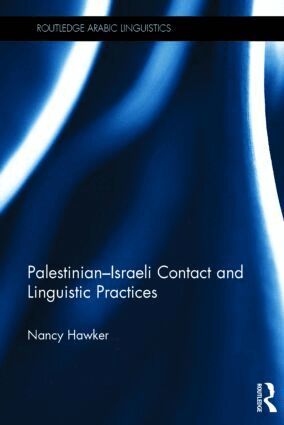
Palestinian-Israeli Contact and Linguistic Practices
Av Nancy Hawker
Inbunden, 2013
2888 kr
Lägg i varukorg
Offering insight into linguistic practices resulting from different kinds of Palestinian-Israeli contact, this book examines a specific conceptualisation of the link between the political and economic contexts and human practices, or between structure and agency, termed "articulation". The contexts …
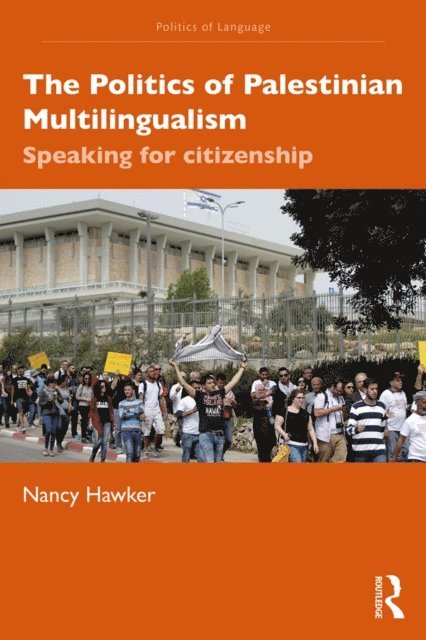
Politics of Palestinian Multilingualism
Speaking for Citizenship
Av Nancy Hawker
E-bok, 2019
785 kr
Lägg i varukorg
The Politics of Palestinian Multilingualism: Speaking for Citizenship provides an essential contribution to understanding the politics of Israel/Palestine through the prism of sociolinguistics and discourse analysis. Arabic-speakers who also know Hebrew resort to a range of communicative strategies …
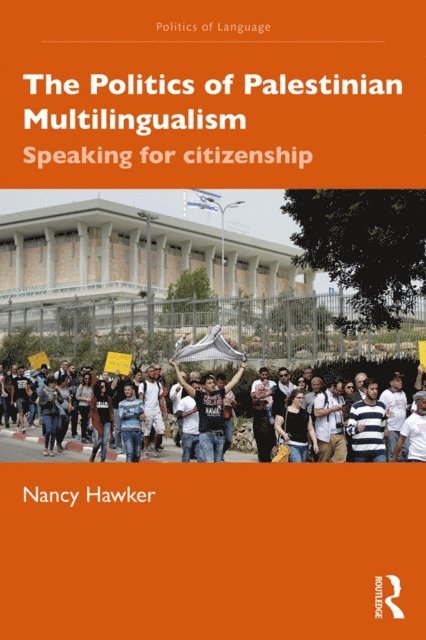
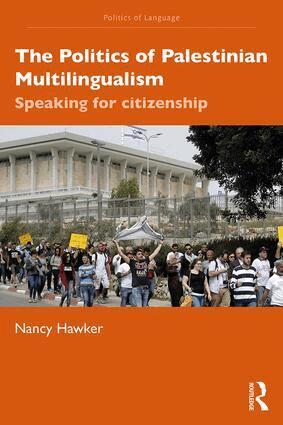
Politics of Palestinian Multilingualism
Speaking for Citizenship
Av Nancy Hawker
E-bok, 2019
768 kr
Lägg i varukorg
The Politics of Palestinian Multilingualism: Speaking for Citizenship provides an essential contribution to understanding the politics of Israel/Palestine through the prism of sociolinguistics and discourse analysis. Arabic-speakers who also know Hebrew resort to a range of communicative strategies …
Palestinian-Israeli Contact and Linguistic Practices
Av Nancy Hawker
E-bok, 2013
983 kr
Lägg i varukorg
Offering insight into linguistic practices resulting from different kinds of Palestinian-Israeli contact, this book examines a specific conceptualisation of the link between the political and economic contexts and human practices, or between structure and agency, termed "articulation". The contexts …
Palestinian-Israeli Contact and Linguistic Practices
Av Nancy Hawker
E-bok, 2013
1004 kr
Lägg i varukorg
Offering insight into linguistic practices resulting from different kinds of Palestinian-Israeli contact, this book examines a specific conceptualisation of the link between the political and economic contexts and human practices, or between structure and agency, termed "articulation". The contexts …
Palestinian-Israeli Contact and Linguistic Practices
Av Nancy Hawker
Häftad, 2018
979 kr
Lägg i varukorg
Offering insight into linguistic practices resulting from different kinds of Palestinian-Israeli contact, this book examines a specific conceptualisation of the link between the political and economic contexts and human practices, or between structure and agency, termed "articulation". The contexts …
Politics of Palestinian Multilingualism
Speaking for Citizenship
Av Nancy Hawker
Inbunden, 2019
2512 kr
Lägg i varukorg
The Politics of Palestinian Multilingualism: Speaking for Citizenship provides an essential contribution to understanding the politics of Israel/Palestine through the prism of sociolinguistics and discourse analysis. Arabic-speakers who also know Hebrew resort to a range of communicative strategies …
Politics of Palestinian Multilingualism
Speaking for Citizenship
Av Nancy Hawker
Häftad, 2019
648 kr
Lägg i varukorg
The Politics of Palestinian Multilingualism: Speaking for Citizenship provides an essential contribution to understanding the politics of Israel/Palestine through the prism of sociolinguistics and discourse analysis. Arabic-speakers who also know Hebrew resort to a range of communicative strategies …
Povídky
Short Stories by Czech Women
Av Nancy Hawker
Häftad, 2006
142 kr
Lägg i varukorg
Young women drift through Prague wondering about unplanned pregnancies, a child's reflections on the Christian concept of sinfulness lead him to resolve to sin `just a little bit', drunken men banter over interminable card games, and a woman's salvation comes in the unexpected form of pickled …