• Fri frakt över 249 kr
  • •
  • Snabba leveranser
  • •
  • Billiga böcker
Kundservice

Du är på sajten för privatpersoner.

Företag, bibliotek eller offentlig verksamhet?

Du handlar på classic.bokus.com, där alla dina funktioner finns intakta.
Till classic.bokus.com
Bokus logotyp. Gå till startsidan.
  • Erbjudanden
  • Nyheter
  • Student
  • Topplistor
  • Barn & ungdom
  • Bokus Play
  • E-böcker
  • Pocketböcker
  • Spel & pussel

Må bättre, för mindre! Upp till 50% rabatt på hälsoböcker

Sidfot

Mina sidor

    Hjälp

    • Kundservice
    • Vanliga frågor och svar
    • Frakt och leverans
    • Retur vid ångerrätt
    • Reklamera vara
    • Betalning
    • Köpvillkor
    • Allmänna villkor
    • Information om webbplatsens tillgänglighet

    Om Bokus

    • Om oss
    • Pressrum
    • För studenter
    • För företag
    • För bibliotek och offentlig verksamhet
    • För leverantörer
    • Hållbarhet

    Populärt

    • Aktuella erbjudanden
    • Presentkort
    • Studentlitteratur
    • Nya böcker
    • Topplistor
    • Signerade böcker
    • Engelska böcker

    Inspiration

    • Boktips
    • BookTok
    • Populära bokserier
    • Barnbokskaraktärer
    • Populära författare
    Logotyp för Bokus
    Följ oss på Facebook (extern länk)Följ oss på Instagram (extern länk)Följ oss på YouTube (extern länk)Följ oss på TikTok (extern länk)
    bokus @ CookiesAnpassa cookiesIntegritetspolicyKöpvillkor
    Till Citymail hemsida (extern länk)Till Budbee hemsida (extern länk)Till Postnord hemsida (extern länk)Till Schenker hemsida (extern länk)Till Early Bird hemsida (extern länk)Till Walleys hemsida (extern länk)
    1. Samhälle och politik
    2. Politik och statsskick
    3. Politisk aktivism

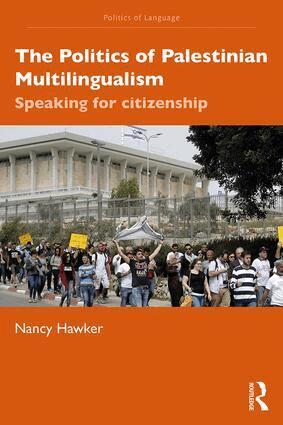
    Politics of Palestinian Multilingualism

    Speaking for Citizenship

    AvNancy Hawker

    Häftad, Engelska, 2019

    Del i serien Politics of Language

    624 kr

    Beställningsvara. Skickas inom 10-15 vardagar. Fri frakt över 249 kr.

    Fler format och utgåvor

    E-bok

    760 kr

    E-bok

    762 kr

    Inbunden

    2 421 kr

    Beskrivning

    The Politics of Palestinian Multilingualism: Speaking for Citizenship provides an essential contribution to understanding the politics of Israel/Palestine through the prism of sociolinguistics and discourse analysis. Arabic-speakers who also know Hebrew resort to a range of communicative strategies for their political ideas to be heard: they either accommodate or resist the Israeli institutional suppression of Arabic. They also codeswitch and borrow from Hebrew as well as from Arabic registers and styles in order to mobilise discursive authority. On political and cultural stages, multilingual Palestinian politicians and artists challenge the existing political structures. In the late capitalist market, language skills are re-packaged as commodified resources. With new evidence from recent and historical discourse, this book is about how speakers of a marginalised, contained language engage with the political system in the idioms at their disposal.The Politics of Palestinian Multilingualism: Speaking for Citizenship is key reading for advanced students and scholars of multilingualism, language contact, ideology, and policy, within sociolinguistics, anthropology, politics, and Middle Eastern studies.

    Produktinformation

    • Utgivningsdatum:2019-05-20
    • Mått:156 x 234 x 12 mm
    • Vikt:316 g
    • Format:Häftad
    • Språk:Engelska
    • Serie:Politics of Language
    • Antal sidor:192
    • Förlag:Taylor & Francis Ltd
    • ISBN:9781138563315

    Utforska kategorier

    • Politisk aktivism inom Samhälle och politik
    • Språkvetenskap och lingvistik inom Språk och ordböcker

    Mer om författaren

    Nancy Hawker (DPhil University of Oxford 2013) has finished a postdoctoral fellowship at the University of Oxford, UK. She is a research fellow at the Aga Khan University’s Institute for the Study of Muslim Civilisations, London.

    Recensioner i media

    "This important book is a powerful reminder that language is deeply intertwined with state practices, ideology and power. In the case of Israel, the hegemony of Hebrew over Arabic and other languages results in everyday Palestinian multilingual navigations that are inherently political, as Hawker ably shows."Yasmeen Abu-Laban, Professor and Canada Research Chair in the Politics of Citizenship and Human Rights, The University of Alberta, Canada"A sobering contribution to the unveiling of Israel's repressive and marginalizing policies against its Palestinian citizens, Nancy Hawker's fascinating sociolinguistic lens and passionate fieldwork show how third-class citizens create cracks in hegemonic structures and carve out discursive spaces of humor, boldness and talent which defy determinism."Amira Hass, journalist and author"In this extraordinary and compelling book, Dr. Nancy Hawker captures the complex play of politics on the Arabic/Hebrew interface, showing the effects of modern late capitalism and Israeli state policies on multilingual Palestinian Arabs. Contributing new understandings of language avoidance and social class, this book is a must-read in linguistic anthropology, sociolinguistics, and Middle Eastern studies." Norma Mendoza-Denton, Professor of Anthropology, University of California at Los Angeles, USA"The Politics of Palestinian Multilingualism is a tour-de-force thick description, examining the discursive and multilingual repertoires employed by Palestinians to escape the politico-linguistic straitjacket in Israel where Arabic is repressed and suppressed. It is a wonderful multidisciplinary welcomed addition to the slim shelf of literature on language as politics and politics as language."Yehouda Shenhav, Professor of Sociology, Tel Aviv University, Israel

    Innehållsförteckning

    • Introduction: A discourse-analytical exploration of the citizenship of Palestinians Chapter 1: The contestation of Arabic on Zionist stages Chapter 2: Linguistically navigating ‘mixed’ social settings in contexts of segregation Chapter 3: Expressing styles for discursive authority Chapter 4: Anxious attitudes, confident practices: the ambivalence of late capitalism Conclusion: The political scientist is the sociolinguist’s friend Epilogue: A personal journey through language teaching and learning ideologies Acknowledgments Appendices Bibliography Index