Natalia Molina - Böcker
Visar alla böcker från författaren Natalia Molina. Handla med fri frakt och snabb leverans.
7 produkter
7 produkter
Del 20 - American Crossroads
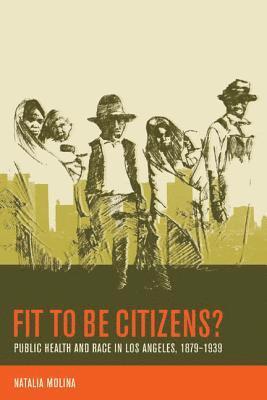
Fit to Be Citizens?
Public Health and Race in Los Angeles, 1879-1939
Häftad, Engelska, 2006
609 kr
Skickas inom 3-6 vardagar
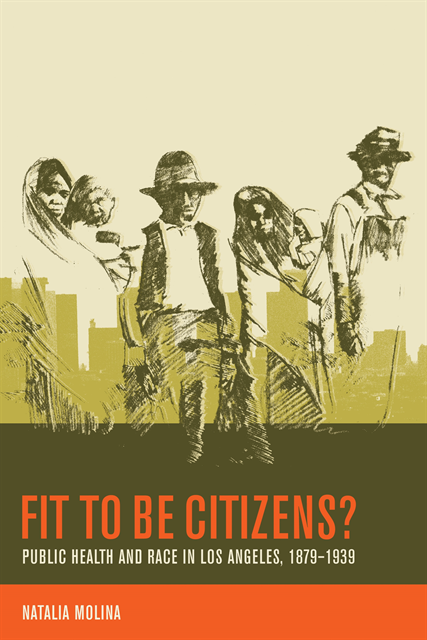
Meticulously researched and beautifully written, "Fit to Be Citizens?" demonstrates how both science and public health shaped the meaning of race in the early twentieth century. Through a careful examination of the experiences of Mexican, Japanese, and Chinese immigrants in Los Angeles, Natalia Molina illustrates the many ways local health officials used complexly constructed concerns about public health to demean, diminish, discipline, and ultimately define racial groups. She shows how the racialization of Mexican Americans was not simply a matter of legal exclusion or labor exploitation, but rather that scientific discourses and public health practices played a key role in assigning negative racial characteristics to the group. The book skillfully moves beyond the binary oppositions that usually structure works in ethnic studies by deploying comparative and relational approaches that reveal the racialization of Mexican Americans as intimately associated with the relative historical and social positions of Asian Americans, African Americans, and whites.Its rich archival grounding provides a valuable history of public health in Los Angeles, living conditions among Mexican immigrants, and the ways in which regional racial categories influence national laws and practices. Molina's compelling study advances our understanding of the complexity of racial politics, attesting that racism is not static and that different groups can occupy different places in the racial order at different times.
Del 38 - American Crossroads
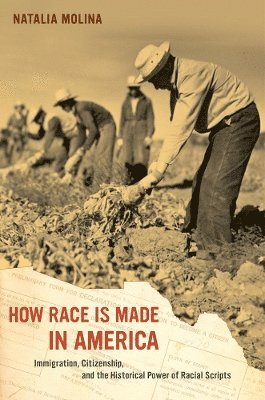
How Race Is Made in America
Immigration, Citizenship, and the Historical Power of Racial Scripts
Inbunden, Engelska, 2014
1 513 kr
Skickas inom 3-6 vardagar
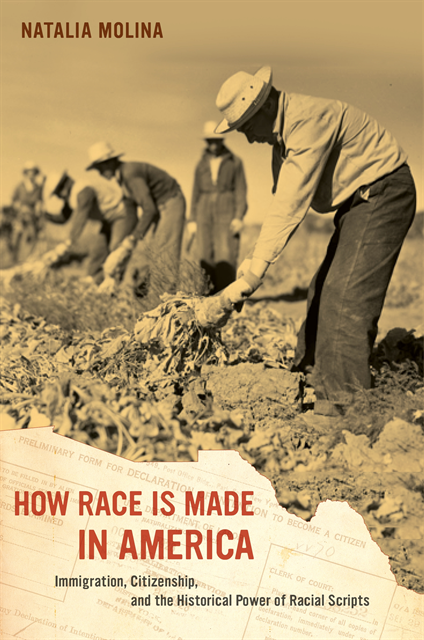
How Race Is Made in America examines Mexican Americans--from 1924, when American law drastically reduced immigration into the United States, to 1965, when many quotas were abolished--to understand how broad themes of race and citizenship are constructed. These years shaped the emergence of what Natalia Molina describes as an immigration regime, which defined the racial categories that continue to influence perceptions in the United States about Mexican Americans, race, and ethnicity. Molina demonstrates that despite the multiplicity of influences that help shape our concept of race, common themes prevail. Examining legal, political, social, and cultural sources related to immigration, she advances the theory that our understanding of race is socially constructed in relational ways--that is, in correspondence to other groups. Molina introduces and explains her central theory, racial scripts, which highlights the ways in which the lives of racialized groups are linked across time and space and thereby affect one another. How Race Is Made in America also shows that these racial scripts are easily adopted and adapted to apply to different racial groups.
Del 38 - American Crossroads
How Race Is Made in America
Immigration, Citizenship, and the Historical Power of Racial Scripts
Häftad, Engelska, 2014
234 kr
Skickas inom 7-10 vardagar
How Race Is Made in America examines Mexican Americans--from 1924, when American law drastically reduced immigration into the United States, to 1965, when many quotas were abolished--to understand how broad themes of race and citizenship are constructed. These years shaped the emergence of what Natalia Molina describes as an immigration regime, which defined the racial categories that continue to influence perceptions in the United States about Mexican Americans, race, and ethnicity. Molina demonstrates that despite the multiplicity of influences that help shape our concept of race, common themes prevail. Examining legal, political, social, and cultural sources related to immigration, she advances the theory that our understanding of race is socially constructed in relational ways--that is, in correspondence to other groups. Molina introduces and explains her central theory, racial scripts, which highlights the ways in which the lives of racialized groups are linked across time and space and thereby affect one another. How Race Is Made in America also shows that these racial scripts are easily adopted and adapted to apply to different racial groups.
1 469 kr
Skickas inom 3-6 vardagar
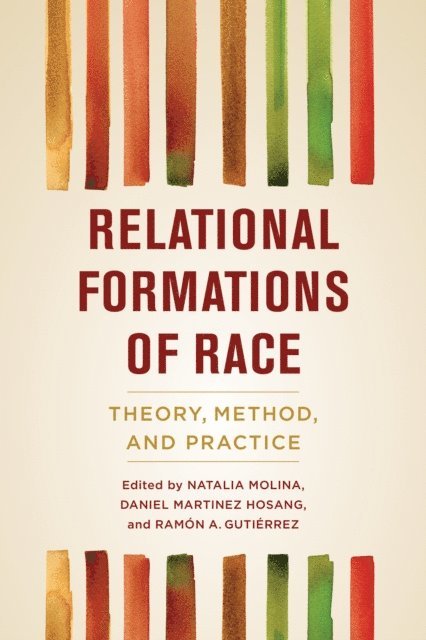
Relational Formations of Race brings African American, Chicanx/Latinx, Asian American, and Native American studies together in a single volume, enabling readers to consider the racialization and formation of subordinated groups in relation to one another. These essays conceptualize racialization as a dynamic and interactive process; group-based racial constructions are formed not only in relation to whiteness, but also in relation to other devalued and marginalized groups. The chapters offer explicit guides to understanding race as relational across all disciplines, time periods, regions, and social groups. By studying race relationally, and through a shared context of meaning and power, students will draw connections among subordinated groups and will better comprehend the logic that underpins the forms of inclusion and dispossession such groups face. As the United States shifts toward a minority-majority nation, Relational Formations of Race offers crucial tools for understanding today’s shifting race dynamics.
518 kr
Skickas inom 3-6 vardagar
Relational Formations of Race brings African American, Chicanx/Latinx, Asian American, and Native American studies together in a single volume, enabling readers to consider the racialization and formation of subordinated groups in relation to one another. These essays conceptualize racialization as a dynamic and interactive process; group-based racial constructions are formed not only in relation to whiteness, but also in relation to other devalued and marginalized groups. The chapters offer explicit guides to understanding race as relational across all disciplines, time periods, regions, and social groups. By studying race relationally, and through a shared context of meaning and power, students will draw connections among subordinated groups and will better comprehend the logic that underpins the forms of inclusion and dispossession such groups face. As the United States shifts toward a minority-majority nation, Relational Formations of Race offers crucial tools for understanding today’s shifting race dynamics.
250 kr
Skickas inom 7-10 vardagar
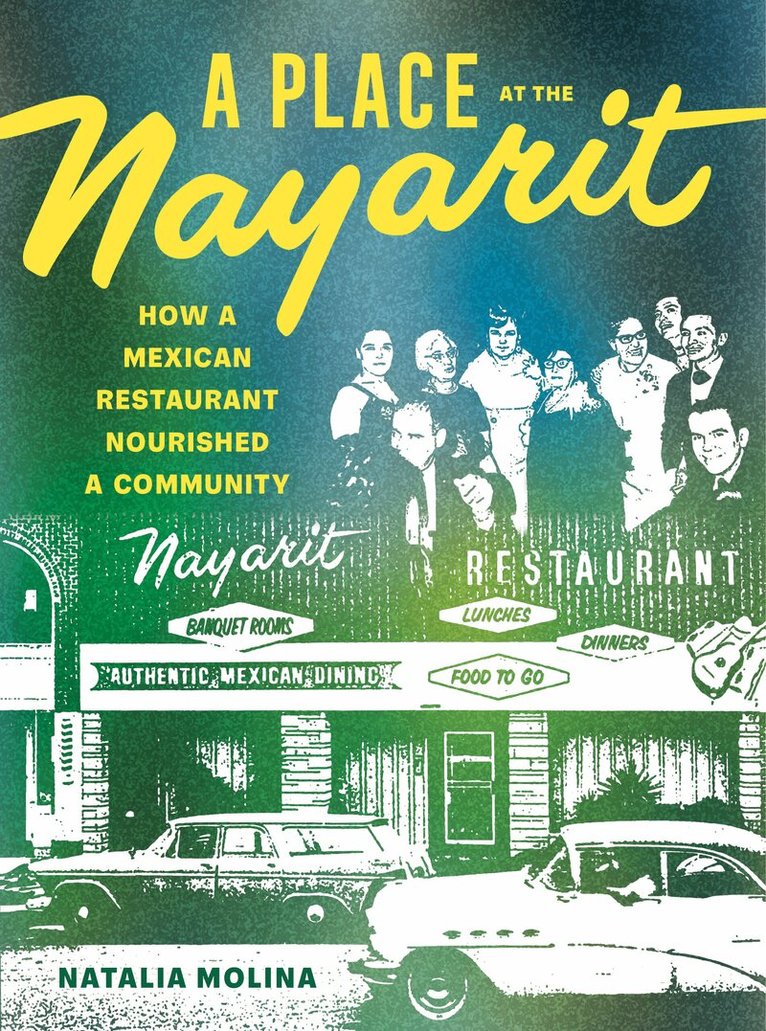
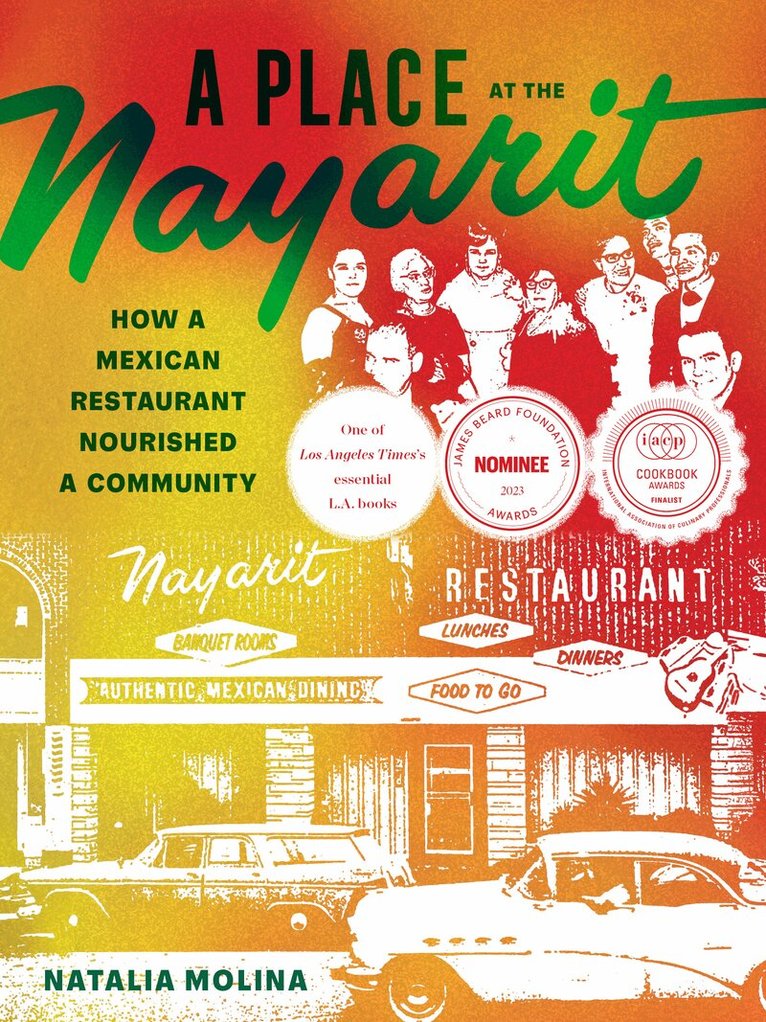
"Extraordinarily relevant and meaningful."—Elee Wood, New York TimesLos Angeles Times, An Ultimate L.A. Bookshelf Essential Book & Latinx Files 2022 Best BooksNew York Times, Best Books about California, New York TimesJames Beard Award Finalist in HistoryL.A. Taco’s 2022 Best BooksMacArthur Genius Natalia Molina unveils the hidden history of the Nayarit, a restaurant in Los Angeles that nourished its community of Mexican immigrants with a sense of belonging.In 1951, Doña Natalia Barraza opened the Nayarit, a Mexican restaurant in Echo Park, Los Angeles. With A Place at the Nayarit, historian Natalia Molina traces the life’s work of her grandmother, remembered by all who knew her as Doña Natalia––a generous, reserved, and extraordinarily capable woman. Doña Natalia immigrated alone from Mexico to L.A., adopted two children, and ran a successful business. She also sponsored, housed, and employed dozens of other immigrants, encouraging them to lay claim to a city long characterized by anti-Latinx racism. Together, the employees and customers of the Nayarit maintained ties to their old homes while providing one another safety and support.The Nayarit was much more than a popular eating spot: it was an urban anchor for a robust community, a gathering space where ethnic Mexican workers and customers connected with their patria chica (their “small country”). That meant connecting with distinctive tastes, with one another, and with the city they now called home. Through deep research and vivid storytelling, Molina follows restaurant workers from the kitchen and the front of the house across borders and through the decades. These people's stories illuminate the many facets of the immigrant experience: immigrants' complex networks of family and community and the small but essential pleasures of daily life, as well as cross-currents of gender and sexuality and pressures of racism and segregation. The Nayarit was a local landmark, popular with both Hollywood stars and restaurant workers from across the city and beloved for its fresh, traditionally prepared Mexican food. But as Molina argues, it was also, and most importantly, a place where ethnic Mexicans and other Latinx L.A. residents could step into the fullness of their lives, nourishing themselves and one another. A Place at the Nayarit is a stirring exploration of how racialized minorities create a sense of belonging. It will resonate with anyone who has felt like an outsider and had a special place where they felt like an insider.
234 kr
Skickas inom 7-10 vardagar
"Extraordinarily relevant and meaningful."—Elee Wood, New York TimesLos Angeles Times, An Ultimate L.A. Bookshelf Essential Book & Latinx Files 2022 Best BooksNew York Times, Best Books about California, New York TimesJames Beard Award Finalist in HistoryL.A. Taco’s 2022 Best BooksMacArthur Genius Natalia Molina unveils the hidden history of the Nayarit, a restaurant in Los Angeles that nourished its community of Mexican immigrants with a sense of belonging.In 1951, Doña Natalia Barraza opened the Nayarit, a Mexican restaurant in Echo Park, Los Angeles. With A Place at the Nayarit, historian Natalia Molina traces the life’s work of her grandmother, remembered by all who knew her as Doña Natalia––a generous, reserved, and extraordinarily capable woman. Doña Natalia immigrated alone from Mexico to L.A., adopted two children, and ran a successful business. She also sponsored, housed, and employed dozens of other immigrants, encouraging them to lay claim to a city long characterized by anti-Latinx racism. Together, the employees and customers of the Nayarit maintained ties to their old homes while providing one another safety and support.The Nayarit was much more than a popular eating spot: it was an urban anchor for a robust community, a gathering space where ethnic Mexican workers and customers connected with their patria chica (their “small country”). That meant connecting with distinctive tastes, with one another, and with the city they now called home. Through deep research and vivid storytelling, Molina follows restaurant workers from the kitchen and the front of the house across borders and through the decades. These people's stories illuminate the many facets of the immigrant experience: immigrants' complex networks of family and community and the small but essential pleasures of daily life, as well as cross-currents of gender and sexuality and pressures of racism and segregation. The Nayarit was a local landmark, popular with both Hollywood stars and restaurant workers from across the city and beloved for its fresh, traditionally prepared Mexican food. But as Molina argues, it was also, and most importantly, a place where ethnic Mexicans and other Latinx L.A. residents could step into the fullness of their lives, nourishing themselves and one another. A Place at the Nayarit is a stirring exploration of how racialized minorities create a sense of belonging. It will resonate with anyone who has felt like an outsider and had a special place where they felt like an insider.