Nathaniel K. Newlands – författare
Visar alla böcker från författaren Nathaniel K. Newlands. Handla med fri frakt och snabb leverans.
10 produkter
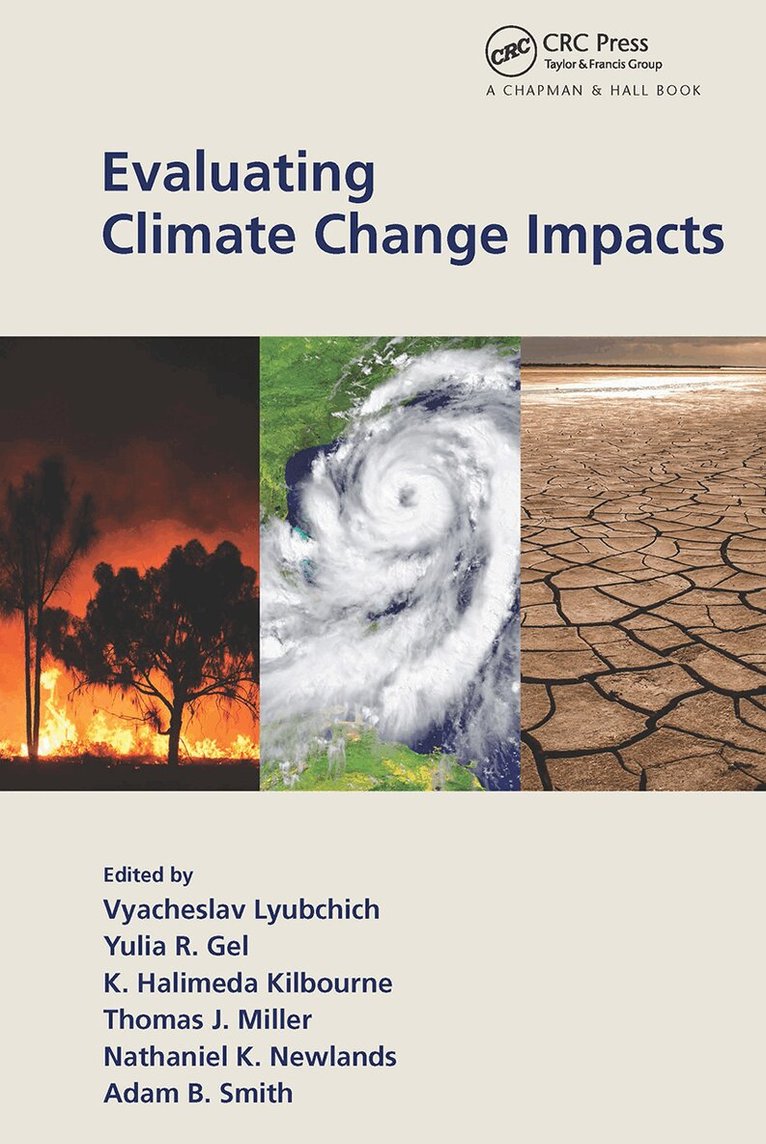
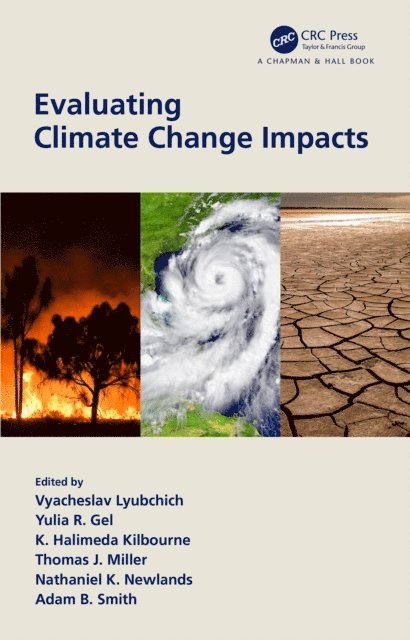
Evaluating Climate Change Impacts
Av Vyacheslav Lyubchich, Yulia Gel m. fl.
Häftad, 2023
940 kr
Lägg i varukorg
Evaluating Climate Change Impacts discusses assessing and quantifying climate change and its impacts from a multi-faceted perspective of ecosystem, social, and infrastructure resilience, given through a lens of statistics and data science. It provides a multi-disciplinary view on the implications …
Evaluating Climate Change Impacts
Av Vyacheslav Lyubchich, Yulia Gel m. fl.
Inbunden, 2020
2516 kr
Lägg i varukorg
Evaluating Climate Change Impacts discusses assessing and quantifying climate change and its impacts from a multi-faceted perspective of ecosystem, social, and infrastructure resilience, given through a lens of statistics and data science. It provides a multi-disciplinary view on the implications …
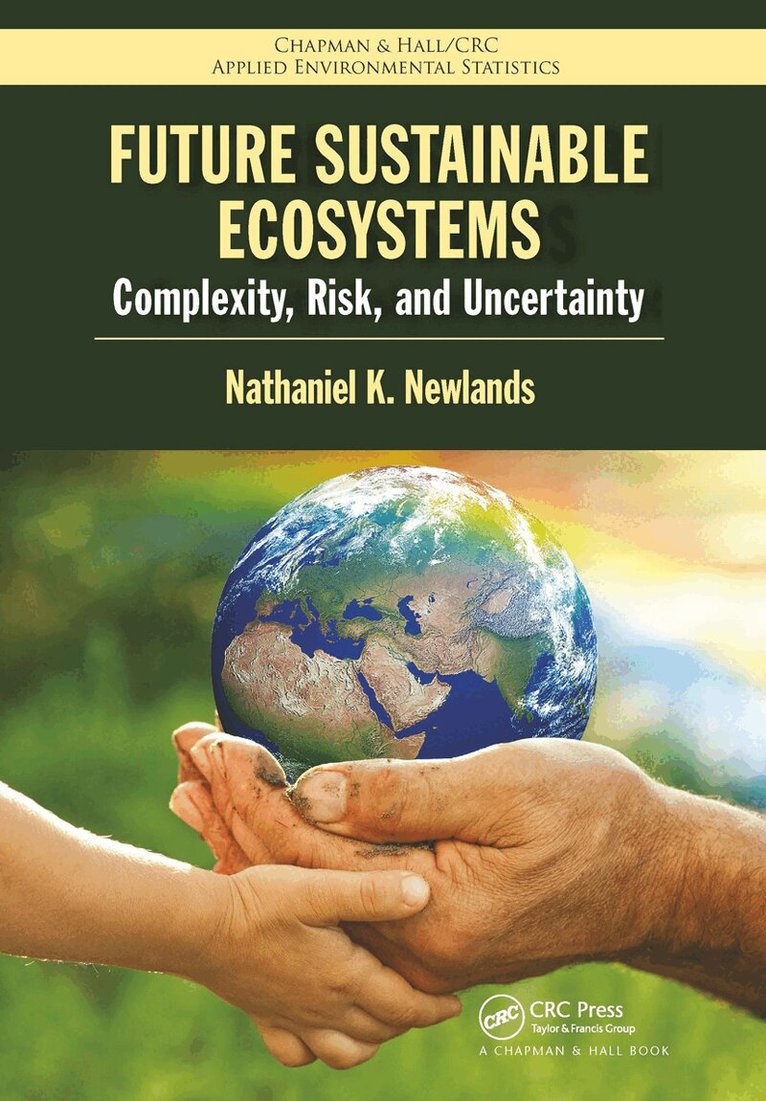
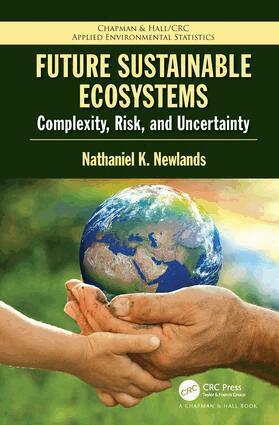
Future Sustainable Ecosystems
Complexity, Risk, and Uncertainty
Häftad, 2021
809 kr
Lägg i varukorg
Future Sustainable Ecosystems: Complexity, Risk, Uncertainty provides an interdisciplinary, integrative overview of environmental problem-solving using statistics. It shows how statistics can be used to solve diverse environmental and socio-economic problems involving food, water, energy scarcity, …
Future Sustainable Ecosystems
Complexity, Risk, and Uncertainty
E-bok, 2016
932 kr
Lägg i varukorg
Future Sustainable Ecosystems: Complexity, Risk, Uncertainty provides an interdisciplinary, integrative overview of environmental problem-solving using statistics. It shows how statistics can be used to solve diverse environmental and socio-economic problems involving food, water, energy scarcity, …
Evaluating Climate Change Impacts
Av A. Smith, Nathaniel K. Newlands m. fl.
E-bok, 2020
1108 kr
Lägg i varukorg
Evaluating Climate Change Impacts discusses assessing and quantifying climate change and its impacts from a multi-faceted perspective of ecosystem, social, and infrastructure resilience, given through a lens of statistics and data science. It provides a multi-disciplinary view on the implications …
Evaluating Climate Change Impacts
Av A. Smith, Nathaniel K. Newlands m. fl.
E-bok, 2020
1108 kr
Lägg i varukorg
Evaluating Climate Change Impacts discusses assessing and quantifying climate change and its impacts from a multi-faceted perspective of ecosystem, social, and infrastructure resilience, given through a lens of statistics and data science. It provides a multi-disciplinary view on the implications …
Future Sustainable Ecosystems
Complexity, Risk, and Uncertainty
Inbunden, 2016
1524 kr
Lägg i varukorg
Future Sustainable Ecosystems: Complexity, Risk, Uncertainty provides an interdisciplinary, integrative overview of environmental problem-solving using statistics. It shows how statistics can be used to solve diverse environmental and socio-economic problems involving food, water, energy scarcity, …
Future Sustainable Ecosystems
Complexity, Risk, and Uncertainty
E-bok, 2016
925 kr
Lägg i varukorg
Future Sustainable Ecosystems: Complexity, Risk, Uncertainty provides an interdisciplinary, integrative overview of environmental problem-solving using statistics. It shows how statistics can be used to solve diverse environmental and socio-economic problems involving food, water, energy scarcity, …
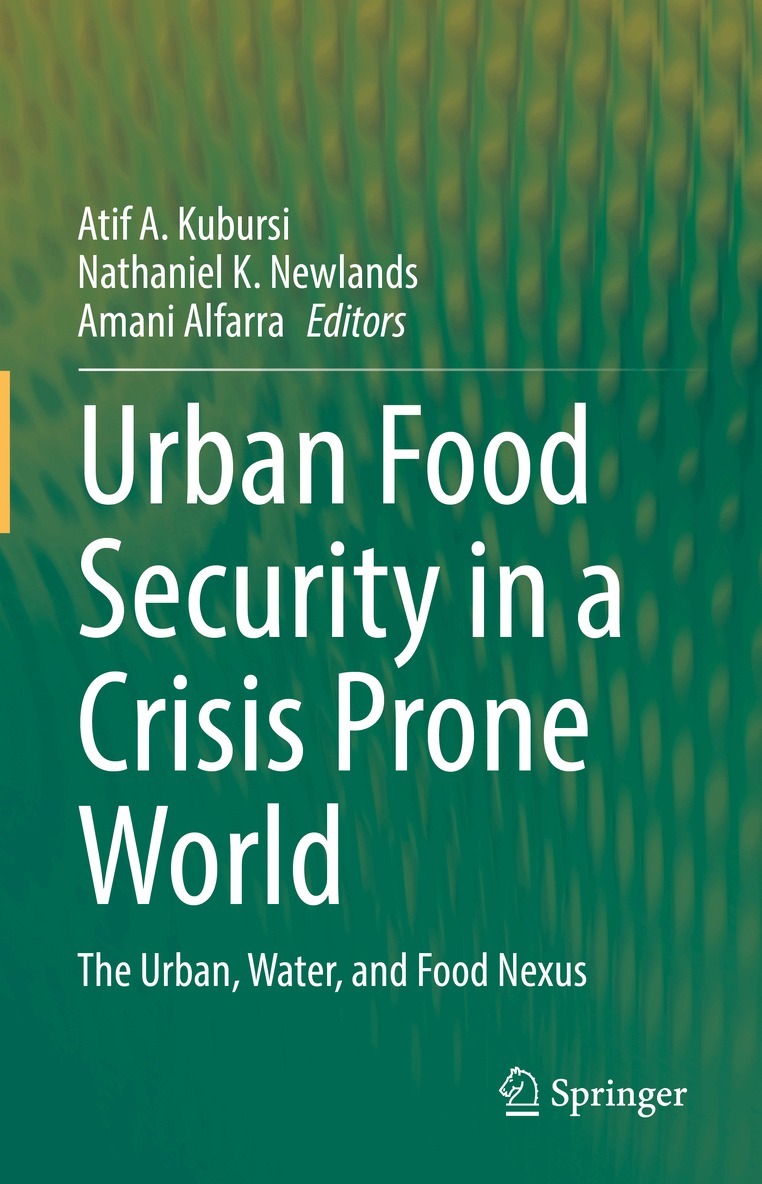
Urban Food Security in a Crisis Prone World
The Urban, Water, and Food Nexus
Av Atif A. Kubursi, Nathaniel K. Newlands m. fl.
Inbunden, 2026
1532 kr
Lägg i varukorg
The world will likely exceed 9 billion people by 2050 and is unlikely to stabilize in the 21st century, requiring 70–100% more food production, while an increasing number of countries are reaching alarming levels of water scarcity. Water for irrigation and food production constitutes one of the …
Urban Food Security in a Crisis Prone World
The Urban, Water, and Food Nexus
Av Amani Alfarra, Nathaniel K. Newlands m. fl.
E-bok, 2026
1948 kr
Lägg i varukorg
The world will likely exceed 9 billion people by 2050 and is unlikely to stabilize in the 21st century, requiring 70–100% more food production, while an increasing number of countries are reaching alarming levels of water scarcity. Water for irrigation and food production constitutes one of the …