National Cancer Policy Board – författare
Visar alla böcker från författaren National Cancer Policy Board. Handla med fri frakt och snabb leverans.
58 produkter
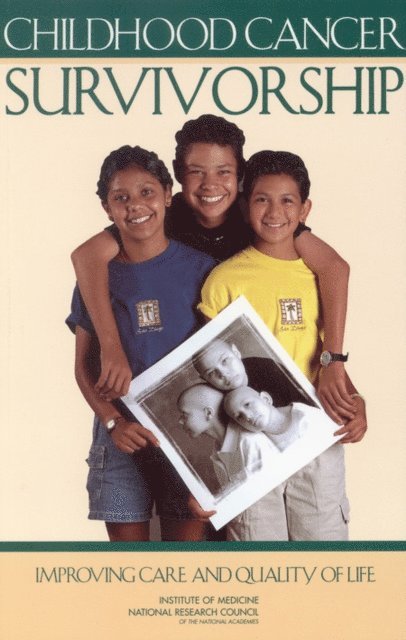
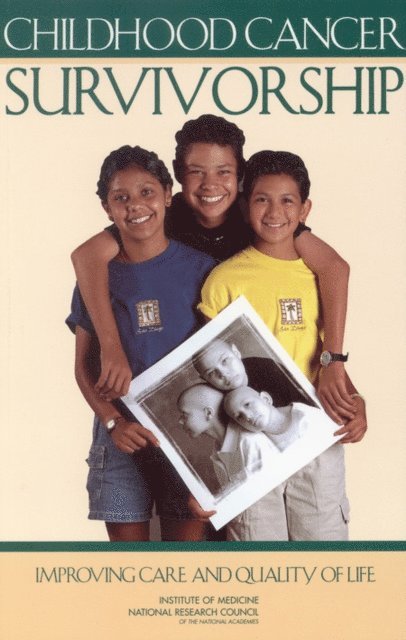
Childhood Cancer Survivorship
Improving Care and Quality of Life
Av National Research Council, Institute of Medicine m. fl.
Häftad, 2003
674 kr
Lägg i varukorg
Only more recently has it been realized that the intense effort to care for and cure a child with cancer does not end with survival. Continued surveillance and a variety of interventions may, in many cases, be needed to identify and care for consequences of treatment that can appear early or only …
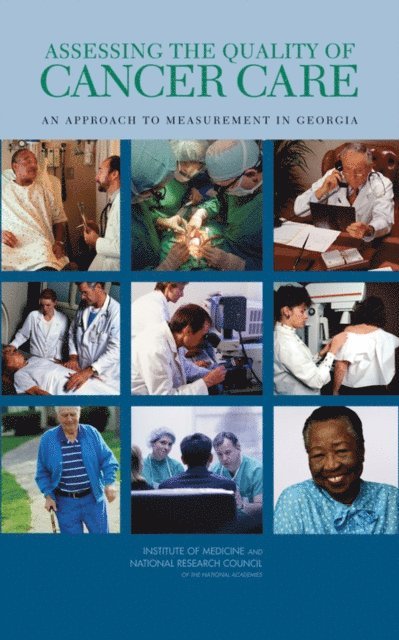
Assessing the Quality of Cancer Care
An Approach to Measurement in Georgia
Av Committee on Assessing Improvements in Cancer Care in Georgia, National Cancer Policy Board m. fl.
E-bok, 2005
981 kr
Lägg i varukorg
Shortly after 1998, leading members of Georgia''s government, medical community, and public-spirited citizenry began considering ways in which some of Georgia''s almost $5 billion, 25-year settlement from the tobacco industry''s Master Settlement Agreement with the 50 states could be used to …
Improving Breast Imaging Quality Standards
Av Committee on Improving Mammography Quality Standards, National Cancer Policy Board m. fl.
E-bok, 2005
628 kr
Lägg i varukorg
Mammography is an important tool for detecting breast cancer at an early stage.When coupled with appropriate treatment, early detection can reduce breast cancermortality. At the request of Congress, the Food and Drug Administration (FDA) commissioneda study to examine the current practice of …
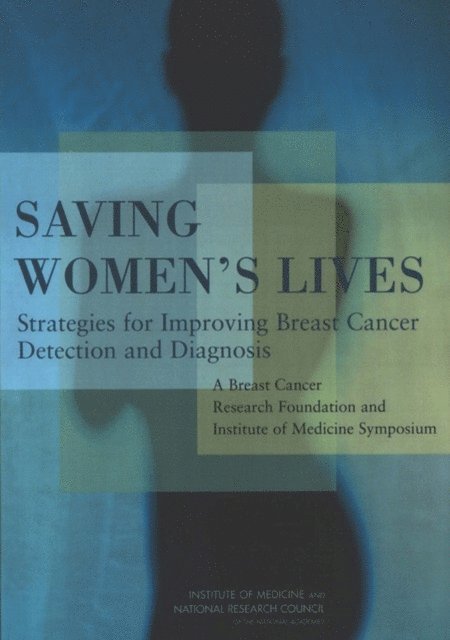
Saving Women's Lives
Strategies for Improving Breast Cancer Detection and Diagnosis
Av Committee on New Approaches to Early Detection and Diagnosis of Breast Cancer, National Cancer Policy Board m. fl.
E-bok, 2005
873 kr
Lägg i varukorg
The outlook for women with breast cancer has improved in recent years.Due to the combination of improved treatments and the benefits of mammographyscreening, breast cancer mortality has decreased steadily since1989. Yet breast cancer remains a major problem, second only to lungcancer as a leading …
Fulfilling the Potential of Cancer Prevention and Early Detection
An American Cancer Society and Institute of Medicine Symposium
Av National Cancer Policy Board, Institute of Medicine m. fl.
E-bok, 2004
660 kr
Lägg i varukorg
This report is the summary of a symposium presented by the American Cancer Society (ACS) and the Institute of Medicine (IOM) to further disseminate the conclusions and recommendations of Fulfilling the Potential of Cancer Prevention and Early Detection. This report discusses issues including better …
Meeting Psychosocial Needs of Women with Breast Cancer
Av National Cancer Policy Board, Institute of Medicine m. fl.
E-bok, 2004
874 kr
Lägg i varukorg
In Meeting Psychosocial Needs of Women with Breast Cancer , the National Cancer PolicyBoard of the Institute of Medicine examines the psychosocial consequences of thecancer experience. The book focuses specifically on breast cancer in women becausethis group has the largest survivor population …
Improving Palliative Care
We Can Take Better Care of People With Cancer
Av National Cancer Policy Board, Institute of Medicine m. fl.
E-bok, 2003
297 kr
Lägg i varukorg
As a society, we have made amazing gains in being able to detect and treat cancer. Even so, about half the people who are told by their doctors that they have cancer will die within a few years. This means that every year about one million people find out that they have cancer and are treated, and …
Childhood Cancer Survivorship
Improving Care and Quality of Life
Av National Cancer Policy Board, Institute of Medicine m. fl.
E-bok, 2003
628 kr
Lägg i varukorg
Only more recently has it been realized that the intense effort to care for and cure a child with cancer does not end with survival. Continued surveillance and a variety of interventions may, in many cases, be needed to identify and care for consequences of treatment that can appear early or only …
Describing Death in America
What We Need to Know: Executive Summary
Av National Cancer Policy Board, Division on Earth and Life Studies m. fl.
E-bok, 2003
628 kr
Lägg i varukorg
National expenditures for medical care in the months and days preceding death are enormous. But we do not know whether that money is buying good quality care or optimizing the quality of life of those dying, or whether the situation is getting better or worse over time. The information that exists …
Fulfilling the Potential of Cancer Prevention and Early Detection
Av National Cancer Policy Board, Institute of Medicine m. fl.
E-bok, 2003
1159 kr
Lägg i varukorg
Cancer ranks second only to heart disease as a leading cause of death in the United States, making it a tremendous burden in years of life lost, patient suffering, and economic costs. Fulfilling the Potential for Cancer Prevention and Early Detection reviews the proof that we can dramatically …
Interpreting the Volume-Outcome Relationship in the Context of Cancer Care
Av National Cancer Policy Board, Institute of Medicine m. fl.
E-bok, 2001
663 kr
Lägg i varukorg
Interpreting the Volume-Outcome Relationship in the Context of Cancer Care is a summary of a workshop held on May 11, 2000, which brought together experts to review evidence of the relationship between volume of services and health-related outcomes for cancer and other conditions, discuss …
Improving Palliative Care for Cancer
Av National Cancer Policy Board, Institute of Medicine m. fl.
E-bok, 2001
785 kr
Lägg i varukorg
In our society''s aggressive pursuit of cures for cancer, we have neglected symptom control and comfort care. Less than one percent of the National Cancer Institute''s budget is spent on any aspect of palliative care research or education, despite the half million people who die of cancer each year …
Improving Palliative Care for Cancer
Summary and Recommendations
Av National Cancer Policy Board, Institute of Medicine m. fl.
E-bok, 2001
419 kr
Lägg i varukorg
It is innately human to comfort and provide care to those suffering from cancer, particularly those close to death. Yet what seems self-evident at an individual, personal level has, by and large, not guided policy at the level of institutions in this country. There is no argument that palliative …
Mammography and Beyond
Developing Technologies for the Early Detection of Breast Cancer
Av Committee on Technologies for the Early Detection of Breast Cancer, National Cancer Policy Board m. fl.
E-bok, 2001
856 kr
Lägg i varukorg
Each year more than 180,000 new cases of breast cancer are diagnosed in women in the U.S. If cancer is detected when small and local, treatment options are less dangerous, intrusive, and costly-and more likely to lead to a cure. Yet those simple facts belie the complexity of developing and …
Enhancing Data Systems to Improve the Quality of Cancer Care
Av National Cancer Policy Board, Institute of Medicine m. fl.
E-bok, 2000
856 kr
Lägg i varukorg
One of the barriers to improving the quality of cancer care in the United States is the inadequacy of data systems. Out-of-date or incomplete information about the performance of doctors, hospitals, health plans, and public agencies makes it hard to gauge the quality of care. Augmenting today''s …
Ensuring Quality Cancer Care
Av National Cancer Policy Board, Institute of Medicine m. fl.
E-bok, 1999
749 kr
Lägg i varukorg
We all want to believe that when people get cancer, they will receive medical care of the highest quality. Even as new scientific breakthroughs are announced, though, many cancer patients may be getting the wrong care, too little care, or too much care, in the form of unnecessary procedures. How …
Saving Women's Lives
Strategies for Improving Breast Cancer Detection and Diagnosis: A Breast Cancer Research Foundation and Institute of Medicine Symposium
Av Committee on New Approaches to Early Detection and Diagnosis of Breast Cancer, National Cancer Policy Board m. fl.
E-bok, 2004
611 kr
Lägg i varukorg
In this report The Breast Cancer Research Foundation (BCRF) and the Institute of Medicine (IOM) present a one-day symposium that was held at the IOM to further disseminate the conclusions and recommendations of the joint IOM and National Research Council report, Saving Women''s Lives: Strategies …
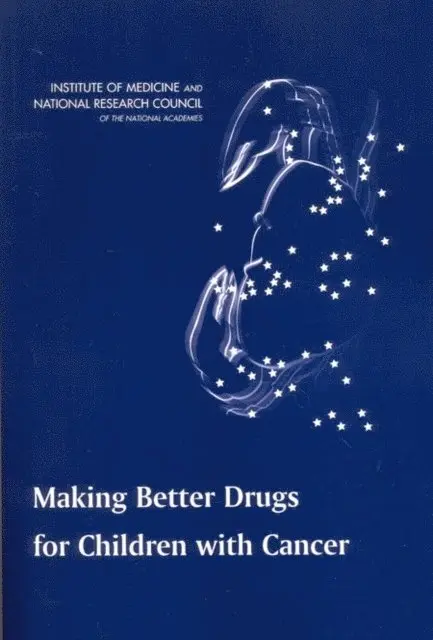
Making Better Drugs for Children with Cancer
Av Committee on Shortening the Time Line for New Cancer Treatments, National Cancer Policy Board m. fl.
E-bok, 2005
428 kr
Lägg i varukorg
The successes that have been achieved in treating childhood cancers stand as beacons against the less dramatic improvements for adults with cancer. Progress began to accelerate in the 1960s and 1970s, as treatment regimens were built up, primarily by building combinations of chemotherapeutic drugs. …
Mammography and Beyond
Developing Technologies for the Early Detection of Breast Cancer: A Non-Technical Summary
Av Committee on the Early Detection of Breast Cancer, National Cancer Policy Board m. fl.
E-bok, 2001
105 kr
Lägg i varukorg
X-ray mammography screening is the current mainstay for early breast cancer detection. It has been proven to detect breast cancer at an earlier stage and to reduce the number of women dying from the disease. However, it has a number of limitations. These current limitations in early breast cancer …
Developing Technologies for Early Detection of Breast Cancer
A Public Workshop Summary
Av Laura Newman, Committee on the Early Detection of Breast Cancer m. fl.
E-bok, 2000
295 kr
Lägg i varukorg
In November 1999, the Institute of Medicine, in consultation with the Commission on Life Sciences, the Commission on Physical Sciences, Mathematics, and Applications, and the Board on Science, Technology and Economic Policy launched a one year study on technologies for early detection of breast …
Childhood Cancer Survivorship
Improving Care and Quality of Life
Av National Cancer Policy Board, Institute of Medicine m. fl.
E-bok, 2003
455 kr
Lägg i varukorg
Only more recently has it been realized that the intense effort to care for and cure a child with cancer does not end with survival. Continued surveillance and a variety of interventions may, in many cases, be needed to identify and care for consequences of treatment that can appear early or only …
Fulfilling the Potential of Cancer Prevention and Early Detection
Av National Cancer Policy Board, Institute of Medicine m. fl.
E-bok, 2003
821 kr
Lägg i varukorg
Cancer ranks second only to heart disease as a leading cause of death in the United States, making it a tremendous burden in years of life lost, patient suffering, and economic costs. Fulfilling the Potential for Cancer Prevention and Early Detection reviews the proof that we can dramatically …
Large-Scale Biomedical Science
Exploring Strategies for Future Research
Av Committee on Large-Scale Science and Cancer Research, National Cancer Policy Board m. fl.
E-bok, 2003
660 kr
Lägg i varukorg
The nature of biomedical research has been evolving in recent years. Technological advances that make it easier to study the vast complexity of biological systems have led to the initiation of projects with a larger scale and scope. In many cases, these large-scale analyses may be the most …
Describing Death in America
What We Need to Know: Executive Summary
Av National Cancer Policy Board, Division on Earth and Life Studies m. fl.
E-bok, 2003
455 kr
Lägg i varukorg
National expenditures for medical care in the months and days preceding death are enormous. But we do not know whether that money is buying good quality care or optimizing the quality of life of those dying, or whether the situation is getting better or worse over time. The information that exists …
Interpreting the Volume-Outcome Relationship in the Context of Cancer Care
Av National Cancer Policy Board, Institute of Medicine m. fl.
E-bok, 2001
471 kr
Lägg i varukorg
Interpreting the Volume-Outcome Relationship in the Context of Cancer Care is a summary of a workshop held on May 11, 2000, which brought together experts to review evidence of the relationship between volume of services and health-related outcomes for cancer and other conditions, discuss …
Improving Palliative Care for Cancer
Summary and Recommendations
Av National Cancer Policy Board, Institute of Medicine m. fl.
E-bok, 2001
286 kr
Lägg i varukorg
It is innately human to comfort and provide care to those suffering from cancer, particularly those close to death. Yet what seems self-evident at an individual, personal level has, by and large, not guided policy at the level of institutions in this country. There is no argument that palliative …
Mammography and Beyond
Developing Technologies for the Early Detection of Breast Cancer
Av Committee on Technologies for the Early Detection of Breast Cancer, National Cancer Policy Board m. fl.
E-bok, 2001
616 kr
Lägg i varukorg
Each year more than 180,000 new cases of breast cancer are diagnosed in women in the U.S. If cancer is detected when small and local, treatment options are less dangerous, intrusive, and costly-and more likely to lead to a cure. Yet those simple facts belie the complexity of developing and …
Improving Palliative Care for Cancer
Av National Cancer Policy Board, Institute of Medicine m. fl.
E-bok, 2001
598 kr
Lägg i varukorg
In our society''s aggressive pursuit of cures for cancer, we have neglected symptom control and comfort care. Less than one percent of the National Cancer Institute''s budget is spent on any aspect of palliative care research or education, despite the half million people who die of cancer each year …
Enhancing Data Systems to Improve the Quality of Cancer Care
Av National Cancer Policy Board, Institute of Medicine m. fl.
E-bok, 2000
687 kr
Lägg i varukorg
One of the barriers to improving the quality of cancer care in the United States is the inadequacy of data systems. Out-of-date or incomplete information about the performance of doctors, hospitals, health plans, and public agencies makes it hard to gauge the quality of care. Augmenting today''s …
Ensuring Quality Cancer Care
Av National Cancer Policy Board, Institute of Medicine m. fl.
E-bok, 1999
511 kr
Lägg i varukorg
We all want to believe that when people get cancer, they will receive medical care of the highest quality. Even as new scientific breakthroughs are announced, though, many cancer patients may be getting the wrong care, too little care, or too much care, in the form of unnecessary procedures. How …