Committee on the Early Detection of Breast Cancer – författare
Visar alla böcker från författaren Committee on the Early Detection of Breast Cancer. Handla med fri frakt och snabb leverans.
6 produkter
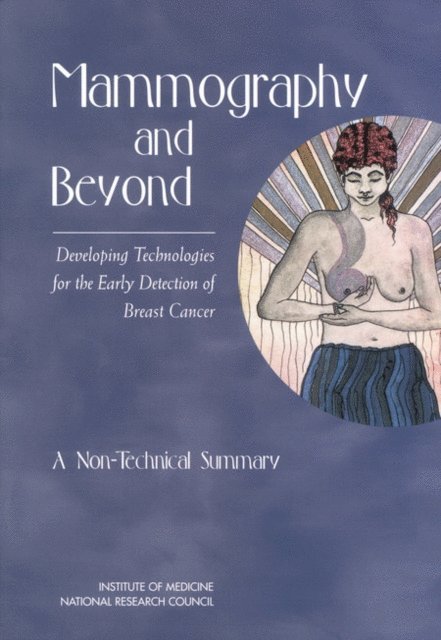
Mammography and Beyond
Developing Technologies for the Early Detection of Breast Cancer: A Non-Technical Summary
Av Committee on the Early Detection of Breast Cancer, National Cancer Policy Board m. fl.
E-bok, 2001
105 kr
Lägg i varukorg
X-ray mammography screening is the current mainstay for early breast cancer detection. It has been proven to detect breast cancer at an earlier stage and to reduce the number of women dying from the disease. However, it has a number of limitations. These current limitations in early breast cancer …
Developing Technologies for Early Detection of Breast Cancer
A Public Workshop Summary
Av Laura Newman, Committee on the Early Detection of Breast Cancer m. fl.
E-bok, 2000
295 kr
Lägg i varukorg
In November 1999, the Institute of Medicine, in consultation with the Commission on Life Sciences, the Commission on Physical Sciences, Mathematics, and Applications, and the Board on Science, Technology and Economic Policy launched a one year study on technologies for early detection of breast …
Developing Technologies for Early Detection of Breast Cancer
A Public Workshop Summary
Av Laura Newman, Committee on the Early Detection of Breast Cancer m. fl.
E-bok, 2000
200 kr
Lägg i varukorg
In November 1999, the Institute of Medicine, in consultation with the Commission on Life Sciences, the Commission on Physical Sciences, Mathematics, and Applications, and the Board on Science, Technology and Economic Policy launched a one year study on technologies for early detection of breast …
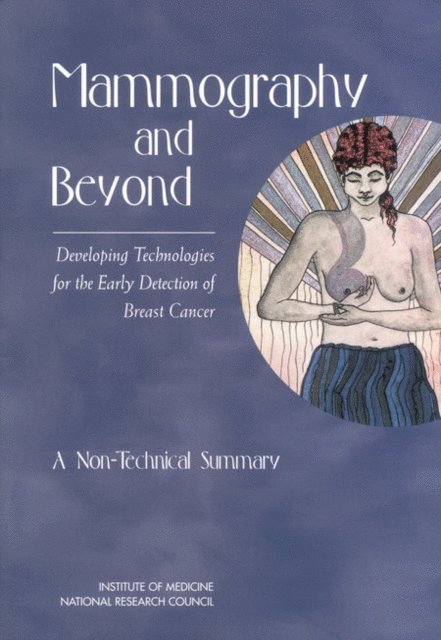
Mammography and Beyond
Developing Technologies for the Early Detection of Breast Cancer: A Non-Technical Summary
Av Committee on the Early Detection of Breast Cancer, National Cancer Policy Board m. fl.
E-bok, 2001
72 kr
Lägg i varukorg
X-ray mammography screening is the current mainstay for early breast cancer detection. It has been proven to detect breast cancer at an earlier stage and to reduce the number of women dying from the disease. However, it has a number of limitations. These current limitations in early breast cancer …
Developing Technologies for Early Detection of Breast Cancer
A Public Workshop Summary
Av National Research Council, Commission on Life Sciences m. fl.
Häftad, 2000
1140 kr
Tillfälligt slut
In November 1999, the Institute of Medicine, in consultation with the Commission on Life Sciences, the Commission on Physical Sciences, Mathematics, and Applications, and the Board on Science, Technology and Economic Policy launched a one year study on technologies for early detection of breast …
Mammography and Beyond
Developing Technologies for the Early Detection of Breast Cancer: A Non-Technical Summary
Av National Research Council, Commission on Life Sciences m. fl.
Häftad, 2001
70 kr
Tillfälligt slut
X-ray mammography screening is the current mainstay for early breast cancer detection. It has been proven to detect breast cancer at an earlier stage and to reduce the number of women dying from the disease. However, it has a number of limitations. These current limitations in early breast cancer …