
Nayef Ghasem – författare
Visar alla böcker från författaren Nayef Ghasem. Handla med fri frakt och snabb leverans.
7 produkter
7 produkter
917 kr
Skickas inom 10-15 vardagar
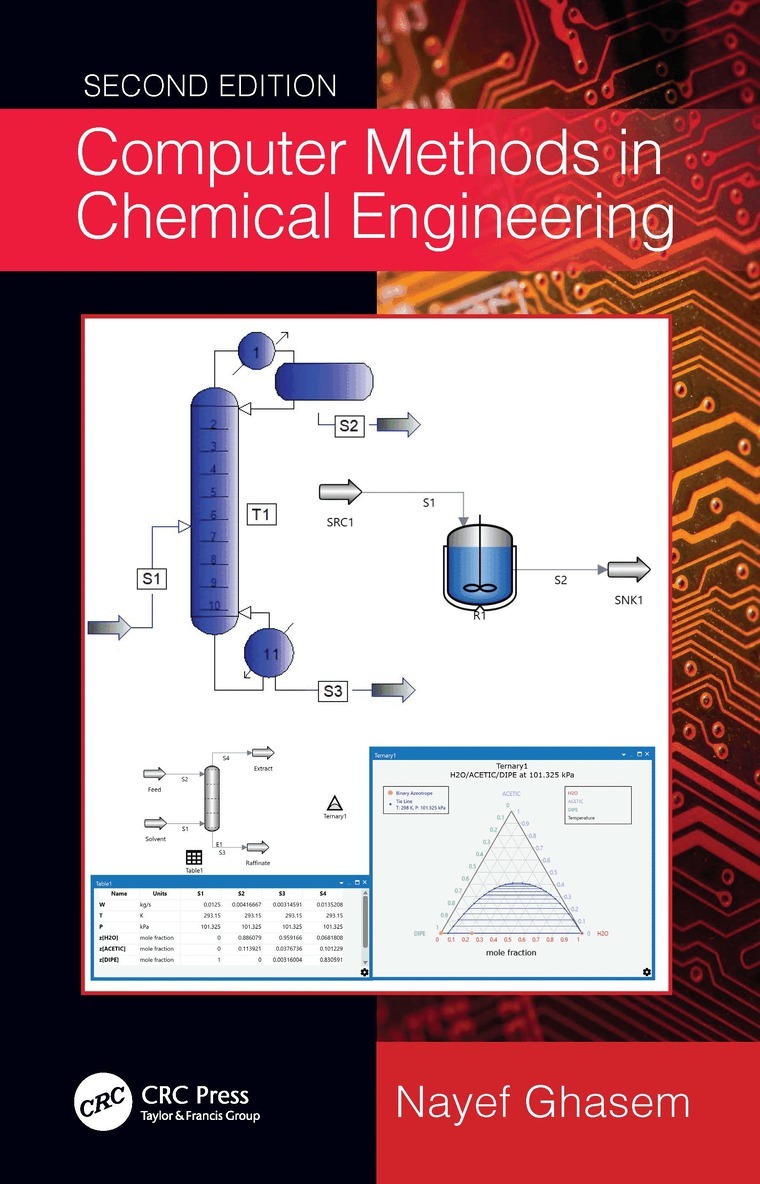
While various software packages have become essential for performing unit operations and other kinds of processes in chemical engineering, the fundamental theory and methods of calculation must also be understood to effectively test the validity of these packages and verify the results. Computer Methods in Chemical Engineering, Second Edition presents the most used simulation software along with the theory involved. It covers chemical engineering thermodynamics, fluid mechanics, material and energy balances, mass transfer operations, reactor design, and computer applications in chemical engineering. The highly anticipated Second Edition is thoroughly updated to reflect the latest updates in the featured software and has added a focus on real reactors, introduces AVEVA Process Simulation software, and includes new and updated appendixes.Through this book, students will learn the following: What chemical engineers do The functions and theoretical background of basic chemical engineering unit operations How to simulate chemical processes using software packages How to size chemical process units manually and with software How to fit experimental data How to solve linear and nonlinear algebraic equations as well as ordinary differential equationsAlong with exercises and references, each chapter contains a theoretical description of process units followed by numerous examples that are solved step by step via hand calculation and computer simulation using Hysys/UniSim, PRO/II, Aspen Plus, and SuperPro Designer. Adhering to the Accreditation Board for Engineering and Technology (ABET) criteria, the book gives chemical engineering students and professionals the tools to solve real problems involving thermodynamics and fluid-phase equilibria, fluid flow, material and energy balances, heat exchangers, reactor design, distillation, absorption, and liquid extraction.This new edition includes many examples simulated by recent software packages. In addition, fluid package information is introduced in correlation to the numerical problems in book. An updated solutions manual and PowerPoint slides are also provided in addition to new video guides and UniSim program files.
2 317 kr
Skickas inom 10-15 vardagar
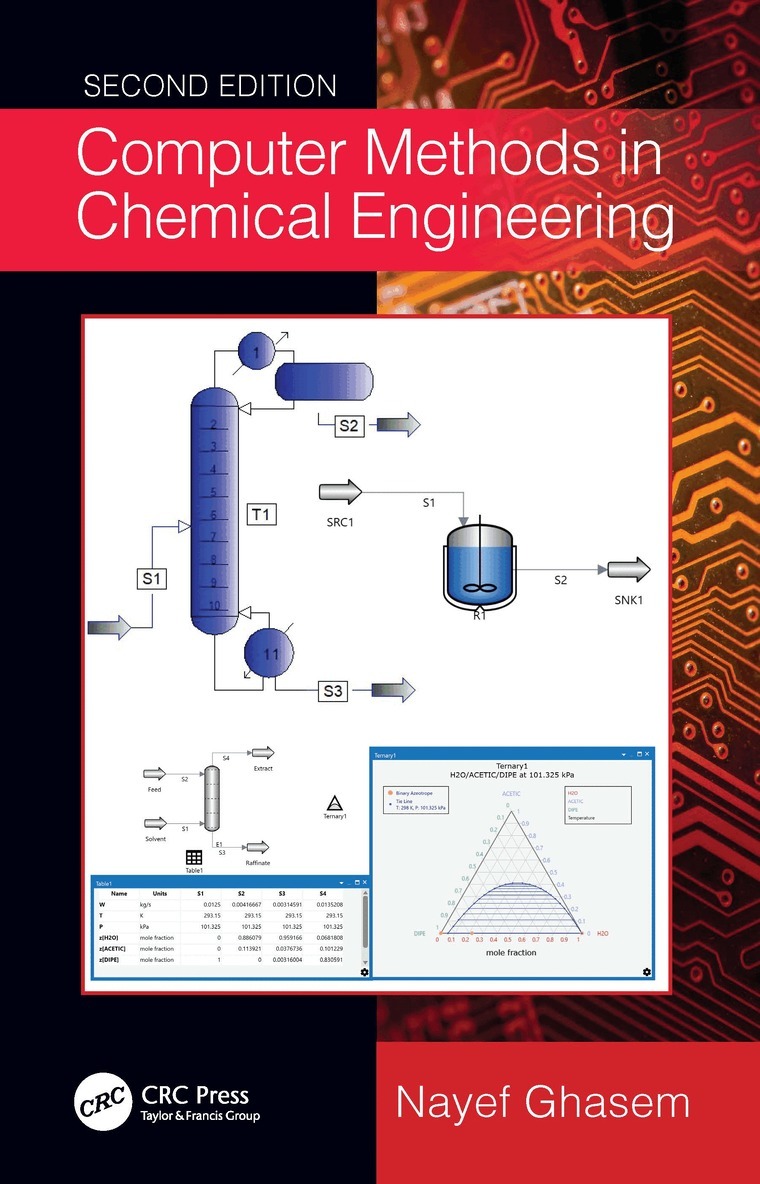
While various software packages have become essential for performing unit operations and other kinds of processes in chemical engineering, the fundamental theory and methods of calculation must also be understood to effectively test the validity of these packages and verify the results. Computer Methods in Chemical Engineering, Second Edition presents the most used simulation software along with the theory involved. It covers chemical engineering thermodynamics, fluid mechanics, material and energy balances, mass transfer operations, reactor design, and computer applications in chemical engineering. The highly anticipated Second Edition is thoroughly updated to reflect the latest updates in the featured software and has added a focus on real reactors, introduces AVEVA Process Simulation software, and includes new and updated appendixes.Through this book, students will learn the following: What chemical engineers do The functions and theoretical background of basic chemical engineering unit operations How to simulate chemical processes using software packages How to size chemical process units manually and with software How to fit experimental data How to solve linear and nonlinear algebraic equations as well as ordinary differential equationsAlong with exercises and references, each chapter contains a theoretical description of process units followed by numerous examples that are solved step by step via hand calculation and computer simulation using Hysys/UniSim, PRO/II, Aspen Plus, and SuperPro Designer. Adhering to the Accreditation Board for Engineering and Technology (ABET) criteria, the book gives chemical engineering students and professionals the tools to solve real problems involving thermodynamics and fluid-phase equilibria, fluid flow, material and energy balances, heat exchangers, reactor design, distillation, absorption, and liquid extraction.This new edition includes many examples simulated by recent software packages. In addition, fluid package information is introduced in correlation to the numerical problems in book. An updated solutions manual and PowerPoint slides are also provided in addition to new video guides and UniSim program files.
1 230 kr
Skickas inom 10-15 vardagar
Numerical methods are vital to the practice of chemical engineering, allowing for the solution of real-world problems. Written in a concise and practical format, this textbook introduces readers to the numerical methods required in the discipline of chemical engineering and enables them to validate their solutions using both Python and Simulink.Introduces numerical methods, followed by the solution of linear and nonlinear algebraic equationsDeals with the numerical integration of a definite function and solves initial and boundary value ordinary differential equations with different ordersWeaves in examples of various numerical methods and validates solutions to each with Python and Simulink graphical programmingFeatures appendices on how to use Python and SimulinkAimed at advanced undergraduate and graduate chemical engineering students, as well as practicing chemical engineers, this textbook offers a guide to the use of two of the most widely used programs in the discipline.The textbook features numerous video lectures of applications and a solutions manual for qualifying instructors.
727 kr
Skickas inom 10-15 vardagar
Numerical methods are vital to the practice of chemical engineering, allowing for the solution of real-world problems. Written in a concise and practical format, this textbook introduces readers to the numerical methods required in the discipline of chemical engineering and enables them to validate their solutions using both Python and Simulink.Introduces numerical methods, followed by the solution of linear and nonlinear algebraic equationsDeals with the numerical integration of a definite function and solves initial and boundary value ordinary differential equations with different ordersWeaves in examples of various numerical methods and validates solutions to each with Python and Simulink graphical programmingFeatures appendices on how to use Python and SimulinkAimed at advanced undergraduate and graduate chemical engineering students, as well as practicing chemical engineers, this textbook offers a guide to the use of two of the most widely used programs in the discipline.The textbook features numerous video lectures of applications and a solutions manual for qualifying instructors.
1 773 kr
Skickas inom 10-15 vardagar
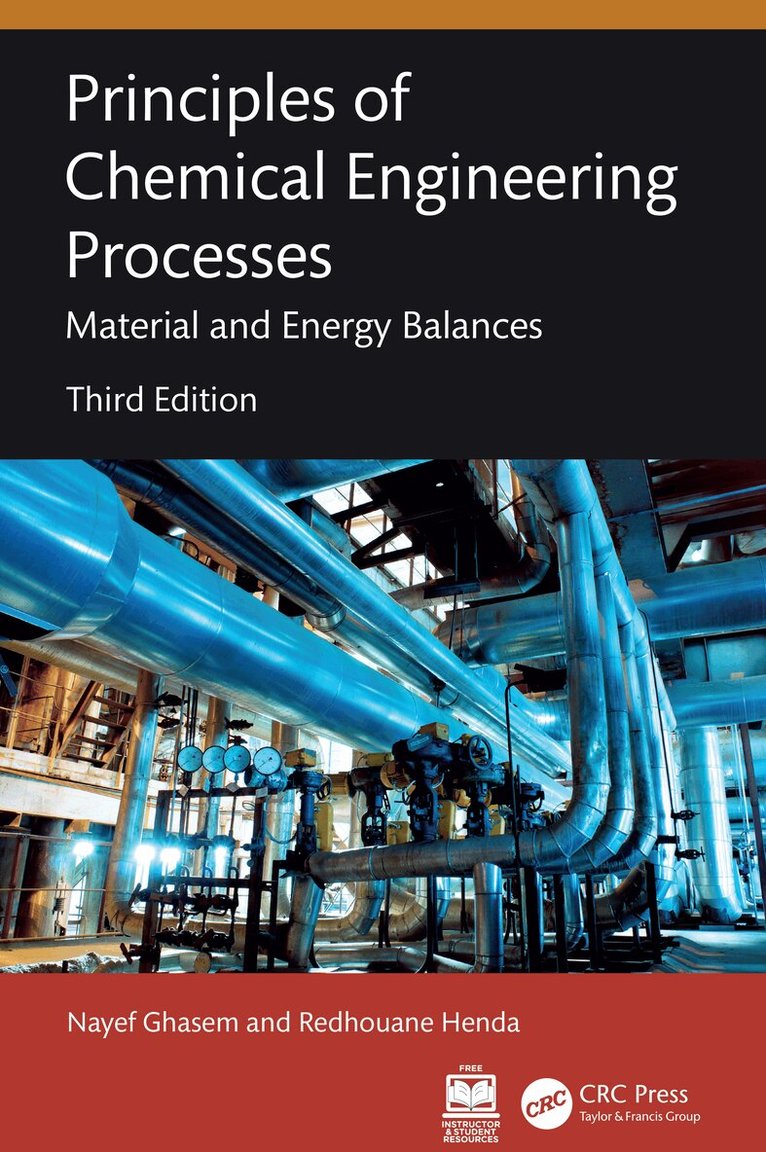
Principles of Chemical Engineering Processes: Material and Energy Balances continues to serve an essential text, guiding students on the basic principles and calculation techniques used in the field of chemical engineering and providing a solid understanding of the fundamentals of the application of material and energy balances. This third edition has been updated to reflect advances in the field and feedback from professors and students. Packed with illustrative examples and case studies, this book:• Features learning objectives and homework problems in every chapter, new material on software modeling, and additional and enhanced solved examples and problems.• Discusses problems in material and energy balances related to chemical reactors and explains the concepts of dimensions, units, psychrometry, steam properties, and conservation of mass and energy.• Demonstrates how Python, MATLAB®, and Simulink® can be used to solve complicated problems of material and energy balances, and now features an introduction to the basics of building Simulink models.• Demonstrates how Python and its libraries, such as NumPy and SciPy, can be used to solve complex problems in material and energy balances, and introduces the basics of building models using Python frameworks similar to Simulink.• Shows how to solve steady-state and transient mass and energy balance problems involving multiple-unit processes and recycle, bypass, and purge streams.• Develops quantitative problem-solving skills, specifically the ability to think quantitatively (including numbers and units), the ability to translate words into diagrams and mathematical expressions, the ability to use common sense to interpret vague and ambiguous language in problem statements, and the ability to make judicious use of approximations and reasonable assumptions to simplify problems.• Offers educational software and sample tutorials and quizzes for download.Aimed at both chemical engineering students and professionals, this book helps readers understand how to calculate, manage, and apply the key ideas of material and energy use in chemical processes through real-world examples. Lecture slides and a solutions manual are available with qualifying course adoption.
2 113 kr
Skickas inom 10-15 vardagar
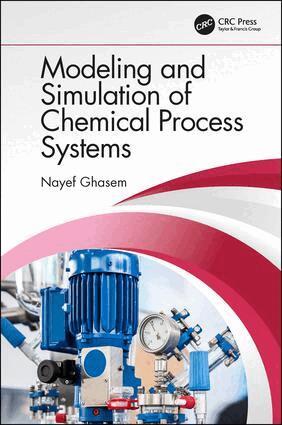
In this textbook, the author teaches readers how to model and simulate a unit process operation through developing mathematical model equations, solving model equations manually, and comparing results with those simulated through software. It covers both lumped parameter systems and distributed parameter systems, as well as using MATLAB and Simulink to solve the system model equations for both. Simplified partial differential equations are solved using COMSOL, an effective tool to solve PDE, using the fine element method. This book includes end of chapter problems and worked examples, and summarizes reader goals at the beginning of each chapter.
Principles of Chemical Engineering Processes
Material and Energy Balances, Second Edition
Inbunden, Engelska, 2014
1 327 kr
Tillfälligt slut
Principles of Chemical Engineering Processes: Material and Energy Balances introduces the basic principles and calculation techniques used in the field of chemical engineering, providing a solid understanding of the fundamentals of the application of material and energy balances. Packed with illustrative examples and case studies, this book:Discusses problems in material and energy balances related to chemical reactorsExplains the concepts of dimensions, units, psychrometry, steam properties, and conservation of mass and energyDemonstrates how MATLAB® and Simulink® can be used to solve complicated problems of material and energy balancesShows how to solve steady-state and transient mass and energy balance problems involving multiple-unit processes and recycle, bypass, and purge streamsDevelops quantitative problem-solving skills, specifically the ability to think quantitatively (including numbers and units), the ability to translate words into diagrams and mathematical expressions, the ability to use common sense to interpret vague and ambiguous language in problem statements, and the ability to make judicious use of approximations and reasonable assumptions to simplify problemsThis Second Edition has been updated based upon feedback from professors and students. It features a new chapter related to single- and multiphase systems and contains additional solved examples and homework problems. Educational software, downloadable exercises, and a solutions manual are available with qualifying course adoption.