Neil Coffee - Böcker
Visar alla böcker från författaren Neil Coffee. Handla med fri frakt och snabb leverans.
4 produkter
4 produkter
1 307 kr
Skickas inom 5-8 vardagar
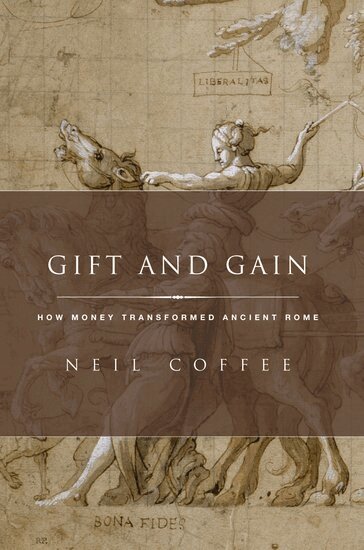
The economy of ancient Rome, with its money, complex credit arrangements, and long-range shipping, was surprisingly modern. Yet Romans also exchanged goods and services within a robust system of gifts and favors, which sustained the supportive relationships necessary for survival in the absence of the extensive state and social institutions. In Gift and Gain: How Money Transformed Ancient Rome, Neil Coffee shows how a vibrant commercial culture progressively displaced systems of gift giving over the course of Rome's classical era. The change was propelled the Roman elite, through their engagement in shipping, moneylending, and other enterprises. Members of the same elite, however, remained habituated to traditional gift relationships, relying on them to exercise influence and build their social worlds. They resisted the transformation, through legislation, political movements, and philosophical argument. The result was a recurring clash across the contexts of Roman social and economic life. The book traces the conflict between gift and gain from Rome's prehistory, down through the conflicts of the late Republic, into the early Empire, showing its effects in areas as diverse as politics, government, legal representation, philosophical thought, public morality, personal and civic patronage, marriage, dining, and the Latin language. These investigations show Rome shifting, unevenly but steadily, away from its pre-historic reliance on relationships of mutual aid, and toward to the more formal, commercial, and contractual relations of modernity.
623 kr
Skickas inom 7-10 vardagar
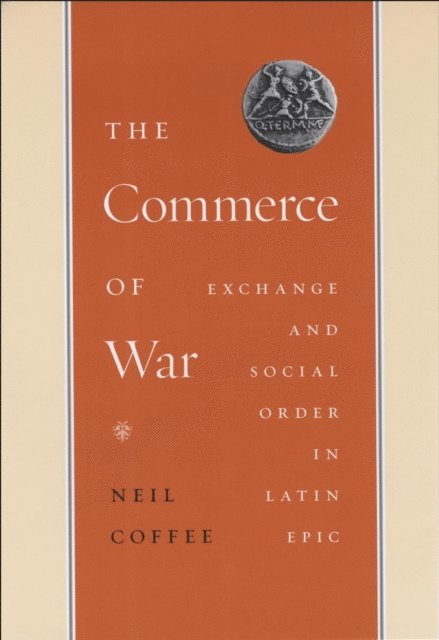
Latin epics such as Virgil's "Aeneid", Lucan's "Civil War", and Statius' "Thebaid" addressed Roman aristocrats whose dealings in gifts, favors, and payments defined their conceptions of social order. In "The Commerce of War", Neil Coffee argues that these exchanges play a central yet overlooked role in epic depictions of Roman society. Tracing the collapse of an aristocratic worldview across all three poems, Coffee highlights the distinction they draw between reciprocal gift giving among elites and the more problematic behaviors of buying and selling. In the "Aeneid", customary gift and favor exchanges are undermined by characters who view human interaction as short-term and commodity-driven. "Civil War" takes the next logical step, illuminating how Romans cope once commercial greed has supplanted traditional values. Concluding with the "Thebaid", which focuses on the problems of excessive consumption rather than exchange, Coffee closes his powerful case that these poems constitute far-reaching critiques of Roman society during its transition from republic to empire.
1 974 kr
Skickas inom 5-8 vardagar
This collection of essays reaffirms the central importance of adopting an intertextual approach to the study of Flavian epic poetry and shows, despite all that has been achieved, just how much still remains to be done on the topic. Most of the contributions are written by scholars who have already made major contributions to the field, and taken together they offer a set of state of the art contributions on individual topics, a general survey of trends in recent scholarship, and a vision of at least some of the paths work is likely to follow in the years ahead. In addition, there is a particular focus on recent developments in digital search techniques and the influence they are likely to have on all future work in the study of the fundamentally intertextual nature of Latin poetry and on the writing of literary history more generally.
410 kr
Skickas inom 5-8 vardagar
This collection of essays reaffirms the central importance of adopting an intertextual approach to the study of Flavian epic poetry and shows, despite all that has been achieved, just how much still remains to be done on the topic. Most of the contributions are written by scholars who have already made major contributions to the field, and taken together they offer a set of state of the art contributions on individual topics, a general survey of trends in recent scholarship, and a vision of at least some of the paths work is likely to follow in the years ahead. In addition, there is a particular focus on recent developments in digital search techniques and the influence they are likely to have on all future work in the study of the fundamentally intertextual nature of Latin poetry and on the writing of literary history more generally.