Neil Englehart – författare
Visar alla böcker från författaren Neil Englehart. Handla med fri frakt och snabb leverans.
8 produkter
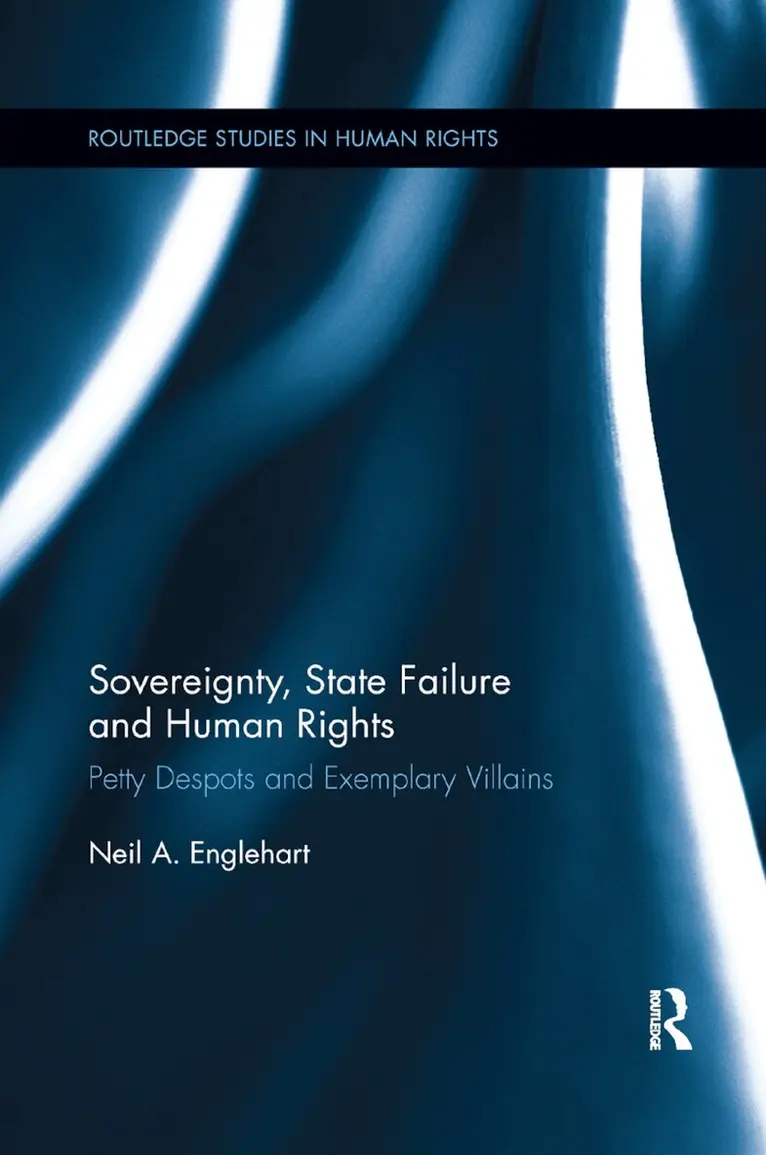
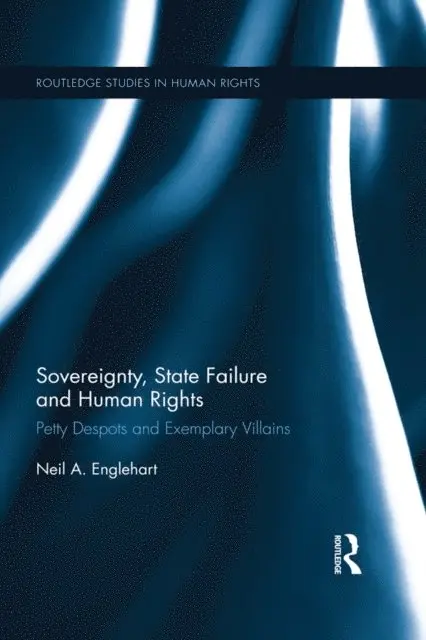
Sovereignty, State Failure and Human Rights
Petty Despots and Exemplary Villains
Häftad, 2019
637 kr
Lägg i varukorg
This book argues that the effectiveness of the state apparatus is one of the crucial variables determining human rights conditions, and that state weakness and failure is responsible for much of the human rights abuses we see today. Weak states are unable to control their own agents or to police …
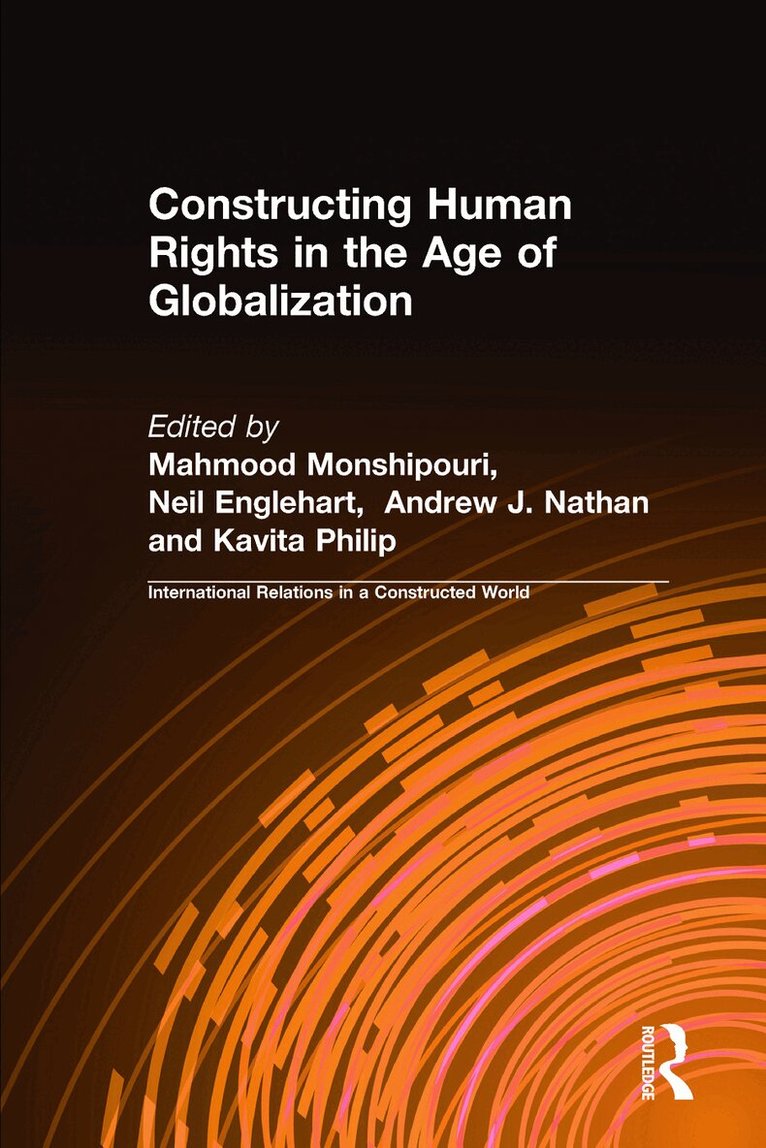
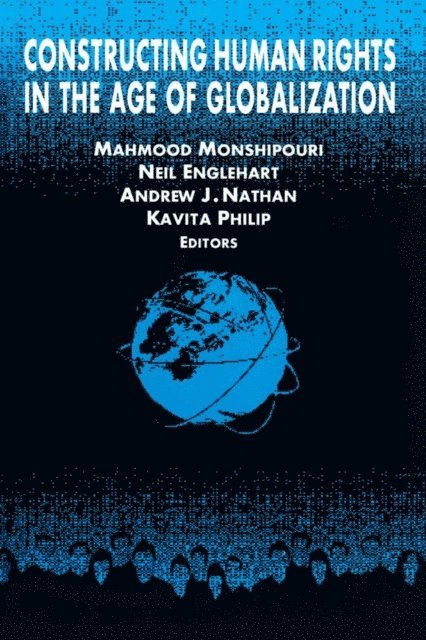
Constructing Human Rights in the Age of Globalization
Av Mahmood Monshipouri, Neil Englehart m. fl.
Inbunden, 2003
2516 kr
Lägg i varukorg
Both human rights and globalization are powerful ideas and processes, capable of transforming the world in profound ways. Notwithstanding their universal claims, however, the processes are constructed, and they draw their power from the specific cultural and political contexts in which they are …
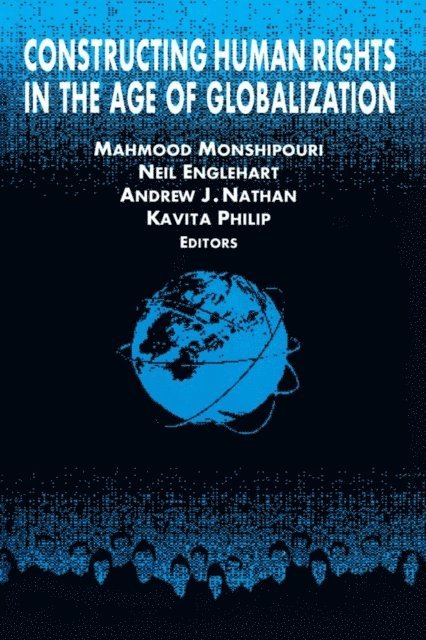
Constructing Human Rights in the Age of Globalization
Av Mahmood Monshipouri, Neil Englehart m. fl.
Häftad, 2003
853 kr
Lägg i varukorg
Both human rights and globalization are powerful ideas and processes, capable of transforming the world in profound ways. Notwithstanding their universal claims, however, the processes are constructed, and they draw their power from the specific cultural and political contexts in which they are …
Sovereignty, State Failure and Human Rights
Petty Despots and Exemplary Villains
Inbunden, 2017
2315 kr
Lägg i varukorg
This book argues that the effectiveness of the state apparatus is one of the crucial variables determining human rights conditions, and that state weakness and failure is responsible for much of the human rights abuses we see today. Weak states are unable to control their own agents or to police …
Sovereignty, State Failure and Human Rights
Petty Despots and Exemplary Villains
E-bok, 2017
814 kr
Lägg i varukorg
This book argues that the effectiveness of the state apparatus is one of the crucial variables determining human rights conditions, and that state weakness and failure is responsible for much of the human rights abuses we see today. Weak states are unable to control their own agents or to police …
Sovereignty, State Failure and Human Rights
Petty Despots and Exemplary Villains
E-bok, 2017
749 kr
Lägg i varukorg
This book argues that the effectiveness of the state apparatus is one of the crucial variables determining human rights conditions, and that state weakness and failure is responsible for much of the human rights abuses we see today. Weak states are unable to control their own agents or to police …
Constructing Human Rights in the Age of Globalization
Av Kavita Philip, Andrew J. Nathan m. fl.
E-bok, 2015
1004 kr
Lägg i varukorg
Both human rights and globalization are powerful ideas and processes, capable of transforming the world in profound ways. Notwithstanding their universal claims, however, the processes are constructed, and they draw their power from the specific cultural and political contexts in which they are …
Constructing Human Rights in the Age of Globalization
Av Kavita Philip, Andrew J. Nathan m. fl.
E-bok, 2015
1004 kr
Lägg i varukorg
Both human rights and globalization are powerful ideas and processes, capable of transforming the world in profound ways. Notwithstanding their universal claims, however, the processes are constructed, and they draw their power from the specific cultural and political contexts in which they are …