Nelson Kasfir – författare
Visar alla böcker från författaren Nelson Kasfir. Handla med fri frakt och snabb leverans.
15 produkter
15 produkter
Häftad, Engelska, 2021
596 kr
Skickas inom 5-8 vardagar
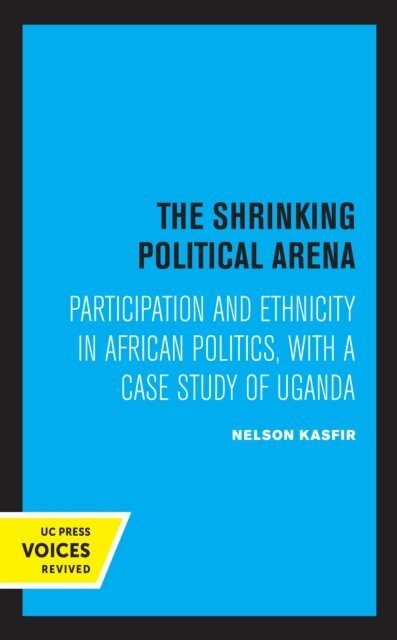
The Shrinking Political Arena: Participation and Ethnicity in African Politics, with a Case Study of Uganda by Nelson Kasfir challenges conventional wisdom about political engagement and ethnic identity in postcolonial Africa. While political science often assumes that once people gain political rights they will not surrender them, and that ethnic loyalties are intractable, Kasfir demonstrates that regimes can and do contract political participation and mute ethnic expression. Focusing on Uganda in the late 1960s, he examines how state authorities dismantled structures of participation established at independence and attempted to remove ethnicity from politics. The result was a surprising decline in public assertion of ethnic demands, even though ethnicity had been central to Uganda’s colonial and early postcolonial politics. This paradox prompts Kasfir to reconceptualize both participation and ethnicity, showing that they are not immutable forces but contingent practices shaped by political engineering.Through detailed analysis, Kasfir reveals participation as a composite phenomenon in which governments can either stimulate or restrict involvement, and ethnicity as an intermittent, situational force that rises or recedes depending on context. By investigating Uganda’s experience, he situates African politics within broader global debates about nationalism, identity, and state power. He further highlights how rulers frame policies to reduce political engagement—sometimes out of self-interest, sometimes with the aim of fostering national unity—and how such policies interact with the lived realities of ethnic communities. Richly informed by field research at Makerere University and extensive engagement with Ugandan officials, students, and citizens, Kasfir’s study remains a seminal exploration of the tensions between participation, ethnicity, and state authority. It illuminates the delicate balance African leaders confront in pursuing stability while negotiating the powerful pull of identity and inclusion.This title is part of UC Press's Voices Revived program, which commemorates University of California Press’s mission to seek out and cultivate the brightest minds and give them voice, reach, and impact. Drawing on a backlist dating to 1893, Voices Revived makes high-quality, peer-reviewed scholarship accessible once again using print-on-demand technology. This title was originally published in 1976.
E-bok
Engelska, 2023406 kr
Läs direkt efter köp
This title is part of UC Press's Voices Revived program, which commemorates University of California Press’s mission to seek out and cultivate the brightest minds and give them voice, reach, and impact. Drawing on a backlist dating to 1893, Voices Revived makes high-quality, peer-reviewed scholarship accessible once again using print-on-demand technology. This title was originally published in 1976.
Inbunden, Engelska, 2021
1 122 kr
Skickas inom 5-8 vardagar
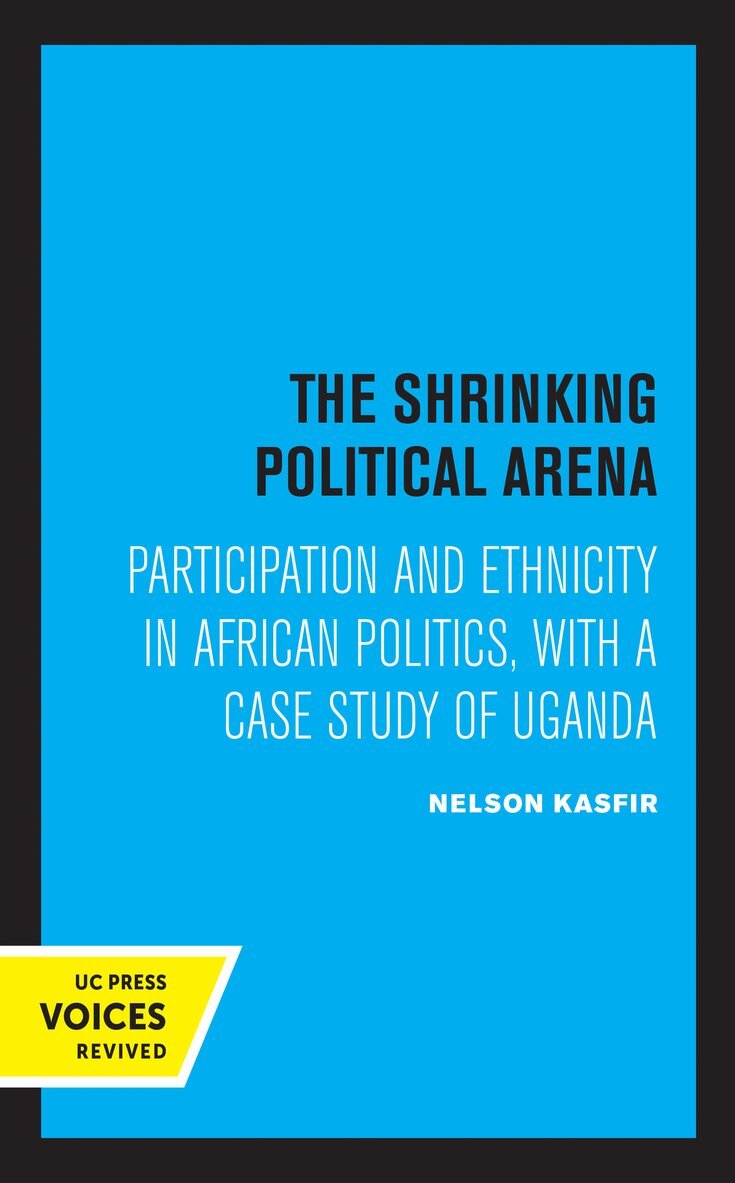
The Shrinking Political Arena: Participation and Ethnicity in African Politics, with a Case Study of Uganda by Nelson Kasfir challenges conventional wisdom about political engagement and ethnic identity in postcolonial Africa. While political science often assumes that once people gain political rights they will not surrender them, and that ethnic loyalties are intractable, Kasfir demonstrates that regimes can and do contract political participation and mute ethnic expression. Focusing on Uganda in the late 1960s, he examines how state authorities dismantled structures of participation established at independence and attempted to remove ethnicity from politics. The result was a surprising decline in public assertion of ethnic demands, even though ethnicity had been central to Uganda’s colonial and early postcolonial politics. This paradox prompts Kasfir to reconceptualize both participation and ethnicity, showing that they are not immutable forces but contingent practices shaped by political engineering.Through detailed analysis, Kasfir reveals participation as a composite phenomenon in which governments can either stimulate or restrict involvement, and ethnicity as an intermittent, situational force that rises or recedes depending on context. By investigating Uganda’s experience, he situates African politics within broader global debates about nationalism, identity, and state power. He further highlights how rulers frame policies to reduce political engagement—sometimes out of self-interest, sometimes with the aim of fostering national unity—and how such policies interact with the lived realities of ethnic communities. Richly informed by field research at Makerere University and extensive engagement with Ugandan officials, students, and citizens, Kasfir’s study remains a seminal exploration of the tensions between participation, ethnicity, and state authority. It illuminates the delicate balance African leaders confront in pursuing stability while negotiating the powerful pull of identity and inclusion.This title is part of UC Press's Voices Revived program, which commemorates University of California Press’s mission to seek out and cultivate the brightest minds and give them voice, reach, and impact. Drawing on a backlist dating to 1893, Voices Revived makes high-quality, peer-reviewed scholarship accessible once again using print-on-demand technology. This title was originally published in 1976.
Inbunden, Engelska, 1984
2 336 kr
Skickas inom 10-15 vardagar
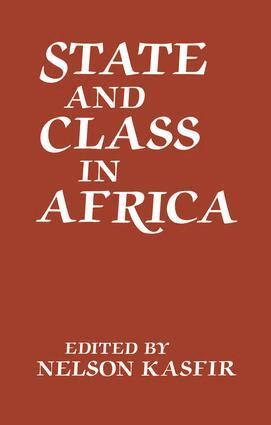
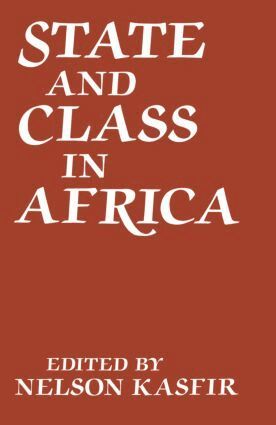
This collection explores the relationships of class and state in contemporary African politics.
Häftad, Engelska, 1998
784 kr
Skickas inom 10-15 vardagar
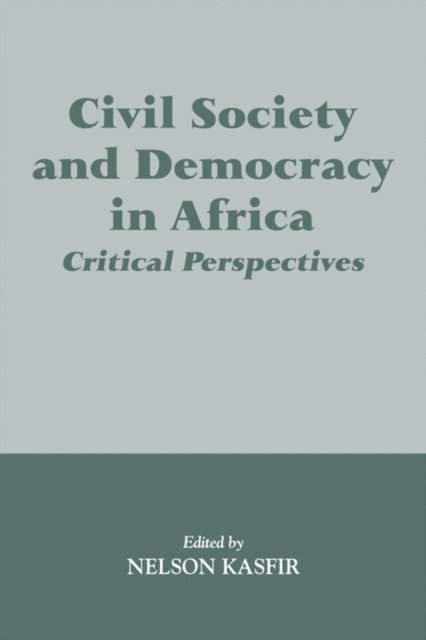
This work critically reviews the conventional uses of the concept of civil society in promoting democratization in Africa and suggests omissions and modifications are needed for more accurate analyses.
Inbunden, Engelska, 1998
2 269 kr
Skickas inom 10-15 vardagar
This work critically reviews the conventional uses of the concept of civil society in promoting democratization in Africa and suggests omissions and modifications are needed for more accurate analyses.
Inbunden, Engelska, 2015
1 338 kr
Skickas inom 7-10 vardagar
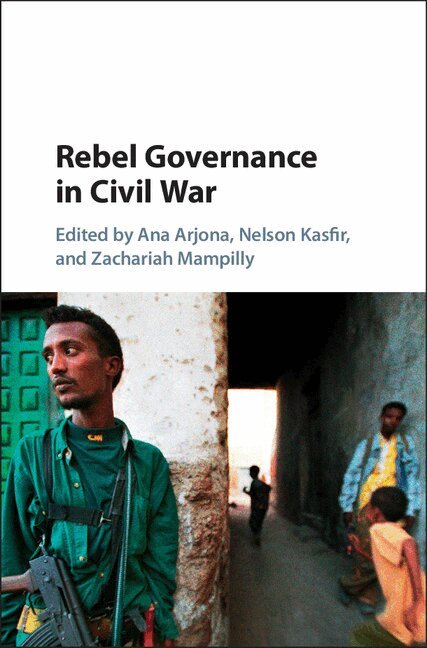
This is the first book to examine and compare how rebels govern civilians during civil wars in Latin America, Africa, Asia, and Europe. Drawing from a variety of disciplinary traditions, including political science, sociology, and anthropology, the book provides in-depth case studies of specific conflicts as well as comparative studies of multiple conflicts. Among other themes, the book examines why and how some rebels establish both structures and practices of rule, the role of ideology, cultural, and material factors affecting rebel governance strategies, the impact of governance on the rebel/civilian relationship, civilian responses to rebel rule, the comparison between modes of state and non-state governance to rebel attempts to establish political order, the political economy of rebel governance, and the decline and demise of rebel governance attempts.
Häftad, Engelska, 2017
464 kr
Skickas inom 7-10 vardagar
This is the first book to examine and compare how rebels govern civilians during civil wars in Latin America, Africa, Asia, and Europe. Drawing from a variety of disciplinary traditions, including political science, sociology, and anthropology, the book provides in-depth case studies of specific conflicts as well as comparative studies of multiple conflicts. Among other themes, the book examines why and how some rebels establish both structures and practices of rule, the role of ideology, cultural, and material factors affecting rebel governance strategies, the impact of governance on the rebel/civilian relationship, civilian responses to rebel rule, the comparison between modes of state and non-state governance to rebel attempts to establish political order, the political economy of rebel governance, and the decline and demise of rebel governance attempts.
E-bok
PDF, Engelska, 2013925 kr
Läs direkt efter köp
This work critically reviews the conventional uses of the concept of civil society in promoting democratization in Africa and suggests omissions and modifications are needed for more accurate analyses.
E-bok
Engelska, 2013925 kr
Läs direkt efter köp
This work critically reviews the conventional uses of the concept of civil society in promoting democratization in Africa and suggests omissions and modifications are needed for more accurate analyses.
Häftad, Engelska, 2016
735 kr
Skickas inom 10-15 vardagar
This collection explores the relationships of class and state in contemporary African politics.
E-bok
Engelska, 2013814 kr
Läs direkt efter köp
This collection explores the relationships of class and state in contemporary African politics.
E-bok
PDF, Engelska, 2013814 kr
Läs direkt efter köp
This collection explores the relationships of class and state in contemporary African politics.
Häftad, Engelska, 2017
361 kr
Skickas inom 5-8 vardagar
E-bok
PDF, Engelska, 2017428 kr
Läs direkt efter köp
Civil society is one of several Western political and social concepts that have not traveled successfully to Africa. Revived in response to the search for democracy in Eastern Europe during the late Soviet era, Western donors promoted and funded new civil society organizations in sub-Saharan Africa, regarding them as an essential grounding for African democratization. Most of these new civil society organizations had little in common with African associational activity. Focusing on the characteristics and behavior of long-standing African organizations would appear a better starting point for developing a useful concept of an African civil society. One candidate worth serious investigation is the Buganda Kingdom Government. This organization violates most distinctions central to Western notions of civil society. Yet it continues to behave like a civil society organization. Its political and conceptual collisions offer guidance toward a useful notion of African civil society and understanding Ugandan politics.