Newton C. A. da Costa – författare
Visar alla böcker från författaren Newton C. A. da Costa. Handla med fri frakt och snabb leverans.
6 produkter
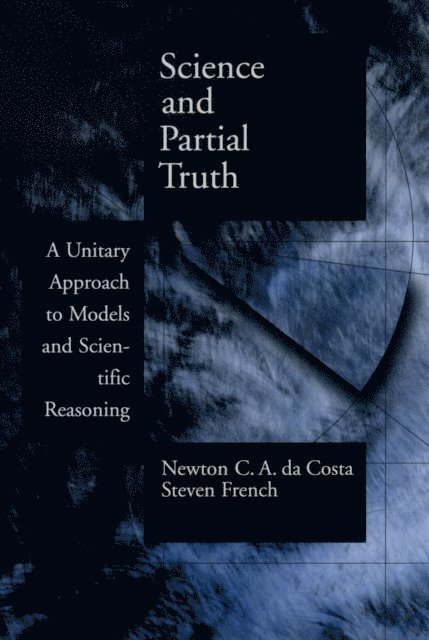
Science and Partial Truth
A Unitary Approach to Models and Scientific Reasoning
Av Steven French, Newton C. A. da Costa
E-bok, 2003
1027 kr
Lägg i varukorg
In the past thirty years, two fundamental issues have emerged in the philosophy of science. One concerns the appropriate attitude we should take towards scientific theories--whether we should regard them as true or merely empirically adequate, for example. The other concerns the nature of …
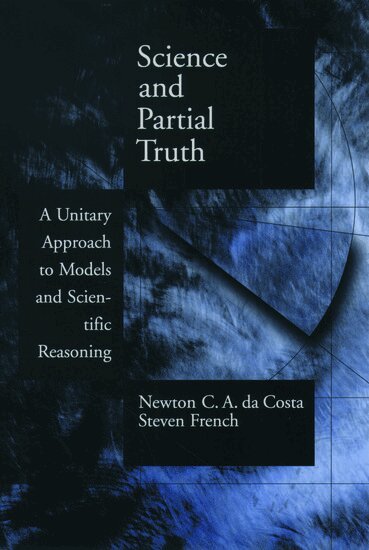
Science and Partial Truth
A Unitary Approach to Models and Scientific Reasoning
Av Newton C. A. da Costa, Steven French
Inbunden, 2003
1848 kr
Lägg i varukorg
Da Costa and French explore the consequences of adopting a "pragmatic" notion of truth in the philosophy of science--in other words, accepting a theory as valid when it may only be partially true rather than wholly true. Their framework sheds new light on issues dealing with belief, theory …
Science and Partial Truth
A Unitary Approach to Models and Scientific Reasoning
Av Steven French, Newton C. A. da Costa
E-bok, 2003
1027 kr
Lägg i varukorg
In the past thirty years, two fundamental issues have emerged in the philosophy of science. One concerns the appropriate attitude we should take towards scientific theories--whether we should regard them as true or merely empirically adequate, for example. The other concerns the nature of …
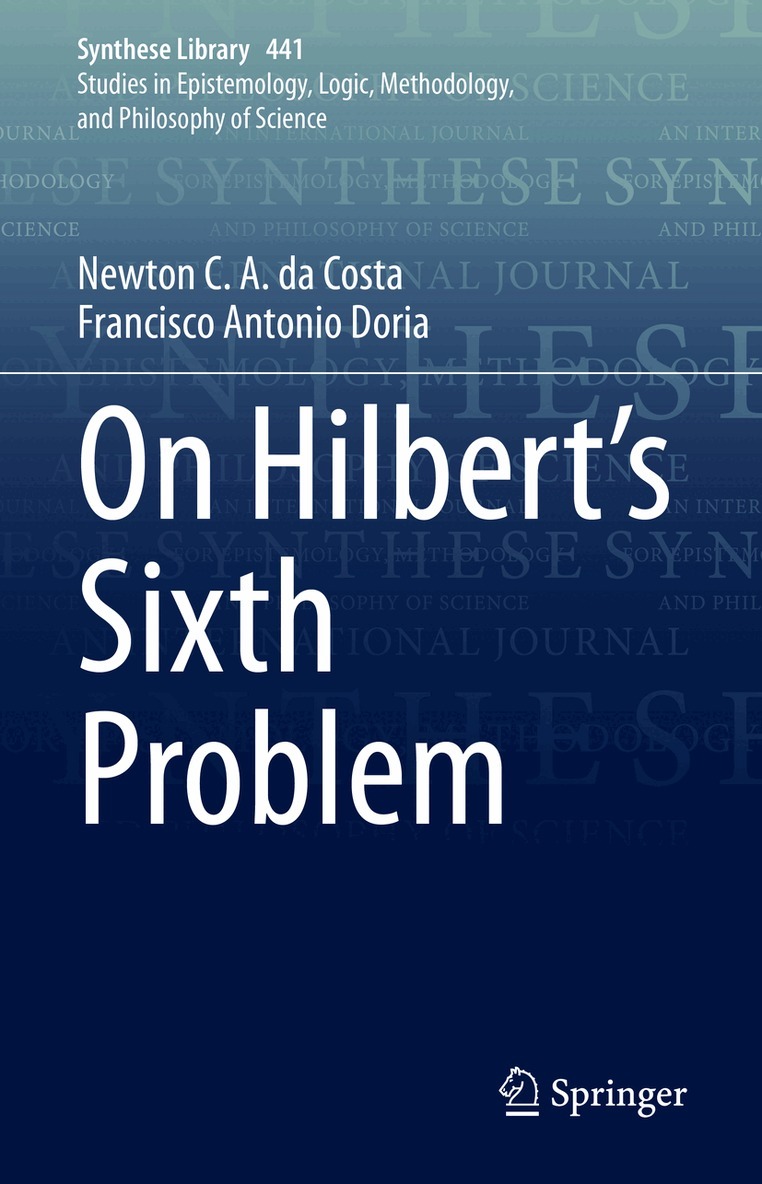
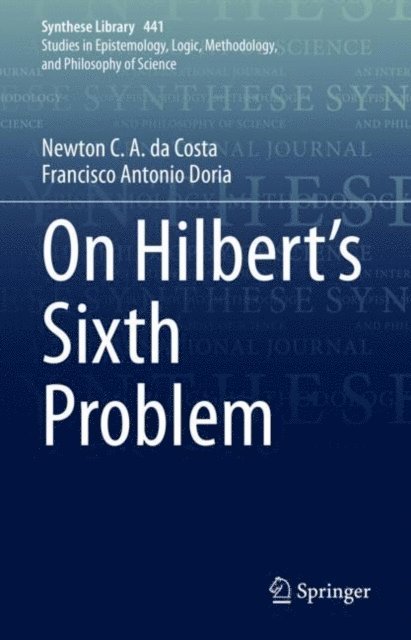
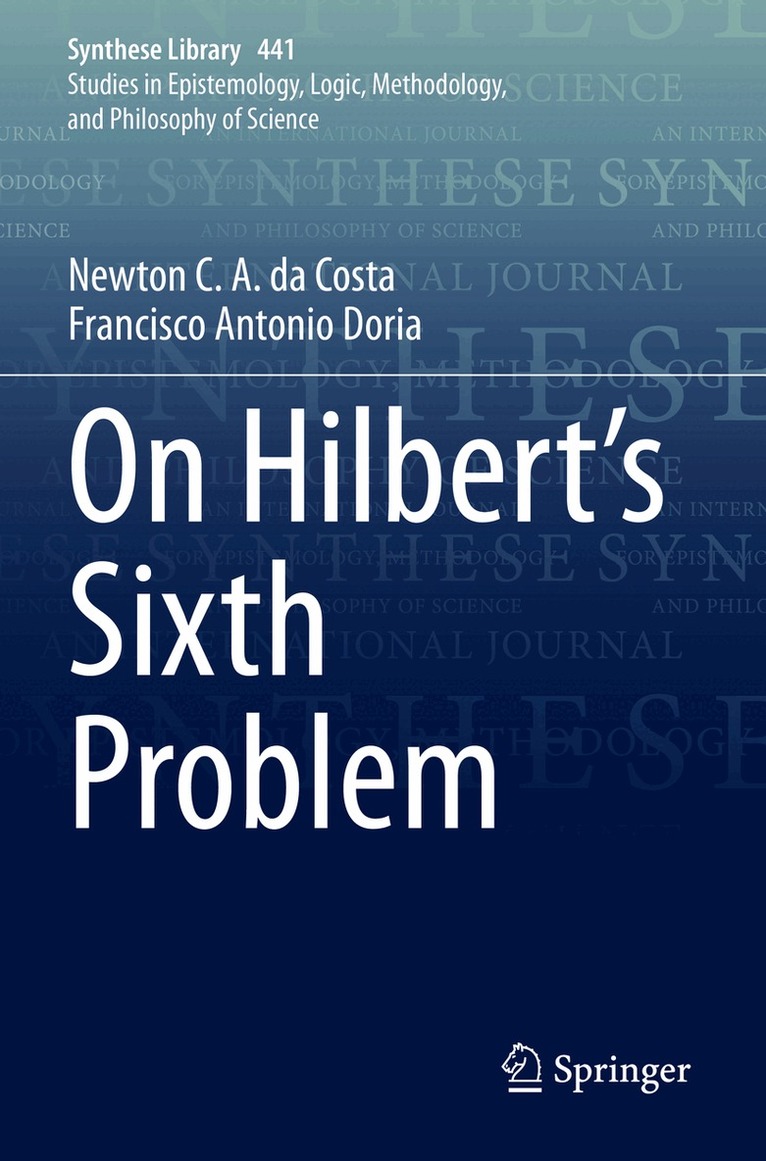
On Hilbert's Sixth Problem
Av Newton C. A. da Costa, Francisco Antonio Doria
Inbunden, 2022
1098 kr
Lägg i varukorg
This book explores the premise that a physical theory is an interpretation of the analytico–canonical formalism. Throughout the text, the investigation stresses that classical mechanics in its Lagrangian formulation is the formal backbone of theoretical physics. The authors start from a …
On Hilbert's Sixth Problem
Av Francisco Antonio Doria, Newton C. A. da Costa
E-bok, 2022
1459 kr
Lägg i varukorg
This book explores the premise that a physical theory is an interpretation of the analytico–canonical formalism. Throughout the text, the investigation stresses that classical mechanics in its Lagrangian formulation is the formal backbone of theoretical physics. The authors start from a …
On Hilbert's Sixth Problem
Av Newton C. A. da Costa, Francisco Antonio Doria
Häftad, 2023
1098 kr
Lägg i varukorg
This book explores the premise that a physical theory is an interpretation of the analytico–canonical formalism. Throughout the text, the investigation stresses that classical mechanics in its Lagrangian formulation is the formal backbone of theoretical physics. The authors start from a …