Nicholas Carnes - Böcker
Visar alla böcker från författaren Nicholas Carnes. Handla med fri frakt och snabb leverans.
8 produkter
8 produkter
519 kr
Skickas inom 7-10 vardagar
Eight of the last twelve presidents were millionaires when they took office. The figure is above fifty percent among current Supreme Court justices, all nine of whom graduated from either Harvard or Yale. Millionaires also control Congress, where a background in business or law is the norm and the average member of the House or Senate has spent less than two percent of his or her adult life in a working-class job. Why is it that most politicians in America are so much better off than the people who elect them - and does the social class divide between citizens and their representatives matter? With White-Collar Government, Nicholas Carnes answers this question with a resounding - and disturbing - yes. Legislators' socioeconomic backgrounds, he shows, have a profound impact not only on how they view the issues but also on the choices they make in office. Scant representation from among the working class almost guarantees that the policy-making process will be skewed toward outcomes that favor the upper class.It matters that the wealthiest Americans set the tax rates for the wealthy, that white-collar professionals choose the minimum wage for blue-collar workers, and that people who have always had health insurance decide whether to help those without. And while there is no one cause for this crisis of representation, Carnes shows that the problem does not stem from a lack of qualified candidates from among the working class. The solution, he argues, must involve a variety of changes, from the equalization of campaign funding to a shift in the types of candidates the parties support. If we want a government for the people, we have to start working toward a government that is truly by the people. White-Collar Government challenges long-held notions about the causes of political inequality in the United States and speaks to enduring questions about representation and political accountability
159 kr
Skickas inom 7-10 vardagar
Eight of the last twelve presidents were millionaires when they took office. The figure is above fifty percent among current Supreme Court justices, all nine of whom graduated from either Harvard or Yale. Millionaires also control Congress, where a background in business or law is the norm and the average member of the House or Senate has spent less than two percent of his or her adult life in a working-class job. Why is it that most politicians in America are so much better off than the people who elect them - and does the social class divide between citizens and their representatives matter? With White-Collar Government, Nicholas Carnes answers this question with a resounding - and disturbing - yes. Legislators' socioeconomic backgrounds, he shows, have a profound impact not only on how they view the issues but also on the choices they make in office. Scant representation from among the working class almost guarantees that the policymaking process will be skewed toward outcomes that favor the upper class.It matters that the wealthiest Americans set the tax rates for the wealthy, that white-collar professionals choose the minimum wage for blue-collar workers, and that people who have always had health insurance decide whether to help those without. And while there is no one cause for this crisis of representation, Carnes shows that the problem does not stem from a lack of qualified candidates from among the working class. The solution, he argues, must involve a variety of changes, from the equalization of campaign funding to a shift in the types of candidates the parties support. If we want a government for the people, we have to start working toward a government that is truly by the people. White-Collar Government challenges long-held notions about the causes of political inequality in the United States and speaks to enduring questions about representation and political accountability.
343 kr
Skickas inom 7-10 vardagar
Why working-class Americans almost never become politicians, what that means for democracy, and what reformers can do about itWhy are Americans governed by the rich? Millionaires make up only three percent of the public but control all three branches of the federal government. How did this happen? What stops lower-income and working-class Americans from becoming politicians? The first book to answer these urgent questions, The Cash Ceiling provides a compelling and comprehensive account of why so few working-class people hold office—and what reformers can do about it.Using extensive data on candidates, politicians, party leaders, and voters, Nicholas Carnes debunks popular misconceptions (like the idea that workers are unelectable or unqualified to govern), identifies the factors that keep lower-class Americans off the ballot and out of political institutions, and evaluates a variety of reform proposals.In the United States, Carnes shows, elections have a built-in “cash ceiling,” a series of structural barriers that make it almost impossible for the working-class to run for public office. Elections take a serious toll on candidates, many working-class Americans simply can’t shoulder the practical burdens, and civic and political leaders often pass them over in favor of white-collar candidates. But these obstacles aren’t inevitable. Pilot programs to recruit, train, and support working-class candidates have the potential to increase the economic diversity of our governing institutions and ultimately amplify the voices of ordinary citizens.Who runs for office goes to the heart of whether we will have a democracy that is representative or not. The Cash Ceiling shows that the best hope for combating the oversized political influence of the rich might simply be to help more working-class Americans become politicians.
203 kr
Skickas inom 7-10 vardagar
Why working-class Americans almost never become politicians, what that means for democracy, and what reformers can do about itWhy are Americans governed by the rich? Millionaires make up only three percent of the public but control all three branches of the federal government. How did this happen? What stops lower-income and working-class Americans from becoming politicians? The first book to answer these urgent questions, The Cash Ceiling provides a compelling and comprehensive account of why so few people who aren't rich hold office—and what reformers can do about it.
Keeping Workers Off the Ballot
How Democracy Undermines Working-Class Representation
Inbunden, Engelska, 2026
1 032 kr
Kommande
Why the underrepresentation of the working class in political office is an inevitable side effect of electoral democracy itselfWhy do so few working-class people go on to hold elected office? In the average democracy, working-class jobs make up about seventy percent of occupations, but only two percent of national legislators come from working-class job. In Keeping Workers Off the Ballot, Nicholas Carnes and Noam Lupu show that this disparity is not because working-class people are less appealing to voters, less interested in running, or less qualified. And the problem isn’t limited to certain countries, campaign finance regimes, or electoral systems. Carnes and Lupu argue that it is the nature of elections themselves that keep workers out our ballots and out of office.Carnes and Lupu point to two inherent features of elections that discourage working-class candidates. Running for office naturally involves taking on significant personal burdens—giving up time, energy, and certainty about the future—that are prohibitive to people in such lower-wage, labor-intensive, and more precarious occupations as manual laborer, retail clerk, and home health aide. Party gatekeepers in turn have strategic incentives to favor potential candidates who can more easily meet the demands of running, and as a result, they pass over qualified working-class people. Carnes and Lupu argue that workers won’t have a seat at the table in our political system unless parties form institutionalized partnerships with strong worker organizations or democracies embrace alternative forms of leadership selection that directly harness the perspectives of ordinary citizens.
Keeping Workers Off the Ballot
How Democracy Undermines Working-Class Representation
Häftad, Engelska, 2026
312 kr
Kommande
Why the underrepresentation of the working class in political office is an inevitable side effect of electoral democracy itselfWhy do so few working-class people go on to hold elected office? In the average democracy, working-class jobs make up about seventy percent of occupations, but only two percent of national legislators come from working-class job. In Keeping Workers Off the Ballot, Nicholas Carnes and Noam Lupu show that this disparity is not because working-class people are less appealing to voters, less interested in running, or less qualified. And the problem isn’t limited to certain countries, campaign finance regimes, or electoral systems. Carnes and Lupu argue that it is the nature of elections themselves that keep workers out our ballots and out of office.Carnes and Lupu point to two inherent features of elections that discourage working-class candidates. Running for office naturally involves taking on significant personal burdens—giving up time, energy, and certainty about the future—that are prohibitive to people in such lower-wage, labor-intensive, and more precarious occupations as manual laborer, retail clerk, and home health aide. Party gatekeepers in turn have strategic incentives to favor potential candidates who can more easily meet the demands of running, and as a result, they pass over qualified working-class people. Carnes and Lupu argue that workers won’t have a seat at the table in our political system unless parties form institutionalized partnerships with strong worker organizations or democracies embrace alternative forms of leadership selection that directly harness the perspectives of ordinary citizens.
391 kr
Skickas inom 7-10 vardagar
The Marvel Cinematic Universe (MCU) is the most expansive and widely viewed fictional narrative in the history of cinema. In 2009, Disney purchased Marvel Entertainment for $4 billion, including its subsidiary film production company, Marvel Studios. Since then, the MCU—the collection of multimedia Marvel Studios products that share a single fictional storyline—has grown from two feature films to thirty interconnected movies, nine streaming Disney+ series, a half dozen short films, and more than thirty print titles. By 2022, eight of the twenty-five highest grossing films of all time are MCU movies.The MCU is a deeply political universe. Intentionally or not, the MCU sends fans scores of messages about a wide range of subjects related to government, public policy, and society. Some are overt, like the contentious debate about government and accountability at the heart of Captain America: Civil War. More often, however, the politics of the MCU are subtle, like the changing role of women from supporting characters (like Black Widow in Iron Man 2) to leading heroes (like Black Widow in Black Widow). The MCU is not only a product of contemporary politics, but many of its stories seem to be direct responses to the problems of the day. Racial injustice, environmental catastrophe, and political misinformation are not just contemporary social ills; they are also key thematic elements of recent MCU blockbusters.In The Politics of the Marvel Cinematic Universe, more than twenty-five leading scholars examine these complex themes. Part one explores how political issues are depicted in the origin stories; part two examines how the MCU depicts classic political themes like government and power; and part three explores questions of diversity and representation in the MCU. The volume’s various chapters examine a wide range of topics: Black Panther and the “racial contract,” Captain America and the political philosophy of James Madison, Dr. Strange and colonial imperialism, S.H.I.E.L.D. and civil-military relations, Spider-Man and environmentalism, and Captain Marvel and second-wave feminism.The Politics of the Marvel Cinematic Universe is the first book to look expansively at politics in the MCU and ask the question, “What lessons are this entertainment juggernaut teaching audiences about politics, society, power, gender, and inequality?”
312 kr
Skickas inom 7-10 vardagar
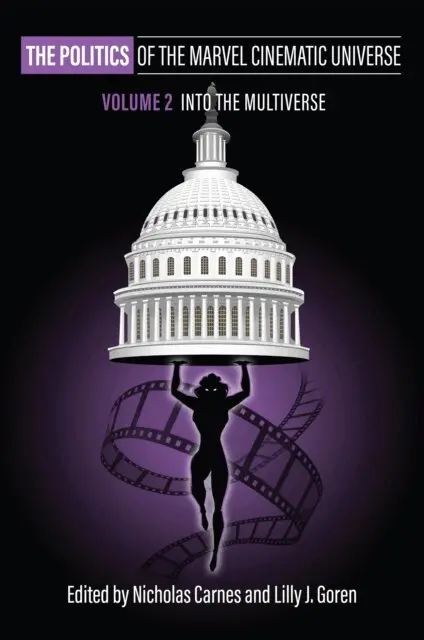
A new volume of essays exploring the on-screen politics and real-world implications of the Marvel Cinematic Universe’s expansion into the multiverse.As the Marvel Cinematic Universe (MCU) moved on from the Thanos storyline, it became more political than ever—both on screen and off.Following up on their first volume about the politics of the MCU, editors Nicholas Carnes and Lilly J. Goren are back with a new volume of essays exploring the political worlds within and outside of the MCU, authored by leading experts on politics, philosophy, and popular culture. This second volume tackles the sprawling narratives in the MCU’s Phase 4, the movies, TV shows, and related content released in 2021 and 2022. During Phase 4, Marvel Studios released films at an unprecedented pace: seven in just two years, including titles like Black Widow, Shang-Chi and the Legend of the Ten Rings, The Eternals, Spider-Man: No Way Home, and Black Panther: Wakanda Forever. Phase 4 also marked the start of the MCU’s move into streaming television, with shows like WandaVision, The Falcon and the Winter Soldier, Loki, Hawkeye, She-Hulk, and Moon Knight. With a fifty-hour combined runtime, Phase 4 included more new MCU content than Phases 1 through 3 (2008 through 2020) combined.The chapters in this volume are organized in three parts that each explore a different aspect of the politics of Phase 4. In Part One, the authors examine “on-screen politics,” looking at the political messages (some subtle, some more explicit) in stories about Thor, the Eternals, She-Hulk, Spider-Man, Loki, and Captain America. Part Two explores the “off-screen” politics of the MCU’s fans, examining topics like political participation, partisanship, and whether MCU fans are more cynical about real-world politics. In Part Three, we face the perennial issues around representation—especially gender, race, and sexuality—that have long dominated popular and academic commentary on superhero fiction.Like The Politics of the Marvel Cinematic Universe, Volume 1: The Infinity Saga, this is another indispensable guide to understanding how the MCU—a fundamental aspect of American pop culture—has a profound and complex relationship with American political life.