Nico Heerink – författare
Visar alla böcker från författaren Nico Heerink. Handla med fri frakt och snabb leverans.
6 produkter
6 produkter
Inbunden, Engelska, 2007
1 674 kr
Skickas inom 10-15 vardagar
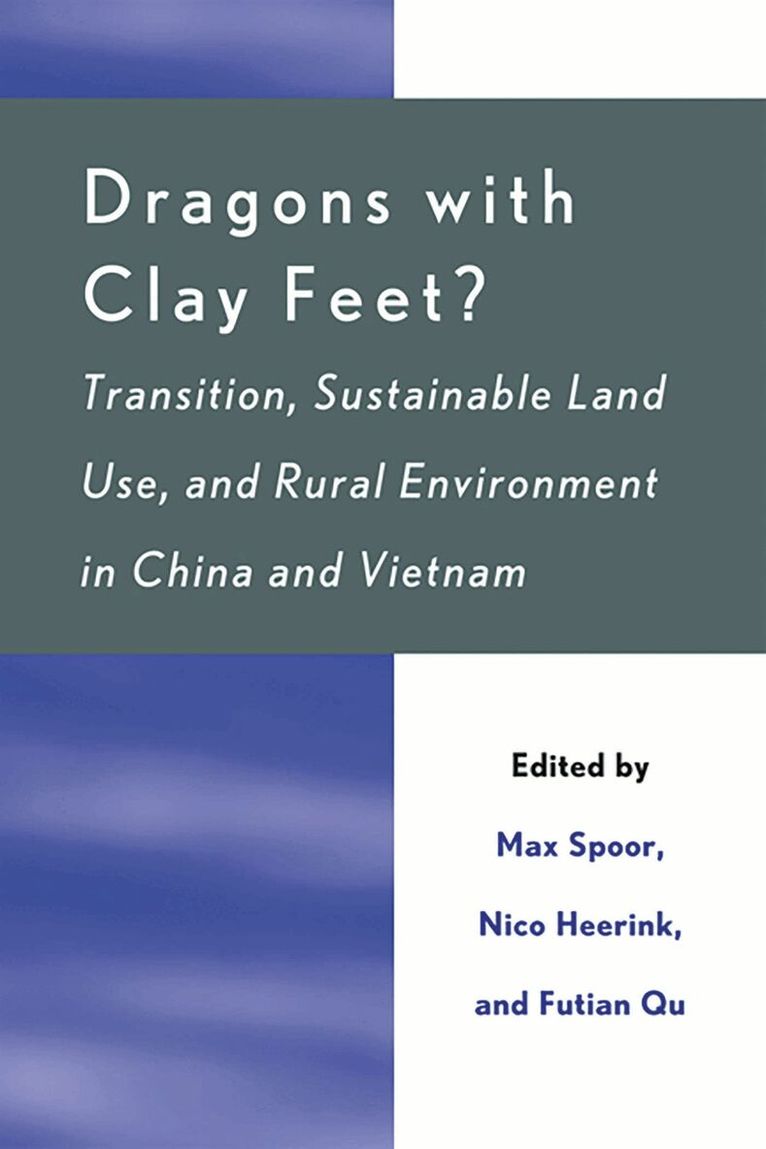
Dragons with Clay Feet? presents state-of-the-art research on the impact of ongoing and anticipated economic policy and institutional reforms on agricultural development and sustainable rural resource in two East-Asian transition (and developing) economies—China and Vietnam. The contributions to this volume focus on the regional and sectoral impact of transformational policies, farm household decision making under a changing economic and institutional environment, and potential trade-offs between agricultural growth and sustainable land management in the two countries. The analysis of household responses to economic policies and changing institution, and their implications for agricultural production and sustainable resource use in East-Asian transition economies, is a relatively new research field. This collection by a group of Chinese, Vietnamese, and international researchers reflect the rapid progress that is being made in this important research field.
Häftad, Engelska, 2010
840 kr
Skickas inom 10-15 vardagar
Dragons with Clay Feet? presents state-of-the-art research on the impact of ongoing and anticipated economic policy and institutional reforms on agricultural development and sustainable rural resource in two East-Asian transition (and developing) economies—China and Vietnam. The contributions to this volume focus on the regional and sectoral impact of transformational policies, farm household decision making under a changing economic and institutional environment, and potential trade-offs between agricultural growth and sustainable land management in the two countries. The analysis of household responses to economic policies and changing institution, and their implications for agricultural production and sustainable resource use in East-Asian transition economies, is a relatively new research field. This collection by a group of Chinese, Vietnamese, and international researchers reflect the rapid progress that is being made in this important research field.
E-bok
PDF, Engelska, 20121 459 kr
Läs direkt efter köp
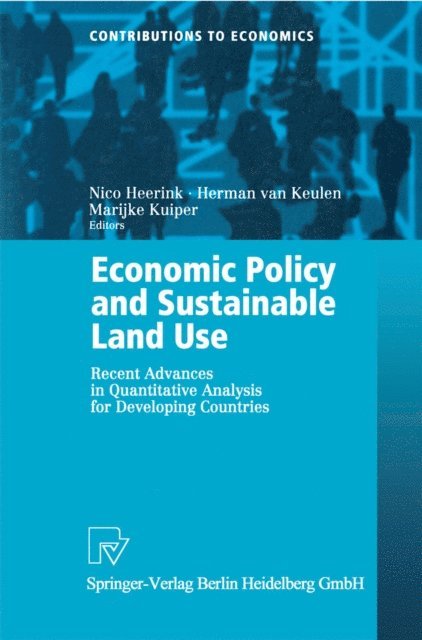
Since the 1980s many developing countries have implemented macro-economic policy reforms to curb inflation, reduce fiscal deficits and control foreign debt. The policy instruments used, such as exchange rate adjustment, budget cuts, trade policy reforms, public expenditure reviews and privatisation, have different and sometimes opposite consequences for agricultural land use. During the same period awareness was growing that deteriorating soil quality could become a limiting factor to increase or even sustain agricultural production. As a result, food availability and even accessibility for large population groups in developing countries may be jeopardised in the near future. Recently, quantitative models have made useful contributions to understanding the impact of economic policy reforms on the sustainability of land use. They provide a consistent analytical framework to deal with complex issues such as the direct and indirect effects of economic, agricultural, environmental and population policies, the role of market imperfections in transmitting economic policy signals, and the interactions between soil quality, agricultural production and household economic decision making. Different types of models can be distinguished: bio economic models, focussing on the link between farm household decisions and the agricultural resource base, household and village models, examining the impact of the socio-economic environment on farm household decisions, and more aggregate models, analysing interactions between sectors and their implications for sustainable land use.
E-bok
PDF, Engelska, 20121 416 kr
Läs direkt efter köp
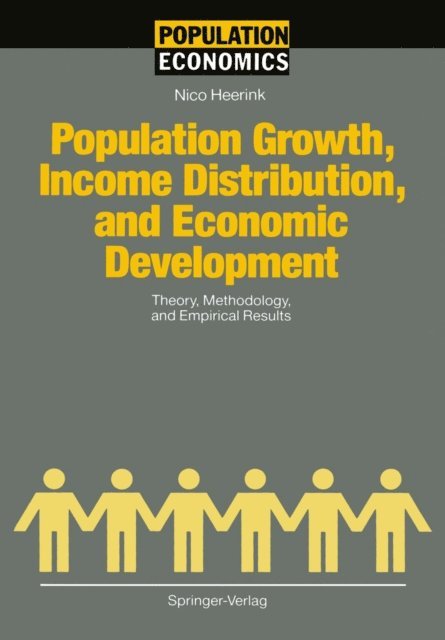
In this book, a model of long-term interrelationshipsbetween income distribution, population growth and economicdevelopment is developed and estimated from data for 54countries. The results indicate that a reduction of incomeinequality leads to lower fertility and mortality, toimprovedbasic needs satisfaction, and to lower labour forceparticipation of young and old males and of females in Asiaand Africa. The effect of income distribution on saving andconsumption is found to be negligible. These outcomessuggest that family planning and health policies in LDCswill show better results when they are supplemented withpolicies aimed at makingthe poor benefit from economicgrowth. As regards development policy, the results indicatethat a reduction of income inequality does not impair theformation of physical capital, but enhances the formation ofhuman capital and lowers the growth rate of the labourforce.
Häftad, Engelska, 2011
1 082 kr
Skickas inom 10-15 vardagar
In this book, a model of long-term interrelationshipsbetween income distribution, population growth and economicdevelopment is developed and estimated from data for 54countries. The results indicate that a reduction of incomeinequality leads to lower fertility and mortality, toimprovedbasic needs satisfaction, and to lower labour forceparticipation of young and old males and of females in Asiaand Africa. The effect of income distribution on saving andconsumption is found to be negligible. These outcomessuggest that family planning and health policies in LDCswill show better results when they are supplemented withpolicies aimed at makingthe poor benefit from economicgrowth. As regards development policy, the results indicatethat a reduction of income inequality does not impair theformation of physical capital, but enhances the formation ofhuman capital and lowers the growth rate of the labourforce.
Häftad, Engelska, 2000
1 082 kr
Skickas inom 10-15 vardagar
Since the 1980s many developing countries have implemented macro-economic policy reforms to curb inflation, reduce fiscal deficits and control foreign debt. The policy instruments used, such as exchange rate adjustment, budget cuts, trade policy reforms, public expenditure reviews and privatisation, have different and sometimes opposite consequences for agricultural land use. During the same period awareness was growing that deteriorating soil quality could become a limiting factor to increase or even sustain agricultural production. As a result, food availability and even accessibility for large population groups in developing countries may be jeopardised in the near future. Recently, quantitative models have made useful contributions to understanding the impact of economic policy reforms on the sustainability of land use. They provide a consistent analytical framework to deal with complex issues such as the direct and indirect effects of economic, agricultural, environmental and population policies, the role of market imperfections in transmitting economic policy signals, and the interactions between soil quality, agricultural production and household economic decision making. Different types of models can be distinguished: bio economic models, focussing on the link between farm household decisions and the agricultural resource base, household and village models, examining the impact of the socio-economic environment on farm household decisions, and more aggregate models, analysing interactions between sectors and their implications for sustainable land use.