Max Spoor – författare
Visar alla böcker från författaren Max Spoor. Handla med fri frakt och snabb leverans.
17 produkter
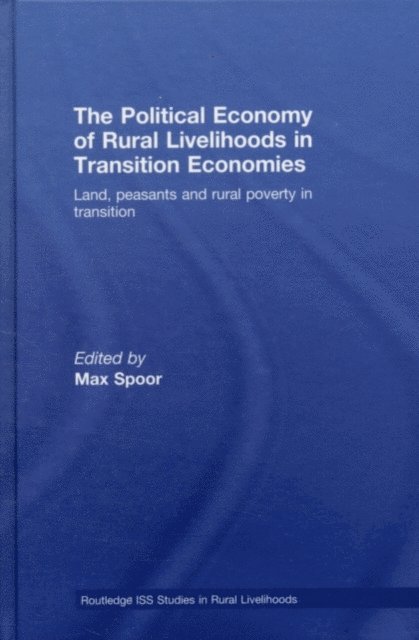
Political Economy of Rural Livelihoods in Transition Economies
Land, Peasants and Rural Poverty in Transition
Av Max Spoor
Inbunden, 2008
2591 kr
Lägg i varukorg
Rural poverty is a phenomenon that is widespread yet often ignored by policy makers and researchers. This edited volume looks critically at rural poverty in Central Eastern Europe, Russia, the Caucasus and Central Asia, China and Vietnam in relation to land reform, farm restructuring and the …
Water, Environmental Security and Sustainable Rural Development
Conflict and Cooperation in Central Eurasia
Av Murat Arsel, Max Spoor
Inbunden, 2009
2480 kr
Lägg i varukorg
This co-edited volume provides a unified scholarly treatment of intensifying debates on the relationship between water scarcity and environmental security in Central Eurasia. Using discussions of sustainable rural development as its conceptual backdrop, the chapters in this volume combine solid …
Political Economy of Rural Livelihoods in Transition Economies
Land, Peasants and Rural Poverty in Transition
Av Max Spoor
Häftad, 2010
1186 kr
Lägg i varukorg
Rural poverty is a phenomenon that is widespread yet often ignored by policy makers and researchers. This edited volume looks critically at rural poverty in Central Eastern Europe, Russia, the Caucasus and Central Asia, China and Vietnam in relation to land reform, farm restructuring and the …
Water, Environmental Security and Sustainable Rural Development
Conflict and Cooperation in Central Eurasia
Av Murat Arsel, Max Spoor
Häftad, 2013
878 kr
Lägg i varukorg
This co-edited volume provides a unified scholarly treatment of intensifying debates on the relationship between water scarcity and environmental security in Central Eurasia. Using discussions of sustainable rural development as its conceptual backdrop, the chapters in this volume combine solid …
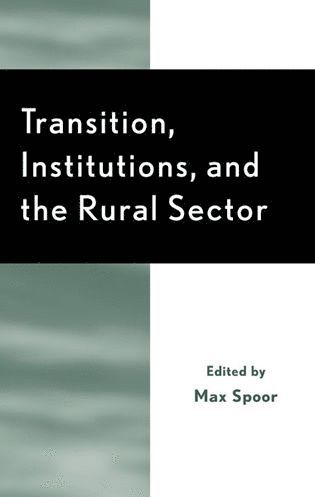
Transition, Institutions and the Rural Sector
Av Max Spoor
Inbunden, 2003
1316 kr
Lägg i varukorg
Transitions, Institutions and the Rural Sector is a series of essays examining and analyzing the rural transformations in the transition economies of Eastern Europe and Central Asia. The authors included in this volume employ a variety of interesting and insightful approaches to the topic, …
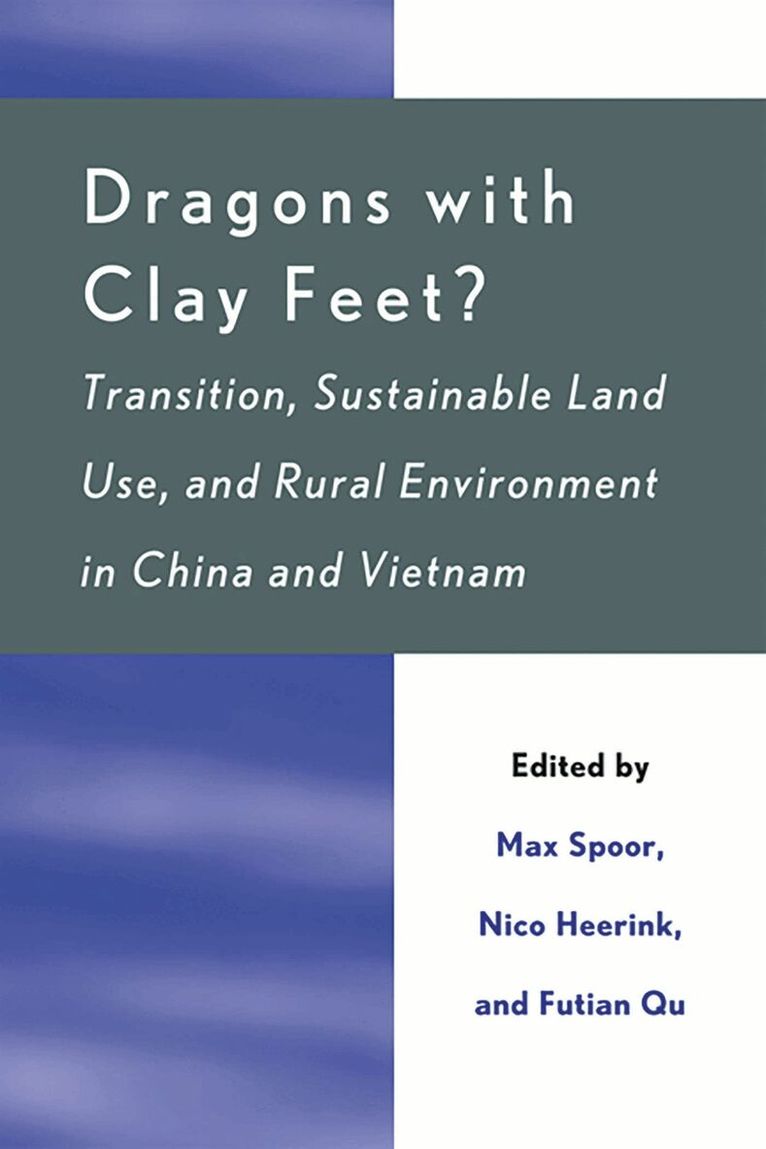
Dragons with Clay Feet?
Transition, Sustainable Land Use, and Rural Environment in China and Vietnam
Av Max Spoor, Nico Heerink m. fl.
Inbunden, 2007
1701 kr
Lägg i varukorg
Dragons with Clay Feet? presents state-of-the-art research on the impact of ongoing and anticipated economic policy and institutional reforms on agricultural development and sustainable rural resource in two East-Asian transition (and developing) economies—China and Vietnam. The contributions to …
Dragons with Clay Feet?
Transition, Sustainable Land Use, and Rural Environment in China and Vietnam
Av Max Spoor, Nico Heerink m. fl.
Häftad, 2010
856 kr
Lägg i varukorg
Dragons with Clay Feet? presents state-of-the-art research on the impact of ongoing and anticipated economic policy and institutional reforms on agricultural development and sustainable rural resource in two East-Asian transition (and developing) economies—China and Vietnam. The contributions to …
Political Economy of Rural Livelihoods in Transition Economies
Land, Peasants and Rural Poverty in Transition
Av Max Spoor
E-bok, 2008
1082 kr
Lägg i varukorg
Rural poverty is a phenomenon that is widespread yet often ignored by policy makers and researchers. This edited volume looks critically at rural poverty in Central Eastern Europe, Russia, the Caucasus and Central Asia, China and Vietnam in relation to land reform, farm restructuring and the …
Political Economy of Rural Livelihoods in Transition Economies
Land, Peasants and Rural Poverty in Transition
Av Max Spoor
E-bok, 2008
1082 kr
Lägg i varukorg
Rural poverty is a phenomenon that is widespread yet often ignored by policy makers and researchers. This edited volume looks critically at rural poverty in Central Eastern Europe, Russia, the Caucasus and Central Asia, China and Vietnam in relation to land reform, farm restructuring and the …
Water, Environmental Security and Sustainable Rural Development
Conflict and Cooperation in Central Eurasia
Av Max Spoor, Murat Arsel
E-bok, 2009
983 kr
Lägg i varukorg
This co-edited volume provides a unified scholarly treatment of intensifying debates on the relationship between water scarcity and environmental security in Central Eurasia. Using discussions of sustainable rural development as its conceptual backdrop, the chapters in this volume combine solid …
Water, Environmental Security and Sustainable Rural Development
Conflict and Cooperation in Central Eurasia
Av Max Spoor, Murat Arsel
E-bok, 2009
983 kr
Lägg i varukorg
This co-edited volume provides a unified scholarly treatment of intensifying debates on the relationship between water scarcity and environmental security in Central Eurasia. Using discussions of sustainable rural development as its conceptual backdrop, the chapters in this volume combine solid …
State and Domestic Agricultural Markets in Nicaragua
From Interventionism to Neo-Liberalism
Av Max Spoor
E-bok, 2016
779 kr
Lägg i varukorg
The book examines in depth the problematic effects of state intervention in agricultural markets of developing countries against the background of the current transition of interventionism to neo-liberalism. The fascinating case of Nicaragua is explored, focusing on the 1979-1990 interventionist …
State and Domestic Agricultural Markets in Nicaragua
From Interventionism to Neo-Liberalism
Av Max Spoor
Häftad, 1995
551 kr
Lägg i varukorg
The book examines in depth the problematic effects of state intervention in agricultural markets of developing countries against the background of the current transition of interventionism to neo-liberalism. The fascinating case of Nicaragua is explored, focusing on the 1979-1990 interventionist …
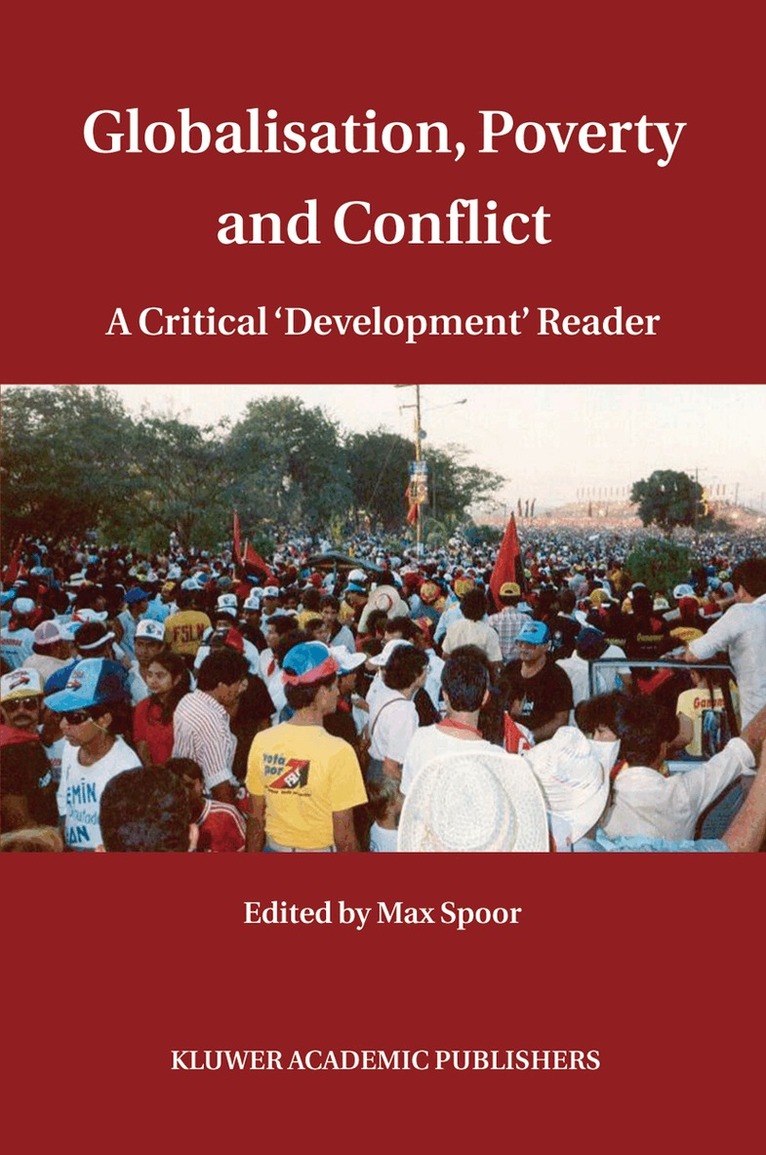
Globalisation, Poverty and Conflict
A Critical 'Development' Reader
Av Max Spoor
Inbunden, 2004
1686 kr
Lägg i varukorg
Is ‘development’ passé? Is it merely a by-product or a ‘trickle down’ effect of economic growth, spurred by globalisation? Will poverty simply diminish with increased global markets? This state-of-the-art critical ‘development’ reader deals with these and related questions. Globalisation, Poverty …
Globalisation, Poverty and Conflict
A Critical ''Development'' Reader
Av Max Spoor
E-bok, 2005
2111 kr
Lägg i varukorg
Is ‘development’ passé? Is it merely a by-product or a ‘trickle down’ effect of economic growth, spurred by globalisation? Will poverty simply diminish with increased global markets? This state-of-the-art critical ‘development’ reader deals with these and related questions. Globalisation, Poverty …
Globalisation, Poverty and Conflict
A Critical 'Development' Reader
Av Max Spoor
Häftad, 2010
1639 kr
Lägg i varukorg
Is ‘development’ passé? Is it merely a by-product or a ‘trickle down’ effect of economic growth, spurred by globalisation? Will poverty simply diminish with increased global markets? This state-of-the-art critical ‘development’ reader deals with these and related questions. Globalisation, Poverty …
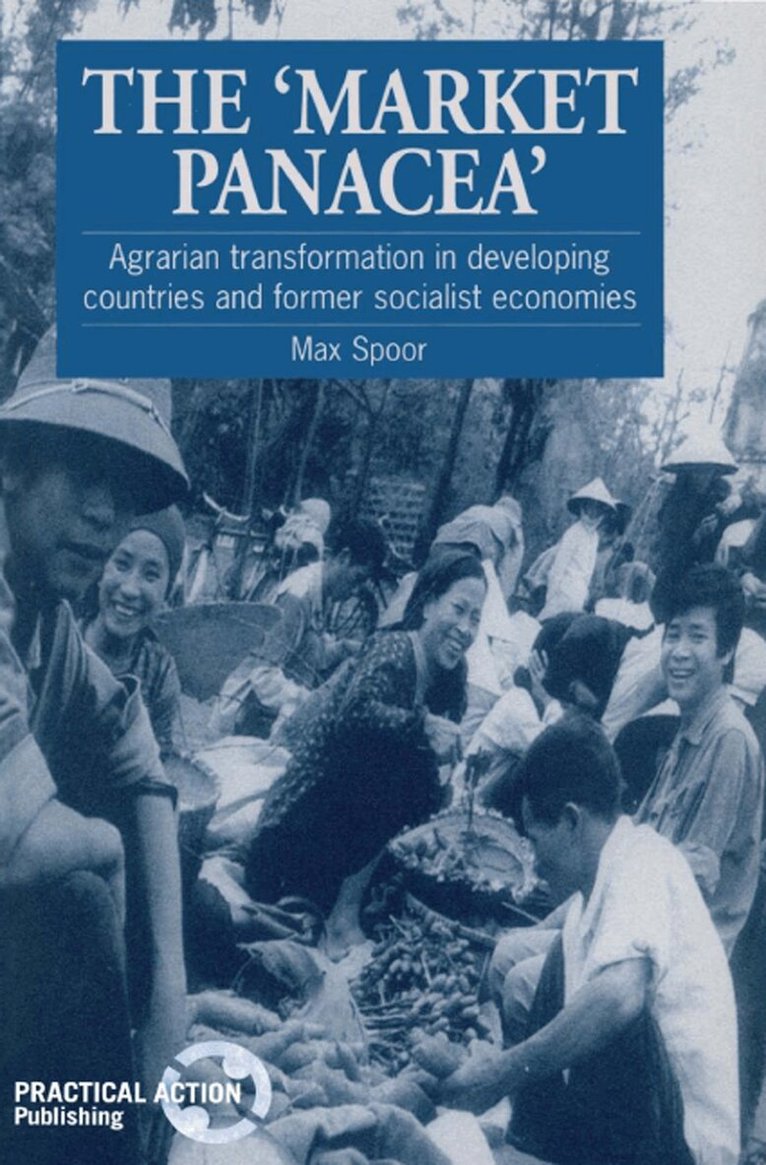
Market Panacea
Agrarian transformation in developing countries and former socialist economies
Av Max Spoor
Häftad, 1997
256 kr
Tillfälligt slut