Nicola Masciandaro - Böcker
Visar alla böcker från författaren Nicola Masciandaro. Handla med fri frakt och snabb leverans.
11 produkter
11 produkter
295 kr
Skickas inom 7-10 vardagar
Shaped by the increasing commercialization of economic relations, the social agitation of the agricultural and artisan classes, and the growing formalization of status consciousness, the cultural landscape of late medieval England was fertile territory for the representation of work. In The Voice of the Hammer, Nicola Masciandaro examines the Middle English lexicon, accounts of the history of work, and the poetry of Geoffrey Chaucer to reveal that late medieval society understood work as a distinct and problematical field of experience, and that concerns over the relation of work to life were as pressing then as now."This book deals with questions that historians of late medieval labour scarcely dare to ask—what is the meaning of the words werk, swink, and craft? How did people in the fourteenth century conceptualize and value work? Much superficial speculation about whether people regarded work as punishing or virtuous can be set aside, as Nicola Masciandaro has applied his formidable learning to supply a nuanced and authoritative analysis of the thinking of such writers as Chaucer and Gower. Anyone enquiring into late medieval attitudes to labour must now take account of this important book."—Christopher Dyer, University of Leicester"In The Voice of the Hammer, Nicola Masciandaro engagingly presents a large issue with elegance and capaciousness. His subtle and significant readings of all of the works he addresses support the ingenious topics and important ideas he has highlighted in the broad field of late medieval ideas of labor, at once so central to the concerns of later Middle English poetry and so widely disseminated in the culture from which that arose."—Andrew Galloway, Cornell University"Nicola Masciandaro shows us a contested and complex Middle English set of attitudes towards work, incorporating ideas about nature, humanity's place in the world, and the relation of the present to a simpler past. He gives an intriguing account of the multiple meanings of work in English and shows that texts often regarded as denunciations of workers or of technical progress are more interesting statements about the ambiguity of humanity's control over the world and subjugation to its laws. The result is an important and perceptive contribution to the history of medieval social thought."—Paul Freedman, Chester D. Tripp Professor of History, Yale University
298 kr
Skickas inom 5-8 vardagar
269 kr
Skickas inom 5-8 vardagar
185 kr
Skickas inom 5-8 vardagar
208 kr
Skickas inom 5-8 vardagar
275 kr
Skickas inom 5-8 vardagar
152 kr
Skickas inom 5-8 vardagar
1 254 kr
Skickas inom 5-8 vardagar
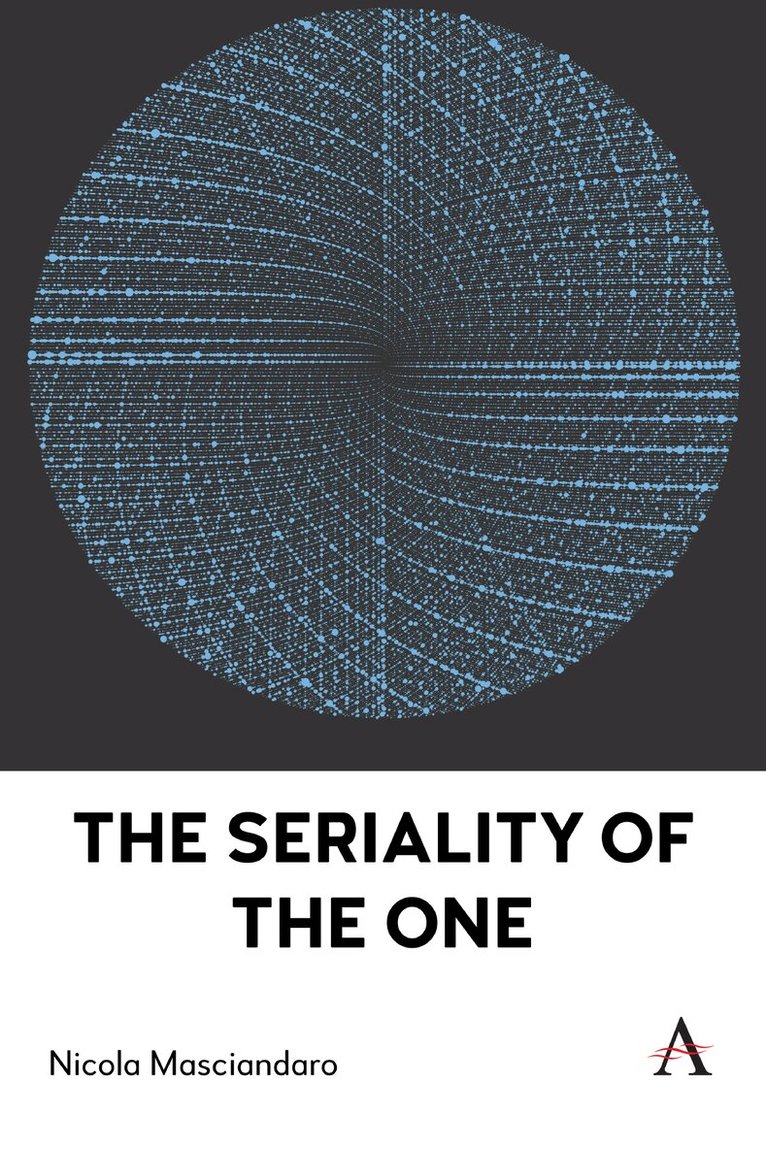
Following the idea of the series as a fundamental feature of reality, The Seriality of the One investigates its metaphysical, ontological, and existential significance in dialogue with an open constellation of modern and premodern authors, giving special attention to the way seriality mediates and measures the relation between the individual and the universal, bridging by ellipsis the unbounded interpenetrating unities of the one and the One. Seen through the ongoing perspective of the series, beings, events, and facts are never discrete and definable identities that can ever be counted or discounted as having greater or lesser importance or status than others. Nothing is merely itself or a part of something else. In the infinity mirror of seriality, all are simultaneously equivalent to all or the totality itself.
446 kr
Tillfälligt slut
446 kr
Tillfälligt slut
280 kr
Tillfälligt slut
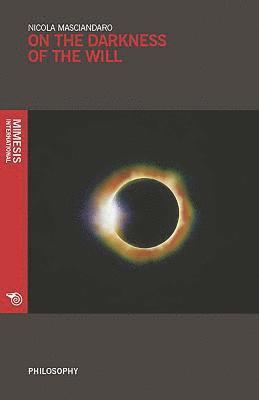
"For the will desires not to be dark, and this very desire causes the darkness” (Jacob Boehme). Moving through the fundamental question of this paradox, this book offers a constellation of theoretical and critical essays that shed light on the darkness of the will: its obscurity to itself. Through in-depth analysis of medieval and modern sources - Augustine, Pseudo-Dionysius, Eriugena, Dante, Meister Eckhart, Chaucer, Nietzsche, Cioran, Meher Baba - this volume interrogates the nature and meaning of the will, along seven modes: spontaneity, potentiality, sorrow, matter, vision, eros, and sacrifice. These multiple lines of inquiry are finally presented to coalesce around one fundamental point of agreement: the will says yes, yet only a will that knows how to say no to itself, entering the silence of its own darkness, will ever be free.