Nicolas Werth - Böcker
Visar alla böcker från författaren Nicolas Werth. Handla med fri frakt och snabb leverans.
4 produkter
4 produkter
582 kr
Skickas inom 7-10 vardagar
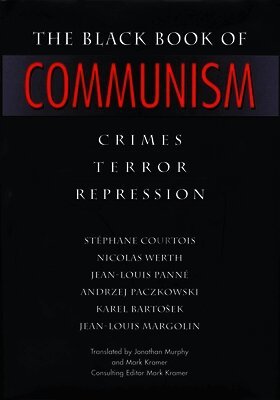
Already famous throughout Europe, this international bestseller plumbs recently opened archives in the former Soviet bloc to reveal the actual, practical accomplishments of Communism around the world: terror, torture, famine, mass deportations, and massacres. Astonishing in the sheer detail it amasses, the book is the first comprehensive attempt to catalogue and analyze the crimes of Communism over seventy years."Revolutions, like trees, must be judged by their fruit," Ignazio Silone wrote, and this is the standard the authors apply to the Communist experience—in the China of "the Great Helmsman," Kim Il Sung's Korea, Vietnam under "Uncle Ho" and Cuba under Castro, Ethiopia under Mengistu, Angola under Neto, and Afghanistan under Najibullah. The authors, all distinguished scholars based in Europe, document Communist crimes against humanity, but also crimes against national and universal culture, from Stalin's destruction of hundreds of churches in Moscow to Ceausescu's leveling of the historic heart of Bucharest to the widescale devastation visited on Chinese culture by Mao's Red Guards.As the death toll mounts—as many as 25 million in the former Soviet Union, 65 million in China, 1.7 million in Cambodia, and on and on—the authors systematically show how and why, wherever the millenarian ideology of Communism was established, it quickly led to crime, terror, and repression. An extraordinary accounting, this book amply documents the unparalleled position and significance of Communism in the hierarchy of violence that is the history of the twentieth century.
250 kr
Skickas inom 7-10 vardagar
During the spring of 1933, Stalin's police rounded up nearly one hundred thousand people as part of the Soviet regime's "cleansing" of Moscow and Leningrad and deported them to Siberia. Many of the victims were sent to labor camps, but ten thousand of them were dumped in a remote wasteland and left to fend for themselves. Cannibal Island reveals the shocking, grisly truth about their fate. These people were abandoned on the island of Nazino without food or shelter. Left there to starve and to die, they eventually began to eat each other. Nicolas Werth, a French historian of the Soviet era, reconstructs their gruesome final days using rare archival material from deep inside the Stalinist vaults. Werth skillfully weaves this episode into a broader story about the Soviet frenzy in the 1930s to purge society of all those deemed to be unfit. For Stalin, these undesirables included criminals, opponents of forced collectivization, vagabonds, gypsies, even entire groups in Soviet society such as the "kulaks" and their families.Werth sets his story within the broader social and political context of the period, giving us for the first time a full picture of how Stalin's system of "special villages" worked, how hundreds of thousands of Soviet citizens were moved about the country in wholesale mass transportations, and how this savage bureaucratic machinery functioned on the local, regional, and state levels. Cannibal Island challenges us to confront unpleasant facts not only about Stalin's punitive social controls and his failed Soviet utopia, but about every generation's capacity for brutality--including our own.
161 kr
Skickas inom 7-10 vardagar
A searing historical account of a tragic episode of the Stalinist terrorDuring the spring of 1933, Stalin’s police rounded up nearly one hundred thousand people as part of the Soviet regime’s “cleansing” of Moscow and Leningrad and deported them to Siberia. Many of the victims were sent to labor camps, but ten thousand of them were dumped in a remote wasteland and left to fend for themselves. Cannibal Island reveals the shocking, grisly truth about their fate.These people were abandoned on the island of Nazino without food or shelter. Left there to starve and to die, they eventually began to eat each other. Nicolas Werth, a French historian of the Soviet era, reconstructs their gruesome final days using rare archival material from deep inside the Stalinist vaults. Werth skillfully weaves this episode into a broader story about the Soviet frenzy in the 1930s to purge society of all those deemed to be unfit. For Stalin, these undesirables included criminals, opponents of forced collectivization, vagabonds, gypsies, even entire groups in Soviet society such as the “kulaks” and their families. Werth sets his story within the broader social and political context of the period, giving us for the first time a full picture of how Stalin’s system of “special villages” worked, how hundreds of thousands of Soviet citizens were moved about the country in wholesale mass transportations, and how this savage bureaucratic machinery functioned on the local, regional, and state levels.Cannibal Island challenges us to confront unpleasant facts not only about Stalin’s punitive social controls and his failed Soviet utopia but about every generation’s capacity for brutality—including our own.
205 kr
Skickas inom 3-6 vardagar