Nicole Beth Wallenbrock – författare
Visar alla böcker från författaren Nicole Beth Wallenbrock. Handla med fri frakt och snabb leverans.
7 produkter
7 produkter
Häftad, Engelska, 2021
480 kr
Skickas inom 10-15 vardagar
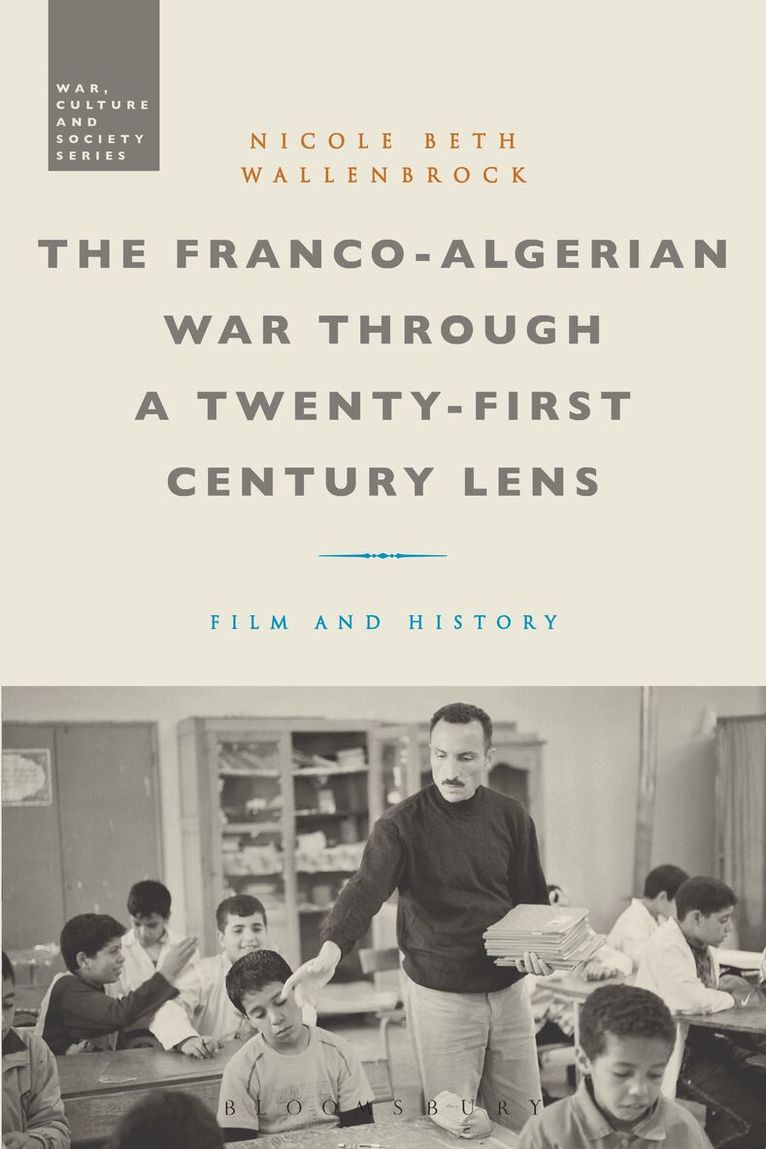
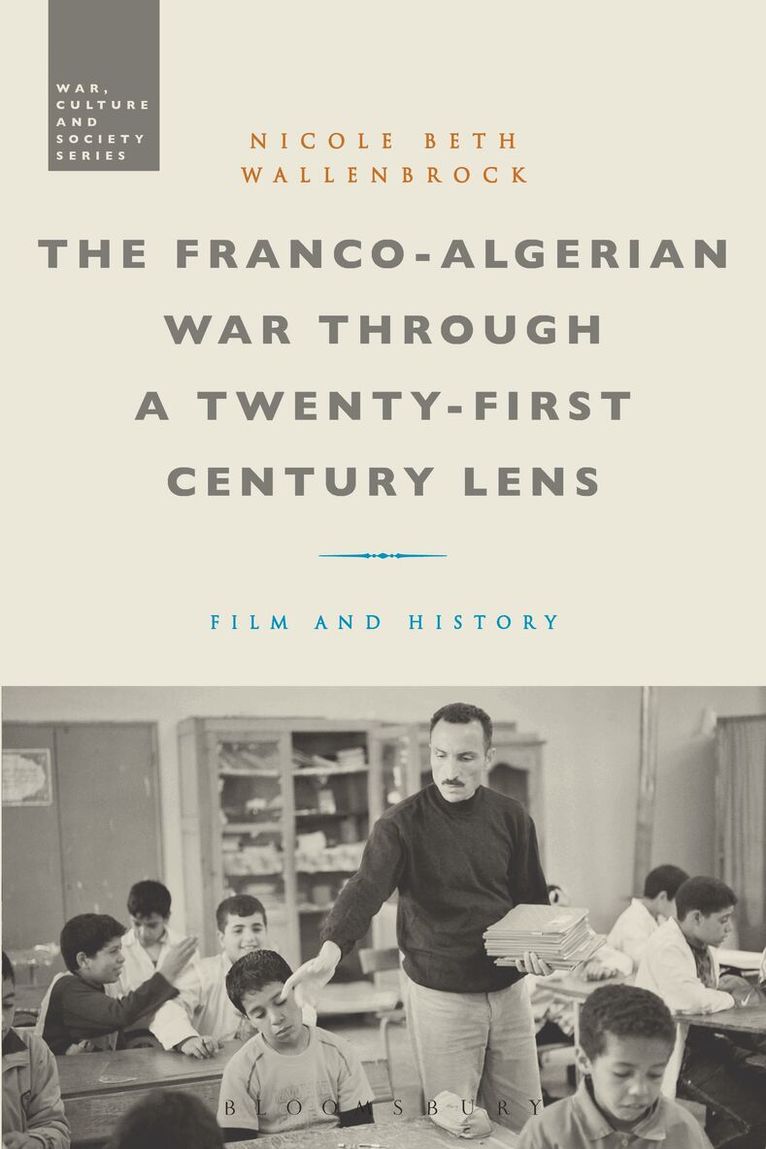
The Franco-Algerian War (1954–62) remains a powerful international symbol of Third Worldism and the finality of Empire. Through its nuanced analysis of the war’s depiction in film, The Franco-Algerian War through a Twenty-First Century Lens locates an international reckoning with history that both condemns and exonerates past generations.Algerian and French production partnerships—such as Hors-la-loi, (Outside the Law, Rachid Bouchareb, 2010) and Loubia Hamra (Bloody Beans, Narimane Mari, 2013)—are one of several ways citizens collaborate to unearth a shared history and its legacy. Nicole Beth Wallenbrock probes cinematic discourse to shed new light on topics including: the media revelation of torture and atomic bomb tests; immigration’s role in the evolution of the war’s meaning; and the complex relationship of the intertwined film cultures. The first chapter summarizes the Franco-Algerian War in 20th-century film, thus grounding subsequent queries with Algeria’s moudjahid or freedom-fighter films and the French new wave’s perceived disinterest in the conflict.This book is an invaluable resource for scholars seeking to understand cinema’s role in re-evaluating war and reconstructing international memory.
Inbunden, Engelska, 2020
1 583 kr
Skickas inom 10-15 vardagar
The Franco-Algerian War (1954–62) remains a powerful international symbol of Third Worldism and the finality of Empire. Through its nuanced analysis of the war’s depiction in film, The Franco-Algerian War through a Twenty-First Century Lens locates an international reckoning with history that both condemns and exonerates past generations.Algerian and French production partnerships—such as Hors-la-loi, (Outside the Law, Rachid Bouchareb, 2010) and Loubia Hamra (Bloody Beans, Narimane Mari, 2013)—are one of several ways citizens collaborate to unearth a shared history and its legacy. Nicole Beth Wallenbrock probes cinematic discourse to shed new light on topics including: the media revelation of torture and atomic bomb tests; immigration’s role in the evolution of the war’s meaning; and the complex relationship of the intertwined film cultures. The first chapter summarizes the Franco-Algerian War in 20th-century film, thus grounding subsequent queries with Algeria’s moudjahid or freedom-fighter films and the French new wave’s perceived disinterest in the conflict.This book is an invaluable resource for scholars seeking to understand cinema’s role in re-evaluating war and reconstructing international memory.
E-bok
PDF, Engelska, 2020514 kr
Läs direkt efter köp
The Franco-Algerian War (1954–62) remains a powerful international symbol of Third Worldism and the finality of Empire. Through its nuanced analysis of the war''s depiction in film, The Franco-Algerian War through a Twenty-First Century Lens locates an international reckoning with history that both condemns and exonerates past generations. Algerian and French production partnerships-such as Hors-la-loi, (Outside the Law, Rachid Bouchareb, 2010) and Loubia Hamra (Bloody Beans, Narimane Mari, 2013)-are one of several ways citizens collaborate to unearth a shared history and its legacy. Nicole Beth Wallenbrock probes cinematic discourse to shed new light on topics including: the media revelation of torture and atomic bomb tests; immigration''s role in the evolution of the war''s meaning; and the complex relationship of the intertwined film cultures. The first chapter summarizes the Franco-Algerian War in 20th-century film, thus grounding subsequent queries with Algeria''s moudjahid or freedom-fighter films and the French new wave''s perceived disinterest in the conflict. This book is an invaluable resource for scholars seeking to understand cinema''s role in re-evaluating war and reconstructing international memory.
E-bok
Engelska, 2020514 kr
Läs direkt efter köp
The Franco-Algerian War (1954–62) remains a powerful international symbol of Third Worldism and the finality of Empire. Through its nuanced analysis of the war''s depiction in film, The Franco-Algerian War through a Twenty-First Century Lens locates an international reckoning with history that both condemns and exonerates past generations. Algerian and French production partnerships-such as Hors-la-loi, (Outside the Law, Rachid Bouchareb, 2010) and Loubia Hamra (Bloody Beans, Narimane Mari, 2013)-are one of several ways citizens collaborate to unearth a shared history and its legacy. Nicole Beth Wallenbrock probes cinematic discourse to shed new light on topics including: the media revelation of torture and atomic bomb tests; immigration''s role in the evolution of the war''s meaning; and the complex relationship of the intertwined film cultures. The first chapter summarizes the Franco-Algerian War in 20th-century film, thus grounding subsequent queries with Algeria''s moudjahid or freedom-fighter films and the French new wave''s perceived disinterest in the conflict. This book is an invaluable resource for scholars seeking to understand cinema''s role in re-evaluating war and reconstructing international memory.
Inbunden, Engelska, 2021
1 208 kr
Skickas inom 3-6 vardagar
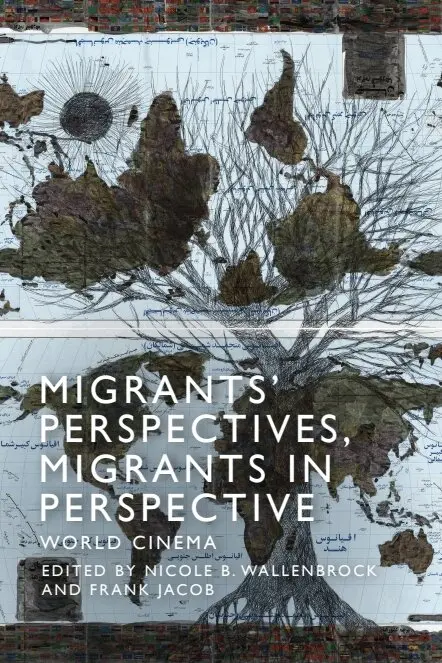
Presenting the depiction of migration through a variety of cinematic outlets, this volume explores film's depiction of human displacement in different geographic circumstances and probes the reasons why cinema so frequently evokes a stereotype of in-transit people. Techniques of affect and distance are revealed in the contributors' close film studies of wide-ranging matter which include works by the Dardenne brothers, transnational video artists Ghazel and Bouchra Khalili, and studies of Syrian films at Western festivals. Migrants' Perspective, Migrants in Perspective: World Cinema deciphers the semiotics of migration and its representation in cinema, exploring both the complications of shooting a migrant subject, and the challenges of including the migrants' point of view.
Häftad, Engelska, 2023
643 kr
Skickas inom 3-6 vardagar
Analyses how migrants are portrayed in film from different viewpointsDeciphers the semiotics of migration and its representation in cinemaAnalyses films which depict migration in Africa, the Americas, Europe, and the Middle EastExplores films that transgress mainstream popular currents and instead participate in alternative networks, such as internet, festivals, museums, and art-house circuitsPresenting the depiction of migration through a variety of cinematic outlets, this volume explores film's depiction of human displacement in different geographic circumstances and probes the reasons why cinema so frequently evokes a stereotype of in-transit people. Techniques of affect and distance are revealed in the contributors' close film studies of wide-ranging matter which include works by the Dardenne brothers, transnational video artists Ghazel and Bouchra Khalili, and studies of Syrian films at Western festivals.Migrants' Perspective, Migrants in Perspective: World Cinema deciphers the semiotics of migration and its representation in cinema, exploring both the complications of shooting a migrant subject, and the challenges of including the migrants' point of view.
E-bok
PDF, Engelska, 2016260 kr
Läs direkt efter köp
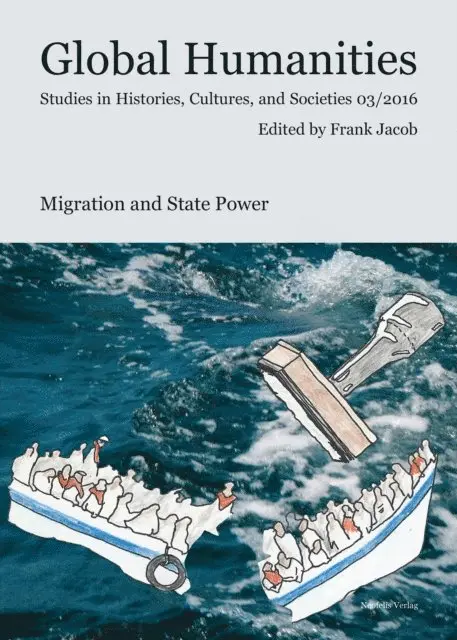
The current situation in Europe seems to emphasize that our modern society is still not ready to accept migration as an important part of human history. Instead of welcoming immigrants and refugees with open arms, state power is trying to restrict asylum for those who are in need. The reasons, why people leave their home countries are different: human trafficking, prosecution, war, or just the hope for a better future. Despite the ethical and moral perspective and the duty of a modern democratic state to support those in need, restrictions and limitations of civil rights often seem to be the sole answer. While the members of the European Union are accusing each other, a solution for the problem of refugee migration is far away.The relationship between migration and state power has always been difficult. To highlight its history the third volume of Global Humanities deals with the philosophy and the history of this interrelationship as well as its reception in popular media. It analyzes the difficulties with regard to migration and state power from Huguenot France to Korea and Taiwan after 1945. Furthermore, by providing historical case studies, it shows that the problems of migration movements are not new at all and that there have always been similarities with regard to the reaction to those movements, which more than resembles the actual situation in Europe and other parts of the world.