Nicole Gnesotto – författare
Visar alla böcker från författaren Nicole Gnesotto. Handla med fri frakt och snabb leverans.
5 produkter
5 produkter
E-bok
PDF, Engelska, 2006318 kr
Läs direkt efter köp
A Brookings Institution Press and EU Institute for Security Studies publicationThe greater Middle East region is beset by a crescent of crises, stretching from Pakistan through Afghanistan, Iran, and Iraq to the Israeli-Palestinian conflict. Together, these five crises pose the most pressing security challenges faced by the United States and its European alliesranging from terrorism and weapons proliferation to the rise of fundamentalism and the lack of democracy. Until now, Europe and the United States have approached these issues (indeed, the Middle East as a whole) in differing ways, with little effective coordination of policy. In fact, how best to deal with the greater Middle East has emerged as one of the most contentious issues in U.S.-European relations. The need for a common approach to the region is more evident than ever.This book brings together some of Europe and America's leading scholars and practitioners in an effort to develop a common approach to resolving the five major crises in the region. European and American authors provide succinct and fact-filled overviews of the different crises, describe U.S. and European perspectives on the way forward, and suggest ways in which the United States and Europe can better cooperate. In the conclusion, the editors synthesize the different suggestions into a roadmap for U.S.-European cooperation for addressing the challenges of the Greater Middle East in the years ahead.Contributors include Stephen Cohen (Brookings Institution), James Dobbins (RAND), Toby Dodge (University of London), Martin Indyk (Saban Center at Brookings), Kenneth Pollack (Saban Center at Brookings), Jean-Luc Racine (Center for the Study of India and South Asia), Barnett Rubin (New York University), Yezid Sayigh (University of Cambridge), and Bruno Tertrais (Fondation pour la Recherche Stratégique).
Häftad, Engelska, 2006
297 kr
Skickas inom 10-15 vardagar
A Brookings Institution Press and EU Institute for Security Studies publicationThe greater Middle East region is beset by a crescent of crises, stretching from Pakistan through Afghanistan, Iran, and Iraq to the Israeli-Palestinian conflict. Together, these five crises pose the most pressing security challenges faced by the United States and its European alliesranging from terrorism and weapons proliferation to the rise of fundamentalism and the lack of democracy. Until now, Europe and the United States have approached these issues (indeed, the Middle East as a whole) in differing ways, with little effective coordination of policy. In fact, how best to deal with the greater Middle East has emerged as one of the most contentious issues in U.S.-European relations. The need for a common approach to the region is more evident than ever.This book brings together some of Europe and America's leading scholars and practitioners in an effort to develop a common approach to resolving the five major crises in the region. European and American authors provide succinct and fact-filled overviews of the different crises, describe U.S. and European perspectives on the way forward, and suggest ways in which the United States and Europe can better cooperate. In the conclusion, the editors synthesize the different suggestions into a roadmap for U.S.-European cooperation for addressing the challenges of the Greater Middle East in the years ahead.Contributors include Stephen Cohen (Brookings Institution), James Dobbins (RAND), Toby Dodge (University of London), Martin Indyk (Saban Center at Brookings), Kenneth Pollack (Saban Center at Brookings), Jean-Luc Racine (Center for the Study of India and South Asia), Barnett Rubin (New York University), Yezid Sayigh (University of Cambridge), and Bruno Tertrais (Fondation pour la Recherche Stratégique).
E-bok
Franska, 2017149 kr
Läs direkt efter köp
Où va le monde ? Comment en est-on arrivé là ? Pourquoi le désordre, la violence, le chaos donnent-ils le sentiment d’être les nouvelles règles du système international, alors que la paix, la prospérité, la liberté, la règle du droit étaient données, il y a à peine vingt ans, comme les promesses de la fin de la guerre froide ? Quelles dynamiques dominent aujourd’hui le monde ? Le marché ou la force ? L’économie ou la géopolitique ? La première va-t-elle réussir à pacifier le monde et l’unir dans un destin commun ? La seconde finira-t-elle par casser l’unification des marchés au profit de désordres et de rivalités incontrôlés ? Pascal Lamy et Nicole Gnesotto n’ont pas les mêmes réponses, sauf sur l’Europe, et en débattent ici avec Jean-Michel Baer. Un livre lumineux pour comprendre les enjeux du nouveau désordre mondial. Proche de Jacques Delors, Pascal Lamy a été commissaire européen, puis directeur général de l’Organisation mondiale du commerce (OMC). Il a publié, chez Odile Jacob, Quand la France s’éveillera. Nicole Gnesotto est professeur titulaire de la chaire sur l’Union européenne au Conservatoire national des arts et métiers, et présidente du conseil d’administration de l’Institut des hautes études de défense nationale. Jean-Michel Baer a été journaliste à Libération, membre du cabinet de Jacques Delors, directeur de la Culture puis de la Recherche en sciences sociales à la Commission européenne.
E-bok
Franska, 2018154 kr
Läs direkt efter köp
Où va le monde ? Comment en est-on arrivé là ? Pourquoi le désordre, la violence, le chaos donnent-ils le sentiment d’être les nouvelles règles du système international, alors que la paix, la prospérité, la liberté, la règle du droit étaient données, il y a à peine vingt ans, comme les promesses de la fin de la guerre froide ? Quelles dynamiques dominent aujourd’hui le monde ? Le marché ou la force ? L’économie ou la géopolitique ? La première va-t-elle réussir à pacifier le monde et l’unir dans un destin commun ? La seconde finira-t-elle par casser l’unification des marchés au profit de désordres et de rivalités incontrôlés ? Pascal Lamy et Nicole Gnesotto n’ont pas les mêmes réponses, sauf sur l’Europe, et en débattent ici. Un livre lumineux pour comprendre les enjeux du nouveau désordre mondial. Proche de Jacques Delors, Pascal Lamy a été commissaire européen, puis directeur général de l’Organisation mondiale du commerce (OMC). Il a publié, chez Odile Jacob, Quand la France s’éveillera. Nicole Gnesotto est professeur titulaire de la chaire sur l’Union européenne au Conservatoire national des arts et métiers, et présidente du conseil d’administration de l’Institut des hautes études de défense nationale.
E-bok
Engelska, 2019178 kr
Läs direkt efter köp
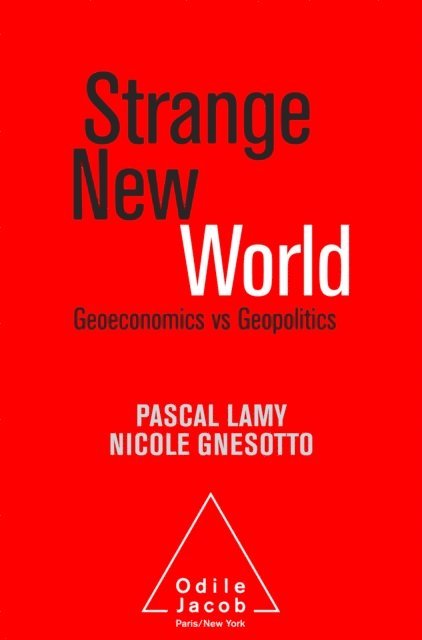
Where is the world heading? Towards a “new world disorder” marked by the resurgence of geopolitical conflicts and state-sponsored violence or towards an ineluctable economic convergence? Building on their expertise in economics, defense, and European affairs, former Director-General of the World Trade Organization Pascal Lamy and defense analyst Nicole Gnesotto do not share the same opinion about our world’s future, but they both hold this nexus between geopolitical and geoeconomic forces to be at the core of our understanding of global affairs. They offer in this book a stimulating dialogue in the making. It first opposes, then gradually weaves together two different but complementary perspectives on future strategic challenges. For Nicole Gnesotto, globalization has accentuated tensions and isolationism; but Pascal Lamy remains confident in the power of a regulated and harnessed globalization to pacify the world and make it a better place. This book offers strategic thinking and blends theory with vision and insight to provide us with an urgent examination of the great transformations that the world is facing and the possible solutions Europe could offer to overcome this tumultuous phase of global history. A must-read for anyone interested in getting a firmer grasp on global and European affairs. Pascal Lamy, Jacques Delors’s former chief of staff, was a European Trade Commissioner (1999-2004) before serving for two terms as Director General of the World Trade Organization (2005-2013). Nicole Gnesotto, professor at the CNAM (National Arts & Trades Centre), specializes in international relations issues, particularly European ones. She ran the Institut d’études de sécurité de l’Union européenne from 2002 to 2007.