Niklas Juth - Böcker
Visar alla böcker från författaren Niklas Juth. Handla med fri frakt och snabb leverans.
5 produkter
5 produkter
1 047 kr
Skickas
Denna rikt illustrerade lärobok berör samtliga aspekter på ämnet obstetrik, från konception och fysiologisk omställning under graviditet till handläggning av allt från det normala till det mest komplicerade. Livsstilsfaktorer, drogmissbruk och betydelsen av fostermiljön för individens framtida hälsa berörs. Det finns utförliga kapitel om ultraljudsdiagnostik, fosterövervakning under graviditet och förlossning inklusive obstetriska ingrepp. Även ämnen som etik, psykologiska faktorer, föräldrar–barninteraktion, omvårdnadsperspektiv, juridiska aspekter och ett internationellt perspektiv ingår.Denna tredje upplaga av läroboken i obstetrik är omarbetad av tre nya redaktörer och är skriven av ett nittiotal författare, samtliga specialister inom sina respektive områden. Boken är en produkt av ett unikt samarbete mellan ett stort antal specialkunniga läkare och barnmorskor inom svensk obstetrik samt sjukgymnaster, epidemiologer och jurister. Samtliga kapitel är uppdaterade och 36 kapitel är helt nyskrivna med nya författarkonstellationer.Boken vänder sig till läkarstuderande på grundutbildningen, till läkare under specialistutbildning samt till läkare och barnmorskor som är verksamma inom obstetrik.
Del 1 - Cambridge Law, Medicine and Ethics
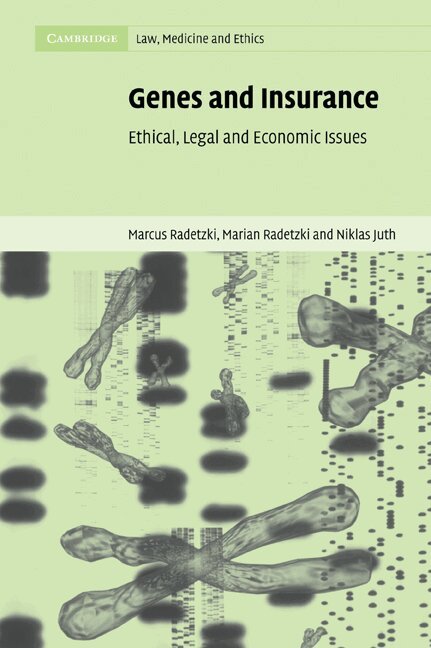
Genes and Insurance
Ethical, Legal and Economic Issues
Häftad, Engelska, 2008
428 kr
Skickas inom 7-10 vardagar
The result of two key social developments in recent years are examined here: the partial dismantling of the welfare state and the progress of genetics. Genetic insights are increasingly valuable for risk assessment, and insurers would like to use these insights to help determine premiums. Combined with the fact that social welfare is being curtailed, this could potentially create an uninsured high-risk population. Along with considerations of autonomy and privacy, this is the basis for an ethical critique of insurer's access to information. The result has often been regulation of such information; but the authors argues that due to adverse selection, regulation will not solve these problems, and this may jeopardize the survival of private personal insurance. Instead, we should look towards the resurrection of social insurance, a key component of the welfare state. This will interest academic researchers as well as professionals involved with genetics and insurance.
Del 1 - Cambridge Law, Medicine and Ethics
Genes and Insurance
Ethical, Legal and Economic Issues
Inbunden, Engelska, 2003
1 324 kr
Skickas inom 7-10 vardagar
The result of two key social developments in recent years are examined here: the partial dismantling of the welfare state and the progress of genetics. Genetic insights are increasingly valuable for risk assessment, and insurers would like to use these insights to help determine premiums. Combined with the fact that social welfare is being curtailed, this could potentially create an uninsured high-risk population. Along with considerations of autonomy and privacy, this is the basis for an ethical critique of insurer's access to information. The result has often been regulation of such information; but the authors argues that due to adverse selection, regulation will not solve these problems, and this may jeopardize the survival of private personal insurance. Instead, we should look towards the resurrection of social insurance, a key component of the welfare state. This will interest academic researchers as well as professionals involved with genetics and insurance.
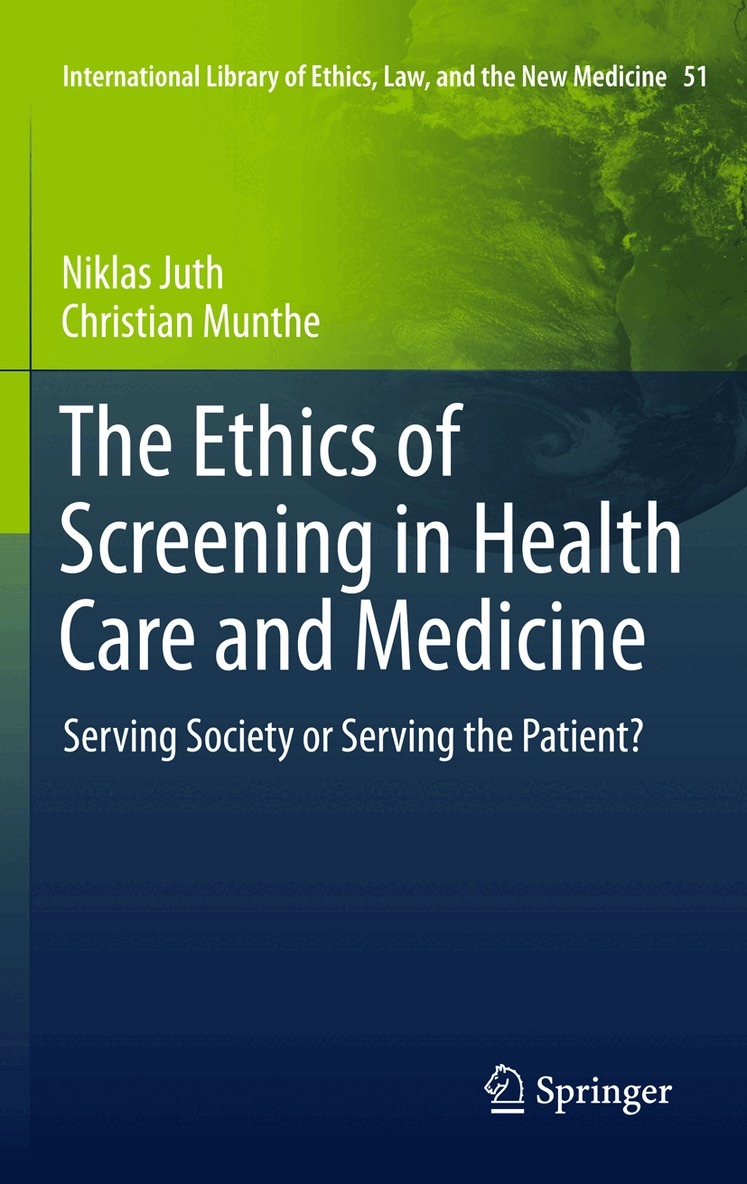
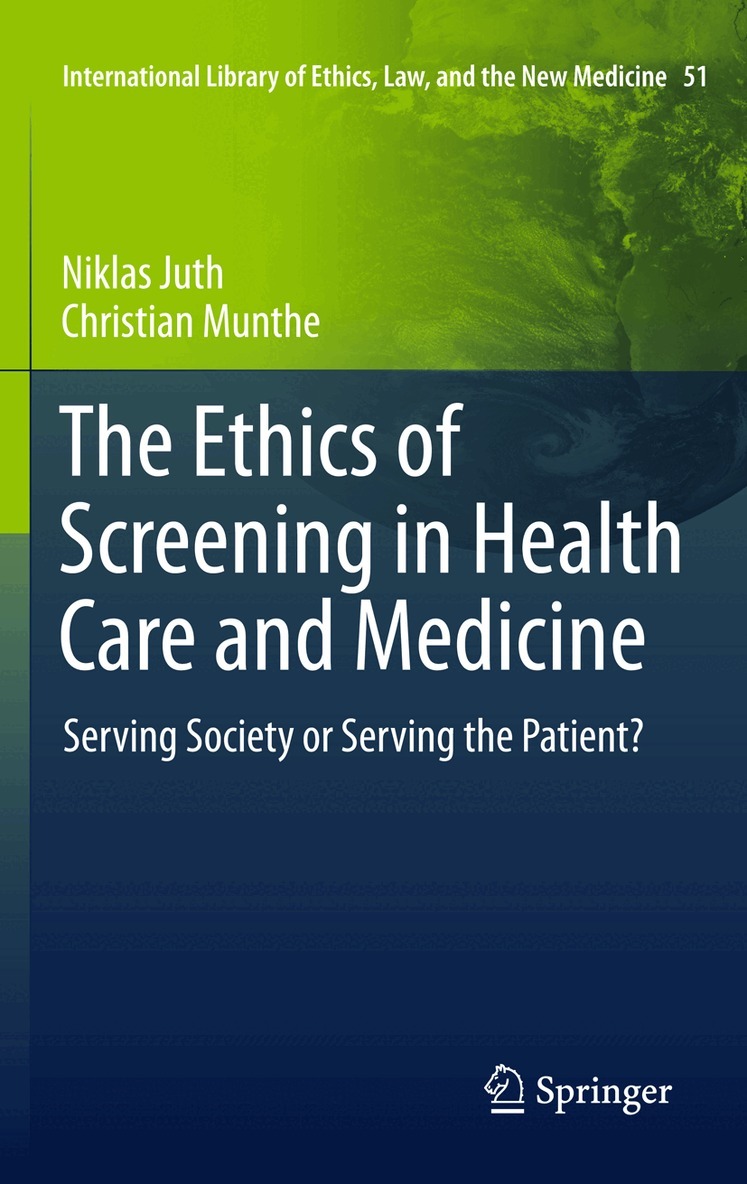
Ethics of Screening in Health Care and Medicine
Serving Society or Serving the Patient?
Inbunden, Engelska, 2011
1 640 kr
Skickas inom 10-15 vardagar
Medical or health-oriented screening programs are amongst the most debated aspects of health care and public health practices in health care and public health ethics, as well as health policy discussions. In spite of this, most treatments of screening in the research literature restrict themselves to isolated scientific aspects, sometimes complemented by economic analyses or loose speculations regarding policy aspects. At the same time, recent advances in medical genetics and technology, as well as a rapidly growing societal focus on public health concerns, inspires an increase in suggested or recently started screening programs. This book involves an in-depth analysis of the ethical, political and philosophical issues related to health-oriented screening programs. It explores the considerations that arise when heath care interacts with other societal institutions on a large scale, as is the case with screening: What values may be promoted or compromised by screening programs? What conflicts of values do typically arise – both internally and in relation to the goals of health care, on the one hand, and the goals of public health and the general society, on the other? What aspects of screening are relevant for determining whether it should be undertaken or not and how it should be organised in order to remain defensible? What implications does the ethics of screening have for health care ethics as a whole? These questions are addressed by applying philosophical methods of conceptual analysis, as well as models and theories from moral and political philosophy, medical ethics, and public health ethics, to a large number of ongoing and proposed screening programs which makes this book the first comprehensive work on the ethics of screening. Analyses and suggestions are made that are of potential interest to health care staff, medical researchers, policy makers and the general public.
Ethics of Screening in Health Care and Medicine
Serving Society or Serving the Patient?
Häftad, Engelska, 2013
1 593 kr
Skickas inom 10-15 vardagar
Medical or health-oriented screening programs are amongst the most debated aspects of health care and public health practices in health care and public health ethics, as well as health policy discussions. In spite of this, most treatments of screening in the research literature restrict themselves to isolated scientific aspects, sometimes complemented by economic analyses or loose speculations regarding policy aspects. At the same time, recent advances in medical genetics and technology, as well as a rapidly growing societal focus on public health concerns, inspires an increase in suggested or recently started screening programs. This book involves an in-depth analysis of the ethical, political and philosophical issues related to health-oriented screening programs. It explores the considerations that arise when heath care interacts with other societal institutions on a large scale, as is the case with screening: What values may be promoted or compromised by screening programs? What conflicts of values do typically arise – both internally and in relation to the goals of health care, on the one hand, and the goals of public health and the general society, on the other? What aspects of screening are relevant for determining whether it should be undertaken or not and how it should be organised in order to remain defensible? What implications does the ethics of screening have for health care ethics as a whole? These questions are addressed by applying philosophical methods of conceptual analysis, as well as models and theories from moral and political philosophy, medical ethics, and public health ethics, to a large number of ongoing and proposed screening programs which makes this book the first comprehensive work on the ethics of screening. Analyses and suggestions are made that are of potential interest to health care staff, medical researchers, policy makers and the general public.