Nikos Skoutaris – författare
Visar alla böcker från författaren Nikos Skoutaris. Handla med fri frakt och snabb leverans.
12 produkter
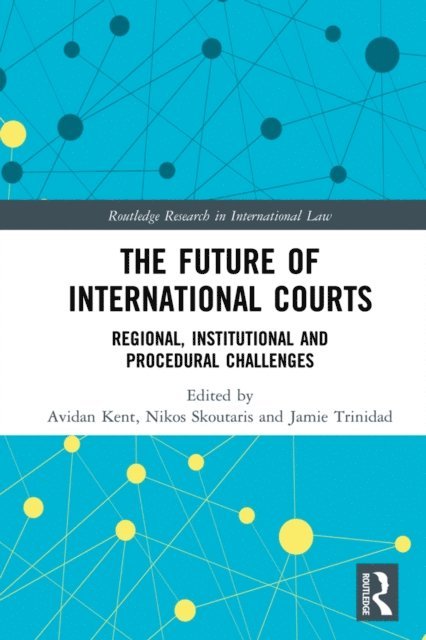
Future of International Courts
Regional, Institutional and Procedural Challenges
Av Jamie Trinidad, Nikos Skoutaris m. fl.
E-bok, 2019
733 kr
Lägg i varukorg
The end of World War II marked the beginning of a new golden era in international law. Treaties and international organisations proliferated at an unprecedented rate, and many courts and tribunals were established with a view to ensuring the smooth operation of this new universe of international …
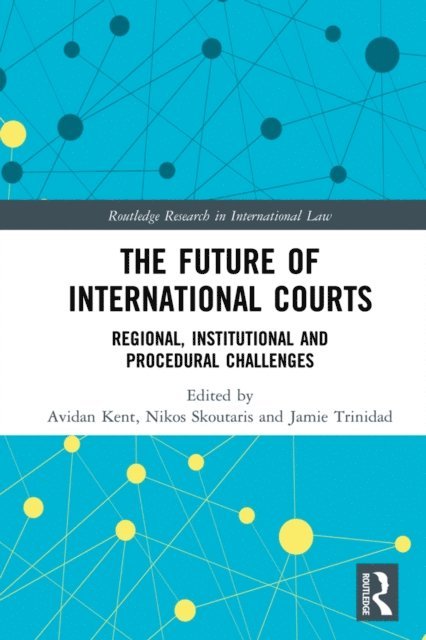
Future of International Courts
Regional, Institutional and Procedural Challenges
Av Jamie Trinidad, Nikos Skoutaris m. fl.
E-bok, 2019
749 kr
Lägg i varukorg
The end of World War II marked the beginning of a new golden era in international law. Treaties and international organisations proliferated at an unprecedented rate, and many courts and tribunals were established with a view to ensuring the smooth operation of this new universe of international …
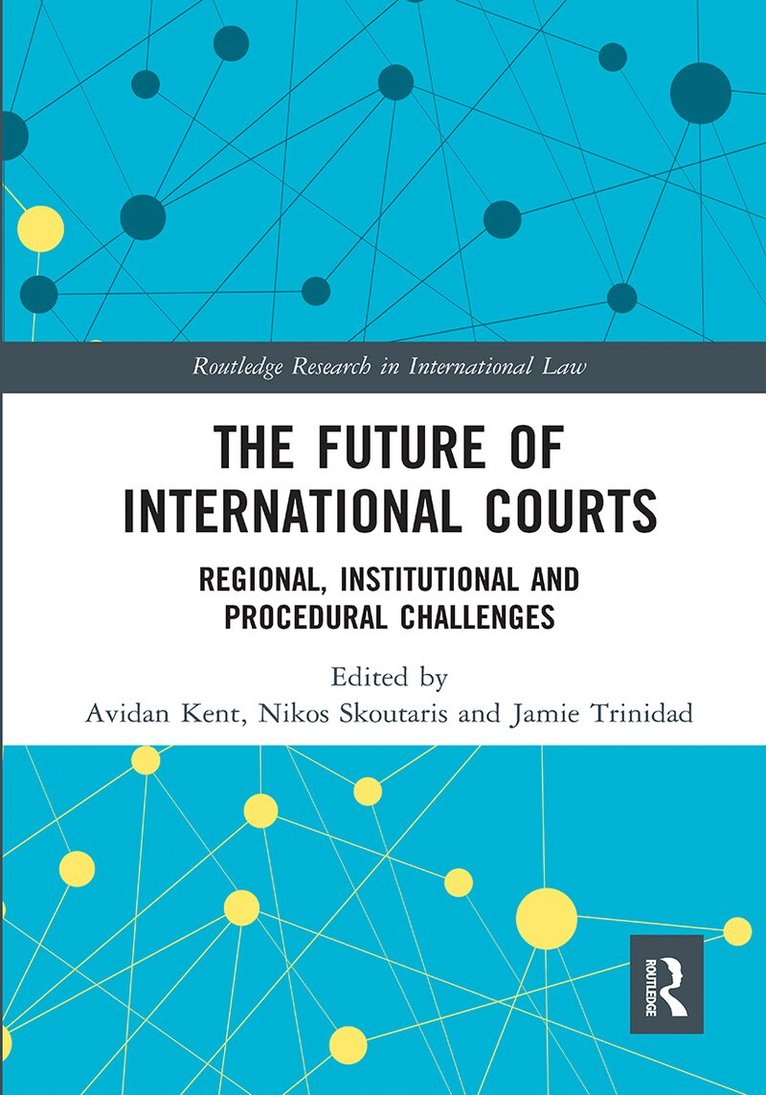
Future of International Courts
Regional, Institutional and Procedural Challenges
Av Avidan Kent, Nikos Skoutaris m. fl.
Häftad, 2021
638 kr
Lägg i varukorg
The end of World War II marked the beginning of a new golden era in international law. Treaties and international organisations proliferated at an unprecedented rate, and many courts and tribunals were established with a view to ensuring the smooth operation of this new universe of international …
Future of International Courts
Regional, Institutional and Procedural Challenges
Av Avidan Kent, Nikos Skoutaris m. fl.
Inbunden, 2019
2319 kr
Lägg i varukorg
The end of World War II marked the beginning of a new golden era in international law. Treaties and international organisations proliferated at an unprecedented rate, and many courts and tribunals were established with a view to ensuring the smooth operation of this new universe of international …
EU Accession to the ECHR
Av Vasiliki Kosta, Nikos Skoutaris m. fl.
Häftad, 2016
554 kr
Lägg i varukorg
Article 6 of the Treaty on European Union (TEU) provides that the EU will accede to the system of human rights protection of the European Convention on Human Rights (ECHR). Protocol No 9 in the Treaty of Lisbon opens the way for accession. This represents a major change in the relationship between …
Brexit: A Way Forward
A Way Forward
Av Sarah Alwahaibi, Oriana Casasola m. fl.
Häftad, 2019
675 kr
Lägg i varukorg
EU Accession to the ECHR
Av Vasiliki Kosta, Nikos Skoutaris m. fl.
E-bok, 2014
589 kr
Lägg i varukorg
Article 6 of the Treaty on European Union (TEU) provides that the EU will accede to the system of human rights protection of the European Convention on Human Rights (ECHR). Protocol No 9 in the Treaty of Lisbon opens the way for accession. This represents a major change in the relationship between …
EU Accession to the ECHR
Av Vasiliki Kosta, Nikos Skoutaris m. fl.
E-bok, 2014
602 kr
Lägg i varukorg
Article 6 of the Treaty on European Union (TEU) provides that the EU will accede to the system of human rights protection of the European Convention on Human Rights (ECHR). Protocol No 9 in the Treaty of Lisbon opens the way for accession. This represents a major change in the relationship between …
Cyprus Issue
The Four Freedoms in a Member State Under Siege
E-bok, 2011
1362 kr
Lägg i varukorg
This is a book on the interrelationship of the EU legal order and the Cyprus issue. The book addresses a question which is of great significance for the legal order of the EU (as well as for Cypriots, Turks and Greeks), namely how the Union deals with the de facto division of the island. Despite …
Territorial Pluralism in Europe
Vertical Separation of Powers in the EU and its Member States
Inbunden, 2021
1122 kr
Kommande
Governmental powers can be apportioned vertically at different levels. Five levels of vertical government are distinguishable, moving from purely local to the truly global: (1) local, ie municipal or citywide; (2) substate-regional (3) State; (4) supranational, eg the European Union; (5) and …
EU Accession to the ECHR
Av Vasiliki Kosta, Nikos Skoutaris m. fl.
Inbunden, 2014
1311 kr
Lägg i varukorg
Article 6 of the Treaty on European Union (TEU) provides that the EU will accede to the system of human rights protection of the European Convention on Human Rights (ECHR). Protocol No 9 in the Treaty of Lisbon opens the way for accession. This represents a major change in the relationship between …