Nina Hyams - Böcker
Visar alla böcker från författaren Nina Hyams. Handla med fri frakt och snabb leverans.
6 produkter
6 produkter
1 074 kr
Skickas inom 5-8 vardagar
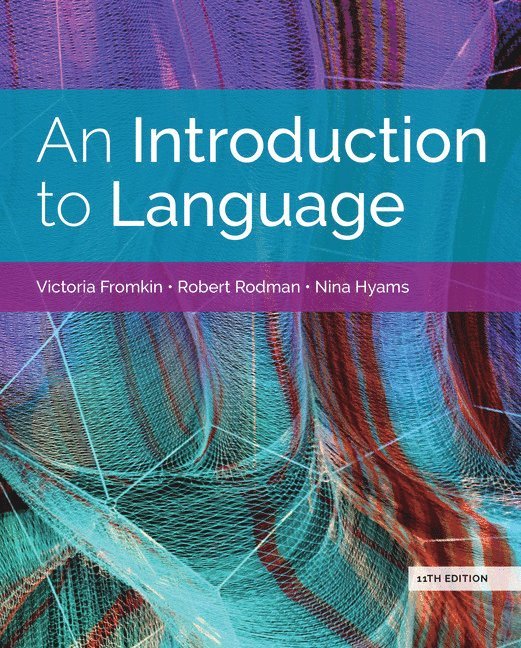
An Introduction to Language introduces you to the fascinating study of human language from an Australian perspective. Chapters explore the nature of human language, the grammatical aspects and psychology of language, as well as language and its relation to society. Popular features include learning objectives and margin definitions in each chapter, along with summary tables inside the covers, which assist you to learn core concepts and terminology.
488 kr
Skickas inom 7-10 vardagar
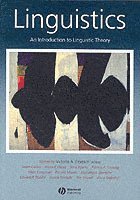
Linguistics: An Introduction to Linguistic Theory is a textbook, written for introductory courses in linguistic theory for undergraduate linguistics majors and first-year graduate students, by twelve major figures in the field, each bringing their expertise to one of the core areas of the field - morphology, syntax, semantics, phonetics, phonology, and language acquisition. In each section the book is concerned with discussing the underlying principles common to all languages, showing how these are revealed in language acquisition and in the specific grammars of the world's languages.Key book features: Written by twelve linguists all internationally recognized as leaders in their fields of specialization.Exercises and data-analysis problems within and at end of each chapter help students learn what it means to actually do linguistics.Includes the latest developments in theoretical linguistics; for example, Optimality Theory.Other pedagogical tools include: extensive glossary of key terms, chapter summaries, further reading lists.
990 kr
Skickas inom 7-10 vardagar
Linguistics: An Introduction to Linguistic Theory is a textbook, written for introductory courses in linguistic theory for undergraduate linguistics majors and first-year graduate students. Twelve major figures in the field bring their expertise to each of the core areas of the field - morphology, syntax, semantics, phonetics, phonology, and language acquisition. In each section the book is concerned with discussing the underlying principles common to all languages, showing how these are revealed in language acquisition and in the specific grammars of the world's languages. Theoretical concepts are introduced through the analysis of a wide set of language data from Arabic to Zulu. The student will learn how to "do" linguistics by working through real linguistic data. Each section explains how to define and solve a problem; organizes the data into paradigms revealing the structured patterns in the data; formulates generalizations based on these patterns; proposes rules or principles to account for the generalization; seeks independent evidence in its argument for the proposed theoretical construct. The book brings the latest developments in theoretical linguistics to bear in its discussion of the traditional issues. It covers these subjects in greater depth than is found in most introductory texts permitting the student to proceed directly, after using this text, to graduate courses in the field. It contains problems, a glossary, and a bibliography for further reading. Linguistics is supported by an instructor's manual.
942 kr
Skickas inom 5-8 vardagar
Whether you are studying education, languages, cognitive science, psychology, anthropology, English, or teaching English as a Second Language (TESL), AN INTRODUCTION TO LANGUAGE, 11th Edition, offers the information you need in a clear and descriptive manner that assumes no prior knowledge of linguistics. This edition retains the blend of humor and broad coverage that have made the text a perennial best seller, while adding up-to-date information and new research that render each topic fresh, engaging, and current.
1 096 kr
Skickas inom 10-15 vardagar
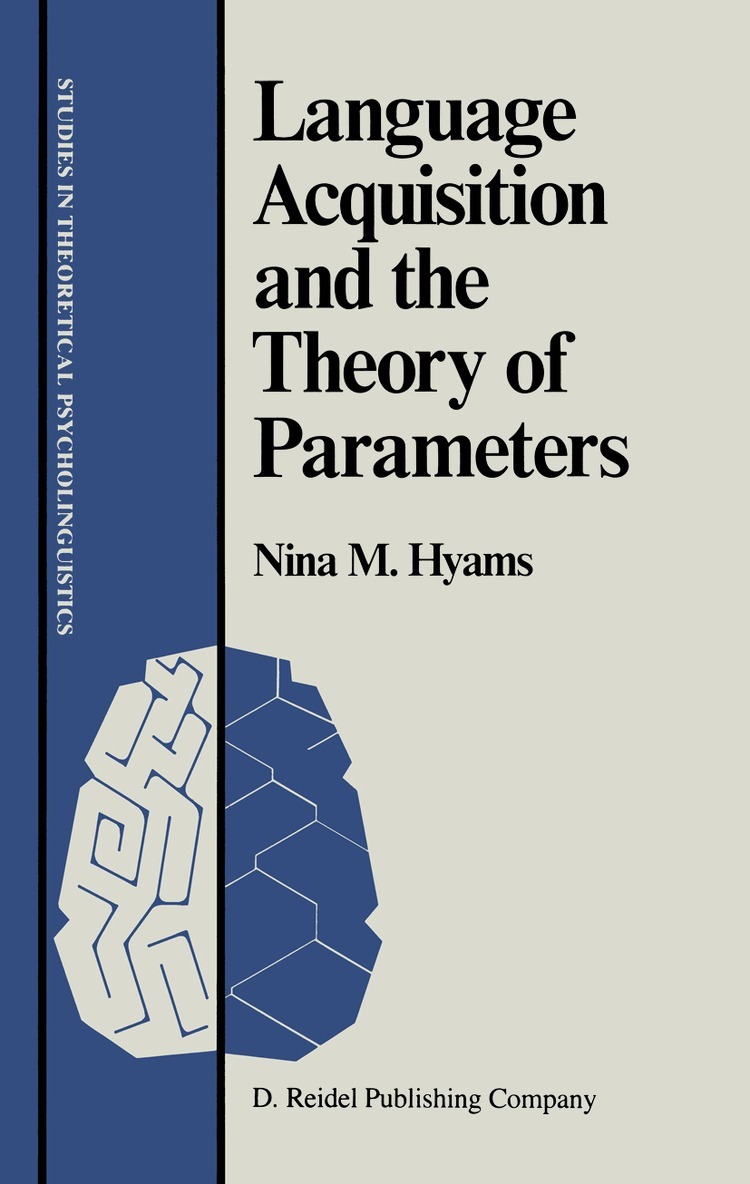
This book is perhaps the most stunning available demonstration of the explanatory power of the parametric approach to linguistic theory. It is akin, not to a deductive proof, but to the discovery of a footprint in a far-off place which leaves an archeologist elated. The book is full of intricate reasoning, but the stunning aspect is that the reasoning moves between not only complex syntax and diverse languages, but it makes predictions about what two-year-old children will assume about the jumble of linguistic input that confronts them. Those predictions, Hyams shows, are supported by a discriminating analysis of acquisition data in English and Italian. Let us examine the linguistic context for a moment before we discuss her theory. The ultimate issue in linguistic theory is the explanation of how a child can acquire any human language. To capture this fact we must posit an innate mechanism which meets two opposite constraints: it must be broad enough to account for the diversity of human language, and narrow enough so that the child does not make irrelevant hypotheses about his own language, particularly ones from which there is no recovery. That is, a child must not posit a grammar which permits all of the sentences of a language as well as other sentences which are not in the language. In a word, the child must not create a language in which one cannot make adult discriminations between grammatical and ungrammatical.
1 096 kr
Skickas inom 10-15 vardagar
This book is perhaps the most stunning available demonstration of the explanatory power of the parametric approach to linguistic theory. It is akin, not to a deductive proof, but to the discovery of a footprint in a far-off place which leaves an archeologist elated. The book is full of intricate reasoning, but the stunning aspect is that the reasoning moves between not only complex syntax and diverse languages, but it makes predictions about what two-year-old children will assume about the jumble of linguistic input that confronts them. Those predictions, Hyams shows, are supported by a discriminating analysis of acquisition data in English and Italian. Let us examine the linguistic context for a moment before we discuss her theory. The ultimate issue in linguistic theory is the explanation of how a child can acquire any human language. To capture this fact we must posit an innate mechanism which meets two opposite constraints: it must be broad enough to account for the diversity of human language, and narrow enough so that the child does not make irrelevant hypotheses about his own language, particularly ones from which there is no recovery. That is, a child must not posit a grammar which permits all of the sentences of a language as well as other sentences which are not in the language. In a word, the child must not create a language in which one cannot make adult discriminations between grammatical and ungrammatical.