Nirvikar Singh - Böcker
Visar alla böcker från författaren Nirvikar Singh. Handla med fri frakt och snabb leverans.
6 produkter
6 produkter
622 kr
Skickas inom 3-6 vardagar
One of the most remarkable stories of immigration in the last half century is that of Indians to the United States. People of Indian origin make up a little over one percent of the American population now, up from barely half a percent at the turn of the millennium. Complete with a new epilogue, the paperback edition of The Other One Percent is a careful, data-driven, and comprehensive account of the three core processes-selection, assimilation, and entrepreneurship-that have led to this rapid rise. This unique phenomenon is driven by-and, in turn, has influenced-wide-ranging changes, especially the ongoing revolution in information technology and its impact on economic globalization, immigration policies in the U.S., higher education policies in India, and foreign policies of both nations. If the overall picture is one of economic success, the details reveal the critical issues faced by Indian immigrants.
625 kr
Skickas inom 5-8 vardagar
One of the most remarkable stories of immigration in the last half century is that of Indians to the United States. People of Indian origin make up a little over one percent of the American population now, up from barely half a percent at the turn of the millennium. Not only has its recent growth been extraordinary, but this population from a developing nation with low human capital is now the most-educated and highest-income group in the worlds most advanced nation. The Other One Percent is a careful, data-driven, and comprehensive account of the three core processesselection, assimilation, and entrepreneurshipthat have led to this rapid rise. This unique phenomenon is driven byand, in turn, has influencedwide-ranging changes, especially the ongoing revolution in information technology and its impact on economic globalization, immigration policies in the U.S., higher education policies in India, and foreign policies of both nations. If the overall picture is one of economic success, the details reveal the critical issues faced by the immigrants stemming from the social, linguistic, and class structure in India, the professional and geographic distribution in the U.S., the simultaneous expressions of pan-Indian and regional identities and simultaneous leadership in high-skill industries (like computers and medicine) and low-skill industries (like hospitality and retail trade), and the multi-generational challenges of a diverse group from the worlds largest democracy fitting into its oldest.
1 842 kr
Skickas inom 7-10 vardagar
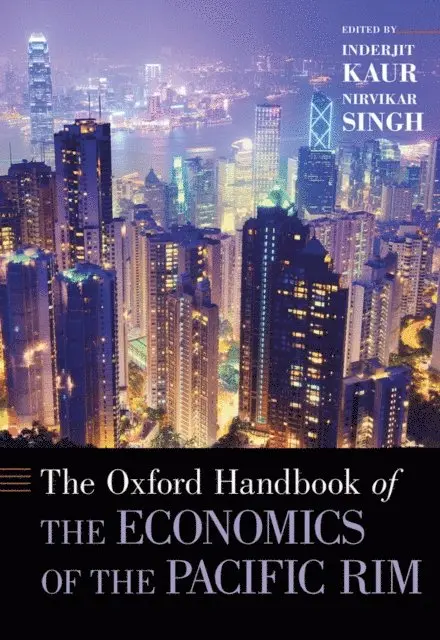
The Pacific Rim is a dynamic as well as diverse economic region, containing the world's three largest economies (US, China and Japan, measured by GDP at PPP). Many of the world's fasting growing and emerging market economies lie in this region. Trans-Pacific economic exchange, including trade and capital movements, has been an important driver of the world economy, contributing to growth as well as global imbalances. Within the Asia-Pacific region also, there has been an increase in trade and investment, as well as the development of value chain linkages through outsourcing and foreign direct investment. How to manage this economic integration and the vagaries of globalization, while supporting continued high growth has been an important theme of economic debate in the region. This Handbook will begin with institutional and historical perspectives, go on to consider various dimensions of economic policies, then examine the growth process and specific challenges to growth, and finally consider the key theme of regional economic integration in its many dimensions, including trade, investment, monetary coordination, crisis management and value networks.
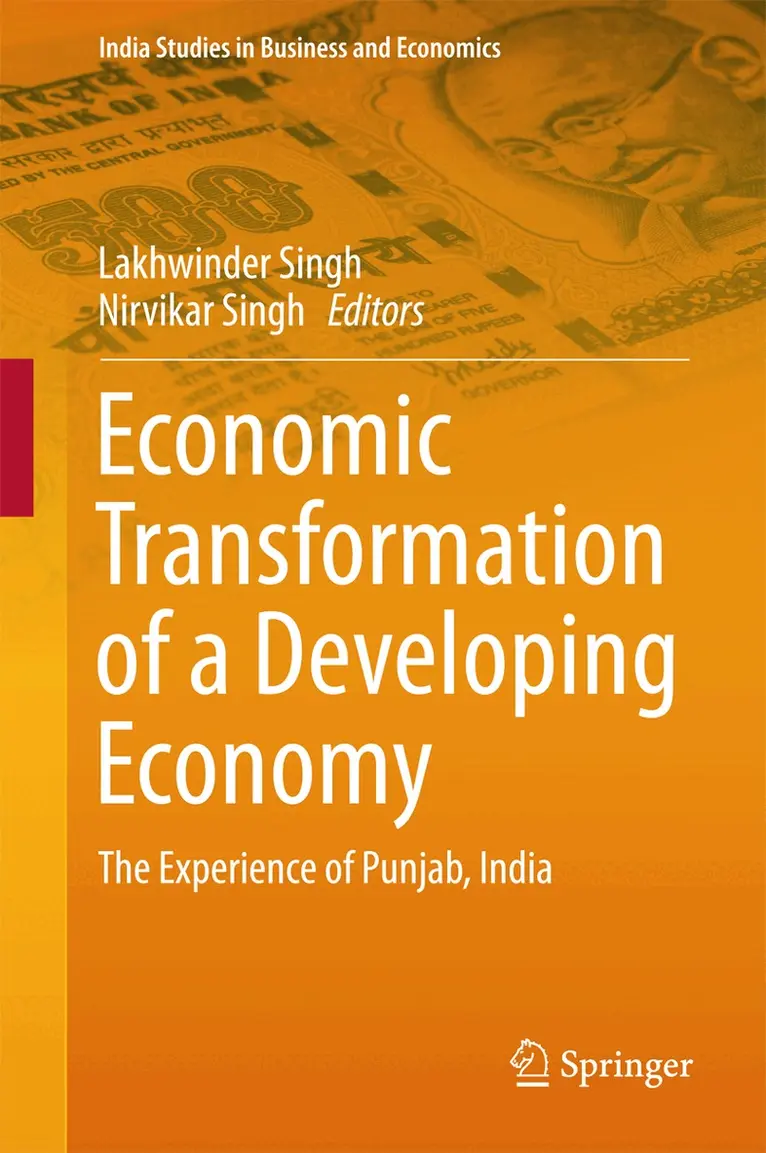
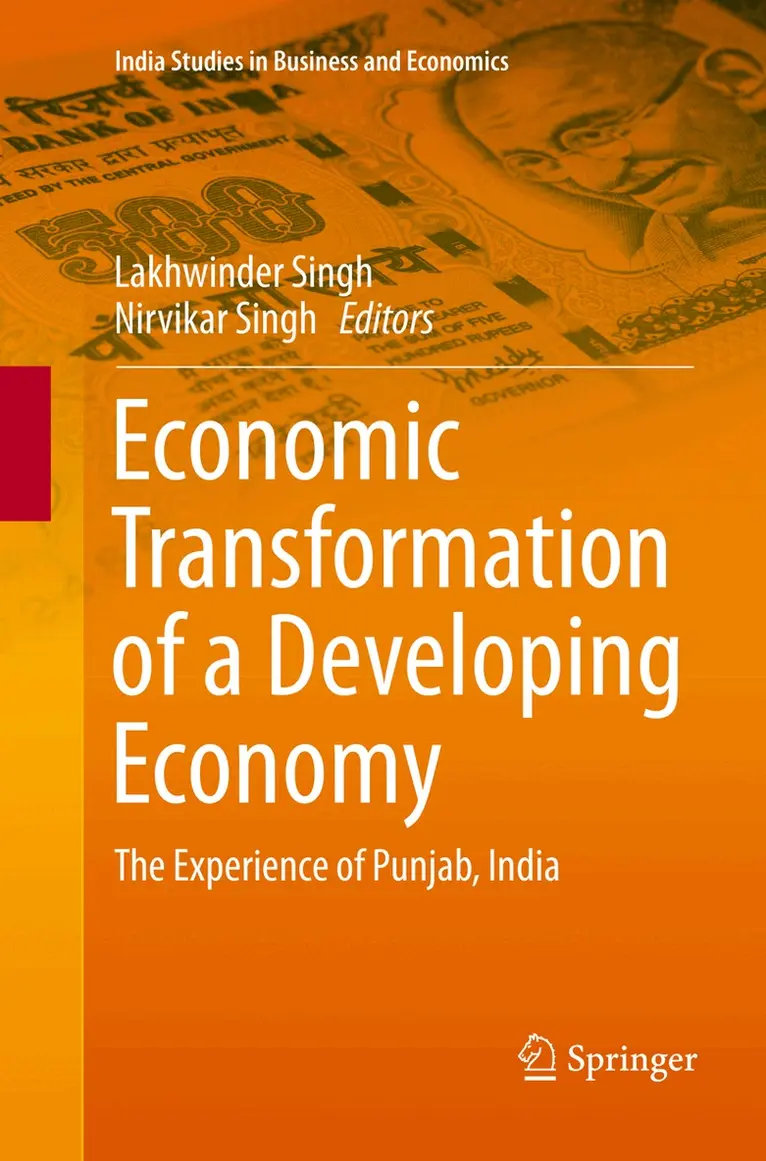
Economic Transformation of a Developing Economy
The Experience of Punjab, India
Inbunden, Engelska, 2016
1 095 kr
Skickas inom 10-15 vardagar
Foreword by Prof. Kaushik BasuThis book traces the development experience of one of India’s most dynamic and prosperous states, Punjab, which has provided the country with a much-needed degree of food security. The relative regression of Punjab’s economy in the post-economic reforms period and slow current economic growth give cause for concern. The contributions in this book address the question of why the structural transformation of Punjab’s economy has fallen into the middle-income trap. Each investigates the policy constraints influencing the relative stagnation of the economy and suggests appropriate measures for alleviating them. By integrating theoretical constructs and new evidence, the authoritative contributions diagnose the nature of the current problems and offer practical solutions. They cover important issues such as the crisis of agrarian transition, agrarian markets and distributive justice, employment growth and transition to non-agriculture sectors, fiscal policy, external factors in economic transformation, and perspectives on rejuvenating the state’s economy.
Economic Transformation of a Developing Economy
The Experience of Punjab, India
Häftad, Engelska, 2019
1 095 kr
Skickas inom 10-15 vardagar
They cover important issues such as the crisis of agrarian transition, agrarian markets and distributive justice, employment growth and transition to non-agriculture sectors, fiscal policy, external factors in economic transformation, and perspectives on rejuvenating the state’s economy.
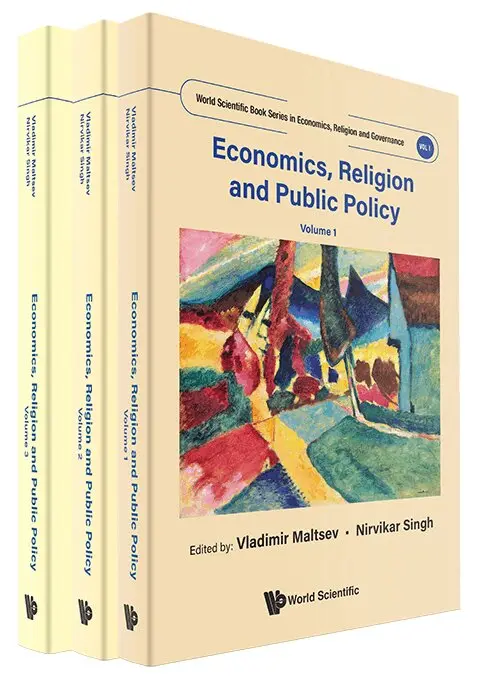
Del 1 - World Scientific Book Series In Economics, Religion And Governance
Economics, Religion And Public Policy (In 3 Volumes)
Inbunden, Engelska, 2026
6 916 kr
Kommande
Economics, Religion and Public Policy is a three-volume exploration of religious beliefs and their persistent impact on economic life. Each volume in the set employs an eclectic mix of economics, politics, sociology and history to rigorously study how religion influences individual well-being, social harmony, governance and economic development. Each volume contains contributions by individual authors which critically examine specific cases from both Western and non-Western experience.Volume 1 lays some intellectual groundwork for the series as a whole, illustrating foundational concepts, influences and inner tensions within the economics of religion. The chapters in the volume demonstrate diverse approaches to "doing" the economics of religion, applying economic reasoning to a range of issues, from examining one's identity and the sources of overall human flourishing to studying the impact of religion on criminal organizations and events such as the tragedy of Jonestown. The contributions highlight that religion has been important throughout human history, and that any carefully constructed socioeconomic policy must be sensitive to the religious roots that often still exert seen and unseen influences on institutions, culture, and life in general.Volume 2 deepens the exploration of religion pertaining to matters of human cooperation and governance. Drawing on evolutionary, institutional and political-economy frameworks, it examines the complex processes of how religion becomes intertwined with societal norms, law, authority and the state itself. The volume presents a wide range of economics-based perspectives on religion and governance, from the positive influence of religion on collective action, to its role in the formation of more extractive forms of government such as theocracies. The volume illustrates these findings through a series of rich historical and empirical studies, which include the economic analysis of monotheism, the Catholic Church, Calvinist Protestantism, Islamic revivalism, the Roma people's social norms, and more. Altogether, the book underscores the complexity of religion as a factor in shaping individual behavior and social outcomes across time and different cultural contexts.Volume 3 extends the intellectual path charted by the preceding volumes. While continuing to explore the interconnections between religion, economic life and governance, it emphasizes the tensions and conflicts that religion can generate within and between communities. The chapters tackle difficult issues of ethnicity, demographic change, nationalism and environmental pressures, demonstrating how religion has the potential to both mitigate and exacerbate such challenges. The volume pays close attention to how these dynamics unfold within non-Western religious traditions, offering a diverse range of case studies, including the analysis of economic inequalities among religious groups and castes in India, political instrumentalization of the Serbian Orthodox Church in the Balkans, the rise of Pentecostalism in Brazil, and more. On the other hand, chapters on Buddhist economics and Sikh millennials show how religious tensions can be utilized productively, enabling communities to navigate and adapt to various economic challenges of the contemporary world.