Nokuthula Hlabangane – författare
Visar alla böcker från författaren Nokuthula Hlabangane. Handla med fri frakt och snabb leverans.
5 produkter
5 produkter
Häftad, Engelska, 2021
377 kr
Skickas inom 5-8 vardagar
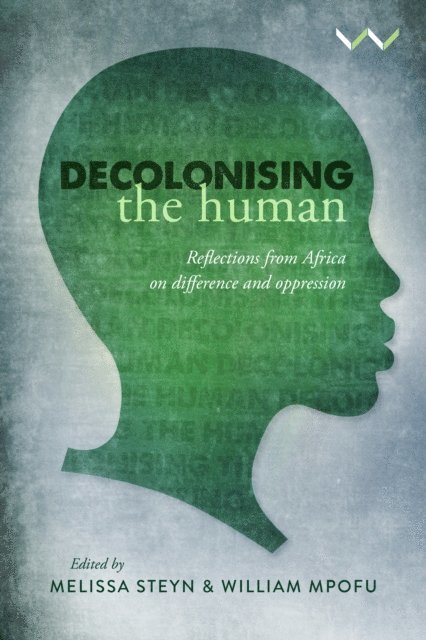
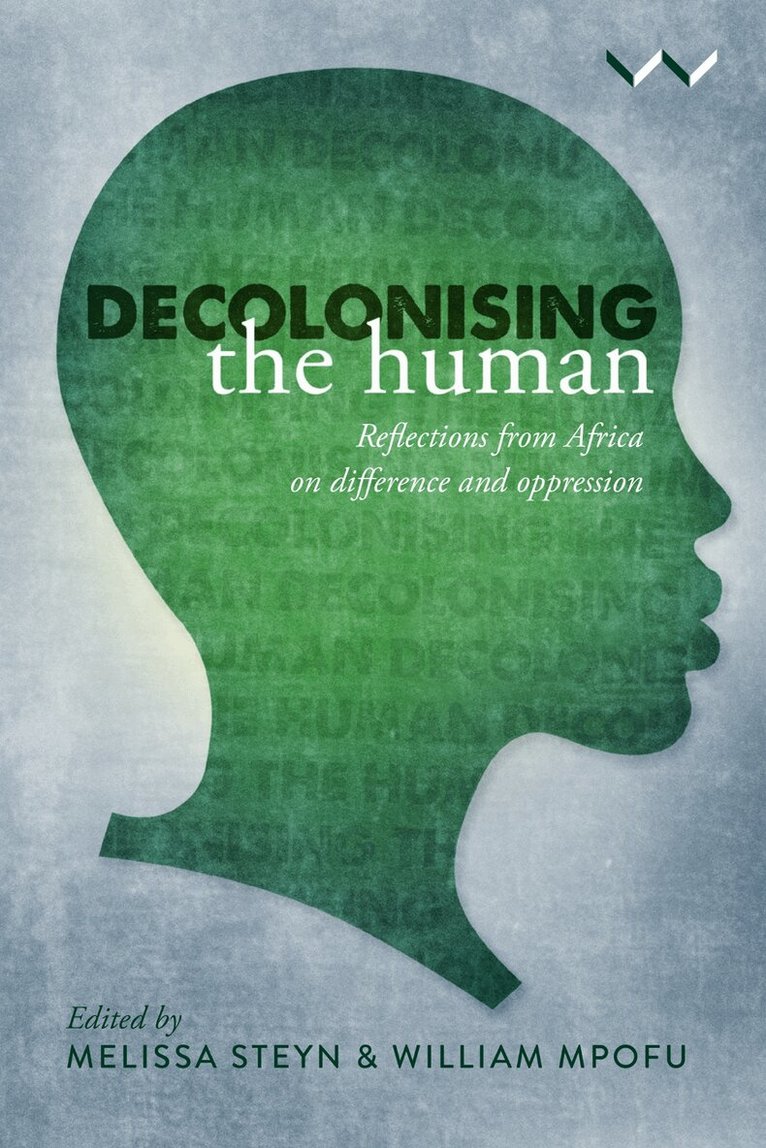
Decolonising the Human examines the ongoing project of constituting 'the human' in light of the durability of coloniality and the persistence of multiple oppressionsThe 'human' emerges as a deeply political category, historically constructed as a scarce existential resource. Once weaponised, it allows for the social, political and economic elevation of those who are centred within its magic circle, and the degradation, marginalisation and immiseration of those excluded as the different and inferior Other, the less than human. Speaking from Africa, a key site where the category of the human has been used throughout European modernity to control, exclude and deny equality of being, the contributors use decoloniality as a potent theoretical and philosophical tool, gesturing towards a liberated, pluriversal world where human difference will be recognised as a gift, not used to police the boundaries of the human. Here is a transdisciplinary critical exploration of a wide range of subjects, including history, politics, philosophy, sociology, anthropology and decolonial studies.
E-bok
PDF, Engelska, 2021386 kr
Läs direkt efter köp
Decolonising the Human examines the ongoing project of constituting ‘the human’ in light of the durability of coloniality and the persistence of multiple oppressions. The ‘human’ emerges as a deeply political category, historically constructed as a scarce existential resource. Once weaponised, it allows for the social, political and economic elevation of those who are centred within its magic circle, and the degradation, marginalisation and immiseration of those excluded as the different and inferior Other, the less than human.Speaking from Africa, a key site where the category of the human has been used throughout European modernity to control, exclude and deny equality of being, the contributors use decoloniality as a potent theoretical and philosophical tool, gesturing towards a liberated, pluriversal world where human difference will be recognised as a gift, not used to police the boundaries of the human. Here is a transdisciplinary critical exploration of a wide range of subjects, including history, politics, philosophy, sociology, anthropology and decolonial studies.
E-bok
Engelska, 2021386 kr
Läs direkt efter köp
Decolonising the Human examines the ongoing project of constituting ‘the human’ in light of the durability of coloniality and the persistence of multiple oppressions. The ‘human’ emerges as a deeply political category, historically constructed as a scarce existential resource. Once weaponised, it allows for the social, political and economic elevation of those who are centred within its magic circle, and the degradation, marginalisation and immiseration of those excluded as the different and inferior Other, the less than human.Speaking from Africa, a key site where the category of the human has been used throughout European modernity to control, exclude and deny equality of being, the contributors use decoloniality as a potent theoretical and philosophical tool, gesturing towards a liberated, pluriversal world where human difference will be recognised as a gift, not used to police the boundaries of the human. Here is a transdisciplinary critical exploration of a wide range of subjects, including history, politics, philosophy, sociology, anthropology and decolonial studies.
Häftad, Engelska, 2020
638 kr
Skickas inom 5-8 vardagar
E-bok
PDF, Engelska, 2020734 kr
Läs direkt efter köp
Positing the notions of coloniality of ignorance and geopolitics of ignorance as central to coloniality and colonisation, this book examines how colonialists socially produced ignorance among colonised indigenous peoples so as to render them docile and manageable. Dismissing colonial descriptions of indigenous people as savages, illiterate, irrational, prelogical, mystical, primitive, barbaric and backward, the book argues that imperialists/colonialists contrived geopolitics of ignorance wherein indigenous regions were forced to become ignorant, hence containable and manageable in the imperial world. Questioning the provenance of modernist epistemologies, the book asks why Eurocentric scholars only contest the provenance of indigenous knowledges, artefacts and scientific collections. Interrogating why empire sponsors the decolonisation of universities/epistemologies in indigenous territories while resisting the repatriation/restitution of indigenous artefacts, the book also wonders why Westerners who still retain indigenous artefacts, skulls and skeletons in their museums, universities and private collections do not consider such artefacts and skulls to be colonising them as well. The book is valuable to scholars and activists in the fields of anthropology, museums and heritage studies, science and technology studies, decoloniality, policymaking, education, politics, sociology and development studies.