Norman A. Graebner - Böcker
Visar alla böcker från författaren Norman A. Graebner. Handla med fri frakt och snabb leverans.
7 produkter
7 produkter
174 kr
Skickas inom 5-8 vardagar
The Allied victory in World War II led to a feeling in the US of grandeur and omnipotence, as America became the most powerful country in recent history and US dollars were used to rebuild war-torn Europe. Russian acquisitiveness and ideology, however, soon changed the national euphoria to fear. As Washington reverberated with reports of a planned Communist monolith, national defence and negotiation from strength became the rallying cries of the country.This collection of essays explores the national security policies developed in response to this threat by the Truman and Eisenhower administrations. More pointed and analytic than any other book on the subject, it shows clearly that the makers of Cold War policy were motivated by assumptions of a global Soviet danger. It also examines the nature of US security policy and points to the growing gap between the ends of a global security policy - to protect Western democracy from the 'Red Menace' - and the means - a nuclear strategy with limited applications.
1 001 kr
Skickas inom 3-6 vardagar
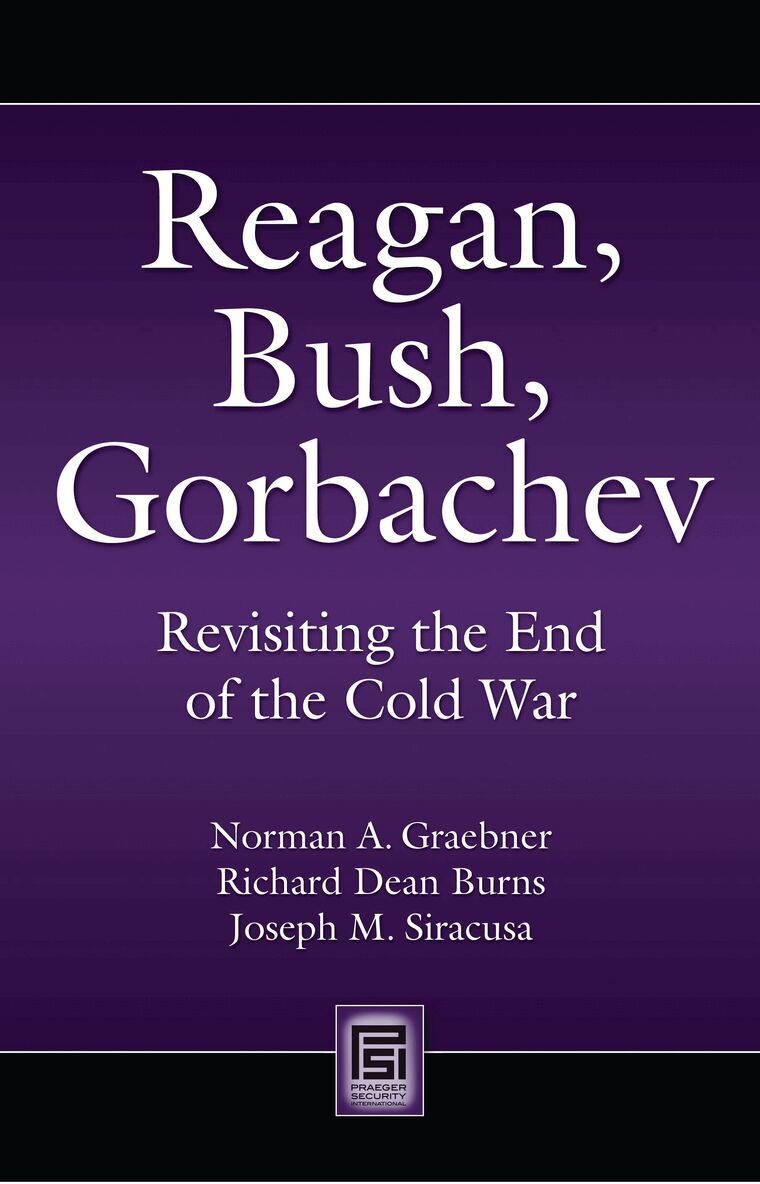
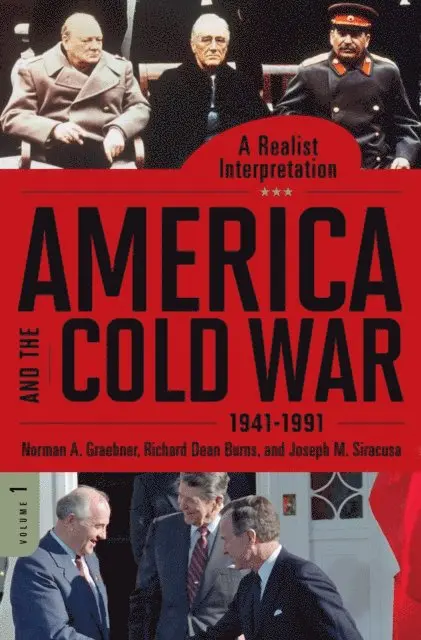
This work is a contemporary chronicle of the Cold War and offers an analysis of policy and rhetoric of the United States and Soviet Union during the 1980s. The authors examine the assumptions that drove political decisions and the rhetoric that defined the relationship as the Soviet Union began to implode.This work demonstrates that while the subsequent unraveling of the Soviet empire was an unintended side effect of Mikhail Gorbachev's reforms, termination of the Cold War was not. Ronald Reagan deserves full credit for recognizing Gorbachev's sincerity and his determination to change the direction of Soviet policies. For this, Reagan felt the full wrath of anticommunist hawks for doing business with a communist leader. But it was Gorbachev who concluded the superpowers had become mesmerized by ideological myths which ruled out any meaningful discussions of a possible accommodation of political issues for more than four decades. The evidence is compelling that Gorbachev himself broke the Cold War's ideological straight jacket that had paralyzed Moscow and Washington's ability to resolve their differences. Though politically weakened, Gorbachev conceded nothing to U.S. military superiority. Never did he negotiate from a position of weakness. In doing so, the last Soviet leader faced even greater political and physical risk. Without Gorbachev the end of the Cold War could have played out very differently and perhaps with great danger.
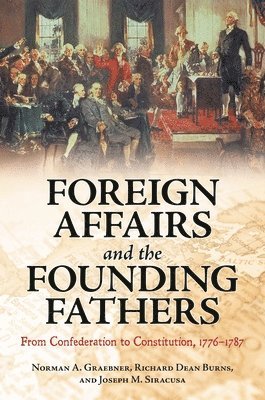
Foreign Affairs and the Founding Fathers
From Confederation to Constitution, 1776–1787
Inbunden, Engelska, 2011
626 kr
Skickas inom 10-15 vardagar
This concise diplomatic history of the Confederation era is the first new work on the topic in a generation. In its pages, three distinguished diplomatic historians offer a realist interpretation of the way in which the Founding Fathers conducted foreign affairs, refreshing our collective memory about their priorities and their values.When three of the nation's leading historians come together to fashion a fresh study of American history, the resulting work cannot help but be a monumental addition to the field. Foreign Affairs and the Founding Fathers: From Confederation to Constitution, 1776–1787 is such a work. These eminent scholars provide a thoughtful, realist interpretation of the Founders' view of America's place in the world, delivering a timely reassessment of their aspirations, thoughts, and actions during the seminal decades of the American nation.This book takes readers backstage where they can eavesdrop on the Founders to better understand their motives and intentions and see how they responded to threats and problems associated with America's place in the world. Arguing that the Founding Fathers essentially thought and acted in terms of power—ranking matters of national interest and security over ideology and moral concerns—the book sheds new light on the foreign policy opportunities and challenges of the day, as the Founders weighed and determined them. In so doing, it offers important guideposts for our own time.
675 kr
Skickas inom 10-15 vardagar
As the first of a trilogy of works on American diplomacy, this volume studies the task of diplomacy in achieving communication and dialogue among nations of widely divergent cultures and values.
1 227 kr
Skickas inom 7-10 vardagar
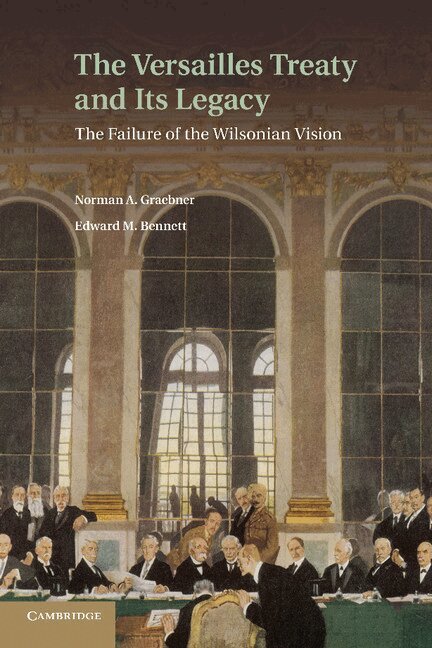
This study, a realist interpretation of the long diplomatic record that produced the coming of World War II in 1939, is a critique of the Paris Peace Conference and reflects the judgment shared by many who left the Conference in 1919 in disgust amid predictions of future war. The critique is a rejection of the idea of collective security, which Woodrow Wilson and many others believed was a panacea, but which was also condemned as early as 1915. This book delivers a powerful lesson in treaty-making and rejects the supposition that treaties, once made, are unchangeable, whatever their faults.
344 kr
Skickas inom 7-10 vardagar
This study, a realist interpretation of the long diplomatic record that produced the coming of World War II in 1939, is a critique of the Paris Peace Conference and reflects the judgment shared by many who left the Conference in 1919 in disgust amid predictions of future war. The critique is a rejection of the idea of collective security, which Woodrow Wilson and many others believed was a panacea, but which was also condemned as early as 1915. This book delivers a powerful lesson in treaty-making and rejects the supposition that treaties, once made, are unchangeable, whatever their faults.
368 kr
Skickas inom 10-15 vardagar
This work is a contemporary chronicle of the Cold War and offers an analysis of policy and rhetoric of the United States and Soviet Union during the 1980s. The authors examine the assumptions that drove political decisions and the rhetoric that defined the relationship as the Soviet Union began to implode.This work demonstrates that while the subsequent unraveling of the Soviet empire was an unintended side effect of Mikhail Gorbachev's reforms, termination of the Cold War was not. Ronald Reagan deserves full credit for recognizing Gorbachev's sincerity and his determination to change the direction of Soviet policies. For this, Reagan felt the full wrath of anticommunist hawks for doing business with a communist leader. But it was Gorbachev who concluded the superpowers had become mesmerized by ideological myths which ruled out any meaningful discussions of a possible accommodation of political issues for more than four decades. The evidence is compelling that Gorbachev himself broke the Cold War's ideological straight jacket that had paralyzed Moscow and Washington's ability to resolve their differences. Though politically weakened, Gorbachev conceded nothing to U.S. military superiority. Never did he negotiate from a position of weakness. In doing so, the last Soviet leader faced even greater political and physical risk. Without Gorbachev the end of the Cold War could have played out very differently and perhaps with great danger.