Octavio Quintanilla – författare
Visar alla böcker från författaren Octavio Quintanilla. Handla med fri frakt och snabb leverans.
3 produkter
3 produkter
220 kr
Skickas inom 7-10 vardagar
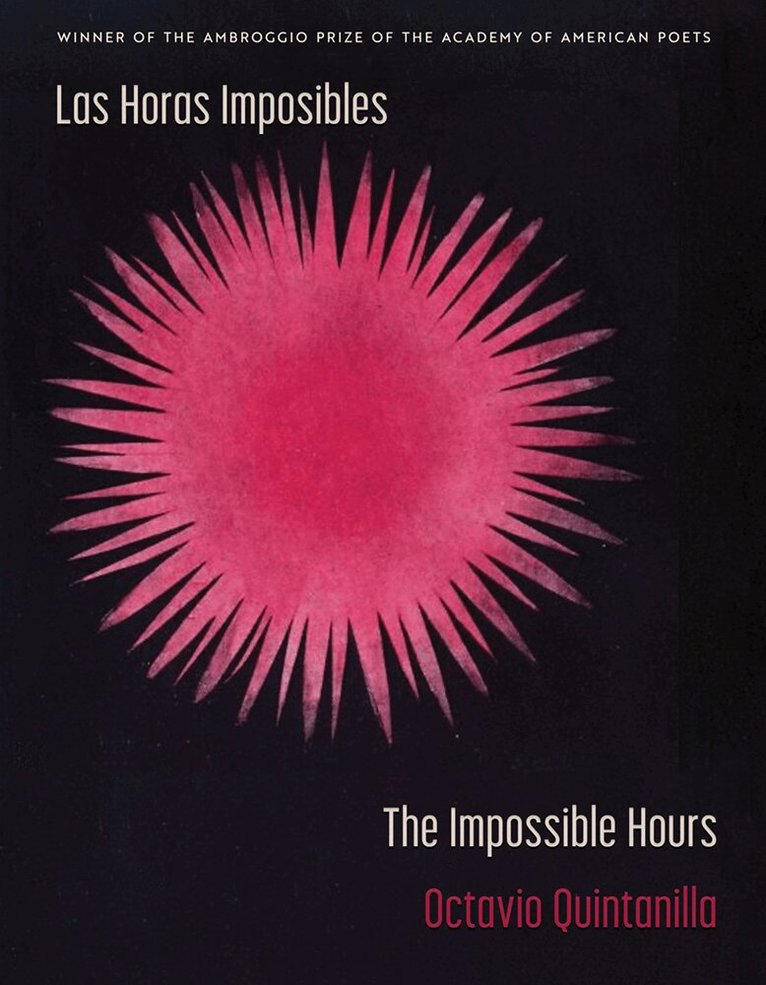
In Las Horas Imposibles / The Impossible Hours, Octavio Quintanilla takes us on a profound journey to witness what it means to erase those boundaries devised by genre and politics intent on stifling memory, imagination, and creativity. Presented in Spanish with English translations, this poetry collection comprises lyric and concrete poems- or frontextos- that explore intimacy and different shades of violence as a means to reconcile the speaker's sense of belonging in the world. From the opening poem to the last in the first section, Quintanilla captures the perilous journeys that migrants undertake crossing borders as well as the paths that lovers forge to meet their endless longing. These themes are skillfully woven by Quintanilla, guiding us back and forth across the Rio Grande to encounter the apparitions of the disappeared and to witness the willingness of many to risk life and limb for a better life. The second half of the collection is one long poem, a letter addressed to a lost lover who will never get to read the speaker's secret thoughts. Haunted by loss - of parents, of children, of the self - the speaker reaches an inevitable epiphany: " [A]nd sometimes it's hard to know / on which side of the river I stand." Stylistically, these poems destabilize our notions and expectations of genre and lyricism. Las Horas Imposibles / The Impossible Hours is more than just an exercise in poetic virtuosity it is an excavation into the complexities of what it means to be a human being in our contemporary world.
165 kr
Skickas inom 5-8 vardagar
307 kr
Skickas inom 3-6 vardagar
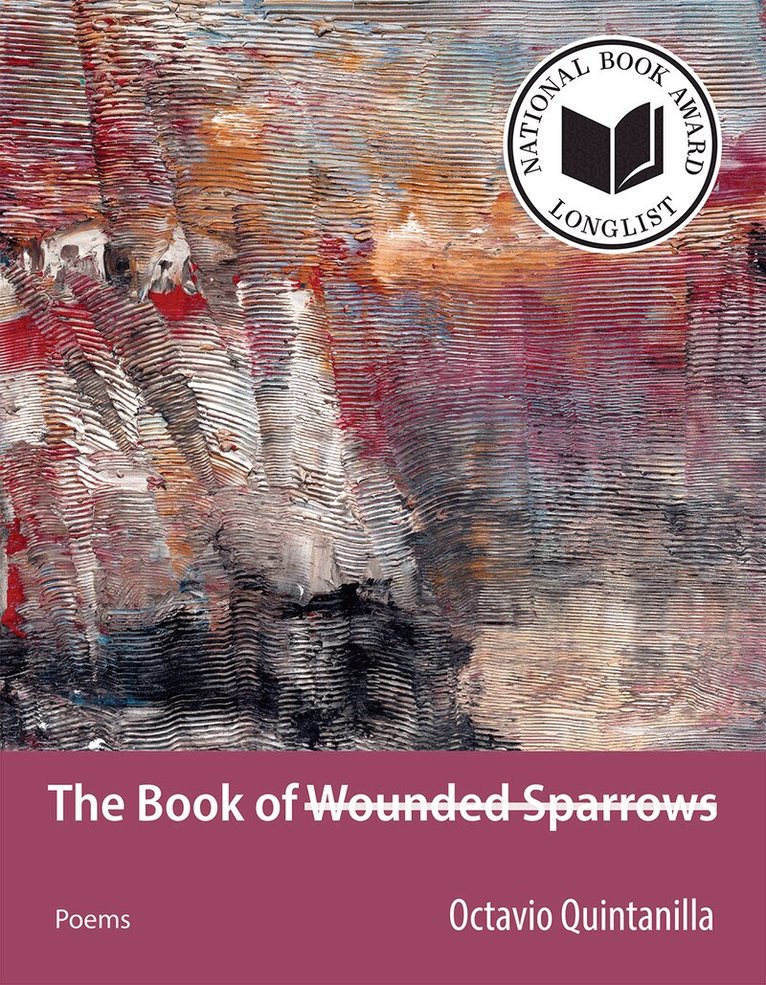
In The Book of Wounded Sparrows, his second full-length collection of poetry, Octavio Quintanilla sifts through the wreckage left in the pursuit of the American Dream. This is a book within a book, a memory within a memory, a future within a past, and most urgently—a journey to reclaim the self for what it was and to proclaim what it could be. Nested within one another, the English and Spanish, the poetry and art, create layers of obscuration and revelation, unburying the fractured landscapes left in the wake of geographic, emotional, and familial dislocation. In this collection, Quintanilla finds the language and the form to write about the loss that often happens when one migrates from one country to another: the loss of family, the loss of culture, and the loss of language. Of course, this book is more than that—more than a narrative of loss—it is a book of poetic reclamation, of poetic imagination, of finding new and interesting ways to tell a story, a love of language at its center, so as to reclaim a history of trauma and mythologize the self.