Øyvind Vågnes - Böcker
Visar alla böcker från författaren Øyvind Vågnes. Handla med fri frakt och snabb leverans.
6 produkter
6 produkter
260 kr
Skickas inom 10-15 vardagar
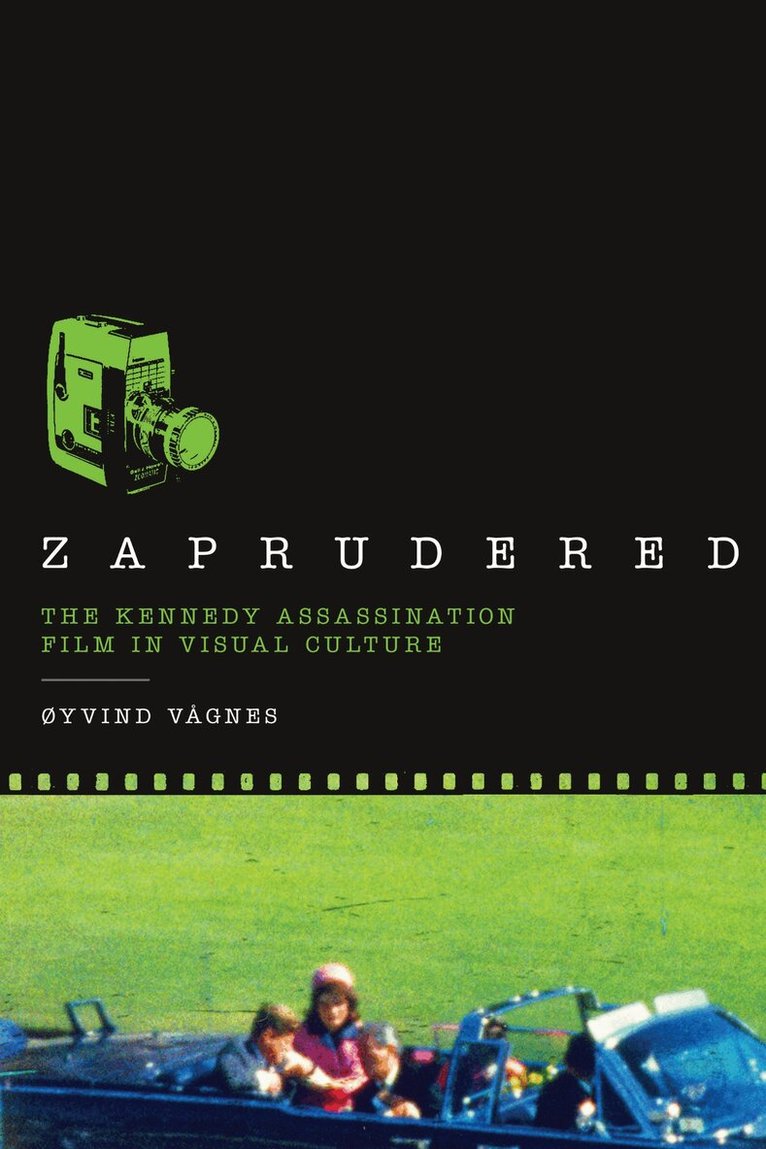
Winner, Peter C. Rollins Book Award, 2012As the fiftieth anniversary of the Kennedy assassination approaches, the traumatic aspects of the tragedy continue to haunt our perceptions of the 1960s. One reason for this lies in the home movie of the incident filmed by Abraham Zapruder, a bystander who became one of the twentieth century's most important accidental documentarians.The first book devoted exclusively to the topic, Zaprudered traces the journey of the film and its effect on the world's collective imagination. Providing insightful perspective as an observer of American culture, Norwegian media studies scholar Øyvind VÅgnes begins by analyzing three narratives that are projections of Zapruder's images: performance group Ant Farm's video The Eternal Frame, Don DeLillo's novel Underworld, and an episode from Seinfeld. Subsequent topics he investigates include Dealey Plaza's Sixth Floor Museum, Zoran Naskovski's installation Death in Dallas, assassin video games, and other artifacts of the ways in which the footage has made a lasting impact on popular culture and the historical imagination. VÅgnes also explores the role of other accidental documentarians, such as those who captured scenes of 9/11.Zapruder's footage has never yielded a conclusive account of what happened in Dealey Plaza. Zaprudered thoroughly examines both this historical enigma and its indelible afterimages in our collective imagination.
690 kr
Skickas inom 10-15 vardagar
The first book of its kind, Gestures of Seeing in Film, Video and Drawing engages broadly with the often too neglected yet significant questions of gesture in visual culture. In our turbulent mediasphere where images – as lenses bearing on their own circumstances – are constantly mobilized to enact symbolic forms of warfare and where they get entangled in all kinds of cultural conflicts and controversies, a turn to the gestural life of images seems to promise a particularly pertinent avenue of intellectual inquiry. The complex gestures of the artwork remain an under-explored theoretical topos in contemporary visual culture studies. In visual art, the gestural appears to be that which intervenes between form and content, materiality and meaning. But as a conceptual force it also impinges upon the very process of seeing itself. As a critical and heuristic trope, the gestural galvanizes many of the most pertinent areas of inquiry in contemporary debates and scholarship in visual culture and related disciplines: ethics (images and their values and affects), aesthetics (from visual essentialism to transesthetics and synesthesia), ecology (iconoclastic gestures and spaces of conflict), and epistemology (questions of the archive, memory and documentation). Offering fresh perspectives on many of these areas, Gestures of Seeing in Film, Video and Drawing will be intensely awaited by readers from and across several disciplines, such as anthropology, linguistics, performance, theater, film and visual studies.
2 238 kr
Skickas inom 10-15 vardagar
The first book of its kind, Gestures of Seeing in Film, Video and Drawing engages broadly with the often too neglected yet significant questions of gesture in visual culture. In our turbulent mediasphere where images – as lenses bearing on their own circumstances – are constantly mobilized to enact symbolic forms of warfare and where they get entangled in all kinds of cultural conflicts and controversies, a turn to the gestural life of images seems to promise a particularly pertinent avenue of intellectual inquiry. The complex gestures of the artwork remain an under-explored theoretical topos in contemporary visual culture studies. In visual art, the gestural appears to be that which intervenes between form and content, materiality and meaning. But as a conceptual force it also impinges upon the very process of seeing itself. As a critical and heuristic trope, the gestural galvanizes many of the most pertinent areas of inquiry in contemporary debates and scholarship in visual culture and related disciplines: ethics (images and their values and affects), aesthetics (from visual essentialism to transesthetics and synesthesia), ecology (iconoclastic gestures and spaces of conflict), and epistemology (questions of the archive, memory and documentation). Offering fresh perspectives on many of these areas, Gestures of Seeing in Film, Video and Drawing will be intensely awaited by readers from and across several disciplines, such as anthropology, linguistics, performance, theater, film and visual studies.
958 kr
Skickas inom 10-15 vardagar
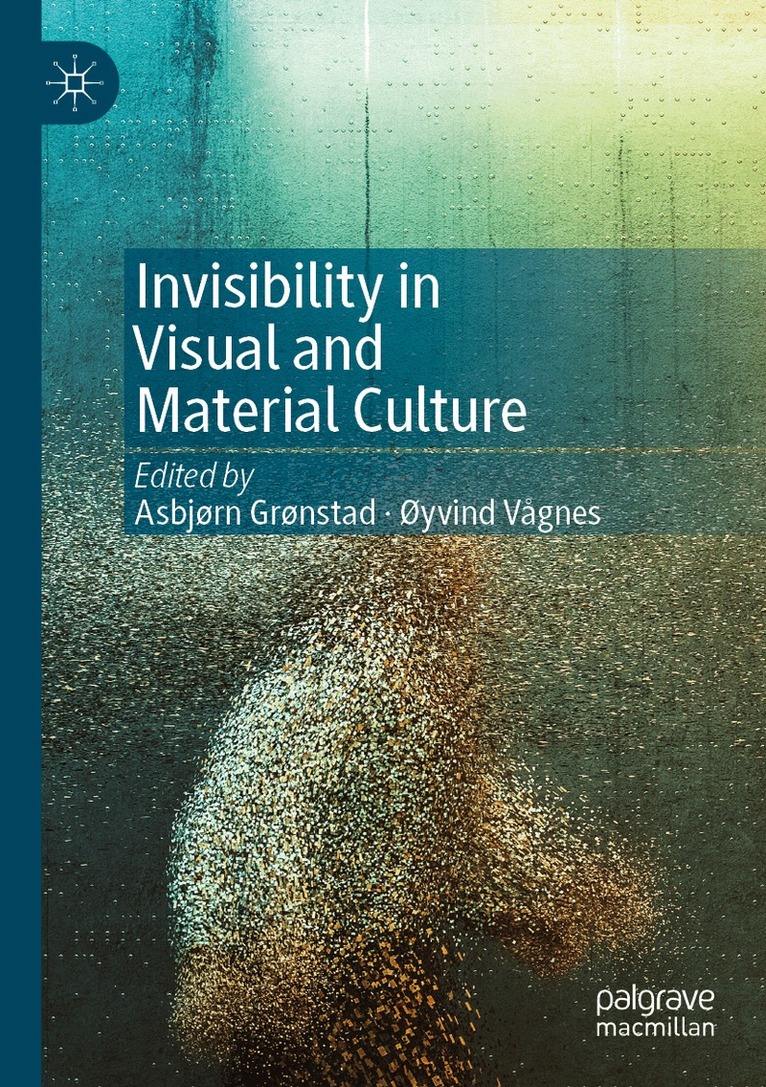
The essays in Invisibility in Visual and Material Culture contribute pioneering and revelatory insights into the phenomenon of invisibility, forging new and multi-disciplinary approaches at the intersection of aesthetics, technology, representation and politics.
694 kr
Skickas inom 10-15 vardagar
The essays in Invisibility in Visual and Material Culture contribute pioneering and revelatory insights into the phenomenon of invisibility, forging new and multi-disciplinary approaches at the intersection of aesthetics, technology, representation and politics.
306 kr
Skickas
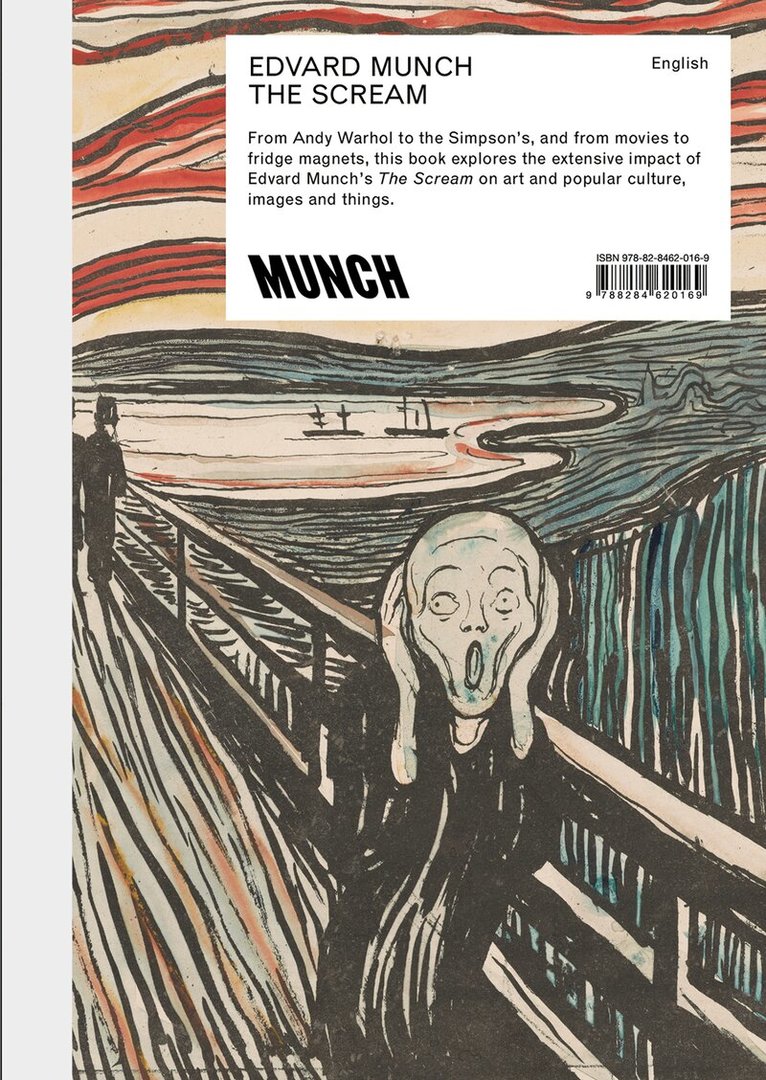
Ever since Munch first came up with the Scream motif at the end of the 19th century, countless artists, including Andy Warhol and Marina Abramović, have modified it within their own work. In addition, the open-mouthed figure has cropped up in popular cultural productions such as Wes Craven’s Scream film franchise, the poster for the kids’ movie Home Alone, and in scores of satirical cartoons – on everything from Brexit to Donald Trump’s presidency and tax rises – as well as on innumerable political banners and placards, most recently in protests about the climate emergency. In recent years, the Scream image has also taken a prominent place on digital screens in the form of its own emoji and as the basis of countless memes. At the same time, the quantity of souvenirs and other objects decorated with or shaped like Munch’s figure of desperation has increased immeasurably. In short: these days The Scream haunts pretty much every layer of culture. It is without doubt one of the most frequently reproduced images in the history of art, equalled only perhaps by Leonardo da Vinci’s Mona Lisa, and is the originator of a constantly expanding network of analogue and digital mutations. Via these three texts, and a rich selection of illustrations – including all known Scream images ever made by the artist himself, a selection of his Scream texts and countless so-called Scream mutations – this book embraces Munch’s best-known image as a cultural phenomenon.