Özgür Koca - Böcker
Visar alla böcker från författaren Özgür Koca. Handla med fri frakt och snabb leverans.
3 produkter
3 produkter
Islam, Causality, and Science
Perspectives on Reconciliation of Islamic Tradition and Modern Science
Inbunden, Engelska, 2024
753 kr
Skickas inom 7-10 vardagar
This Element intends to contribute to the debate between Islam and science. It focuses on one of the most challenging issues in the modern discussion on the reconciliation of religious and scientific claims about the world, which is to think about divine causality without undermining the rigor and efficacy of the scientific method. First, the Element examines major Islamic accounts of causality. Then, it provides a brief overview of contemporary debates on the issue and identifies both scientific and theological challenges. It argues that any proposed Islamic account of causality for the task of reconciliation should be able to preserve scientific rigor without imposing a priori limits on scientific research, account for miracles without turning them into science-stoppers or metaphors, secure divine and creaturely freedom, and establish a strong sense of divine presence in the world. Following sections discuss strengths and weaknesses of each account in addressing these challenges.
Islam, Causality, and Science
Perspectives on Reconciliation of Islamic Tradition and Modern Science
Häftad, Engelska, 2024
234 kr
Skickas inom 7-10 vardagar
This Element intends to contribute to the debate between Islam and science. It focuses on one of the most challenging issues in the modern discussion on the reconciliation of religious and scientific claims about the world, which is to think about divine causality without undermining the rigor and efficacy of the scientific method. First, the Element examines major Islamic accounts of causality. Then, it provides a brief overview of contemporary debates on the issue and identifies both scientific and theological challenges. It argues that any proposed Islamic account of causality for the task of reconciliation should be able to preserve scientific rigor without imposing a priori limits on scientific research, account for miracles without turning them into science-stoppers or metaphors, secure divine and creaturely freedom, and establish a strong sense of divine presence in the world. Following sections discuss strengths and weaknesses of each account in addressing these challenges.
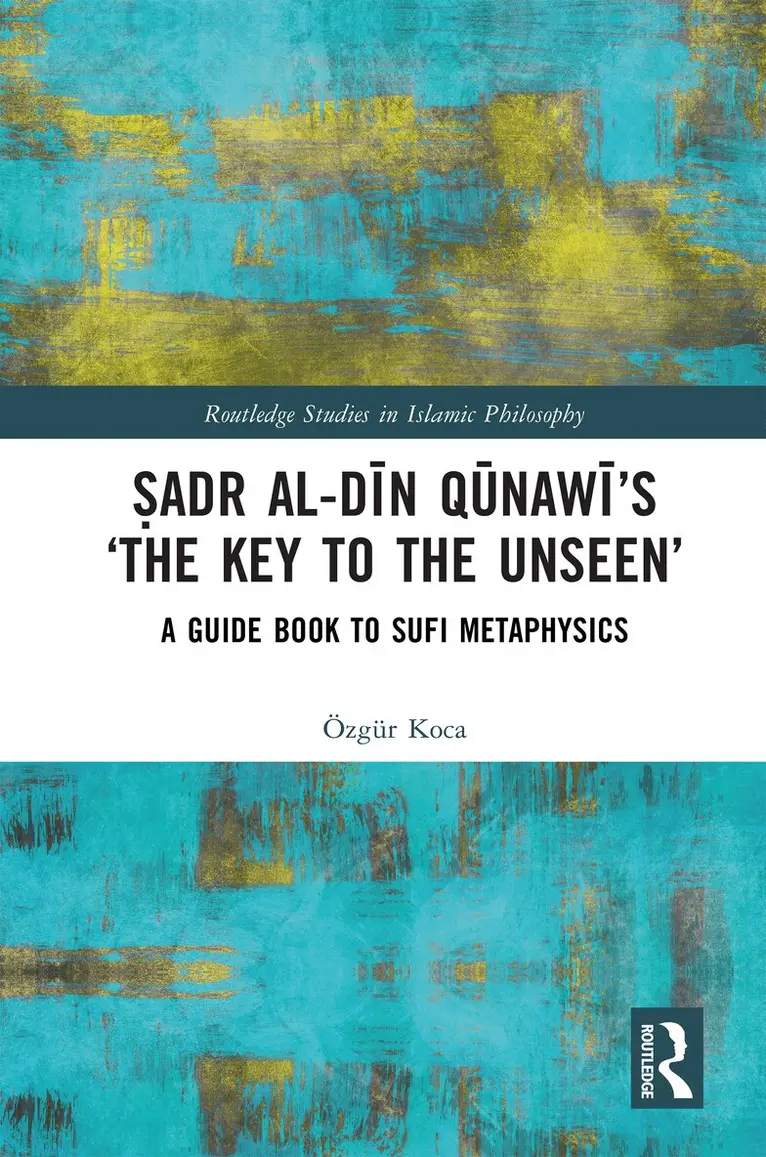
Ṣadr al-Dīn Qūnawī’s ‘The Key to the Unseen’
A Guide Book to Sufi Metaphysics
Inbunden, Engelska, 2026
2 258 kr
Kommande
Ṣadr al-Dīn Qūnawī’s ‘The Key to the Unseen’: A Guide Book to Sufi Metaphysics offers the first systematic articulation of Ibn ʿArabī’s revolutionary teachings, presenting one of the most significant works of Islamic spirituality and a cornerstone of Sufi metaphysics through the profound synthesis of his foremost disciple, Ṣadr al-Dīn Qūnawī.Spanning the realms of mysticism, philosophy, and theology, this foundational text explores the intricate relationships between divine manifestation, cosmic hierarchy, and spiritual realization. From the systematic presentation of metaphysical principles to the practical dimensions of mystical experience, Qūnawī examines how rigorous intellectual inquiry can illuminate the deepest questions of existence while remaining rooted in lived spiritual transformation. Through his masterful synthesis, contributors to Islamic thought witness how Sufism evolved from purely experiential practice into formal scholarly discipline, establishing frameworks that would inspire generations of commentary and shape the trajectory of Islamic spirituality across diverse cultural contexts. The work also traces how mystical insight adapts to systematic articulation, illuminating the sophisticated negotiations between experiential knowledge, intellectual discourse, and spiritual authority. Despite its immense influence throughout the Muslim world, The Key to the Unseen has remained largely unknown in Western scholarship. This translation seeks to open its transformative vision to contemporary readers, serving both as an essential introduction to Qūnawī’s thought and as a vital window into one of the most fertile periods in Islamic philosophy and spirituality.A foundational contribution to the study of Sufism, Islamic philosophy, and mystical traditions, this book is essential reading for scholars of Islamic studies, comparative religion, medieval philosophy, and spiritual literature.