O.L. Davis – författare
Visar alla böcker från författaren O.L. Davis. Handla med fri frakt och snabb leverans.
2 produkter
2 produkter
214 kr
Skickas inom 10-15 vardagar
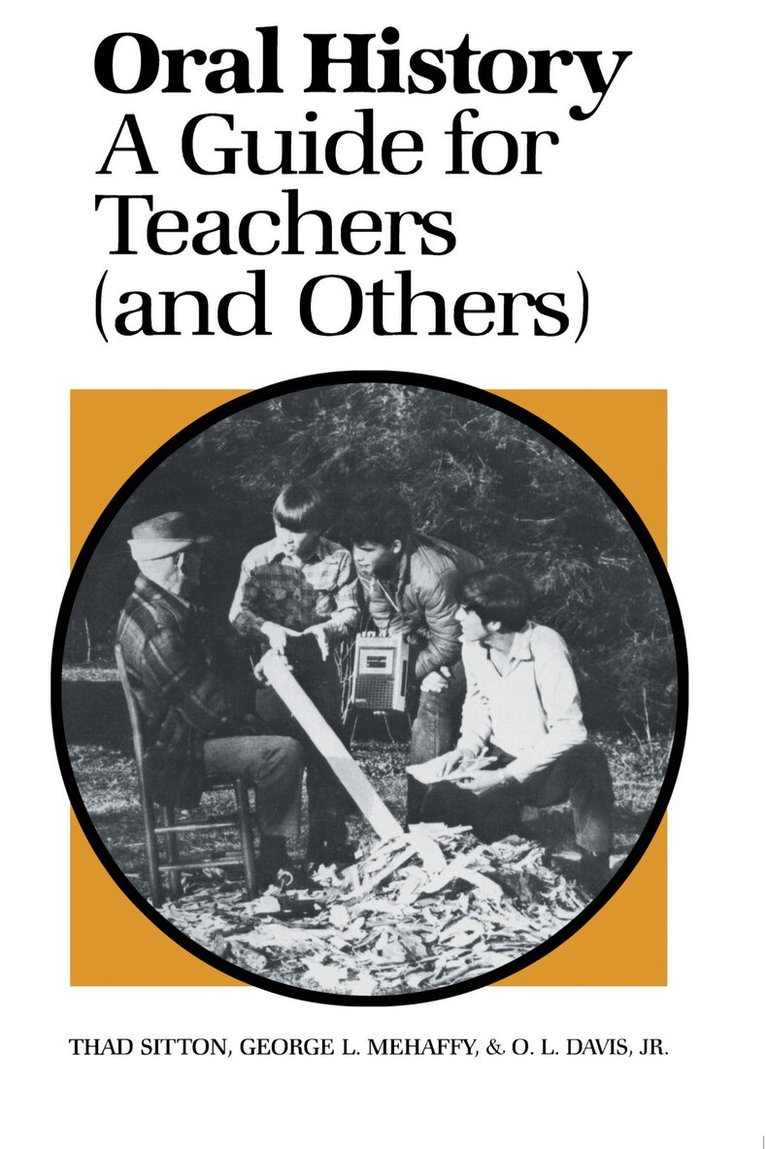
More than a mode of gathering information about the past, oral history has become an international movement. Historians, folklorists, and other educational and religious groups now recognize the importance of preserving the recollections of people about the past. The recorded memories of famous and common folk alike provide a vital complement to textbook history, bringing the past to life through the stories of those who lived it. Oral History is designed to introduce teachers, students, and interested individuals to the techniques, problems, and pleasures of collecting oral history. The authors, themselves experienced educators, examine the uses of oral history in the classroom, looking at a wide range of projects that have been attempted and focusing on those that have succeeded best. Besides suggesting many possible projects, they discuss the necessary hardware and its use: recording equipment and procedures, interview outlines and preliminary research, photography and note-taking in the field, transcription and storage of information, legal forms, and more. For the teacher, the authors offer helpful advice on training students to be sensitive interviewers in both formal and informal situations. How can oral histories collected in the classroom be put to use? The authors discuss their uses within the curriculum; in projects such as oral history archives, publications such as the popular Foxfire books, and other media productions; and in researching current community problems. Useful appendixes survey a variety of reference tools for the oral historian and describe in detail how a Foxfire-concept magazine may be developed.
360 kr
Skickas inom 11-20 vardagar
Bruce VanSledright shows how young students can benefit from an investigative, inquiry-based approach to the study of history, as called for by the national standards. Addressing important questions about the teaching and learning of history in today's diverse classrooms, this volume conveys the results of an innovative teacher-research project using engaging stories of VanSledright's classroom experiences, provides examples and guidelines for teaching novices to engage in historical investigations (in contrast to memorizing details in a textbook), offers strong evidence that children do have the intellectual capacity to judge the validity, reliability, and perspective of historical documents and images, and wrestles with a number of issues facing history teachers who wish to embark on ambitious projects with their students that can take them against the grain of policy mandates (such as recall-based, high-stakes testing).