Oluseyi Matthew Odebiyi - Böcker
Visar alla böcker från författaren Oluseyi Matthew Odebiyi. Handla med fri frakt och snabb leverans.
8 produkter
8 produkter
1 905 kr
Skickas inom 7-10 vardagar
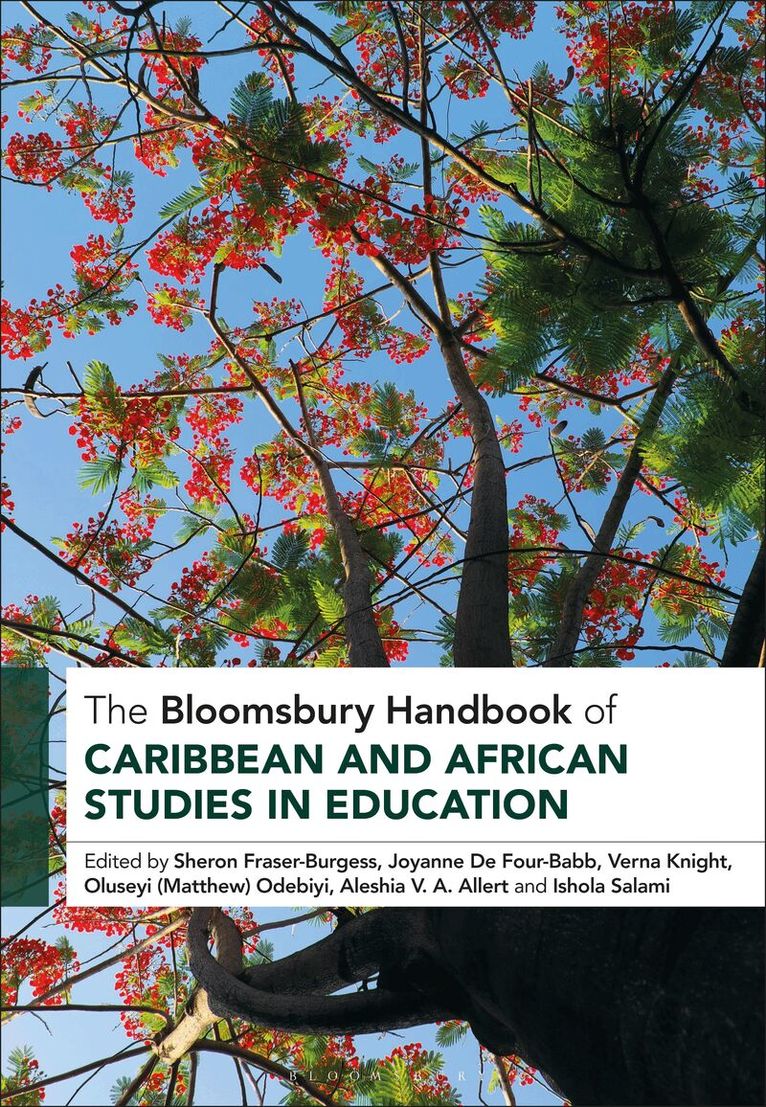
This handbook covers the history, policy, practice and theories of African and Caribbean education and promotes the sustainability of socio-cultural beliefs, values, knowledge and skills in the regions. Africa and the Caribbean share commonalities of the geopolitical and historical dominance by European empires and colonialism and aftereffects of anti-blackness in the global trade in enslaved persons. Indigenous religious, cultural, and ethnic currents in Africa are echoed in the Caribbean along with a strong infusion of Asian and other ethnic influences. The handbook shows how educators in both regions are grappling with Western education eclipsing indigenous epistemology and contributes to important debates and discourses including culturally relevant teaching, decolonization, critical race theory, Africana studies, Black emancipation, the African diaspora, Bi-cultural experiences, and the climate emergency. It is organized into three sections covering past issues that frame education in Africa and the Caribbean; the present challenges and opportunities of Education in the regions; and future opportunities for education post-2020.
695 kr
Kommande
This handbook covers the history, policy, practice and theories of African and Caribbean education and promotes the sustainability of socio-cultural beliefs, values, knowledge and skills in the regions. Africa and the Caribbean share commonalities of the geopolitical and historical dominance by European empires and colonialism and aftereffects of anti-blackness in the global trade in enslaved persons. Indigenous religious, cultural, and ethnic currents in Africa are echoed in the Caribbean along with a strong infusion of Asian and other ethnic influences. The handbook shows how educators in both regions are grappling with Western education eclipsing indigenous epistemology and contributes to important debates and discourses including culturally relevant teaching, decolonization, critical race theory, Africana studies, Black emancipation, the African diaspora, Bi-cultural experiences, and the climate emergency. It is organized into three sections covering past issues that frame education in Africa and the Caribbean; the present challenges and opportunities of Education in the regions; and future opportunities for education post-2020.
582 kr
Skickas inom 7-10 vardagar
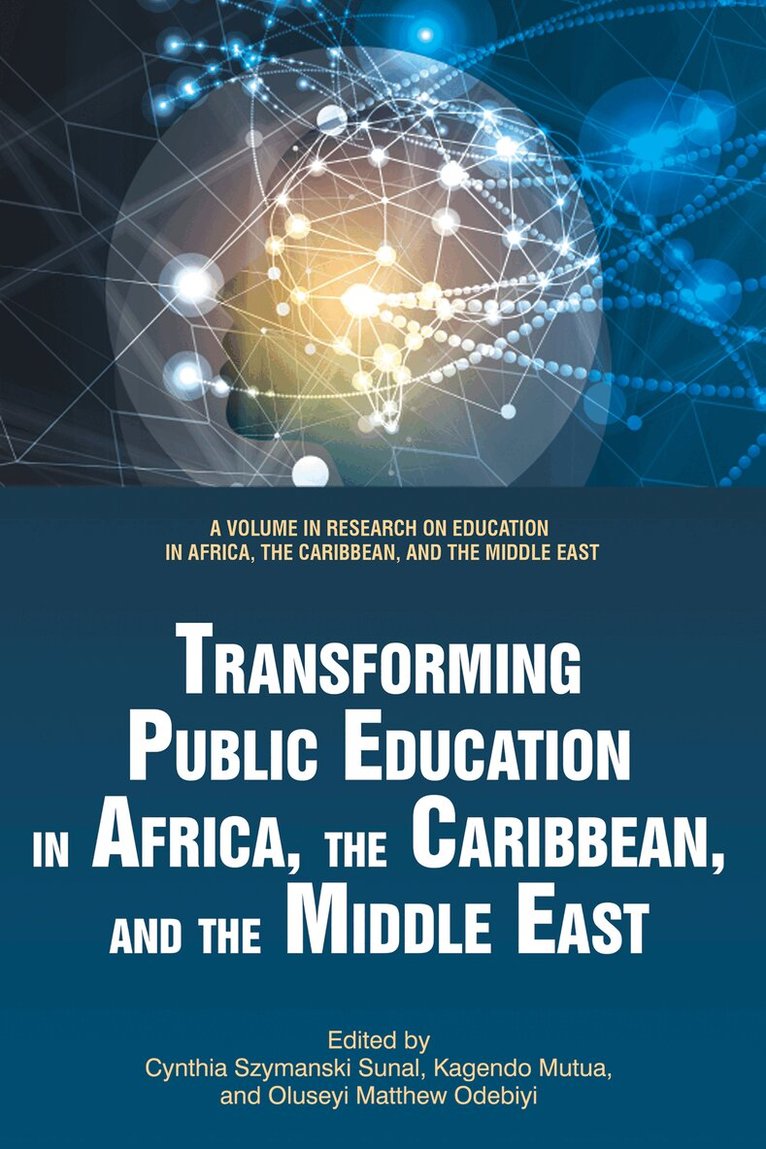
Public education has expanded to serve large populations across the regions of Africa, the Caribbean, and the Middle East. Many nations in these regions are moving into a phase of public education in which a variety of factors are being identified as influencing the quality of public education and its ability to serve all children and adolescents. It has become evident that ethnic background, gender, religious affiliation, and ability/disability are important factors in who is served and how well the individual is served. The chapters in this volume, Book 8, of Research on Education in Africa, the Caribbean, and the Middle East document and describe the status, success, and limitations of public education’s efforts at transformation. They provide points from which further research and practice might occur.
1 029 kr
Skickas inom 7-10 vardagar
Public education has expanded to serve large populations across the regions of Africa, the Caribbean, and the Middle East. Many nations in these regions are moving into a phase of public education in which a variety of factors are being identified as influencing the quality of public education and its ability to serve all children and adolescents. It has become evident that ethnic background, gender, religious affiliation, and ability/disability are important factors in who is served and how well the individual is served. The chapters in this volume, Book 8, of Research on Education in Africa, the Caribbean, and the Middle East document and describe the status, success, and limitations of public education’s efforts at transformation. They provide points from which further research and practice might occur.
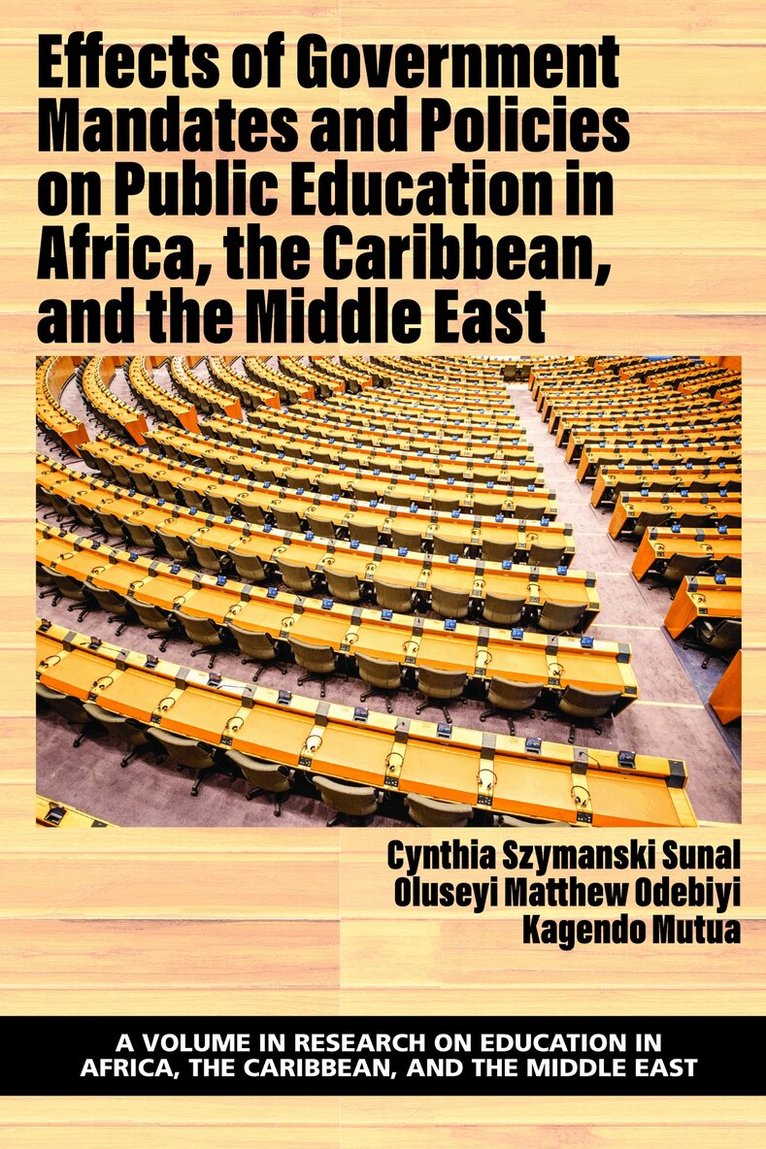
Effects of Government Mandates and Policies on Public Education in Africa, the Caribbean, and the Middle East
Häftad, Engelska, 2022
582 kr
Skickas inom 7-10 vardagar
As the demand for education at all levels has increased, so have the models of meeting these increased demands for education. As in many other parts of the world, public education has expanded to serve large populations across the regions of Africa, the Caribbean, and the Middle East. Many nations in these regions have instituted mandates, policies, and frameworks intended to simultaneously increase access to public education opportunities as well as improve the quality of education provided and to address a wide populace. Because the increase in educational demand has occurred at all levels, these efforts often address various levels of education from early childhood through primary schooling, junior secondary and secondary schooling and into tertiary education. Efforts also have been made to increase participation in education by marginalized and/or special populations. The range of efforts is large with some focusing on involving migrants/immigrants/refugees in primary education while others aim at opening up choices at the university level.Recently, nations in the region have recognized the possibilities of digital learning (online learning) as cell phones and other widely used portable wireless devices have made it possible to sell the idea that one can learn from anywhere at any time. This widespread access to technology has made it possible for governments as well as private entities to expand learning opportunities even to populations previously unreached or to address difficult to reach sectors of the population. At the same time, the population itself has not only increased in numbers but in diversity. Maintaining quality through digital and other means of quick expansion of educational opportunities continues to be challenging if not problematic.Effects of Government Mandates and Policies on Public Education in Africa, the Caribbean, and the Middle East is Book IX of the series, Research on Education in Africa, the Caribbean, and the Middle East. Chapters document, describe and/or raise critical issues and/or questions resulting from government policies, mandates and frameworks intended to make available public education to an ever-growing populace while at the same time being mindful of improving quality of education being availed to an increasingly diverse populace.
Effects of Government Mandates and Policies on Public Education in Africa, the Caribbean, and the Middle East
Inbunden, Engelska, 2022
1 029 kr
Skickas inom 7-10 vardagar
As the demand for education at all levels has increased, so have the models of meeting these increased demands for education. As in many other parts of the world, public education has expanded to serve large populations across the regions of Africa, the Caribbean, and the Middle East. Many nations in these regions have instituted mandates, policies, and frameworks intended to simultaneously increase access to public education opportunities as well as improve the quality of education provided and to address a wide populace. Because the increase in educational demand has occurred at all levels, these efforts often address various levels of education from early childhood through primary schooling, junior secondary and secondary schooling and into tertiary education. Efforts also have been made to increase participation in education by marginalized and/or special populations. The range of efforts is large with some focusing on involving migrants/immigrants/refugees in primary education while others aim at opening up choices at the university level.Recently, nations in the region have recognized the possibilities of digital learning (online learning) as cell phones and other widely used portable wireless devices have made it possible to sell the idea that one can learn from anywhere at any time. This widespread access to technology has made it possible for governments as well as private entities to expand learning opportunities even to populations previously unreached or to address difficult to reach sectors of the population. At the same time, the population itself has not only increased in numbers but in diversity. Maintaining quality through digital and other means of quick expansion of educational opportunities continues to be challenging if not problematic.Effects of Government Mandates and Policies on Public Education in Africa, the Caribbean, and the Middle East is Book IX of the series, Research on Education in Africa, the Caribbean, and the Middle East. Chapters document, describe and/or raise critical issues and/or questions resulting from government policies, mandates and frameworks intended to make available public education to an ever-growing populace while at the same time being mindful of improving quality of education being availed to an increasingly diverse populace.
518 kr
Skickas inom 7-10 vardagar
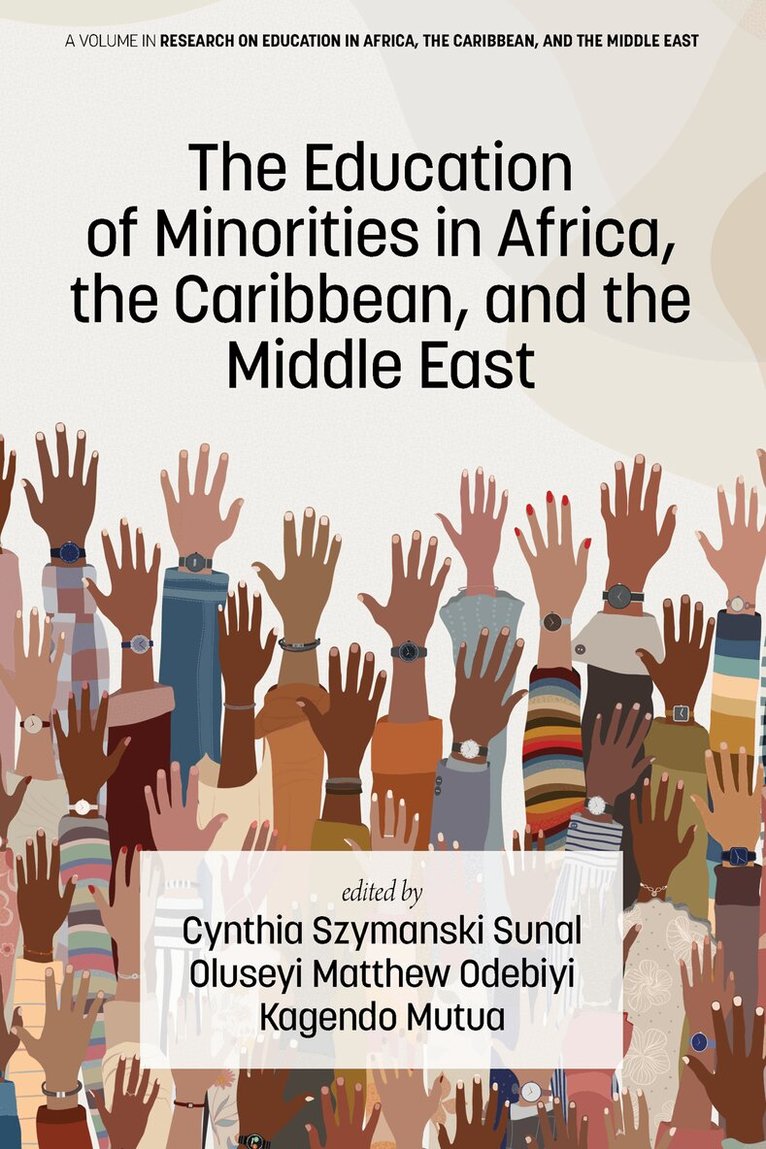
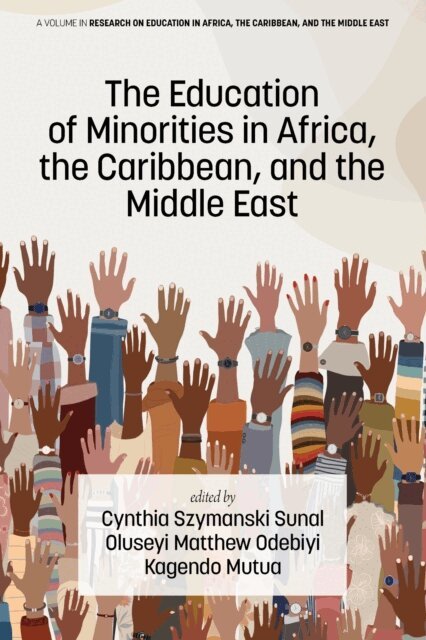
Educators have focused on creating and adapting curriculum content and pedagogy to reflect the diverse backgrounds of their minority students. Parallel to public school curricula, some minority groups have created and introduced curricula and pedagogy to maintain, honor, and develop their group's identity. The scope of these efforts is large and covers different levels of education from early childhood to university. It also covers a wide range of social forms such as ethnicity, class, gender, and ability/ disability. Because these efforts involve possibilities and challenges, discourses on the education of minorities are complex. Mainstream reports may be far removed from how minorities actually experience the educational contexts in African, the Caribbean, and the Middle East.We are seeing different dynamics in what it means to educate all students in these regions. Understanding the functions of curriculum and instruction to provide educational opportunities is essential. Addressing the inclusion and possible marginalization of minorities in public education systems in these world regions continues to be challenging, if not problematic.In this book, The Education of Minorities in Africa, the Caribbean, and the Middle East; educational researchers document, describe, and/or raise critical issues and questions on efforts intended to make relevant and appropriate public education available to minorities in the regions.
965 kr
Skickas inom 7-10 vardagar
Educators have focused on creating and adapting curriculum content and pedagogy to reflect the diverse backgrounds of their minority students. Parallel to public school curricula, some minority groups have created and introduced curricula and pedagogy to maintain, honor, and develop their group's identity. The scope of these efforts is large and covers different levels of education from early childhood to university. It also covers a wide range of social forms such as ethnicity, class, gender, and ability/ disability. Because these efforts involve possibilities and challenges, discourses on the education of minorities are complex. Mainstream reports may be far removed from how minorities actually experience the educational contexts in African, the Caribbean, and the Middle East.We are seeing different dynamics in what it means to educate all students in these regions. Understanding the functions of curriculum and instruction to provide educational opportunities is essential. Addressing the inclusion and possible marginalization of minorities in public education systems in these world regions continues to be challenging, if not problematic.In this book, The Education of Minorities in Africa, the Caribbean, and the Middle East; educational researchers document, describe, and/or raise critical issues and questions on efforts intended to make relevant and appropriate public education available to minorities in the regions.