Ori Sela - Böcker
Visar alla böcker från författaren Ori Sela. Handla med fri frakt och snabb leverans.
4 produkter
4 produkter
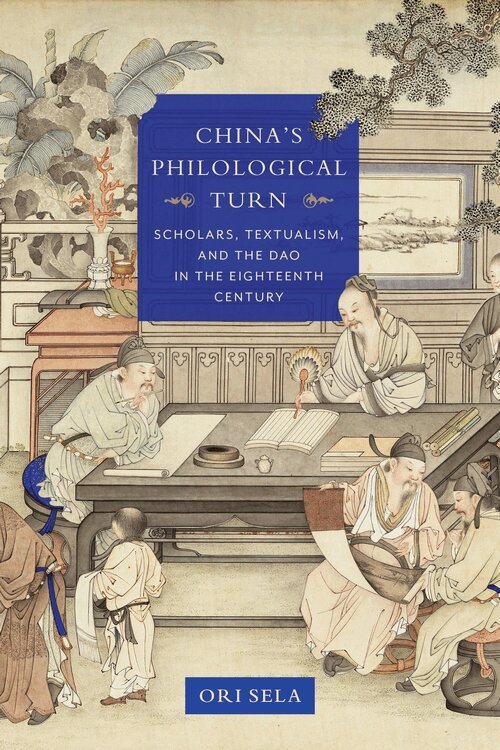
China's Philological Turn
Scholars, Textualism, and the Dao in the Eighteenth Century
Inbunden, Engelska, 2018
616 kr
Skickas inom 7-10 vardagar
In eighteenth-century China, a remarkable intellectual transformation took place, centered on the ascendance of philology. Its practitioners were preoccupied with the reliability of sources as evidence for restoring ancient texts and meanings and with the centrality of facts and truth to their scholarship and identity. With the power to construct the textual past, philology has the potential to shape both individual and collective identities, and its rise to prominence consequently deeply affected contemporaneous political, social, and cultural agendas.Ori Sela foregrounds the polymath Qian Daxin (1728–1804), one of the most distinguished scholars of the Qing dynasty, to tell this story. China’s Philological Turn traces scholars’ social networks and the production of knowledge, considering the texts they studied along with their reading practices and the assumptions about knowledge, facts, and truth that came with them. The book considers fundamental issues of eighteenth-century intellectual life: the tension between antiquity’s elevated status and the question of what antiquity actually was; the status of scientific knowledge, especially astronomy, mathematics, and calendrical studies; and the relationship between learned debates and cultural anxieties, especially scholars’ self-characterization and collective identity. Sela brings to light manuscripts, biographies, letters, handwritten notes, epitaphs, and more to highlight the creativity and openness of his subjects. A pioneering book in the cultural history of intellectuals across disciplinary boundaries, China’s Philological Turn reconstructs the history of eighteenth-century Chinese learning and its long-lasting consequences.
754 kr
Skickas inom 7-10 vardagar
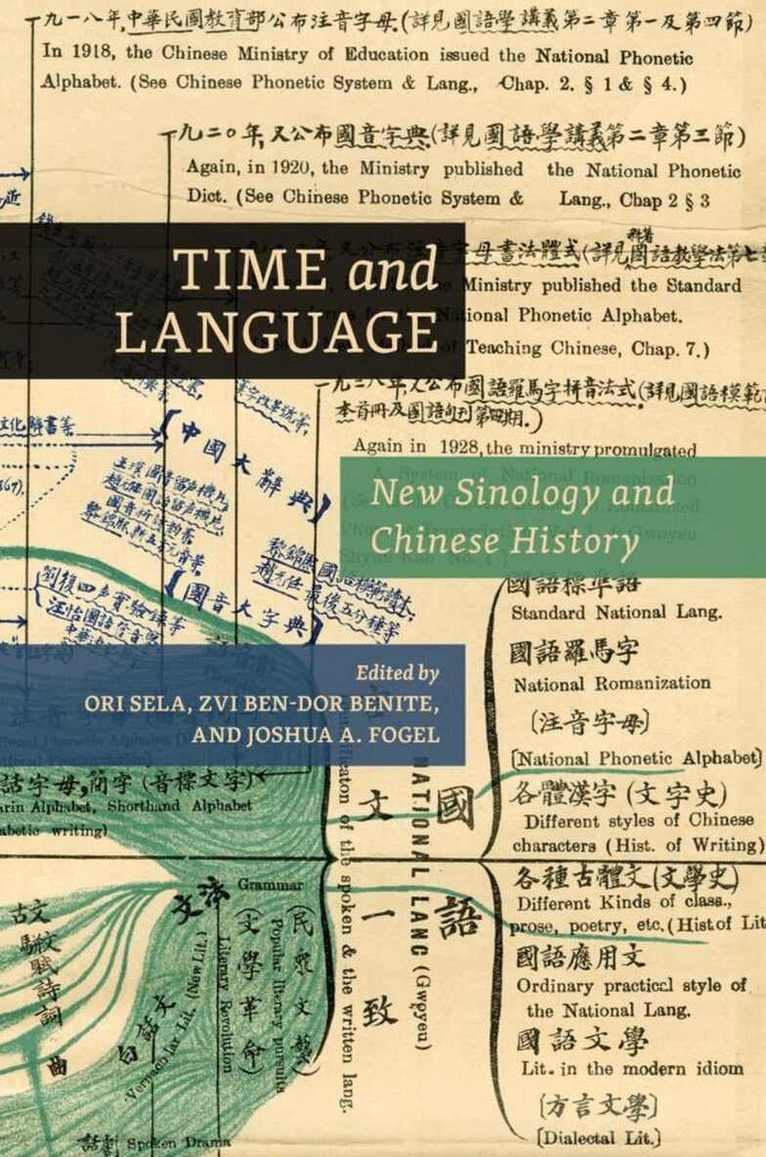
China’s past and present have been in a continuous dialogue throughout history, one that is heavily influenced by time and language: the temporal orientation and the linguistic apparatus used to express and solidify identity, ideas, and practices. Presenting a host of in-depth case studies, Time and Language: New Sinology and Chinese History argues for and demonstrates the significance of "New Sinology" by restoring the role of language/philology in the research and understanding of how modern China emerged. Reading the modern as a careful and ongoing conversation with the past renders the "new" in a different perspective. This volume is a significant step toward a new historical narrative of China’s modern history, one wherein "ruptures" can exist in tandem with continuities. The collection accentuates the deep connection between language and power—one that spans well across China’s long past—and hence the immense consequences of linguistic-related methodology to the comprehension of power structures and identity in China.Each of the essays in this volume tackles these issues, the methodological and the thematic, from a different angle but they all share the Sinological prism of analysis and the basic understanding that a much longer timeframe is required to make sense of Chinese modernity. The languages examined are diverse, including modern and classical Chinese, as well as Manchu and Japanese. Taken together they bring a spectrum of linguistic perspectives and hence a spectrum of power relations and identities to the forefront. While the essays focus on late Qing and early twentieth-century eras, they refer often to earlier periods, which are necessary to making real sense of later eras. The methodological and the thematic do not only converge, but also generate a plea for fostering and expanding this approach in current and future studies.
292 kr
Skickas inom 7-10 vardagar
China’s past and present have been in a continuous dialogue throughout history, one that is heavily influenced by time and language: the temporal orientation and the linguistic apparatus used to express and solidify identity, ideas, and practices. Presenting a host of in-depth case studies, Time and Language: New Sinology and Chinese History argues for and demonstrates the significance of "New Sinology" by restoring the role of language/philology in the research and understanding of how modern China emerged. Reading the modern as a careful and ongoing conversation with the past renders the "new" in a different perspective. This volume is a significant step toward a new historical narrative of China’s modern history, one wherein "ruptures" can exist in tandem with continuities. The collection accentuates the deep connection between language and power—one that spans well across China’s long past—and hence the immense consequences of linguistic-related methodology to the comprehension of power structures and identity in China.Each of the essays in this volume tackles these issues, the methodological and the thematic, from a different angle but they all share the Sinological prism of analysis and the basic understanding that a much longer timeframe is required to make sense of Chinese modernity. The languages examined are diverse, including modern and classical Chinese, as well as Manchu and Japanese. Taken together they bring a spectrum of linguistic perspectives and hence a spectrum of power relations and identities to the forefront. While the essays focus on late Qing and early twentieth-century eras, they refer often to earlier periods, which are necessary to making real sense of later eras. The methodological and the thematic do not only converge, but also generate a plea for fostering and expanding this approach in current and future studies.
1 499 kr
Skickas inom 3-6 vardagar
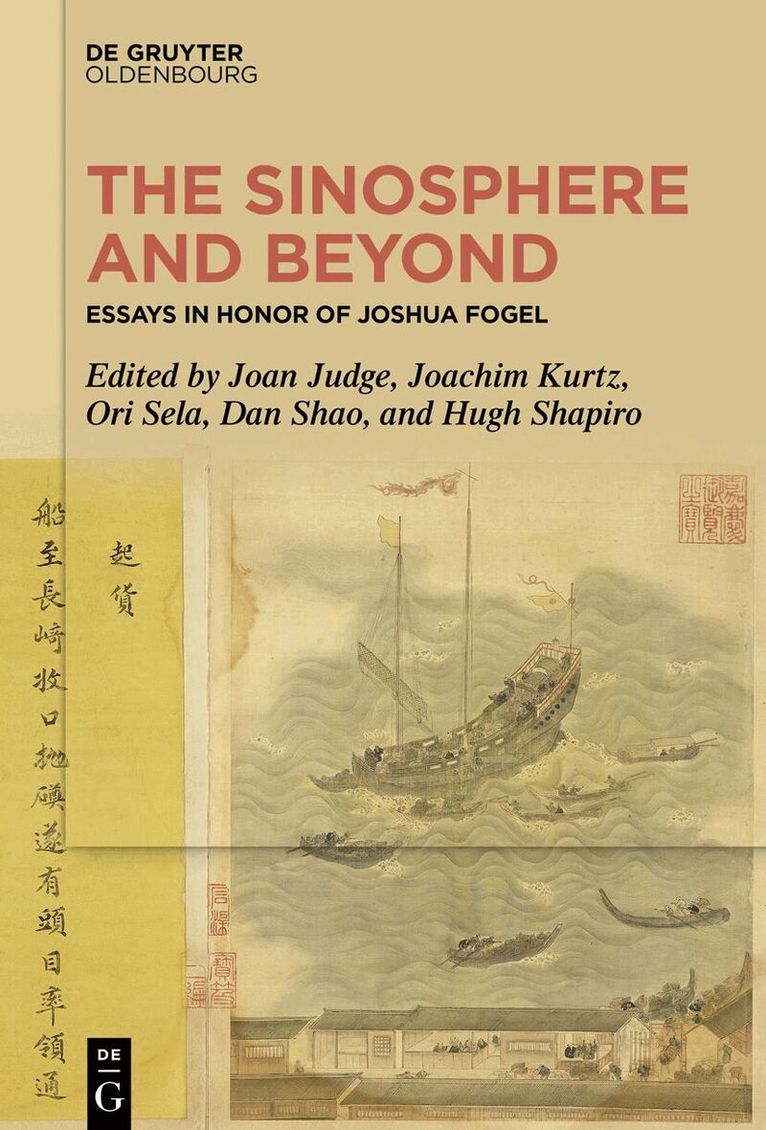
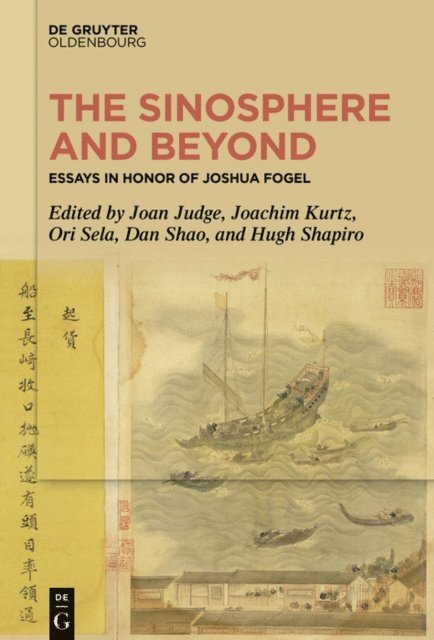
The history of East Asia can be most productively studied through a transnational, translingual, and transcultural approach to the region. In The Sinosphere and Beyond, twenty-six leading and emerging scholars use such approaches in rich clusters of essays on Historiography, Sino-Japanese Encounters, Law and Justice, Politics, Art, Literature, and Translation. Each essay builds on the legacy of Joshua Fogel, whose scholarship defined the contours of the Sinosphere in the Western world and beyond. The collection will be of interest to scholars and students with specific research concerns within these broader rubrics: from the towering progenitors of Japanese Sinology to gendered, diplomatic, and cultural dimensions of Sino-Japanese encounters; from Sinitic poetry to legal culture and revolutionary life; from art commerce and levels of literary expression to the quandaries of translation. In addition to offering a broad range of case studies, the volume is testimony to the methodological importance of a dynamic intra- and transregional approach for an understanding of the layered history of East Asia.