Oscar Giner - Böcker
Visar alla böcker från författaren Oscar Giner. Handla med fri frakt och snabb leverans.
3 produkter
3 produkter
533 kr
Skickas inom 7-10 vardagar
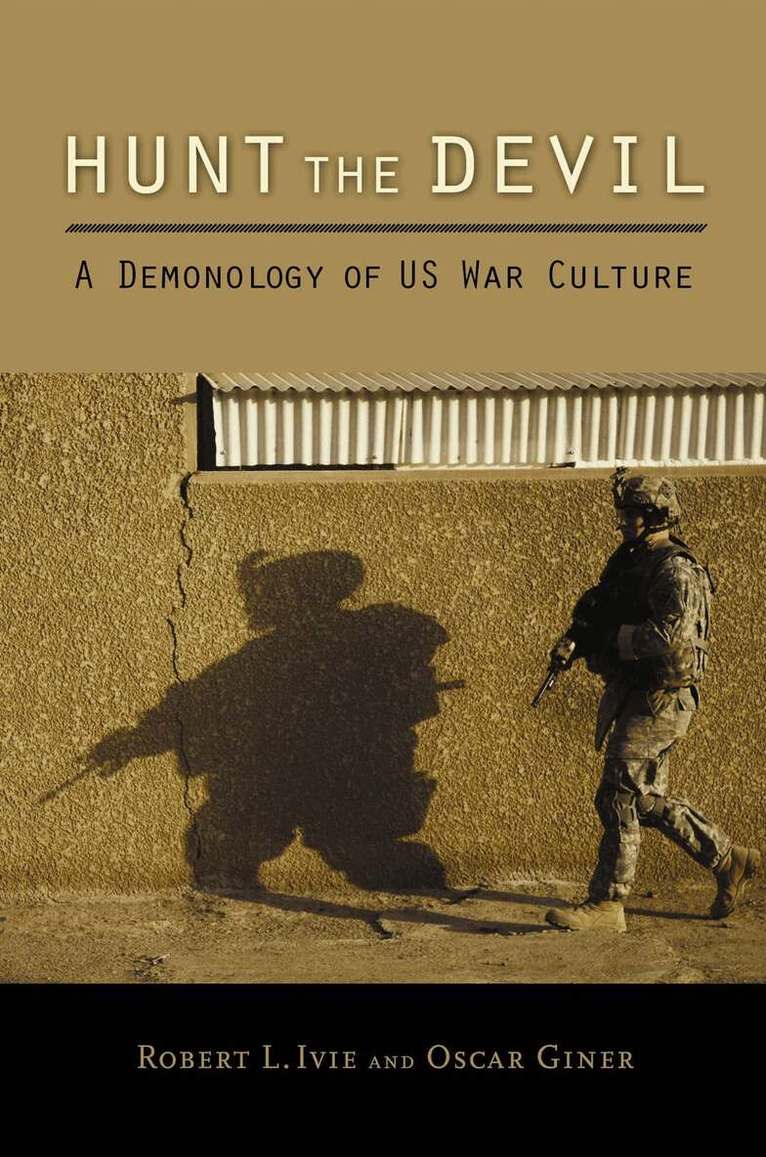
Hunt the Devil explains the origins and processes of the repetitive American reflex to demonize and then wage war against perceived opponents as well as ways to break the cycle.Hunt the Devil is a timely and illuminating exploration of demonic imagery in US war culture. In it, authors Robert L. Ivie and Oscar Giner examine the origins of the Devil figure in the national psyche and review numerous examples from US history of the demonization of America’s perceived opponents. Their analysis demonstrates that American military deployments are often part of a cycle of mythical projection wherein the Devil repeatedly appears anew and must be exorcised through redemptive acts of war, even at the cost of curtailing democratic values.Meticulously researched, documented, and argued, Hunt the Devil opens with contemporary images of the US’s global war on terror in the aftermath of 9/11. In five chapters devoted to the demonization of evildoers, witches, Indians, dictators, and Reds by American writers, in presidential rhetoric, and in popular culture, Ivie and Giner show how the use of demonization in the war on terror is only the most recent manifestation of a process that has recurred throughout American history.In a sixth chapter, the authors introduce the archetype of the Trickster. Though not opposed to the Devil per se, the Trickster’s democratic impulses have often provided a corrective antidote to the corrosive and distorting effects of demonization. Invoking the framework of Carl Jung’s shadow aspect, Hunt the Devil offers the Trickster as a figure who can break the cycle of demonization and war.The role of the mythic Devil in the American psyche has profound implications, not just for American diplomacy and the use of American arms in the world, but for the possibility of domestic peace within an increasingly diverse society. Hunt the Devil provides much of interest to readers and scholars in the fields of war, rhetorical studies, American Studies, US political culture, Jungian psychology, and mythography.
Del 51 - Frontiers in Political Communication
After Empire
Myth, Rhetoric, and Democratic Revival
Häftad, Engelska, 2024
394 kr
Skickas inom 5-8 vardagar
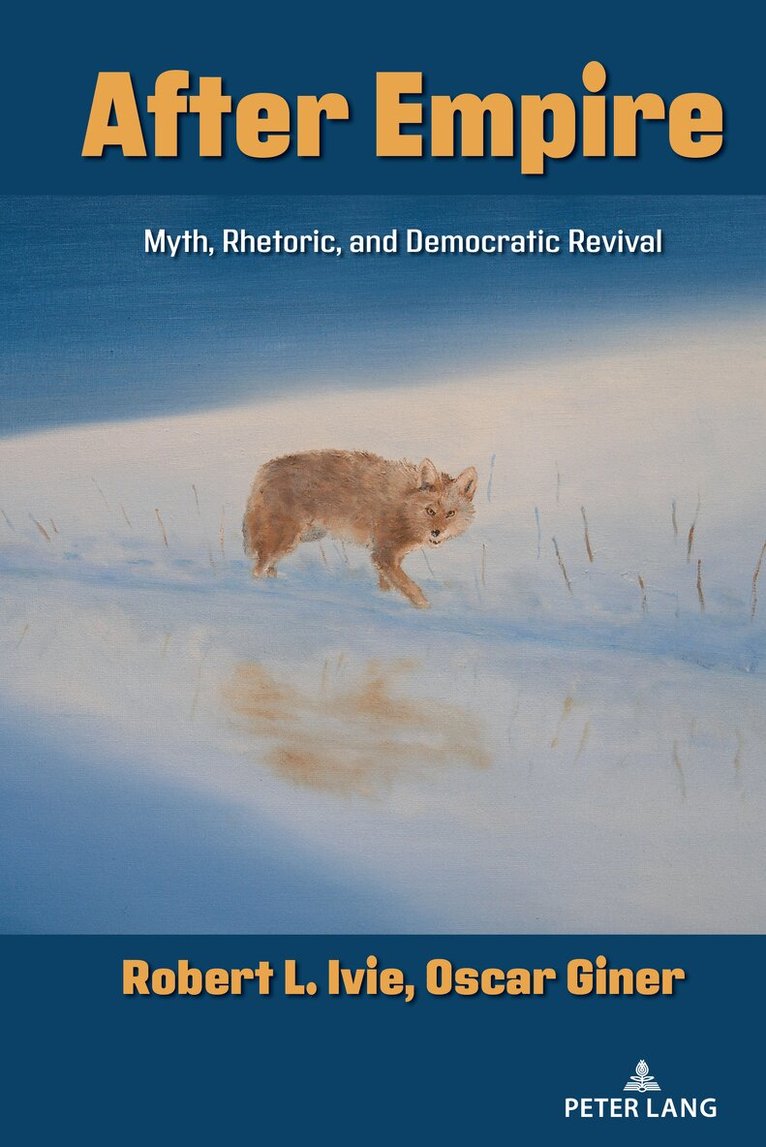
This book probes the mythic underpinnings of U.S. war culture, asking how myth can be reconfigured to foster a discourse more conducive to a culture of peace. It breaks with an imperial mindset of endless warfare and places myth’s creative potential into productive relationship with rhetoric’s democratic vocation to foster an attitude of tolerance and interdependence and resist the violence of alienation. Drawing on the archetype of coyote and manifestations of a people’s better angels, the book examines both the resistance of imperial orthodoxy to critique and susceptibility to cultural change. It locates Barack Obama’s presidency and rhetorical juggling at the threshold of a shifting hemispheric consciousness and explores the prophetic voice of veterans opposed to war, a voice that prefigures the possibility of conversion to a culture of peace. The book culminates in consideration of democracy’s renewal by means of rhetorically adept dissent to enable deliberation amidst conflict. After Empire chronicles America’s addiction to war-in-the-name-of-peace, wherein the military-industrial complex entwines with crippling national mythologies. Drs. Ivie and Giner argue that by seeing the world as a series of threats, our imaginations have shriveled, leaving us rotating from self-righteous exceptionalism to other-fearing doubts. Moving past that dynamic, the authors plot a "passage to democracy," where the nation grows out of imperial hubris and into mature, deliberative democracy.Stephen J. Hartnett, Professor, Department of Communication, University of Colorado, Denver In After Empire: Myth, Rhetoric, and Democratic Revival, Robert L. Ivie and Oscar Giner unpack the way that contemporary American myths of war have played a role in legitimizing war and creating an American empire built around a militarized society. They show that creation of an alternative mythology privileging dissent is essential to rebuilding American democracy. The book is cogently argued, based on groundbreaking research on myth and militarism, and a genuine pleasure to read!Robert C. Rowland, Professor, Department of Communication Studies, University of Kansas After Empire offers both an analysis of contemporary US war culture and an intervention into it in the hope of making the US a healthier democracy. Focusing on the intersection of politics, popular culture, and myth, and deftly integrating theory, method, and substantive content, Ivie and Giner provide a map of the current US public sphere in ways that will interest academics as well as practitioners and prove useful for courses in rhetoric, history, and political science. Mary E. Stuckey, Edwin Erle Sparks Professor of Communication Arts & Sciences, Pennsylvania State University, University Park
Del 51 - Frontiers in Political Communication
After Empire
Myth, Rhetoric, and Democratic Revival
Inbunden, Engelska, 2024
1 058 kr
Skickas inom 5-8 vardagar
This book probes the mythic underpinnings of U.S. war culture, asking how myth can be reconfigured to foster a discourse more conducive to a culture of peace. It breaks with an imperial mindset of endless warfare and places myth’s creative potential into productive relationship with rhetoric’s democratic vocation to foster an attitude of tolerance and interdependence and resist the violence of alienation. Drawing on the archetype of coyote and manifestations of a people’s better angels, the book examines both the resistance of imperial orthodoxy to critique and susceptibility to cultural change. It locates Barack Obama’s presidency and rhetorical juggling at the threshold of a shifting hemispheric consciousness and explores the prophetic voice of veterans opposed to war, a voice that prefigures the possibility of conversion to a culture of peace. The book culminates in consideration of democracy’s renewal by means of rhetorically adept dissent to enable deliberation amidst conflict. After Empire chronicles America’s addiction to war-in-the-name-of-peace, wherein the military-industrial complex entwines with crippling national mythologies. Drs. Ivie and Giner argue that by seeing the world as a series of threats, our imaginations have shriveled, leaving us rotating from self-righteous exceptionalism to other-fearing doubts. Moving past that dynamic, the authors plot a "passage to democracy," where the nation grows out of imperial hubris and into mature, deliberative democracy.Stephen J. Hartnett, Professor, Department of Communication, University of Colorado, Denver In After Empire: Myth, Rhetoric, and Democratic Revival, Robert L. Ivie and Oscar Giner unpack the way that contemporary American myths of war have played a role in legitimizing war and creating an American empire built around a militarized society. They show that creation of an alternative mythology privileging dissent is essential to rebuilding American democracy. The book is cogently argued, based on groundbreaking research on myth and militarism, and a genuine pleasure to read!Robert C. Rowland, Professor, Department of Communication Studies, University of Kansas After Empire offers both an analysis of contemporary US war culture and an intervention into it in the hope of making the US a healthier democracy. Focusing on the intersection of politics, popular culture, and myth, and deftly integrating theory, method, and substantive content, Ivie and Giner provide a map of the current US public sphere in ways that will interest academics as well as practitioners and prove useful for courses in rhetoric, history, and political science. Mary E. Stuckey, Edwin Erle Sparks Professor of Communication Arts & Sciences, Pennsylvania State University, University Park