P. D. A. Garnsey - Böcker
Visar alla böcker från författaren P. D. A. Garnsey. Handla med fri frakt och snabb leverans.
9 produkter
9 produkter
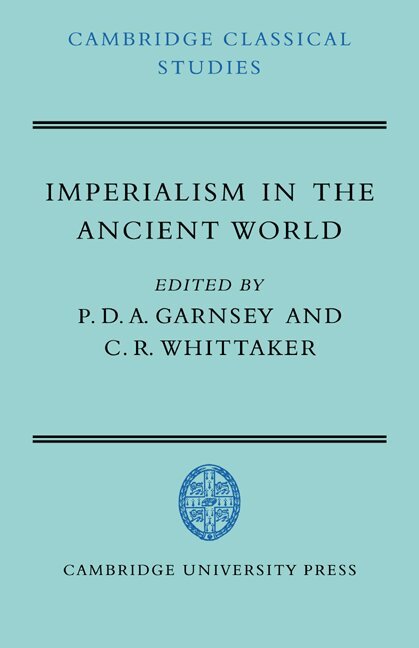
Imperialism in the Ancient World
The Cambridge University Research Seminar in Ancient History
Häftad, Engelska, 2007
441 kr
Skickas inom 7-10 vardagar
The economics of imperialism, its political background and institutional frameworks, the material benefits it conferred, the ideologies of ruler and ruled - these are some of the more important aspects of imperialism discussed in this volume. In presenting the evidence for ancient imperialims and suggesting concepts and methods of interpretation these articles, which are the work of the Cambridge University Research Seminar in Ancient History, range from New Kingdom Egypt and Carthage, through the classical Greek world of Athens and Sparta, to Macedonia and Rome. This book will be particularly useful to ancient historians but should also interest historian of other periods as well as students of politics.
500 kr
Skickas inom 7-10 vardagar
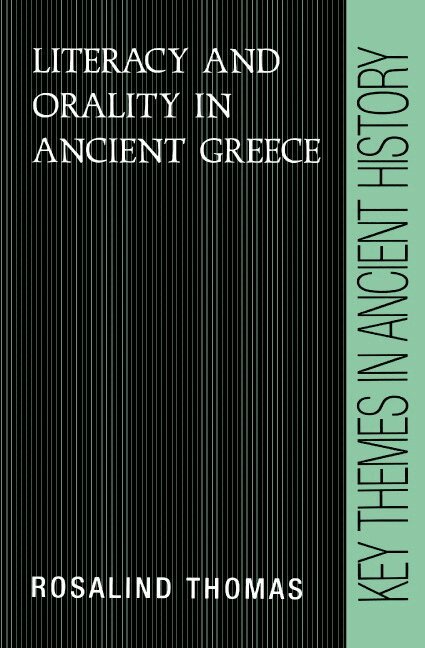
This book explores the role of written and oral communication in Greece and is the first systematic and sustained treatment at this level. It examines the recent theoretical debates about literacy and orality and explores the uses of writing and oral communication, and their interaction, in ancient Greece. It is concerned to set the significance of written and oral communication as much as possible in their social and historical context, and to stress the specifically Greek characteristics in their use, arguing that the functions of literacy and orality are often fluid and culturally determined. It draws together the results of recent studies and suggests further avenues of enquiry. Individual chapters deal with (among other things) the role of writing in archaic Greece, oral poetry, the visual and monumental impact of writing, the performance and oral transmission even of written texts, and the use of writing by the city-states; there is an epilogue on Rome. All ancient evidence is translated.
526 kr
Skickas inom 7-10 vardagar
The absence of a professional police force in the city of Rome in classical times is often identified as a major cause of the collapse of the Republic. But this alleged 'structural weakness' was not removed by the Emperor Augustus and his successors, and was in fact shared with other pre-modern states: a specialised police force is a modern invention. In this critical study of the system of law and order in ancient Rome in both Republican and Imperial periods, Wilfried Nippel identifies the mechanisms of self-regulation which operated as a stabilising force within Roman society. This case-study of ancient Rome has a comparative dimension and will interest legal historians of other pre-modern societies as well as ancient historians, anthropologists, sociologists and political scientists.
448 kr
Skickas inom 7-10 vardagar
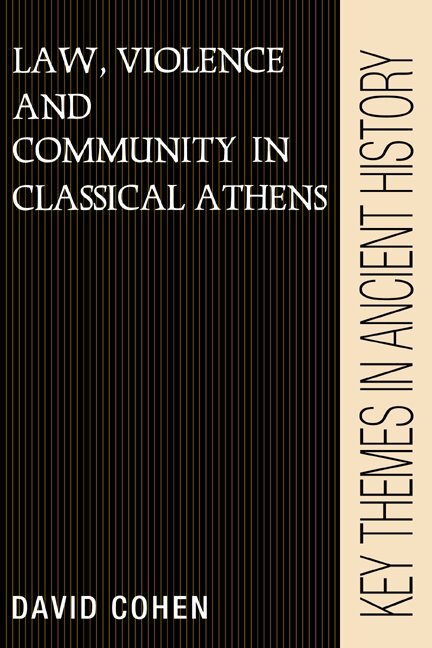
The theme of this book is the legal regulation of violence and the role of litigation in Athenian society. Using comparative anthropological and historical perspectives, David Cohen challenges traditional evolutionary and functionalist accounts of the development of legal process. Examining Athenian theories of social conflict and the rule of law, as well as actual litigation involving the regulation of violence, he emphasises the way in which the judicial process operates in an agonistic social field. This perspective illuminates the social dimensions of litigation and the legal regulation of violence, and helps to explain otherwise puzzling features of Athenian litigation.
448 kr
Skickas inom 7-10 vardagar
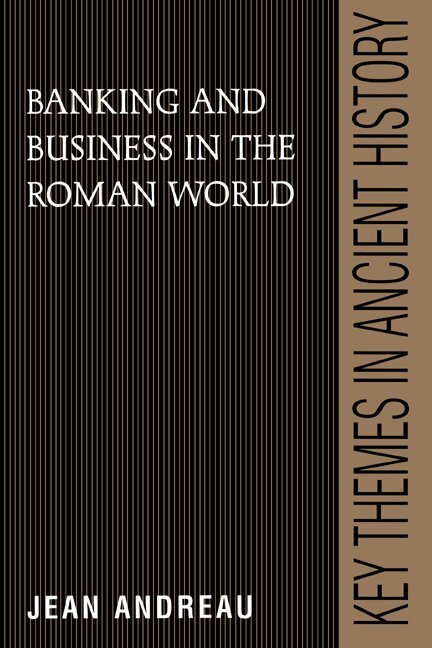
In the first century BC lending and borrowing by the senators was the talk of Rome and even provoked political crises. During this same period, the state tax-farmers were handling enormous sums and exploiting the provinces of the Empire. Until now no book has presented a synthetic view of Roman banking and financial life as a whole, from the time of the appearance of the first bankers' shops in the Forum between 318 and 310 BC down to the end of the Principate in AD 284. Professor Andreau writes of the business deals of the elite and the professional bankers and also of the interventions of the state. To what extent did the spirit of profit and enterprise predominate over the traditional values of the city of Rome? And what economic role did these financiers play? How should we compare that role to that of their counterparts in later periods.
461 kr
Skickas inom 7-10 vardagar
This book - the only history of friendship in classical antiquity that exists in English - examines the nature of friendship in Greece and Rome from Homer to the Christian Roman Empire of the fourth century AD. Friendship is conceived of as a voluntary and loving relationship, but there are major shifts in emphasis from the bonding among warriors in epic poetry, to the egalitarian ties characteristic of the Athenian democracy, the status-conscious connections in Rome and the Hellenistic kingdoms, and the commitment to a universal love among Christian writers. Friendship is also examined in relation to erotic love and comradeship, for its role in politics and economic life, in philosophical and religious communities, in connection with patronage and the private counsellors of kings, and in respect to women. Its relation to modern friendship is also fully discussed.
396 kr
Skickas inom 7-10 vardagar
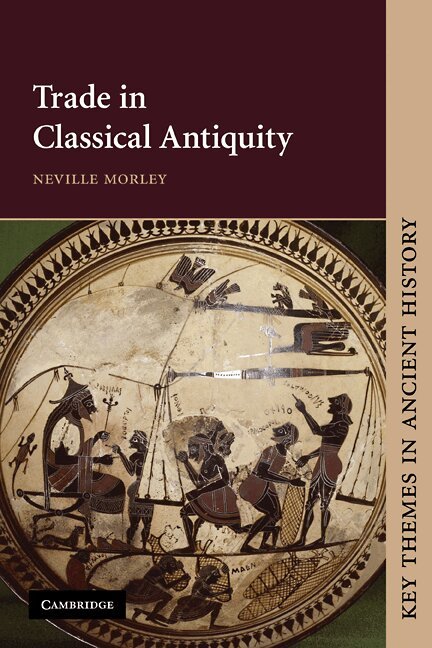
Historians have long argued about the place of trade in classical antiquity: was it the life-blood of a complex, Mediterranean-wide economic system, or a thin veneer on the surface of an underdeveloped agrarian society? Trade underpinned the growth of Athenian and Roman power, helping to supply armies and cities. It furnished the goods that ancient elites needed to maintain their dominance - and yet, those same elites generally regarded trade and traders as a threat to social order. Trade, like the patterns of consumption that determined its development, was implicated in wider debates about politics, morality and the state of society, just as the expansion of trade in the modern world is presented both as the answer to global poverty and as an instrument of exploitation and cultural imperialism. This 2007 book explores the nature and importance of ancient trade, considering its ecological and cultural significance as well as its economic aspects.
1 024 kr
Skickas inom 7-10 vardagar
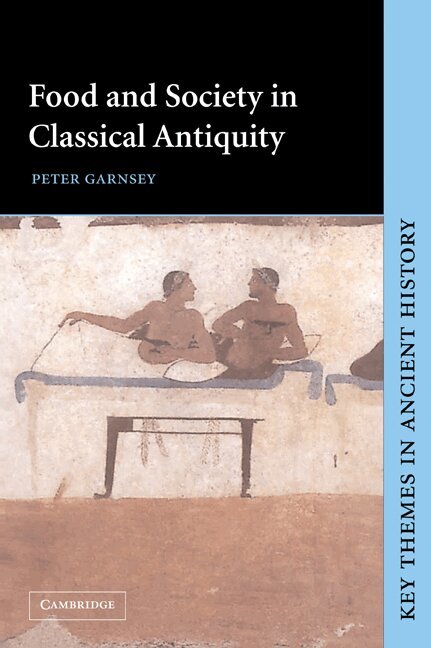
This is the first study of food in classical antiquity that treats it as both a biological and a cultural phenomenon. The variables of food quantity, quality and availability, and the impact of disease, are evaluated and a judgement reached which inclines to pessimism. Food is also a symbol, evoking other basic human needs and desires, especially sex, and performing social and cultural roles which can be either integrative or divisive. The book explores food taboos in Greek, Roman, and Jewish society, and food-allocation within the family, as well as more familiar cultural and economic polarities which are highlighted by food and eating. The author draws on a wide range of evidence new and old, from written sources to human skeletal remains, and uses both comparative historical evidence from early modern and contemporary developing societies and the anthropological literature, to create a case-study of food in antiquity.
422 kr
Skickas inom 7-10 vardagar
This is the first study of food in classical antiquity that treats it as both a biological and a cultural phenomenon. The variables of food quantity, quality and availability, and the impact of disease, are evaluated and a judgement reached which inclines to pessimism. Food is also a symbol, evoking other basic human needs and desires, especially sex, and performing social and cultural roles which can be either integrative or divisive. The book explores food taboos in Greek, Roman, and Jewish society, and food-allocation within the family, as well as more familiar cultural and economic polarities which are highlighted by food and eating. The author draws on a wide range of evidence new and old, from written sources to human skeletal remains, and uses both comparative historical evidence from early modern and contemporary developing societies and the anthropological literature, to create a case-study of food in antiquity.